Imaginary interview with Roland
by Charactorium · Roland · Mythology · 6 min read
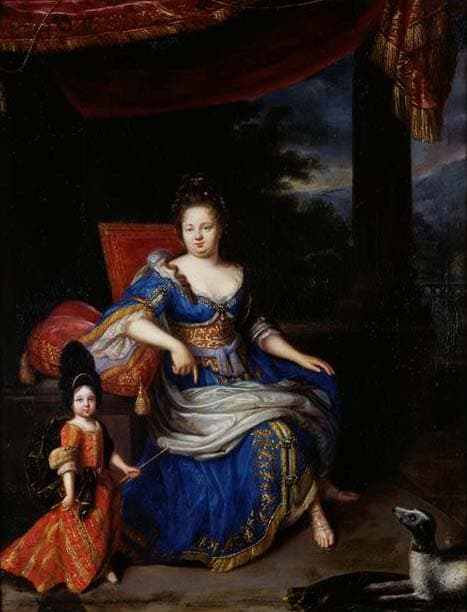
Day is fading on the heights of Roncevaux, in that Pyrenean pass where Charlemagne's rearguard was ambushed. Leaning against a gray rock, sword still in hand, the most illustrious of paladins agrees to speak before night falls. His voice is hoarse, but the knight's pride has lost none of its edge.
—How would you describe your place alongside Emperor Charlemagne?
We were twelve who formed the close guard of my lord, and I was honored to be named first among them. To be a paladin is not only to carry the emperor's gonfalon into battle; it is to answer for his word as one answers for a blood debt. At the court of Aix-la-Chapelle, each morning I went to the chapel at the sound of bells, then I was awaited for councils where Charlemagne weighed war and peace with his best men. Rollant est proz e Oliver est sage — thus we are distinguished, my companion and I. He weighs, I strike. The vassal owes his suzerain loyalty unto death; I owed it doubly, for I am his nephew and his right arm.
He weighs, I strike.
—What were your days like at the imperial palace before the campaigns?
People think the knight is always in the saddle, lance lowered; the truth is harsher and simpler. Up before dawn, I heard mass, for no one bears iron without first bearing the cross. The afternoon hardens the arms: wielding the lance, vaulting onto the destrier, those horses trained to fear neither cry nor steel. In the evening, in the great hall, we broke the white bread reserved for those of my rank, and the jongleurs sang the deeds of the ancients while wine circulated. The hauberk weighs heavy on a man's shoulders, believe me; you get used to it like a second skin. That is what chivalry is day to day: less glory than one imagines, and much sweat offered to God and the king.
No one bears iron without first bearing the cross.
—Tell us about Durandal, that sword they say never breaks.
Durandal is not a blade, it is a companion. It is said to have been forged never to bend or break, and I have tested it on a hundred shields without it chipping. But its true strength does not lie in the steel: in its golden hilt are set holy relics, fragments torn from the flesh of the blessed. When I strike, it is not only my arm that delivers the blow, it is heaven that descends with it. That is why I love it more than my destrier, more than my own life. A sword that contained only metal, any blacksmith can remake; but a blade inhabited by the sacred, only one is forged, and it is entrusted to you like an oath.
Durandal is not a blade, it is a companion.
—Why do you care so much that this sword contains relics?
Because a warrior without faith is nothing but a butcher. In the hilt of Durandal sleep a tooth of Saint Peter, blood of Saint Basil, a hair of my lord Saint Denis, a scrap of the Virgin's garment — at least that is what I was taught and what I believe. When I grip that hilt, I am not alone facing the pagans: all the court of heaven fights at my side. That is what separates the paladin from the common soldier. Honor is not enough; the steel itself must be consecrated. That is why, when the hour comes, I will not suffer such a marvel to fall into unbelieving hands. Better to break it than see it sullied.
A warrior without faith is nothing but a butcher.
—Who were you really fighting against in those Spanish mountains?
Against the Saracens of King Marsile, those of Saragossa, who feigned peace the better to betray us. For seven years my lord had carried the cross beyond the Pyrenees, and that proud city remained the last thorn. They promised us hostages and conversions; they set a trap for us. That is the war as I lived it: Christendom on one side, the infidels on the other, and between them the treachery of one of our own who sold the rearguard. I know they will tell my death in a thousand ways, will argue over the names and peoples I faced in these gorges. What does the dying man care for the details of chronicles? What I know, myself, is that I fell with my face turned toward the enemy's land, as a man who never retreated should fall.
I fell with my face turned toward the enemy's land.
—You seem to guess that your story will be rewritten. What do you think of that?
A great deed never fully belongs to the one who accomplishes it. As soon as I am cold, the clerks and jongleurs will seize Roncevaux; they will trim, they will embellish, they will make my wounds sing to stir the hearts of young men. Perhaps they will swell the army of the pagans, perhaps they will blacken the traitor further. That is the office of song: to enlarge shadows and lights. I do not complain: a warrior who dies obscure dies twice, and I would rather be adorned with virtues I did not have than be forgotten. What I ask of those who will sing me is not to lie about the essential: that I loved my lord Charlemagne more than my life, and that I held my rank as paladin until my last breath.
A warrior who dies obscure dies twice.
—How did you come to command that fatal rearguard?
When my lord's army crossed back over the mountains to return to sweet France, a man was needed to cover its rear in these defiles where twenty are enough to stop a thousand. I claimed that charge as an honor, not a burden — it is the lot of the first of the Twelve Peers to hold the most exposed post. With my companion Olivier and Archbishop Turpin, we were there, at Roncevaux, in the year of the great campaign, when the heights suddenly bristled with enemy lances. Treason had sold everything: the hour, the place, the number of our men. I understood, looking up, that we would not see the plain again. But retreat? A vassal does not retreat. You hold, you strike, and you commend your soul to God.
—They say Olivier urged you to sound the horn, and you first refused. Why?
Three times my companion Olivier begged me to put the Olifant to my lips to call the emperor back, and three times I refused. Understand: sounding the horn at the first clash would have been to admit fear, to cast a shadow on the name of all my kin and on sweet France. A man of my rank does not cry for help as long as his arm can wield Durandal. I would rather die than live dishonored. Olivier, for his part, judged with his wisdom, and he was right about the facts — we were too few. But honor is not a matter of accounts. When at last I brought the horn to my lips, it was too late to save my men; it was only time to avenge their memory and call down punishment on the traitor.
I would rather die than live dishonored.
—And that final blast on the olifant, which they say burst your temples?
I blew with all the soul I had left. Blood was already pounding in my ears, my men lay around me, and the horn's voice had to cross the ridges and flow down the valley to the ear of Charlemagne, leagues away. Then I blew as one gives up his last secret: so hard, they say, that my temples burst and blood gushed from my mouth. The ivory Olifant bore the crack from it. That is what the paladin's sacrifice is: not only to fall by the sword, but to tear oneself apart so that the emperor may know and avenge. My body was no more than an instrument in the service of my lord. The horn and I, we broke in the same gesture.
The horn and I, we broke in the same gesture.
—Feeling the end near, what did you want to do with Durandal?
My first concern as a dying man was not for my soul, but for my sword. I could not bear that Durandal and its holy relics should fall into the hands of the pagans; so I tried to break it, striking against the gray stone of Roncevaux with all my failing strength. In vain: the steel bit the rock and the rock gave way, but the blade itself remained intact, as if heaven refused to let it perish with me. I ended up laying it under my body, with the Olifant, so that even my corpse might protect them. Such a marvel must serve only a Christian worthy of it. If God does not wish me to break it, perhaps He destines it to outlive my name — let it go where it will, provided it never serves the infidel.
—Imagine you are venerated long after your death: what would you like men to keep of you?
They tell me that over there, at Blaye, in the Gironde, they might one day preserve my cracked Olifant and my sword as relics, and that pilgrims will come to pray before them. If that is to be, I receive it with gratitude — not out of vanity, but because an object that has touched the sacred retains some of its virtue. Let young knights come and lay their hands on them and learn chivalry: to keep one's word, to hold one's rank, to die rather than betray. I do not ask them to imitate me in my pride — that too-late refusal to sound the horn, I pay dearly for it. But let them remember this: I loved my lord and my sweet France more than my own breath. If they keep that, then my olifant will not have sounded in vain.
Let them remember this: I loved my sweet France more than my own breath.
Read further

This imaginary interview was generated by artificial intelligence from sources documented in Roland's profile. It dramatises what the figure might have said based on what we know about them, but does not constitute attested historical testimony. For primary sources and factual documentation, refer to the full profile.