Kids interview Roland
by Charactorium · Roland · Mythology · 4 min read
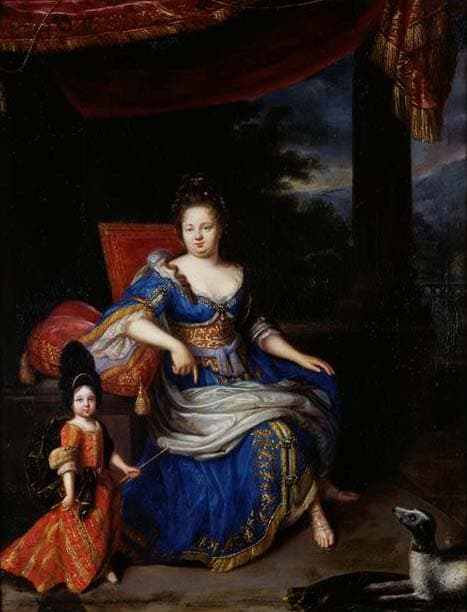
Two young visitors, each twelve years old, cross an old cloister with their school trip. At the end of a stone gallery, a knight awaits them, sword at his side and an ivory horn at his belt. It is Roland, Charlemagne's paladin, who agrees to answer all their questions.
—Who was Charlemagne to you? Did you really know him?
Oh yes, my child, I served him every day. Charlemagne was my emperor, the master of the Franks. Imagine a huge man with a white beard, before whom everyone bowed. I was a paladin — that means an elite knight chosen to stay close to the king. We were twelve, called the Twelve Peers, the best warriors at court. I lived at the palace of Aix-la-Chapelle, trained with the sword in the morning, and advised the emperor in his wars. Serving him was not a job. It was an honor that filled my entire life.
We were twelve peers, the best warriors, chosen to stay close to the king.
—And what did it mean to be faithful to a king in your time?
That's a fine question, and a hard one. In my time, a knight was the vassal of his lord. The vassal is the man who promises to serve and fight, and the lord protects him in return. That promise was called loyalty, and it was never broken. Imagine giving your word once, and it holding for your whole life. I kept mine to the end, until I died at Roncevaux to protect Charlemagne's army. To die for one's lord was not a loss. It was to become worthy.
A knight gives his word once, and it holds for his whole life.
—They say your sword was magical. What was its name?
It was called Durandal, and I loved it like a friend. They said it was unbreakable, my child — I struck rock with it, and it was the stone that broke, not the blade. But it was not just a weapon of war. In its hilt, where the hand rests, holy relics were set: precious little pieces linked to saints, kept as treasures. So when I held Durandal, I held both my courage and my faith. Such a sword you do not let fall into bad hands. Never.
I struck rock, and it was the stone that broke, not my blade.
—And what became of your sword after you?
Ah, that is a story people love to tell. They say that at Blaye, a town near the Gironde, my relics were long kept — my blade Durandal and my ivory horn. Imagine a silent church where pilgrims come from afar to approach the objects of a knight who died for his faith. In my time, such things were venerated as sacred treasures. An object that belonged to a hero was never thrown away: it became a living memory. That is how a simple sword gradually turns into a relic guarded for centuries.
—You had a horn, didn't you? What was the point of blowing it?
Yes, my child, my olifant! It was a great horn carved from ivory, hung at my side. Imagine a deep trumpet whose sound carries over the mountains. At Roncevaux, that narrow pass in the Pyrenees, my rearguard was attacked. The horn was my only way to call for help: a mighty blast, and Charlemagne, far away, could hear it and turn back. In the Song of Roland, that horn becomes the heart of the whole story. A warrior without a horn in those mountains is a voice that does not carry. With it, even dying, I could still speak to my king.
—Is it true you blew so hard that you died from it?
That is what they sing of me, and I wear it with pride. At Roncevaux, surrounded, I took my olifant and blew with all my might, again and again, so that Charlemagne would return. They say I blew so hard that my temples — here, on the sides of my head — burst. Imagine giving your last breath, literally, to save your companions. That was not madness, my child. It was my sacrifice. A knight keeps one strength for the end: that of thinking of others before himself, even when he knows he will die.
I gave my last breath, literally, to save my companions.
—Who did you fight at Roncevaux? Were they your enemies?
In my song, I fight the Saracens, warriors from the south we faced near Zaragoza, in Spain. Imagine a great fortified city, besieged under the sun, and a whole military campaign ending in the trap of the mountains. But know this, my child: there are other accounts. Old clerics wrote, in Latin, in their annals — their chronicle registers — that the attackers were highlanders from those valleys. Time mixes stories. I speak to you of the world of my song, the one sung around the fire.
—How do we know what really happened, then, if it's different?
Well, there are two kinds of people who spoke of me. The jongleurs, those artists who sang from village to village, told my deeds in verse, beautiful and heroic. But before them, scholars at court, like Einhard, wrote history in Latin in the Life of Charlemagne. He speaks of an officer who fell at the pass, soberly, without magic. Imagine two painters before the same battle: one paints the naked truth, the other paints the flame and courage. Both say something true. And you, by listening to both, become wiser than a single story.
Two painters before the same battle: one paints the naked truth, the other the flame.
—How did you become such a famous hero after your death?
You know, I was initially just an officer of Charlemagne, a brief name in old registers. And then the poets took hold of me. Centuries after my death, around the year 1080, someone composed the Song of Roland, a chanson de geste — a long poem that sings of the warlike exploits of a hero. Imagine your story, told and embellished from mouth to mouth, eventually crossing time. That is how a forgotten soldier becomes a legend. People need figures of courage. I was lucky enough to become one, without even asking for it.
A forgotten soldier, told from mouth to mouth, becomes a legend.
—And today, can we still read your story somewhere?
Yes, and it touches me that you ask. The oldest copy of my song sleeps in a manuscript at Oxford, a book written by hand almost a thousand years ago, carefully kept. Imagine pages of parchment, covered in tight handwriting, that have survived all those winters. And my story did not stay in France: it traveled to Italy, Spain, Germany, giving rise to a whole cycle of tales. As long as children like you come to listen to me, I do not truly die. That is the real secret of a hero: he lives as long as his name is told.
A hero lives as long as his name is told.
Read further
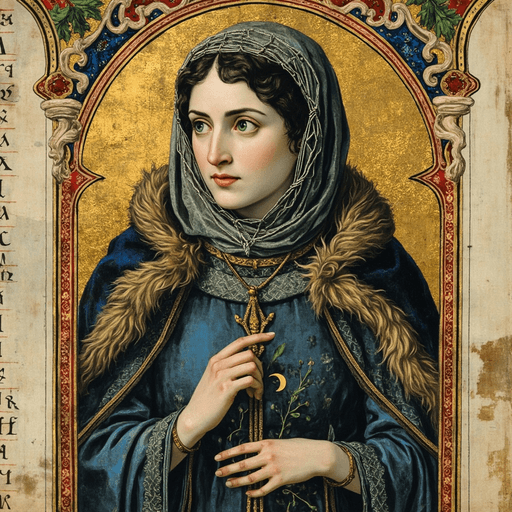
This imaginary interview was generated by artificial intelligence from sources documented in Roland's profile. It dramatises what the figure might have said based on what we know about them, but does not constitute attested historical testimony. For primary sources and factual documentation, refer to the full profile.