Imaginary dialogue between Numa Pompilius and Romulus and Remus
by Charactorium · Romulus and Remus · Mythology · 5 min read
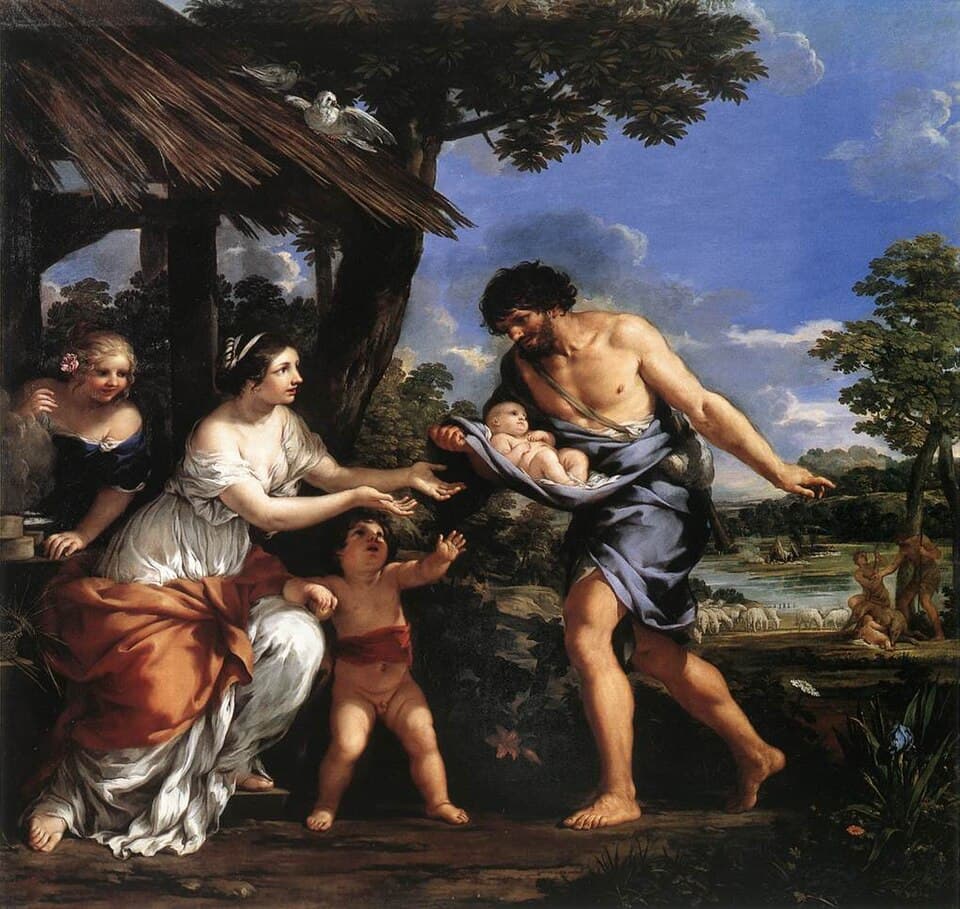
It is at the foot of the Palatine, near the still-new Roma Quadrata, that I find Romulus one morning in the spring of 753 BC, shortly after he had dug the founding furrow. The smell of the earth turned by the plow still lingers, and you can hear the shepherds driving their flocks toward the Tiber. I, Numa, who one day must perpetuate his rites and his pomerium, have come to listen to the one who traced the walls before I had to guard them. He sits on a boundary stone of the sacred frontier, his paludamentum still dusty.
—Romulus, before the city there was the Lupa. You who will one day entrust your rites to me, tell me: what do you truly know of that cave by the Tiber?
We were exposed, Remus and I, on the waters of the Tiber because they feared our blood — that of Mars and a vestal. The river, instead of swallowing us, set us down against the bank. It was there, under the Palatine, in the cave of the Lupercal, that a she-wolf came and offered us her teats. I do not remember her warmth, but the shepherds who took us in swore it all their lives. That fierce beast turned gentle, you see, Numa, is not a fable I tell to children: it is the sign that the gods wanted two survivors for a city. The she-wolf will remain engraved on our standards as long as Rome stands.
The river, instead of swallowing us, set us down against the bank.
—You speak of Remus in the past. When you were two children suckled by the same she-wolf, did you imagine that only one would trace these walls?
Never. We grew up side by side at the shepherd Faustulus's home, sharing the same bread and the same blows. When we resolved to found a city, we were still brothers in everything. But two cannot trace a single furrow, Numa. The gods made us understand this through the flight of birds: on the Aventine, Remus saw six; on the Palatine, I saw twelve. Heaven had chosen. I still believe the she-wolf saved us both so that one would reign and the other serve as a warning. It is hard to say of a brother whom you have loved.
Two cannot trace a single furrow.
—That furrow, precisely. You who precede me by a reign, explain the gesture to me: why the plow, why here, on this hill?
I yoked a white bull and a white cow to the plow, and I pushed the share into the earth of the Palatine following the course of the sky. Where the gates were to open, I lifted the plow to break the furrow — for what the share turns becomes sacred, untouchable. That traced line is the pomerium, the boundary that no one crosses in arms. You will inherit this line, Numa, and you must respect it more than anyone. It is not a defensive ditch: it is a limit that the gods guard. The earth lifted by that plow is worth more than all our stone ramparts.
What the share turns becomes sacred, untouchable.
—And yet that sacred furrow, your own brother crossed it. Romulus, tell me about that day — I who will have to enforce these same limits.
Remus leapt over my nascent wall, out of contempt, to mock the weakness of a barely raised rampart. In that moment I no longer saw my brother: I saw the boundary violated, the augury flouted, the city threatened in its first hour. I struck him. Thus perish whoever shall cross my walls. Believe me, Numa, no night was heavier for me, for I spilled the blood of the only man who had drunk the same milk as I. But a city founded on pity for a brother would not have lasted a winter. The pomerium had to cost dearly to be respected forever.
Thus perish whoever shall cross my walls.
—Several versions of this death are whispered. You who lived it, do you not fear that men will judge you a fratricide rather than a founder?
Let them whisper. Some will say it was a lieutenant, Celer, who struck the blow, others that the quarrel arose from the auguries. I will not hide behind these tales: a king's responsibility is not shared. I chose the city over blood. You will see, Numa, that a founder does not have the luxury of innocence — he bears a fault so that a thousand generations may live in peace. If I am remembered as the brother who killed, let it also be remembered that that death made Rome an inviolable city. I prefer the remorse of a king to the oblivion of a tender man.
A founder does not have the luxury of innocence.
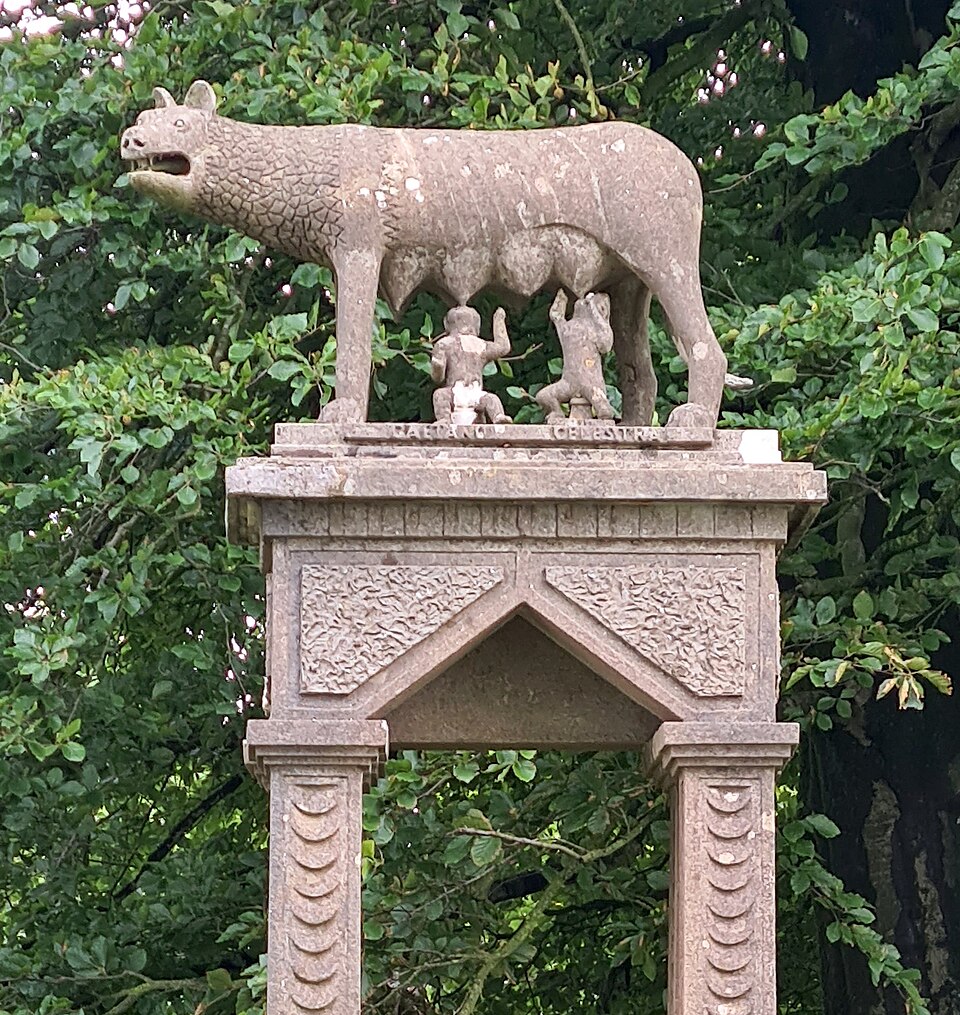
—Once the walls stood, they were empty. How did you populate this nascent city, you who bequeath it to me to govern?
A city without women is a city without a future, Numa. I first opened an asylum on the Capitoline where fugitives, landless shepherds, and men without a city came — that was my first people. But they needed wives, and our neighbors refused us their daughters. So, during the festivals in honor of Neptune, I invited the Sabines with their families, and at the signal my men seized their young women. It was violent, I do not deny it. But from this trial was born an alliance: the Sabines became Romans, and their king Titus Tatius ruled for a time at my side. A city is peopled as it is founded — in pain, then in pact.
A city without women is a city without a future.
—You will leave me a Senate and tribes. Why did you share your power as king when you could keep it all?
Because a king alone dies with his city, Numa. I chose a hundred elders, the patres, to advise me and carry the memory of Rome — that is the Senate, whose weight you will feel when you reign. I divided the people into three tribes, the Ramnes, the Titienses, and the Luceres, so that every man would know his place and his duty. I gave the greatest the cavalry, the celeres, for my guard. A founder does not only build walls: he builds an order that survives his body. You will add rites and peace; I have left you the skeleton. Keep the Senate — it is the heart that will beat when the king is silent.
A founder does not only build walls: he builds an order that survives his body.
—They say you keep shields that fell from the sky. Romulus, what is this mystery that I must guard after you?
A shield fell from the sky, an ancile, a sign that the gods protect Rome as long as it is preserved. But a treasure that everyone recognizes is a treasure that can be stolen. So I had identical copies forged, mixed with the original, so that no one would know which is the true one — and so that no one could take it from the city. You will take care of this cult, Numa, you who love rites more than arms: entrust these shields to priests who will carry them in procession. As long as the ancilia dance in Rome, the city will hold. It is less a weapon than a promise from heaven that you must keep secret.
A treasure that everyone recognizes is a treasure that can be stolen.
—You speak like a man preparing his departure. Romulus, do you feel that the gods are soon calling you back to them?
I feel it, Numa. Mars, my father, will not let his son grow old like a shepherd. One day, perhaps on the Campus Martius during a review of the army, the sky will darken, a storm will rise, and I will no longer be found among the living. Let men not cry murder: it is an elevation, not an end. I have accomplished my part — I have given Rome its walls, its people, its Senate. The rest will belong to you, and to those who come after. A founder does not die: he leaves the earth to watch from above. Prepare yourself, for the one who succeeds me must appease what I founded in war.
A founder does not die: he leaves the earth to watch from above.
—And if you are venerated after this disappearance? How do you want Rome to remember you when I reign in your place?
Let them not mourn a dead man, but honor a god. If I disappear in the storm, tell the people that Romulus has ascended to the immortals, and that he will watch over Rome under a new name. Let them raise a cult to me, let them call me Quirinus, and may that name protect the city of the Quirites. You, Numa, will know better than I how to unite men with the gods — that is your genius, just as mine was the sword and the furrow. Make my memory a rite, and Rome will no longer distinguish history from legend. Thus I will continue to reign, no longer by arms, but by the faith of those who invoke my name.
Let them not mourn a dead man, but honor a god.
This imaginary interview was generated by artificial intelligence from sources documented in Romulus and Remus's profile. It dramatises what the figure might have said based on what we know about them, but does not constitute attested historical testimony. For primary sources and factual documentation, refer to the full profile.