Imaginary interview with Setsuko Hara
by Charactorium · Setsuko Hara (1920 — 2015) · Performing Arts · Culture · 5 min read
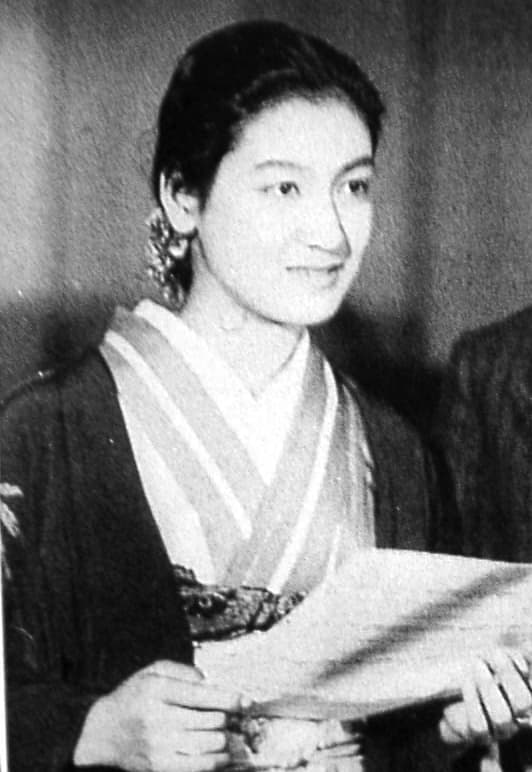
Kamakura, a late autumn afternoon. Behind a bamboo hedge, in a wooden house where silence seemed cultivated like a garden, a woman whom Japan thought lost agrees, for the time of an imaginary conversation, to break her silence. She smiles even before the first question is asked.
—How did you become an actress, at barely fifteen?
I was called Masae Aida, and I was born in Yokohama, the most Western-facing city in all of Japan — you could already breathe something from elsewhere there. In 1935, the Nikkatsu studios found my face, as one finds an object in a shop window, and gave me another name. I had decided nothing; others decided for me. I was a child placed before a camera and asked to be larger than herself. For a long time, I didn't know if I loved this profession or if I had simply let myself be carried along, as the port of my childhood let ships enter without ever holding them back.
Others decided for me; I was a child placed before a camera.
—What did the role Kurosawa entrusted to you in 1946 represent?
The country was emerging from defeat, the cities were still smoking, and then a young director, Akira Kurosawa, asked me to play, in No Regrets for My Youth, a woman who chooses her convictions against militarism. It was 1946, the American occupation was beginning, and saying that on screen required a certain courage — the courage to turn one's anger against those who, just yesterday, demanded our obedience. This character refused to lower her eyes. For the first time, I was not just lending my face: I was lending a voice to all those who had been silenced during the war. People wanted to see in me the modern woman. But I think I learned that day that a role could carry a country.
This character refused to lower her eyes.
—How was that smile born that earned you the nickname "Eternal Goddess"?
To embody Noriko, in the films Yasujirō Ozu entrusted to me between 1949 and 1953, I had to learn to smile even where I should have wept. In Late Spring, in Tokyo Story, my characters swallow their grief and wrap it in a smile, as one wraps a gift one never dares to offer. The audience saw purity and named me Eien no Shojo. I knew that this smile was the opposite of a lie: it was the truth of the women of my country, who console others for the pain they themselves carry. Smiling in sadness is not hiding — it is standing tall.
Smiling in sadness is not hiding — it is standing tall.
—Do you remember what you felt while filming Tokyo Story?
In Tokyo Story, in 1953, I was Noriko, the daughter-in-law who welcomes aging in-laws with a simplicity that nothing rewards. Ozu did not want grand gestures; he wanted one to serve tea, fold a garment, offer a place to sleep — and for all the weight of a life to be contained in these nothings. There is that Japanese idea, mono no aware, that gentle melancholy before things that pass: I think I spent the entire film feeling it without ever having the right to say it. My daughter-in-law was more tender toward these old strangers than their own children. Perhaps because kindness, when it owes nothing, is the freest of all.
All the weight of a life was contained in these nothings: serving tea, folding a garment.
—How did one work on an Ozu set?
At the Shochiku studios in Ofuna, a stone's throw from here, one entered in the morning as if into a temple. Ozu placed his camera very low, at tatami level, at the height of a seated person — so that I was not filmed from above, as one dominates, but from across, as one listens. His scripts were regulated to the word, down to the musicality of silences, and you had to memorize them without breaking the rhythm. We would rehearse a gesture twenty times, thirty times, until the hand found its own way. It was not constraint: it was a way of disappearing into the character until you no longer acted, but were.
I was filmed not from above, as one dominates, but from across, as one listens.
—What did Ozu tell you to direct you?
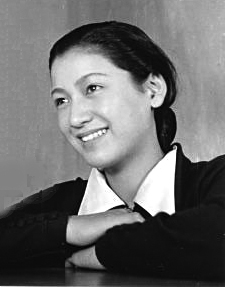
Very little, in truth. He was not one of those directors who explain at length what they are looking for. He would indicate a direction, a breath, the tilt of a head, then leave me to find the right path alone — and that trust was worth all the speeches. Between takes, I would stay apart, rereading my lines, avoiding useless conversations; the set had something monastic about it, and I was happy there as one is in contemplation. I think he trusted me because I was not trying to shine. I was trying to understand. A director who lets you search teaches you more about yourself than all those who claim to know you.
He would indicate a direction, then leave me to find the right path alone.
—Are your characters traditional or modern women?
Neither entirely one nor the other — and that was where their truth lay. Ozu himself chose my kimonos, down to the shade that indicated my characters' exact rank, but in Early Summer I decided my own marriage against my family's advice. A woman between two worlds: faithful to what she received, free to become what she wants. I was told that critic Donald Richie spoke of me as a Japanese feminine ideal in transition; I recognize something true in that. In those years, we were a generation of girls learning to choose without renouncing — to carry the furusato, the native land, in a suitcase we took toward the city.
Faithful to what she received, free to become what she wants.
—How did Late Autumn extend these questions about marriage?
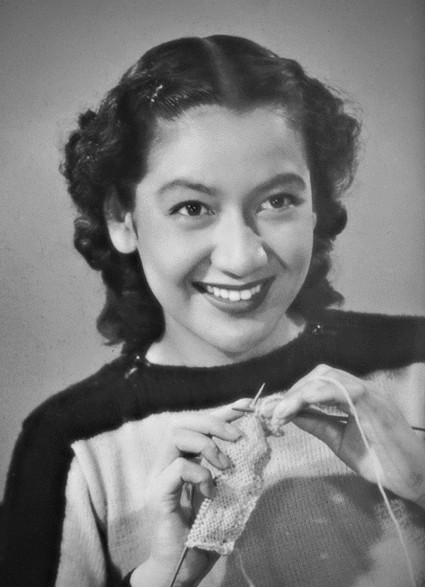
In Late Autumn, in 1960, I had become the mother — a widow trying to marry off her daughter. Eleven years earlier, in Late Spring, I was the daughter who refused to leave her father. Ozu had turned the situation around as one turns an hourglass, and I now stood on the other side of time. There was a melancholy I understood in my own flesh: seeing the ages pass, offering others' happiness at the cost of one's solitude. Marriage, in these films, is never a celebration; it is the moment when one family dissolves so that another may be born. I played both roles with the feeling of having aged an entire lifetime in a single decade.
Ozu had turned the situation around like an hourglass; I stood on the other side of time.
—Why did you leave cinema in 1963, at the height of your fame?
I never gave an explanation, and I think that was my only true freedom. In 1963, at forty-two, I retired to Kamakura, in a wooden house surrounded by gardens, and closed the door. I had been looked at so much that I had ended up thirsting to be seen by no one. The public wanted to keep the luminous face of Noriko from me; I did not want to spoil it for them by aging before their eyes. So I left while the smile still held. Some saw a mystery; I saw only a way of giving back to my silence what cinema had taken from my life.
I left while the smile still held.
—What did you find in this long silence of Kamakura?
I found the temples, the gardens, the sound of rain on the roofs, and the rare luxury of living without being an image. For more than fifty years, I gave no interviews, no photographs, no appearances — not out of disdain, but because I had understood that my characters spoke better than I. When Tokyo Story became, they say, one of the greatest films in the world, I attended no ceremony: what would I have gone to do there but disturb the memory? I let Noriko smile in my place. An actress who falls silent ends up resembling her best roles — and there is nothing more peaceful than letting oneself be mistaken for them.
An actress who falls silent ends up resembling her best roles.
This imaginary interview was generated by artificial intelligence from sources documented in Setsuko Hara's profile. It dramatises what the figure might have said based on what we know about them, but does not constitute attested historical testimony. For primary sources and factual documentation, refer to the full profile.