Imaginary interview with Shango
by Charactorium · Shango · Mythology · Spirituality · 5 min read
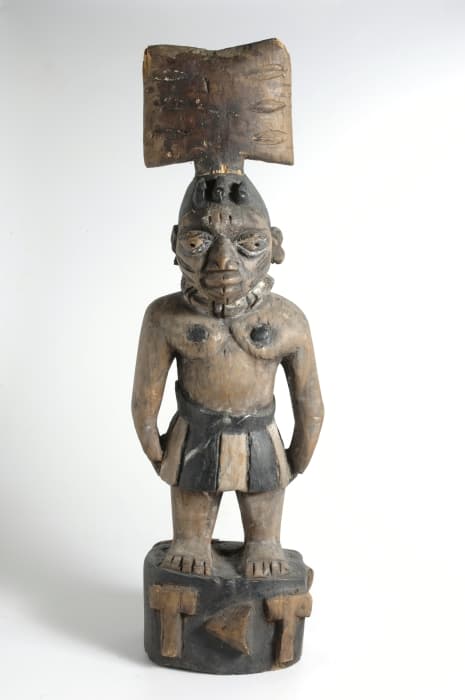
The storm roars atop thunderclouds, somewhere above Oyo. In his celestial palace of Orun, dressed in red and white, the orisha of thunder sets down his double axe for a moment to receive a voice from the earth. Around him roll the bata drums, and every flash of lightning seems to punctuate his words.
—Before you ruled the sky, it is said you were a man, a king among men. How did that happen?
I bore the title of Alaafin, master of the palace, on the throne of Oyo. I was a king feared as much as loved, for from my mouth could spring fire and lightning. My subjects trembled when I spoke, and such power a mortal cannot carry long without being consumed. The itan, those stories kept by the priests, say I did not die as ordinary men die. I ascended. The earth gave me back to the sky, and the storms that roll over the savanna are now my voice remaining among you.
Such power a mortal cannot carry long without being consumed.
—A cry always returns in the songs addressed to you: Oba Koso. What does it tell?
Oba Koso: the king did not hang himself. That is the cry the faithful raise for me in the oriki, those praise poems that are both prayer and memory. Some have claimed that the king of Oyo took his own life, hanging from a tree, defeated by his own hubris. My priests answer: no. The king did not fall, he ascended to heaven in thunder and lightning. That is the whole difference between a broken man and an orisha. Every time an onisango recites this chant, he refuses the version of defeat and proclaims that of ascent.
The king did not hang himself: he ascended to heaven in thunder and lightning.
—Your double-headed axe strikes the imagination. What does this weapon mean in your hands?
It is called oshe, and it cuts on both sides — that is its lesson. My justice knows no side: it can turn against the aggressor as well as against the one who thought himself victim, if lies dwell in his heart. Men imagine the judge always protects the plaintiff. I strike the liar, whoever he is. Look on my altars: the double blade is always there, standing near the stones, for it reminds that lightning falls straight and without negotiation. A single edge would be the justice of men. Two edges, that is mine.
A single edge would be the justice of men. Two edges, that is mine.
—After storms, your faithful gather stones from the earth that they attribute to you. What are these objects?
They are my projectiles. After the storm has plowed the sky, men find polished stone axes in the ground, smooth and ancient, and they know I have thrown them. They call them thunderstones, gather them with awe, and place them on my altars, in the wooden mortar called ère. The corpus of Ifá says it clearly: I punish liars and the unjust with lightning, and only the honest man can hope for my protection when the sky opens. These stones are not pebbles: they are the traces of my passage and the reminder that I aim true.
These stones are not pebbles: they are the traces of my passage.
—How do your faithful call you, so that you descend to them?
Through drums. Three stretched skins, three voices: iya the mother, itotele and okonkolo, which are called the bata. Their rhythm is not music for entertainment; it is a coded language that rises to Orun and summons me to come. When the sun sets, hands strike, songs rise, and one of the initiates feels his head empty: then I enter him, I mount his body as one mounts a horse, and I dance among the living. Red and white swirl, palm wine flows on the altar, and for a moment heaven and earth become one drum.
I enter him, I mount his body as one mounts a horse.
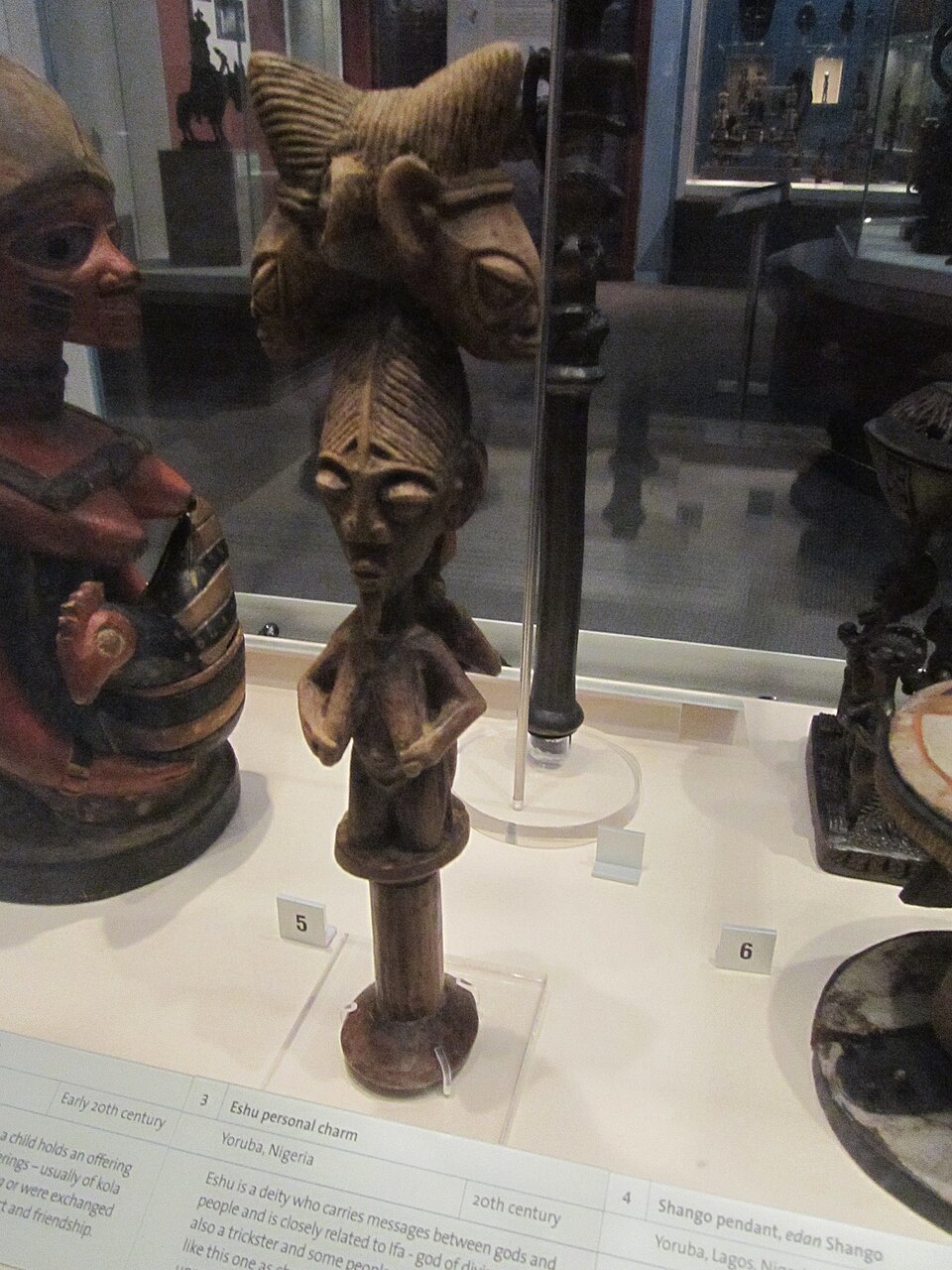
—Red and white appear everywhere around you. Why these two colors?
Red is fire, virile power, the anger that burns. White is the purity of justice, what remains clean when everything has blazed. My priests wear stripes of both colors, a necklace where they alternate, and the ram offered to me during the great festivals of Oyo carries in its horn the reminder of lightning. Pierre Verger, who spent his life between Africa and the Americas recording our rites, noted it well: each orisha has its colors, its animals, its taboos. Mine is recognized by red and white, by the ram, and by the thunder of drums that always accompanies my festivals.
Red is the fire that burns; white is what remains clean when everything has blazed.
—You are said to have three wives, each linked to a water, a wind. Who are they to you?
Three women, three forces of nature that no man could hold together. Oya first, mistress of winds and storms, who runs before me and opens the sky with her gusts before my lightning falls. Oshun next, the river, sweetness and love, she to whom one goes when war is silent. And Oba, linked to stagnant waters, the most discreet and the most wounded. This triangle is not a household affair: it is the very image of Yoruba nature, a balance of forces in permanent tension. Wind, river, and still water — that is what governs the one who governs the storm.
Three forces of nature that no man could hold together.
—You speak of a balance in tension. Does this idea say something broader about the world as you see it?
Everything, among us, is held tension. The world above, Orun, and the world below, Aiye, respond to each other constantly; one watches while the other stirs. My three wives are its living image: Oya's storm must meet Oshun's sweetness, else all is destruction. I myself, king become lightning, am this tension — brutality and justice in the same hand. The orishas are not idols lined up side by side: they are powers that restrain each other. A world where only my lightning ruled would be a burned world. That is why I am never alone.
The orishas are not idols lined up side by side: they are powers that restrain each other.
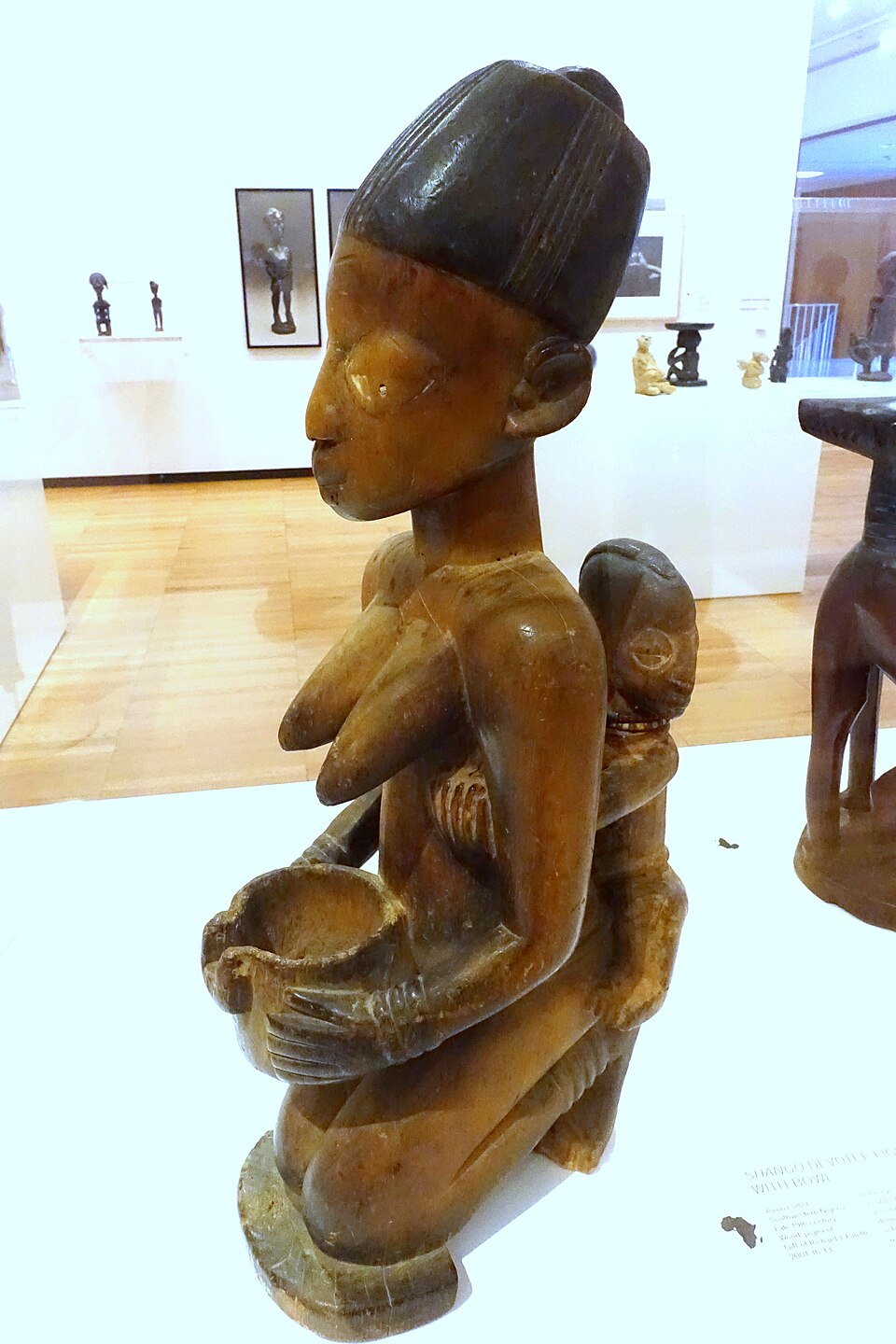
—One day, it is said, your cult left Africa. How did you cross the waters?
In the holds, with my people. Yoruba were torn by the thousands from this land, packed onto ships toward a world they did not know — the Portuguese called them Nagôs. But you do not forcibly embark a god: I left with them, hidden in their memory, in their songs, in the rhythm they kept deep in their bodies. In Salvador de Bahia, in Havana, on the land of Trinidad, my faithful rebuilt my altars far from the masters' eyes. What no chain could sink is the drum carried in the blood.
What no chain could sink is the drum carried in the blood.
—You say you traveled hidden. It is said you even changed your name on the other side of the ocean?
It was necessary. The masters forbade our gods and allowed only theirs, their saints painted on the walls. So my faithful placed a mask on my face: in Cuba, in Santería, I became Changó, and I was prayed to under the features of Saint Barbara, herself daughter of lightning and towers struck by heaven. In Brazil, in Candomblé, I was named Xangô behind the image of Saint Jerome. This is not betrayal, it is a survival trick — syncretism, scholars say. Under the foreign saint, my drum still beat, and red and white remained my colors.
They placed a mask on my face, but underneath my drum still beat.
—A man named Samuel Johnson wrote down your history long after. What do you think such a testimony changes?
Samuel Johnson was one of us, a Yoruba son who feared our itan would fade, so he took up the pen toward the end of his century. He wrote that the third king of Oyo was a man of great power and cruel temper, who spat fire and lightning, and that he was deified after his death to be worshiped as the god of thunder. This does not create me: I existed in the mouths of the babalawo long before ink. But writing is another form of drum, slower, more silent. It carries my lightning to ears my priests will never reach.
Writing is another form of drum, slower, more silent.
Read further
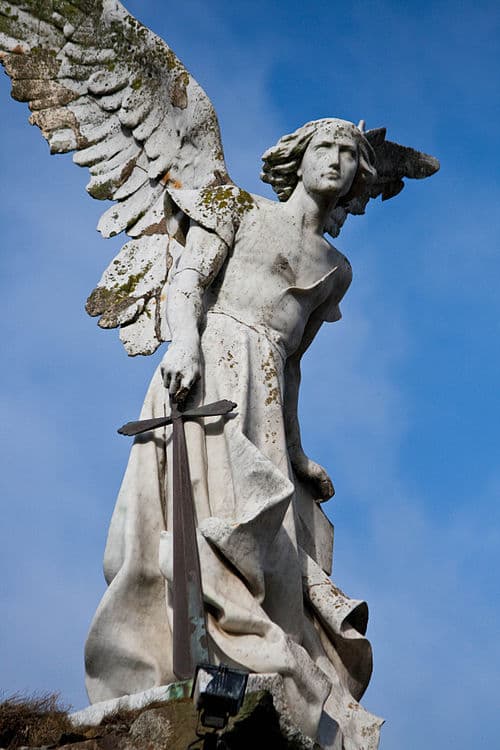
This imaginary interview was generated by artificial intelligence from sources documented in Shango's profile. It dramatises what the figure might have said based on what we know about them, but does not constitute attested historical testimony. For primary sources and factual documentation, refer to the full profile.