Imaginary interview with Sofia Kovalevskaya
by Charactorium · Sofia Kovalevskaya (1850 — 1891) · Sciences · 5 min read
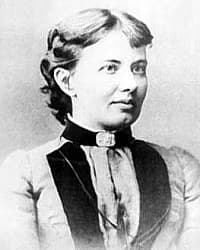
Stockholm, winter 1889. Snow falls on the roofs of the Royal University, and in a cluttered office where the stove purrs, a thirty-nine-year-old woman sets down her pen. Sofia Kovalevskaya, the first female professor of mathematics in Europe, agrees to look back on the improbable path that led her from the walls of her childhood room to the Bordin Prize.
—They say mathematics entered your life before you could even name them. How did that happen?
It was at Palibino, the estate of my childhood. Someone lacked wallpaper for a room and covered the walls with leaves from a course on differential calculus by Professor Ostrogradsky, pages riddled with symbols I did not understand. I would stand for hours before those walls, tracing with my eyes those mysterious signs, those derivatives and integrals that recurred like incantations. My father liked to say he never gave me a real education, but he amused himself by inventing problems to distract me. I believe the fascination was born there, on those walls: I learned the music of a language before knowing its grammar. When, years later, a professor explained limits to me, I felt I was meeting old acquaintances.
I learned the music of a language before knowing its grammar.
—Would you say that this childhood shaped your way of thinking about numbers?
Undoubtedly. I have always approached mathematics not as an arid mechanism, but as a science of imagination — the most poetic of all. People think you need a dry soul to calculate; it is the opposite. You must see figures where others see only numbers, guess the shape of a solution before proving it. I owe that intuition to those long contemplations before Ostrogradsky's formulas, where I had to reconstruct the missing meaning between two torn pages. Thus one learns to fill gaps, to sense continuity. Later, when faced with partial differential equations, I rediscovered the same pleasure: that of a child seeking the hidden pattern in the wallpaper.
—To study, you had to resort to a singular stratagem. What could you do in Russia as a young woman eager for knowledge?
In 1868, a Russian woman could not cross the border alone or enroll in a foreign university without the permission of a father or husband. The doors were locked to me by the bolt of my sex. So I entered into what was called a marriage of convenience with Vladimir Kovalevsky, a paleontologist who shared our ideas of emancipation. A union of reason, a passport disguised as a contract. It may seem cold, but it was an act of freedom: several of us young women used this subterfuge to reach Europe. Thanks to it, I was able to leave for Heidelberg, then for Berlin. Sometimes I laughed thinking that the law, made to imprison us, had given me the key to escape.
The law, made to imprison us, had given me the key to escape.
—Once in Germany, your status remained irregular. How did you attend classes?
At Berlin, the university refused to admit women to its lecture halls. I was a foreign boarder, tolerated but never enrolled, a shadow in the margins of official knowledge. No professor was obliged to teach me; I depended entirely on the goodwill of a few men free enough to disregard custom. That builds character, believe me. When nothing is granted to you, you learn to deserve everything twice over. I worked harder than my male classmates, not out of virtue, but out of necessity: the slightest weakness would have confirmed all prejudices. I have always been convinced that a woman can accomplish whatever a man can — this certainty, born in my childhood, sustained me all my life.
When nothing is granted to you, you learn to deserve everything twice over.
—In Berlin, you met Karl Weierstrass. Do you remember your first trial with him?
Karl Weierstrass was the greatest analyst of his time, and very skeptical about instructing a young Russian woman. To get rid of me politely, he gave me a series of problems he reserved for his most advanced students — questions he thought, I believe, beyond my reach. I returned them the next day, solved, and in an, reportedly, original way. His face changed. From that day on, he became my teacher for four years, teaching me privately since the university remained closed to me. Our correspondence never ceased; his letters gave me, in my hours of doubt, fresh courage to continue my work. I owe him my rigor — and he said he owed me some of his finest joys as a teacher.
I returned them the next day, solved — his face changed.
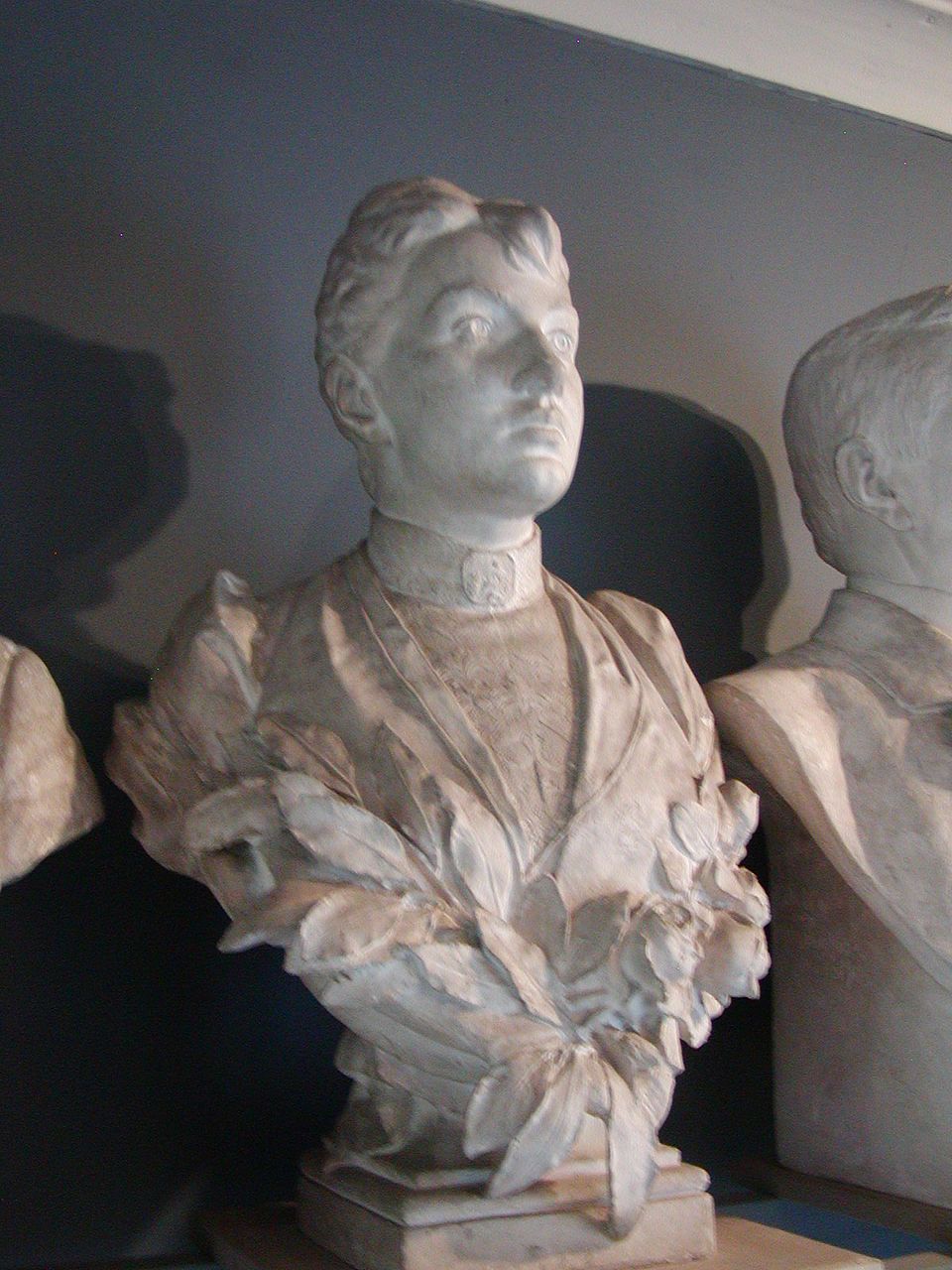
—What did this relationship mean to you, beyond science?
It was far more than an academic companionship. Weierstrass had no close family, and I think I became, at times, like an intellectual daughter to him. Our letters — there were so many between 1871 and the end — mixed the most austere proofs with confidences about our respective solitudes. When discouragement overtook me, when I was denied a position because I was a woman, his words lifted me up. He believed in me with an obstinacy I dared not have for myself. In an academic world that treated me as an intruder, he was the first to treat me as an equal. Much is said about my triumphs; it is forgotten that none would have existed without this patient friendship, forged through theorems and ink.
—In 1888, you won the Bordin Prize from the Paris Academy of Sciences. What was your award-winning memoir about?
My memoir, Theory of the Rotation of a Solid Body around a Fixed Point, tackled a problem said to be locked since Euler and Lagrange. How to describe the motion of a heavy top, a body that rotates and tilts about a point? Only two special cases had been solved; I discovered a third, long considered unsolvable, by using functions that my years with Weierstrass had taught me. The jury examined the copies anonymously, blindly, without knowing the hand that wrote them. That impartiality always seemed to me the most just of justices: only the mathematics was judged, not the sex of its author.
Only the mathematics was judged, not the sex of its author.
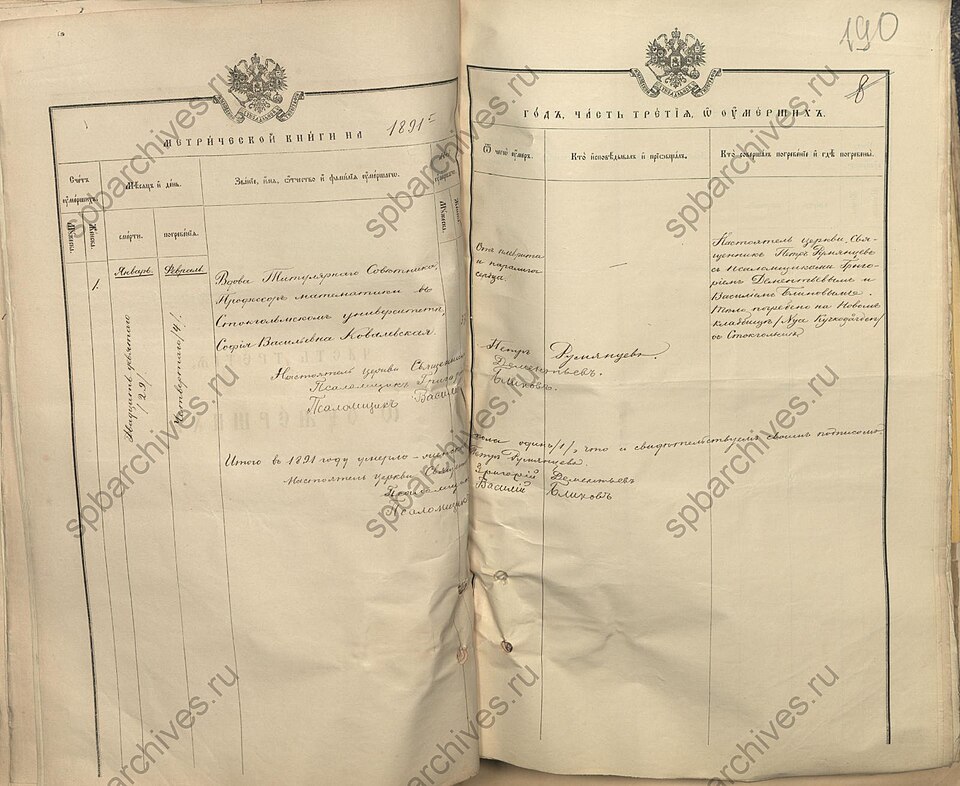
—They say the jury made an exceptional gesture toward you. What happened?
The ordinary award for the Bordin Prize was three thousand francs. But the Paris Academy of Sciences, judging my work to be of a quality exceeding expectations, decided to raise the sum to five thousand francs. I will not hide that this generosity touched me even more than the money. It was the first time a woman received this distinction, and the increase said, without proclaiming it, that something more than a salon curiosity was recognized. That evening, I thought of the young girl at Palibino deciphering formulas on her walls. The path, from that childhood room to the Paris lecture hall, suddenly seemed both immense and perfectly logical, like a beautiful proof.
—You are known as a mathematician, but you also wield a literary pen. How do these two vocations coexist within you?
Many are surprised that one can love equations and novels with the same passion. For me, it is all one: the mathematician, like the poet, must see what others do not see, grasp the hidden harmony of things. I have written short stories, a play, and my Childhood Memories, where Palibino and the walls of my youth come to life. With my pen and inkwell, I move seamlessly from a theorem to a narrative. Dostoevsky, whom I met as a young girl, claimed I could become as great a novelist as a scholar — flattery perhaps, but it made me dream. I never believed I had to choose between the spirit of rigor and the spirit of subtlety.
The mathematician, like the poet, must see what others do not see.
—If you could imagine the trace you will leave, what would you wish to convey to women who, after you, will want to enter science?
I do not much like prophesying, but if I am to be read in a century, I would want this remembered: the doors closed to me were locked by no law of nature, only by men's conventions. I needed a marriage of convenience to cross a border, crawl as a foreign boarder in the margins of Berlin, earn every recognition twice over. May those who come no longer have to scheme! I have always carried the conviction that a woman can do everything a man does; it only remains for the world to take time to agree. My blackboard in Stockholm, where I teach today before students, is my finest answer to the skeptics.
The doors closed to me were locked by no law of nature.
This imaginary interview was generated by artificial intelligence from sources documented in Sofia Kovalevskaya's profile. It dramatises what the figure might have said based on what we know about them, but does not constitute attested historical testimony. For primary sources and factual documentation, refer to the full profile.