Imaginary dialogue between Karl Weierstrass and Sofia Kovalevskaya
by Charactorium · Sofia Kovalevskaya (1850 — 1891) · Sciences · 4 min read
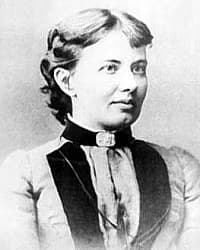
It is in a cozy drawing room in Berlin, on a winter afternoon in 1888, that Karl Weierstrass meets his former student. Snow falls outside the windows, a samovar steams on the table, and papers covered with equations pile up near the lamp. They have known each other for almost twenty years, since those private lessons he gave her when no university would have her. The old master, moved by the recent triumph of the Bordin Prize, has come to listen to the one he calls his most gifted.
—Sofia, before I even taught you, it is said that you read mathematics on the walls of your childhood room. Is that true?
It is absolutely true, and you, who shaped my rigor, will smile at it. My parents could not afford to wallpaper the entire house, and they covered the walls of my room with sheets from a course in differential calculus by Ostrogradsky. I was maybe eleven years old. I spent hours staring at those mysterious signs, those d's and integrals, without understanding a word, but guessing that they hid a secret order. Much later, when my first real teacher explained the notation, I had the strange feeling of meeting old friends. My entire childhood was a deciphering before the letter.
I stared at those signs without understanding a word, but guessing that they hid a secret order.
—To come study with me in Germany, you had to be cunning. Can you tell me at what price you crossed the border?
The price was a marriage, Karl. In Russia, a woman alone could not obtain a passport to study abroad; she needed the permission of a father or a husband. So in 1868, I contracted a white marriage with Vladimir Kovalevsky, a young paleontologist. It was an arrangement between free spirits, a legal stratagem more than a marriage of the heart. It allowed me to leave, first for Heidelberg, then for Berlin to join you. Think of the absurdity: it took the shadow of a husband for a woman to have the right to learn. I crossed that border disguised as a wife, but it was the mathematician who wanted to pass.
It took the shadow of a husband for a woman to have the right to learn.
—Do you remember the day I received you in Berlin? I gave you problems I thought insurmountable. What did you think when you saw them?
I remember it as if it were yesterday. The University of Berlin refused to admit me, and yet you agreed to examine me privately, perhaps reluctantly. You handed me that series of problems that you reserved for your most advanced students, convinced you were testing a presumptuous beginner. I took them, worked all night, and brought them back to you solved the next day. I saw your face change. You never doubted me again, and you gave me four years of your most precious teaching. What I am, I owe largely to you, my master.
I took them, worked all night, and brought them back to you solved.
—Our letters have spanned all these years. What did this correspondence mean to you in moments when discouragement overtook you?
Your letters were my lifeline, Karl. When I returned to Russia without a position, when doubt crushed me and I thought I had abandoned mathematics forever, it was your encouragement that reminded me of my vocation. You wrote to me as a mathematician but also as a friend, and I kept every page of yours. We exchanged proofs as others exchange family news. Without this faithful correspondence, I believe I would have been lost in the barren years that followed my thesis. You were the thread that connected me to the best in myself.
We exchanged proofs as others exchange family news.
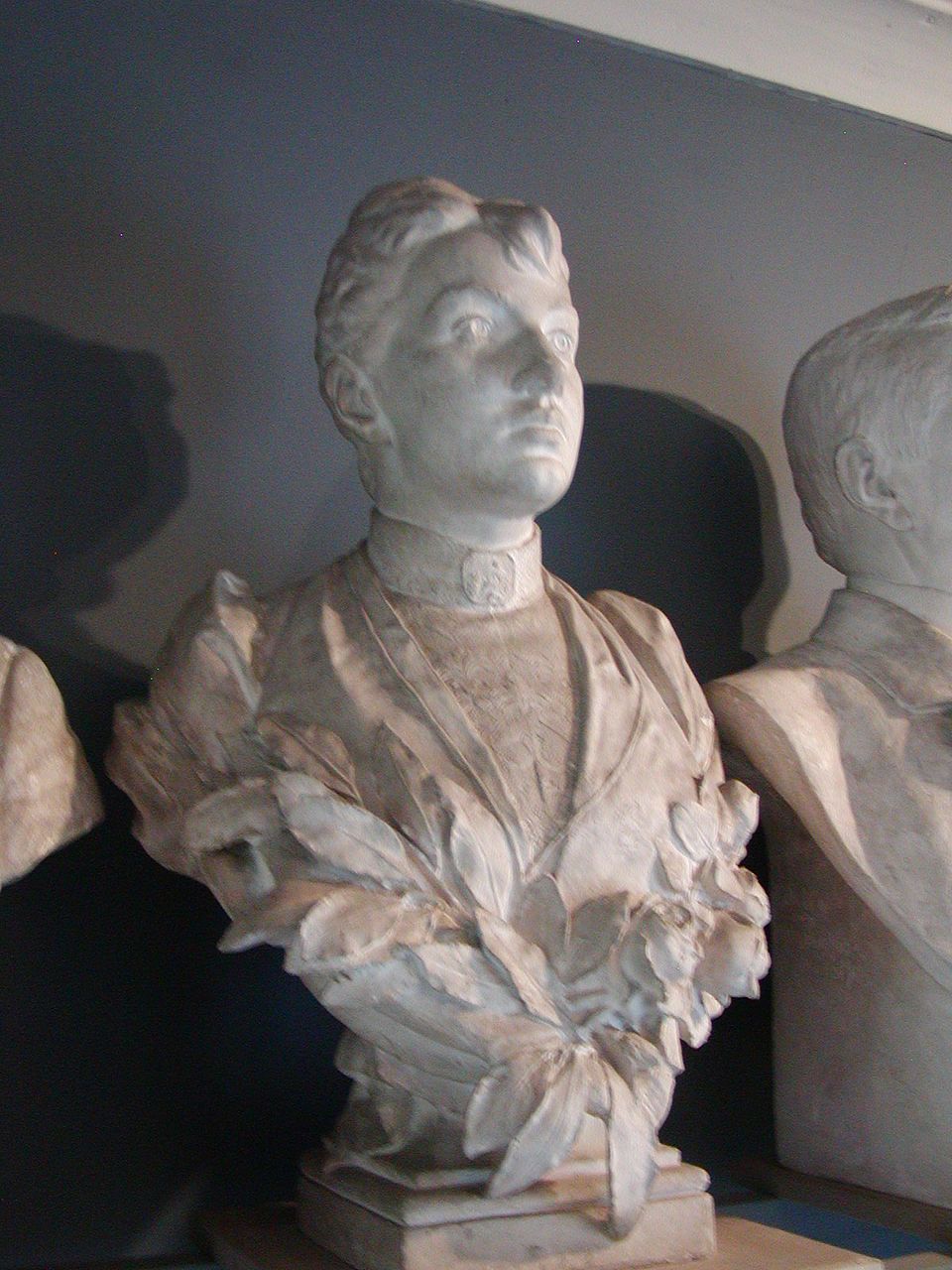
—This year, your memoir on the rotation of a solid body won the Bordin Prize. Tell me what you sought to solve.
I wanted to tackle a problem that Euler and Lagrange had left incomplete: the rotation of a heavy solid body around a fixed point. Only two integrable cases were known; I discovered a third, which was thought impossible. I presented my work to the Académie des Sciences de Paris under a motto, without name, so that only merit would be judged. And you know the rest: the jury found the memoir so remarkable that they raised the prize from three thousand to five thousand francs. You, who taught me analysis, understand my joy — for the first time, a woman received this distinction.
I presented my work under a motto, without name, so that only merit would be judged.
—Now you are a professor at Stockholm. You who were driven out of lecture halls, what do you feel teaching at last?
A feeling of quiet revenge, Karl. For years, I was only a foreign boarder, tolerated in the corridors but deprived of any official status. And now at the University of Stockholm, thanks to the support of Mittag-Leffler, I have become the first woman professor of mathematics at a modern European university. When I step up to the lectern, chalk in hand, before attentive students, I think of the girl who deciphered the walls of her room. The blackboard, which was forbidden to me for so long, is now my kingdom. Nothing makes me happier than to pass on what you passed on to me.
The blackboard, which was forbidden to me for so long, is now my kingdom.
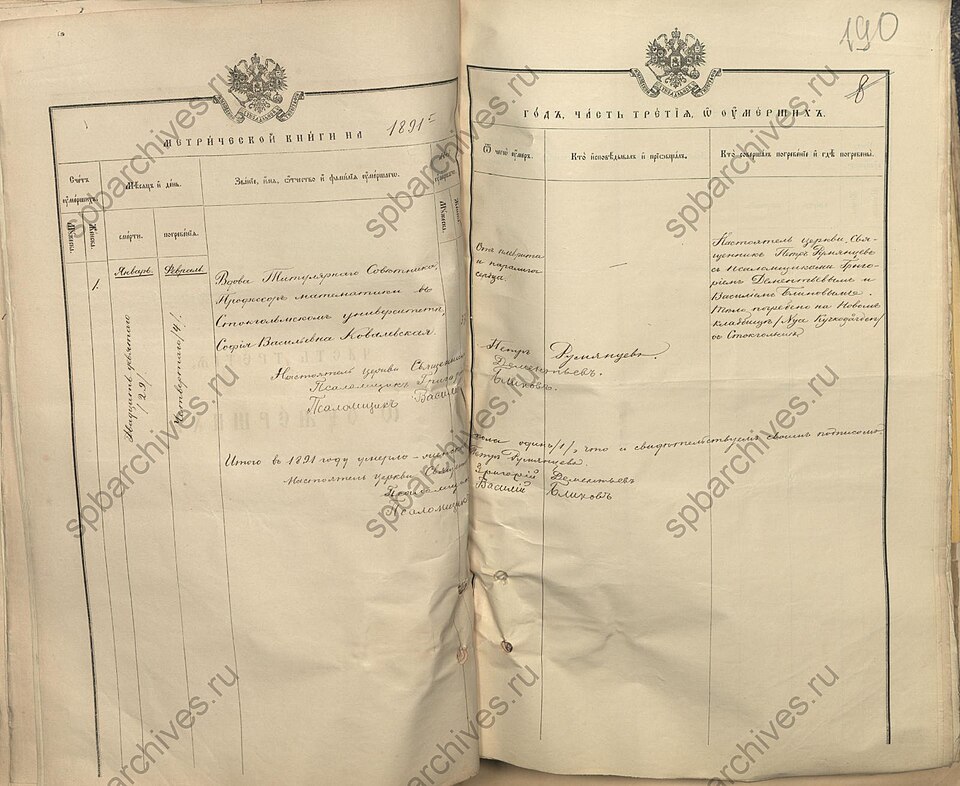
—I am told, Sofia, that you wield not only the mathematician's pen but also the writer's. Does that distance you from numbers?
On the contrary, my friend, both streams spring from the same rock. I write short stories, a play, and I am drafting my Souvenirs d'enfance. Many are surprised, as if analysis and poetry excluded each other. But the mathematician who does not have the soul of a poet will never be a complete mathematician: one must imagine before proving. At night, when I set aside partial differential equations, I tell of the Russia of my childhood, the estates, the governesses, the awakening of a little girl to the immense. You would see that my literary pen pursues the same quest for truth as my scientific pen.
The mathematician who does not have the soul of a poet will never be a complete mathematician.
—You met Dostoevsky in your youth, it is said. What mark did that encounter leave on you?
I met him as a teenager in Saint Petersburg, and it was a revelation. He frequented our home; I listened to this man speak of the human soul with burning intensity. He claimed that I could have become as great a novelist as I am in mathematics — flattery from a great mind, no doubt, but it marked me. From him, I understood that science and letters were not two enemy worlds, but two ways of grasping reality. My century loves this ideal: the woman of science AND letters. I modestly try to embody this romantic dream without betraying either of my two passions.
Science and letters are not two enemy worlds, but two ways of grasping reality.
—Thinking back to that child of the papered walls, would you say your vocation was written in advance, or did you wrest it through struggle?
Both, Karl, for talent alone is never enough. Yes, something in me was disposed to numbers from childhood — that fascination with the formulas on the wall, that vertigo before the infinite that my uncle evoked. But between that seed and the mathematician of today, there have been twenty years of slammed doors, closed universities, a marriage of convenience, and discouragements. You who saw me doubt know how much persistence was needed. I have always been convinced that a woman can accomplish everything a man accomplishes, and this conviction, born in my childhood, sustained me all my life. Vocation was a gift; the craft, a conquest.
Vocation was a gift; the craft, a conquest.
This imaginary interview was generated by artificial intelligence from sources documented in Sofia Kovalevskaya's profile. It dramatises what the figure might have said based on what we know about them, but does not constitute attested historical testimony. For primary sources and factual documentation, refer to the full profile.