Kids interview Sofia Kovalevskaya
by Charactorium · Sofia Kovalevskaya (1850 — 1891) · Sciences · 5 min read
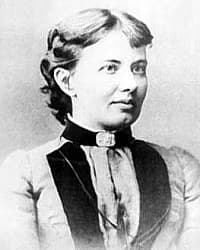
That morning, two young visitors from a class trip push open the door of an office full of chalk and notebooks. A sharp-eyed lady waits for them, seated near a blackboard. Her name is Sofia Kovalevskaya, and she loves being asked questions.
—Is it true that you learned math on the walls of your room?
You know, my child, it's absolutely true. When I was little, in Russia, my family lacked wallpaper for a room. So my uncle covered one wall of my room with old pages from a math course by Professor Ostrogradsky. Imagine entire walls covered with strange signs, numbers, letters, formulas. I would stare at them for hours. I understood nothing, but those drawings fascinated me like a secret. Later, when a real teacher explained those symbols to me, I felt like I was meeting old friends. My wall had prepared me without my knowing.
My walls taught me math before I could read numbers.
—As a child, did you prefer to play or to calculate?
Oh, I loved both! But very early, calculating became a game for me. My father invented little number riddles to amuse me, and I laughed while looking for the answer. For me, a difficult problem was like a closed door: I had a burning desire to find the key. Imagine a locked chest in the attic; you turn, you try, and suddenly, click, it opens. That's exactly what I felt facing an equation, those calculations that show how things change. Many people found it boring. For me, it made me happy, like other children with a beautiful tale.
—Why did you have to get married just to go study elsewhere?
It's a rather sad story, my child. In my time, in Russia, a young girl alone could not go study abroad. She needed permission from a husband or father. Russian universities closed their doors to us. So I made a deal: I married a young scholar, Vladimir Kovalevsky, in 1868, just to get a passport. They called it a white marriage, a marriage on paper, without love at first. Does that surprise you? Back then, it was almost the only way for a girl like me to run toward books. I crossed the border like an escape.
I had to marry to have the right to learn.
—Were you scared leaving alone for Germany?
A little, yes. Imagine an eighteen-year-old girl climbing into a stagecoach, then a steam train spitting smoke, toward a country where she knew no one. I left for Heidelberg, then Berlin. My heart was pounding. But above all, I felt immense joy: finally, I could really study. In Berlin, the university did not admit women to its lecture halls. I was only a foreign boarder, allowed to attend a few courses on the sidelines, without real status. Then a great professor agreed to give me private lessons at his home. Without him, I would have been left at the door.
—Who was that professor, and how did he agree to take you?
His name was Karl Weierstrass, a very great mathematician in Berlin. At first, he did not believe I was capable. To get rid of me politely, he gave me a series of very, very difficult problems, the kind reserved for established scholars. He thought I would give up. But the next day, I came back with my solutions, and even ideas he hadn't expected. Imagine his face! He was dumbfounded. From that day on, he took me as his student for four years. Later, he said I was the most gifted student he ever had. A challenge had sparked it all.
He gave me problems to make me leave; I came back with the answers.
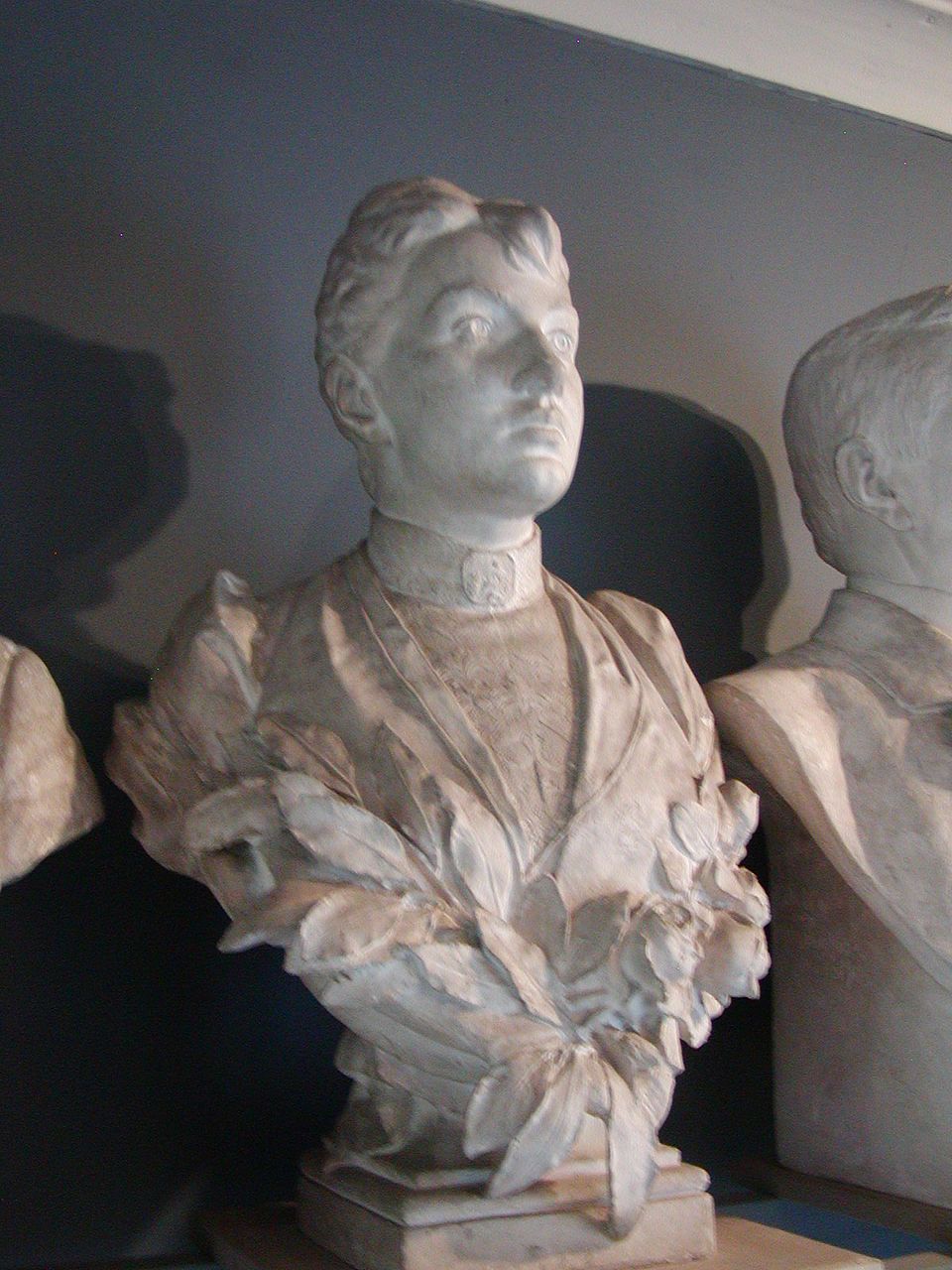
—Did you two write to each other often after your studies?
Oh yes, for years! We exchanged letters, those sheets written with a quill dipped in ink, then entrusted to the horse-drawn post. I told him about my research, my doubts, sometimes my sorrows. His words gave me courage when I wanted to give up everything. You know, doing mathematics can sometimes feel very lonely, like a walker lost in the fog. A letter from a kind mentor was a light in the distance. He encouraged me to continue my work. These letters count among my most precious treasures: they tell how a beginner became a mathematician.
—What is your discovery that you were most proud of?
My work on the rotation of a solid body around a fixed point, in 1888. It sounds complicated, so imagine a simple spinning top on a table. How to describe exactly its motion, how it tilts, wobbles, slows down? For a very long time, no one had been able to calculate it in a difficult case. With my equations, I found a solution that others had been seeking for decades. It's mechanics, the science that studies how objects move. I filled entire notebooks with calculations to achieve it. When you finally understand a spinning top, you understand a little better how the world turns.
Understanding a spinning top is already understanding a bit of the universe.
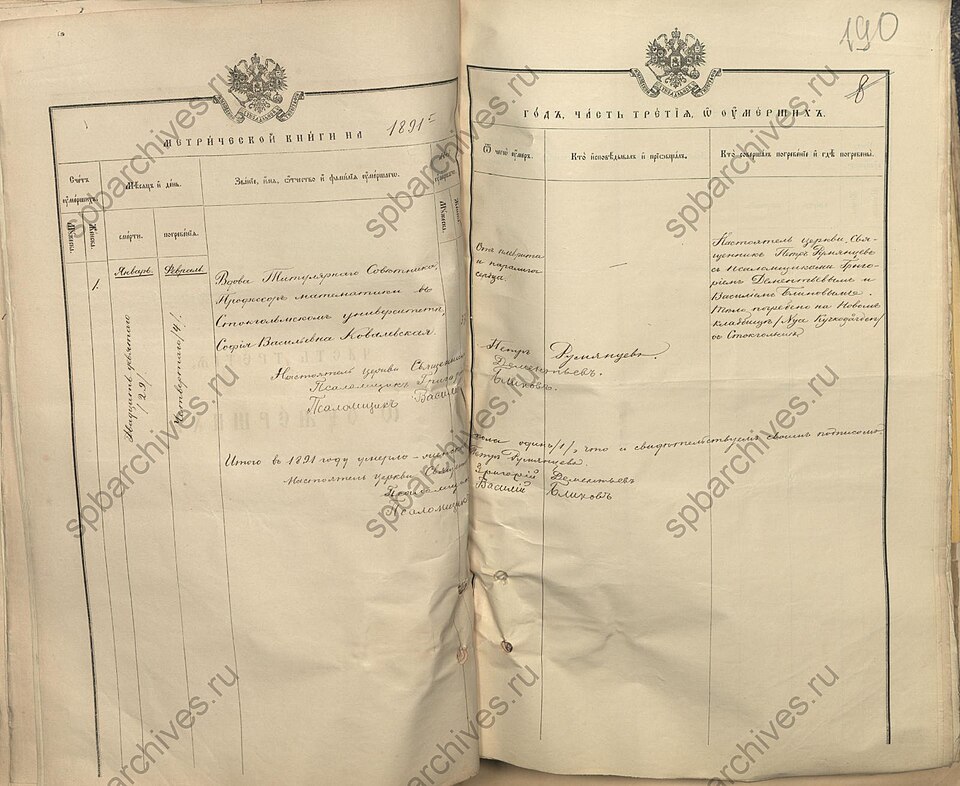
—Is it true that they gave you more money than planned for a prize?
It's true, and it touched me deeply. That work on the spinning top, I sent it to the Academy of Sciences of Paris for a competition, the Bordin Prize. The judges did not know who had written the memoir; the names were hidden. When they read mine, they found it so beautiful that they decided to increase the reward: from three thousand francs, they raised it to five thousand. And then they discovered that the author was a woman. It was the first time a woman received this prize. Imagine my joy: I had been judged on my work alone, without knowing I was a girl.
—They say you also wrote stories, not just math?
Yes, my child, I had two loves! In the morning, I calculated; in the evening, sometimes, I wrote stories. I composed short stories, a play, and my childhood memories, where I tell about those famous walls covered in formulas. As a young girl, I had met the great writer Dostoevsky. He thought I could become as good a novelist as a mathematician! For me, numbers and words did not compete. A beautiful proof is like a beautiful poem: it requires rigor, but also imagination. People often think you have to choose. I never wanted to.
A beautiful proof is like a poem: rigor and imagination.
—If girls want to do math today, what would you tell them?
I would tell them: don't listen to those who claim a girl cannot. All my life, I was convinced that a woman can accomplish what a man accomplishes. Doors were closed to me, in Russia, in Berlin, everywhere. I had to scheme, travel, fight, until I became a professor at Stockholm, the first woman to teach mathematics at a European university. Imagine a room full of students who, for the first time, listen to a woman explain numbers to them. That day, I thought of the little girl in front of her walls. So, my child, if a door is closed, look for a window. But never give up.
If a door is closed, look for a window, but never give up.
This imaginary interview was generated by artificial intelligence from sources documented in Sofia Kovalevskaya's profile. It dramatises what the figure might have said based on what we know about them, but does not constitute attested historical testimony. For primary sources and factual documentation, refer to the full profile.