Imaginary interview with Srinivasa Ramanujan
by Charactorium · Srinivasa Ramanujan (1887 — 1920) · Sciences · 6 min read
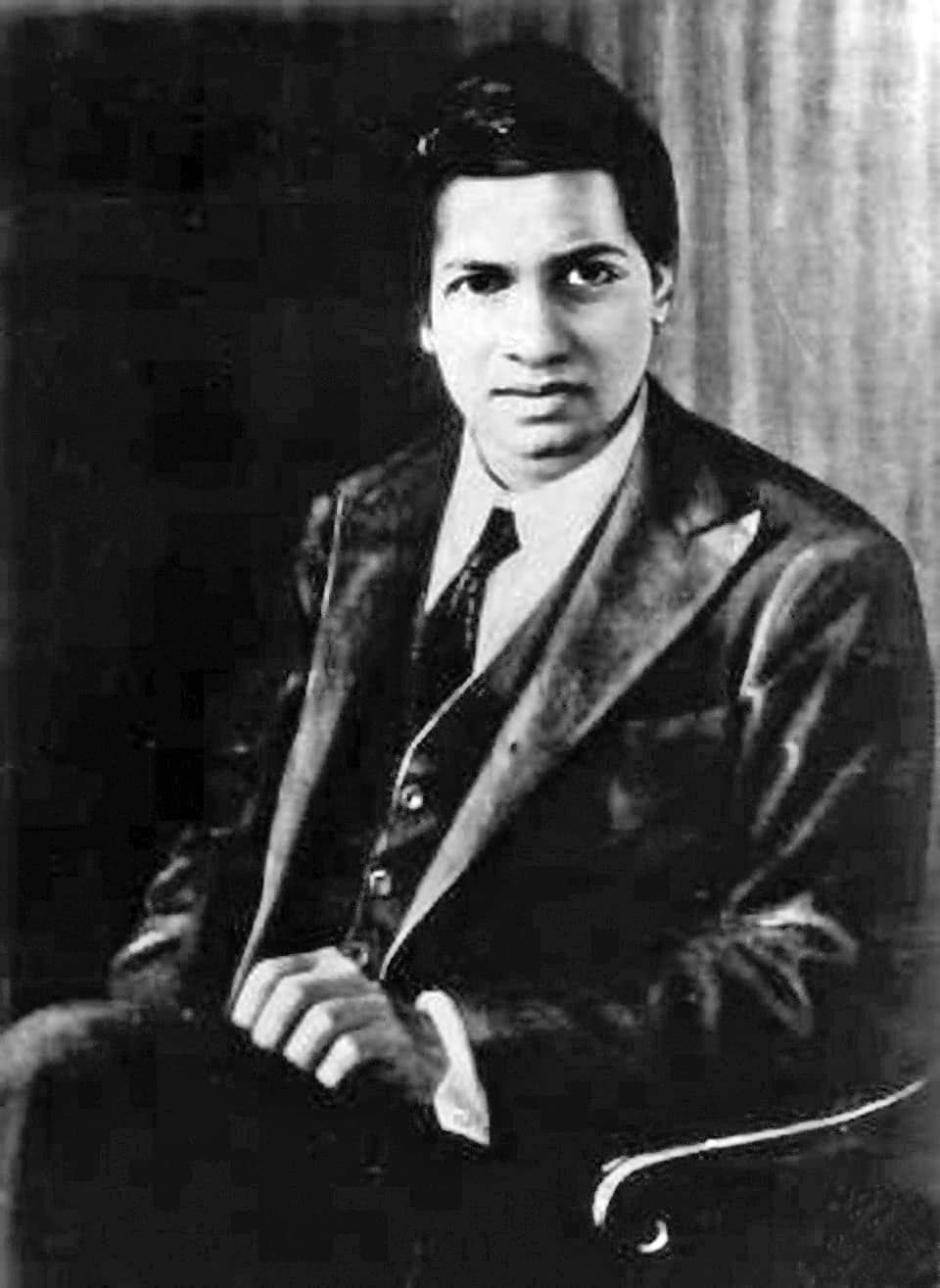
Cambridge, a gray winter afternoon in 1918. In a room at Trinity College where the cold seeps in despite the fire, a slight man, wrapped in a shawl over his English jacket, pushes aside a notebook covered in infinite series. Srinivasa Ramanujan agrees to speak, in a low voice, about the long road that led him from Kumbakonam to this table in England.
—How did you decide to write to a mathematician you had never met, thousands of miles away?
I had no title, no degree, no one around me who understood what I was seeking. In Madras, my pages remained pages; people politely congratulated me and moved on. So, at the beginning of 1913, I took up my pen and set down for Mr. Hardy some hundred and twenty formulas that I had drawn from my notebooks — on prime numbers, on infinite series. I was not asking for money; I was asking to be read. Mailing that letter was the boldest act of my life: I entrusted my entire work to a stranger who could have thrown it in the wastebasket. I only knew that in Cambridge there might live the one reader capable of seeing whether I was mistaken or not.
I was not asking for money; I was asking to be read.
—Do you remember the moment when Hardy's reply reached you?
His letter said that he had been extremely interested in my theorems, and that he begged me to send him the proofs of a few of them. That word — proofs — both filled me with joy and troubled me, because many of my results had come to me without formal proof, like glimpses of truth. Hardy, on the other hand, wanted paths, and I often had only destinations. But the essential thing was there: a great European mathematician did not take me for a dreamer. He wrote that I must come. Leaving my mother, my country, my caste, crossing the sea — for an orthodox Brahmin, it was almost a transgression. Yet I understood that this letter reopened all the doors that colonial India had kept shut before a clerk without a degree.
I often had only destinations, and Hardy wanted paths.
—Before this correspondence, how did you work, alone, without a library or a teacher?
In Kumbakonam, I had only a slate, chalk, and when paper became too expensive, I erased with my elbow. My entire days were spent filling notebooks with formulas that no one asked for and no one read. I worked best in the morning, after my ablutions, when the mind is washed clean like the body. I did not have the great European treatises; I had a few textbooks and endless obstinacy. Many theorems I thought were my own had, I later learned, already been discovered in the West — but I had found them on my own, by other paths. Those notebooks remained my only witnesses, and I am told today that they will keep mathematicians busy long after I am gone.
When paper became too expensive, I erased with my elbow.
—Where do these formulas come from, which you sometimes set down without proof, as if fallen from the sky?
I wish I could explain it properly, and I cannot. An identity appears to me, whole, correct — and only afterward do I seek to understand why it holds. To me, an equation is valuable only if it expresses something of the divine order; I feel that these truths exist before I write them down, and that I am merely copying them. Hardy, like a good Englishman, demanded proof, the chain of reasoning, and he was right: without it, mathematical intuition is only a gamble. But intuition comes first, like a thing seen. My role has been to fill my notebooks with these things seen, betting that they were true — and later it was discovered that they almost always were.
An identity appears to me, whole, correct; I merely copy it.
—It is said that a simple taxi number inspired a remark that has become famous. What happened that day?
I was bedridden, ill, and Hardy had come to visit me. To start a conversation, he told me that he had arrived in a taxi bearing the number 1729, and that this number seemed rather dull to him, almost ominous. I replied at once that no: it is, on the contrary, the smallest number that can be written as the sum of two cubes in two different ways. It was not a calculation; it was an old familiarity — I knew that number the way one knows a neighbor's face. Hardy smiled at that, and they now call this curiosity the 'Hardy-Ramanujan number.' To me, there is no dull number: each has its own character, its secret friendships with others.
There is no dull number: each has its secret friendships with others.
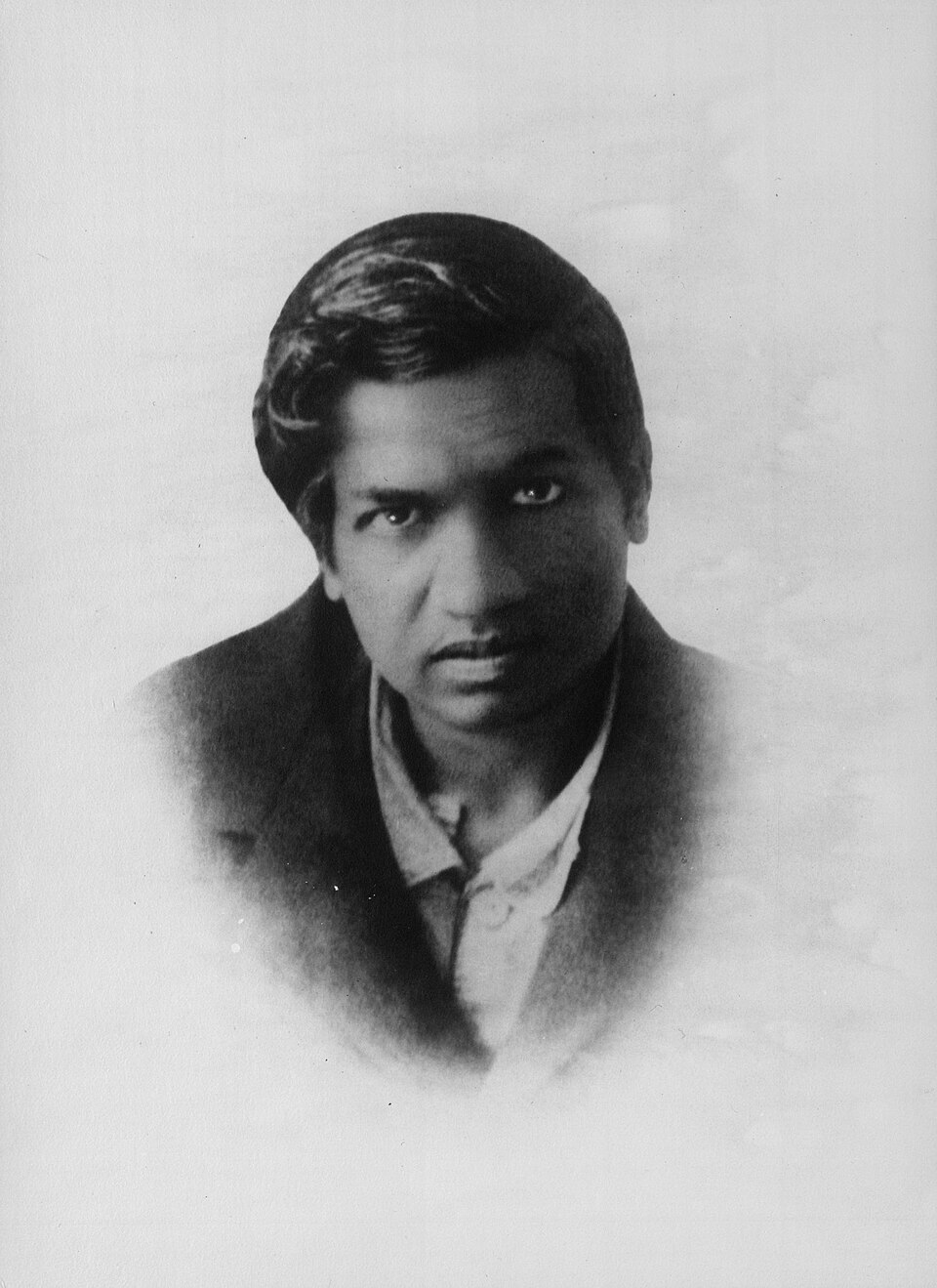
—Many describe your memory for numbers as prodigious. How would you describe your relationship with them?
Others see digits; I see persons, almost. Since childhood in Kumbakonam, integers were my companions: I knew their divisors, their remainders, the ways they could or could not be decomposed. When someone throws a number at me, I do not perform a calculation; I recognize a figure I have met before. That is how 1729 jumped out at me. Perhaps it comes from my way of working alone, for years, with no other society than these integers; by spending so much time with them, you end up sensing their properties before proving them. Hardy said that my strength was this intimacy, and my weakness the lack of the great theorems learned in class. I think he was right on both counts.
Others see digits; I see persons, almost.
—How did a vegetarian Brahmin from southern India experience these Cambridge winters?
Badly, I must admit. I am an orthodox Brahmin and strictly vegetarian: no meat, no fish, and I insist on preparing my own meals to observe my rules. But wartime England rationed everything, vegetables were scarce, and I spent entire evenings boiling rice and lentils over a small fire in my room at Trinity College. Often I worked until exhaustion and forgot to eat. The cold pierced me, homesickness gnawed at me — I missed my mother, my language, the sun of Madras every moment. I honestly believe my health was broken less by mathematics than by that too-empty plate and that too-gray sky.
My health was broken less by mathematics than by that too-empty plate.
—Did you feel you had to disguise yourself to enter this English academic world?
A little, yes. At home I wear the dhoti, simple and light; here they made me put on the academic jacket and shirt, and I was even scolded for my bare feet in the icy corridors. I accepted these clothes as one accepts a costume in a play: they gave me a place among the gentlemen of Trinity College, but they never touched what I am inside. I kept my morning prayers, my diet, my Brahmin habits. My work is honored, I have been elected among the fellows of the Royal Society — an Indian without a degree admitted to that company, who would have believed it? And yet, under the English shirt, I remain the child of Kumbakonam who covered his slate with formulas.
Under the English shirt, I remain the child of Kumbakonam who covered his slate.
—Among all your work with Hardy, which matters most to you?
The partitions, without hesitation — the art of counting how many ways a number can be written as a sum of other numbers. It seems like child's play: four is three plus one, two plus two, and so on. But as the number grows, these ways multiply dizzyingly, and I saw a hidden order emerge. I found that these counts obey congruences, regularities that recur like tides: for example, some are always divisible by five, by seven, by eleven, according to fixed patterns. With Hardy we sought to predict their number by a formula. That in such an elementary domain such music lies hidden — that still moves me.
These regularities recur like tides.
—You often speak of modular functions as a barely explored territory. What do you see there?
They are functions endowed with a strange symmetry: you transform them, you turn them, and they return to themselves, like a face that would recognize itself in a thousand mirrors. I spent my last years at Cambridge on them, and I feel I have only scratched the surface. My congruences on partitions have their roots there; I sense bridges between these objects and number theory of which I see only the first arches. If I could imagine being read a century from now, I would hope that these bridges have been crossed, and that my notebooks, with their unproven formulas, will have served as a rough map. It is a vast country, and I am leaving it too soon, with regret for all that I will not have had time to explore.
They return to themselves, like a face that would recognize itself in a thousand mirrors.
—What do you wish to become of these notebooks you have been filling since childhood?
That they be read slowly, and taken on trust long enough to be verified. I have recorded hundreds of results without proof, because truth came to me faster than proof. I know well what a rigorous mind like Hardy's can reproach them: a formula without proof is only a promise. But I make that promise to my successors, and I bet they will find it kept. That men, after my death, spend years proving what I only saw — that does not sadden me, it honors me. My body is weak, and I will soon return to the sun of India; but the slate of Kumbakonam will, I hope, have left in these pages enough to occupy better minds than mine.
Truth came to me faster than proof.
This imaginary interview was generated by artificial intelligence from sources documented in Srinivasa Ramanujan's profile. It dramatises what the figure might have said based on what we know about them, but does not constitute attested historical testimony. For primary sources and factual documentation, refer to the full profile.