Imaginary dialogue between G.H. Hardy and Srinivasa Ramanujan
by Charactorium · Srinivasa Ramanujan (1887 — 1920) · Sciences · 5 min read
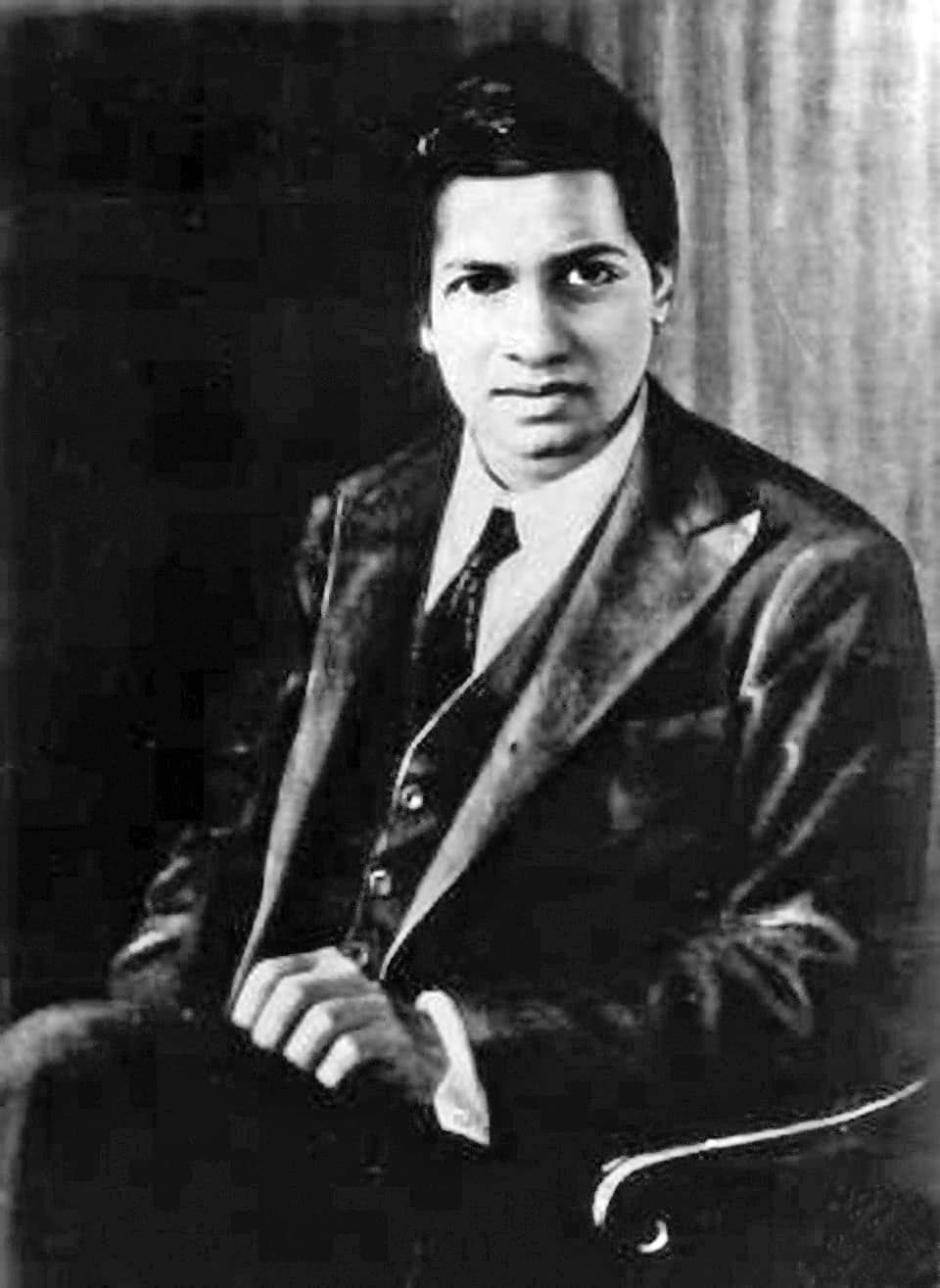
It is in a silent room at Trinity College, Cambridge, in late winter 1919 that I find Ramanujan, wrapped in several blankets despite the fireplace. On the small table lie his notebooks, a pen, and a barely touched cup of milk. We have known each other for six years, since that letter from Madras that kept me awake an entire night. I come, before he boards the ship back to India, to gather from his own voice what the formulas never managed to say.
—Do you remember, my friend, that package you sent me in 1913? What did you hope for from a stranger in Cambridge by sending him a hundred and twenty formulas?
I hoped for almost nothing, Mr. Hardy — and everything at once. In Madras, I was a clerk in an accounting office, and my theorems fed no one. I had already written to other English scholars who did not reply. You, I felt you would understand. I copied my results on divergent series, prime numbers, continued fractions, without proof, because for me proof is not the beginning; it comes after. When your reply arrived, asking for evidence of my most astonishing theorems, my mother herself understood that my life was about to change. You who read that letter first, you know what it is: recognizing someone before ever seeing them.
Proof is not the beginning for me; it comes after.
—In Kumbakonam, you had neither teacher nor library worthy of the name. How does a man learn alone what universities teach from the lectern?
I had an old book by Carr, a simple list of results without explanation, and that sufficed me for years. I filled my notebooks in the evening by lamplight, on a slate that I erased with my elbow to save paper. The formulas came to me — I cannot say it better. Many, I confessed to you, seemed whispered to me during sleep. Without a colleague to correct me, I had to verify everything by calculation, pages and pages of numbers. That made me both distrustful and certain: distrustful of my errors, certain of my intuition. You often reproached me for this lack of rigor, Hardy — but it was this solitude that forged the instrument.
Many of my formulas seemed whispered to me during sleep.
—The other day, I came to see you in a taxi, whose number, 1729, struck me as rather dull. You immediately corrected me. Where does this familiarity with numbers come from?
You said it yourself: dull. And I replied that no, on the contrary it was very interesting — the smallest number expressible in two ways as a sum of two cubes. This is not a calculation I do, Mr. Hardy; it is that each integer for me is like a friend whose face and story I know. When given a number, I immediately see its properties, as you recognize a colleague in a hallway. I believe it is the numbers that speak to me, not the other way around. My family goddess, Namagiri, inspires these truths to me — you smile, but that is how I receive them.
Each integer for me is like a friend whose face and story I know.
—We worked entire nights on the partition function. What, in these additions of integers, held you so much?
Counting how many ways a number breaks into sums — that seems a child's game, yet hides an ocean. I noticed that these counts obeyed secret regularities: for numbers of the form five times an integer plus four, the partition is always divisible by five. Then similarly by seven, by eleven. These congruences amazed me like a pattern repeating in fabric. With you, we sought a formula that would give their number directly, without enumerating everything. I also love my series for the ratio of the circle, which converge so quickly that one reaches desired precision in a few terms. Therein lies my true joy, Hardy: seeing infinity bend to a single line of writing.
Therein lies my true joy: seeing infinity bend to a single line of writing.
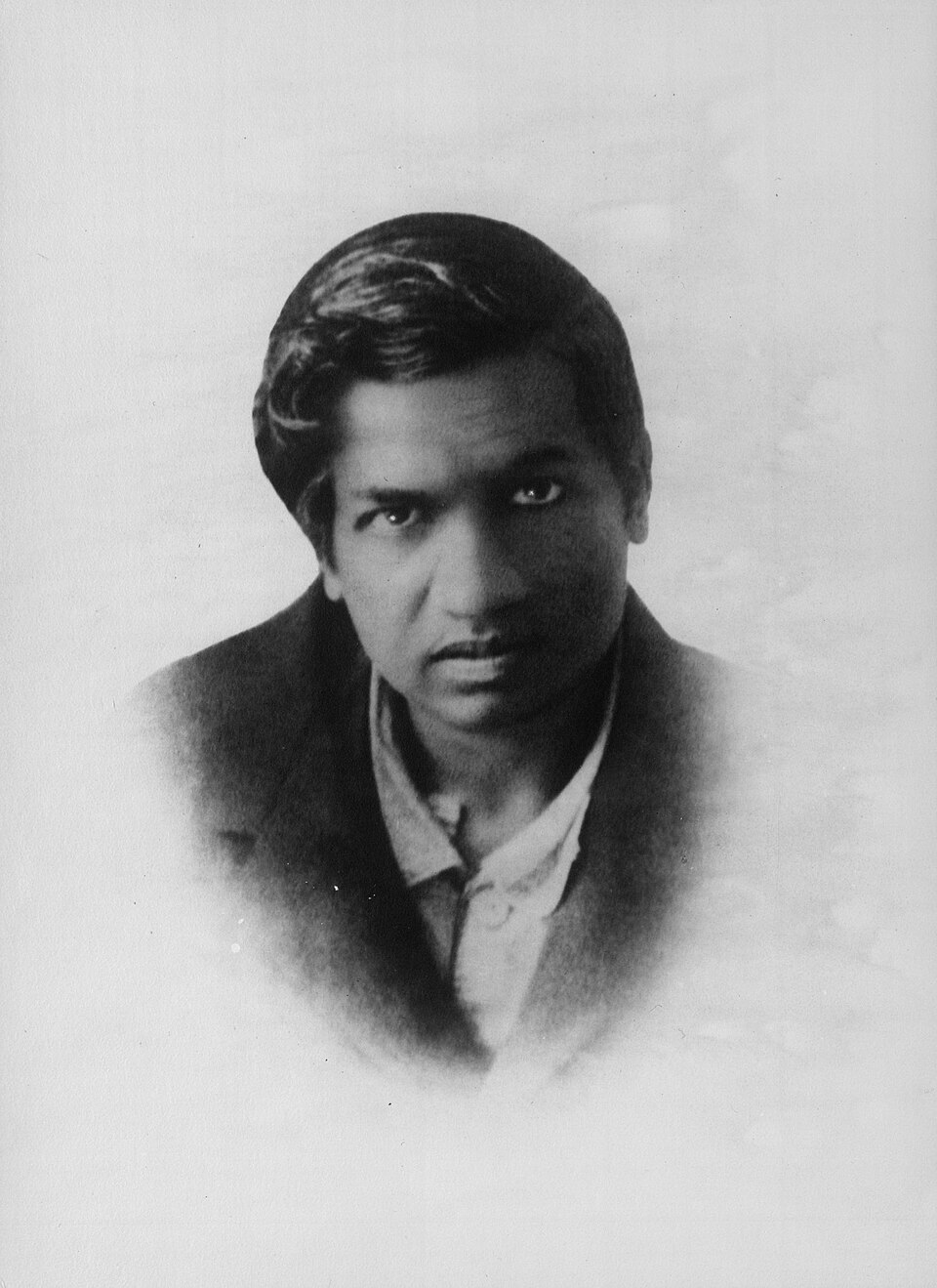
—You entrusted me with magnificent theorems without the slightest proof, which often drove me to despair. Why this reluctance to prove?
It was not reluctance, Mr. Hardy, but impatience. When a truth appears to me whole, stopping to justify it step by step is like praying that someone describe a fruit I already hold in my hand. I know that in your English eyes, trained in rigor, this looks like negligence. You patiently taught me that an unproven result has no place in a journal, and I learned to bend my mind to that discipline. But deep down, I still believe that a correct formula carries its own evidence. Our arguments on this point were lively — and yet they made me a better mathematician.
A correct formula carries its own evidence.
—I see you shivering under those blankets, hardly touching your meal. Tell me frankly how England treats your Brahmin body.
Badly, I admit, and I blame no one. I am a strict vegetarian, as my caste requires, and here vegetables are scarce, especially since the war. I cook myself, late at night, rice and lentils on a small stove, while the rest of the college sleeps. The cold of Cambridge pierces me, I who grew up under the sun of Tamil Nadu. And I miss my wife, my mother, to the point of pain. I have sometimes fasted out of religious scruple more than taste, and my body has suffered. You did the impossible to keep me, Hardy, but there are nourishments that no friendship, however great, can replace.
The cold of Cambridge pierces me, I who grew up under the sun of Tamil Nadu.
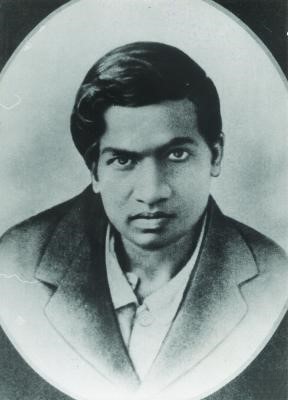
—You are leaving soon for India. What do you take from these years spent far from your loved ones, in our northern mists?
I take these notebooks, heavy with all we discovered together. I also take the memory of that election to the Royal Society in 1918 — I, the Madras clerk, among the greatest scholars of Europe. My father would never have believed it possible. But I return exhausted, and I have no illusions about my strength. There await me the climate of my childhood, my mother's cooking, the temples. Perhaps I will regain my health there, perhaps continue what we began. Whatever happens, Mr. Hardy, know this: without your hand reached out across the seas, my formulas would have died in an accountant's drawer.
Without your hand reached out across the seas, my formulas would have died in an accountant's drawer.
—Among so many modular functions and series you explored, which one do you feel still keeps its mystery intact?
Modular functions, without hesitation. They possess a symmetry so deep they seem like crystals: turn them, transform them, they return to themselves according to hidden laws. Lately I have noted new functions, which resemble modular ones without fully being so — I call them my mock functions. I sense they conceal an entire theory that I will not have time to unfold. That is my frustration and my hope combined: to leave behind seeds rather than harvests. You yourself, Hardy, and those who come after, will have plenty to plow this field for a long time. Mathematics, you see, never ends with the one who glimpsed it.
I leave behind seeds rather than harvests.
—When you think back to your life as a clerk in Madras, before my reply, did you imagine ending up in a Trinity room discussing infinite series?
Never, Mr. Hardy. I had failed my exams because I neglected everything that was not mathematics — history, English, physiology bored me. I was considered a half-educated failure. My wife Janaki was very young, and my family worried to see me fill pages without earning a living. It was the University of Madras that first granted me a scholarship, based on my notebooks. But it was your invitation that transformed the obscure calculator into a mathematician. I sometimes think that all of this hangs on a letter — yours, that January morning. Without it, I might still be aligning columns of figures at the port.
I was considered a half-educated failure.
This imaginary interview was generated by artificial intelligence from sources documented in Srinivasa Ramanujan's profile. It dramatises what the figure might have said based on what we know about them, but does not constitute attested historical testimony. For primary sources and factual documentation, refer to the full profile.