Kids interview Srinivasa Ramanujan
by Charactorium · Srinivasa Ramanujan (1887 — 1920) · Sciences · 5 min read
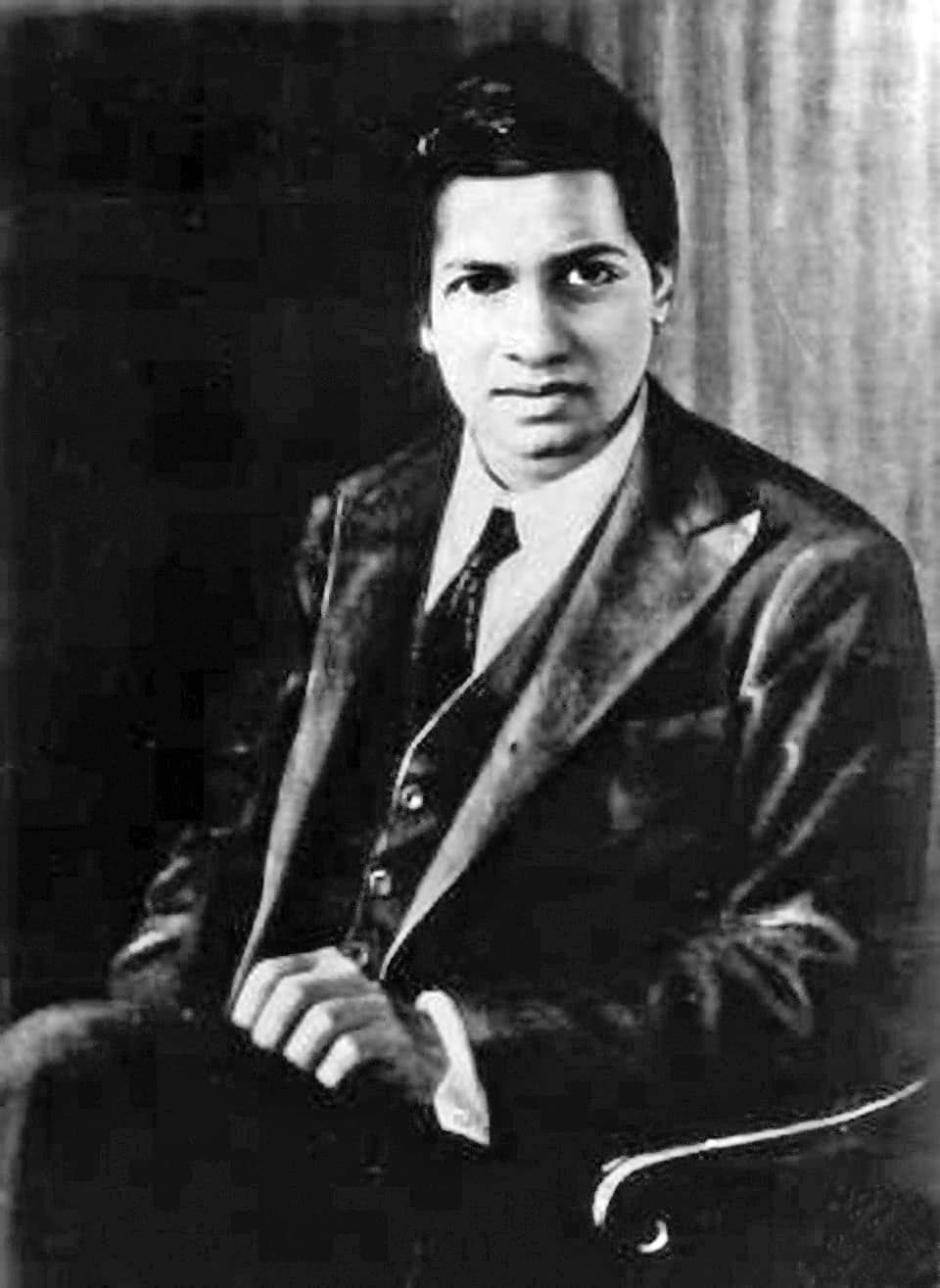
Two twelve-year-old students, on a class trip, have the chance to meet a mathematician from far away. Seated before them, a gentle man with lively eyes awaits, smiling. They take out their notebooks and begin to ask their questions.
—What was it like doing math all alone, without a teacher?
You know, my child, I grew up in Kumbakonam, a small town in southern India. There was no big library, no master to guide me. So I filled entire notebooks with formulas, page after page. Imagine a child inventing a game without knowing the rules, and discovering them on his own. That was my life. They say I was self-taught: that means I taught myself. My only friends were my logarithm tables, those big books full of numbers used for calculating. I had almost nothing. But in my head, I had a vast world.
I had almost nothing in my hands, but a vast world in my head.
—How did you see formulas in your head?
It's hard to explain. Formulas came to me, just like that, almost as a gift. We call it mathematical intuition: seeing that something is true even before you can prove it. Imagine closing your eyes, and a picture appears on its own. For me, they were numbers, infinite series — sequences of numbers added endlessly. I would jot them down quickly in my notebook, without always writing why they were correct. Later, scholars spent years checking my pages. And you know what? Almost everything was right. Even I, sometimes, didn't know where it came from.
Formulas came to me like a gift, and I jotted them down quickly before they flew away.
—Why did you write a letter to a scholar so far from home?
Because no one around me really understood what I was doing. In 1913, I gathered my courage and wrote to a great English mathematician, G.H. Hardy, at Cambridge. In my letter, I gave him a long list of formulas I had found on my own. Imagine: a stranger, on the other side of the world, sending his secrets to a famous scholar. I was afraid he would throw my letter in the trash. But he replied! He asked me to send him proofs of my theorems. That letter changed everything in my life.
I was a stranger at the end of the world, and I dared to write to a famous scholar.
—Were you happy when Hardy said yes?
Oh yes, but I was also very scared, you know. Leaving India was enormous for me. In 1914, I crossed the sea to join Hardy at Trinity College, Cambridge. Imagine a young man who had never seen snow, suddenly in an old stone university. Hardy was stern but fair. We worked together in front of a blackboard, with chalk, writing immense formulas. In a few years, we published many papers on number theory. He brought me the rigor of proofs; I brought him my intuitions. We made an odd couple, and yet it worked.
He brought me the proofs, I brought him the intuitions.
—Is it true you loved numbers like friends?
Yes, that's a bit like it! For me, every number had its own character. One day, Hardy came to see me in the hospital. He said he had arrived in taxi number 1729, and that it was a very dull number. I answered right away: no! On the contrary, it is the smallest number that can be written as a sum of two cubes in two different ways. Imagine two different recipes that give exactly the same cake. Since then, it's called the "Hardy–Ramanujan number." You see, numbers never bored me. They spoke to me.
For me, every number had its own character, like a friend.
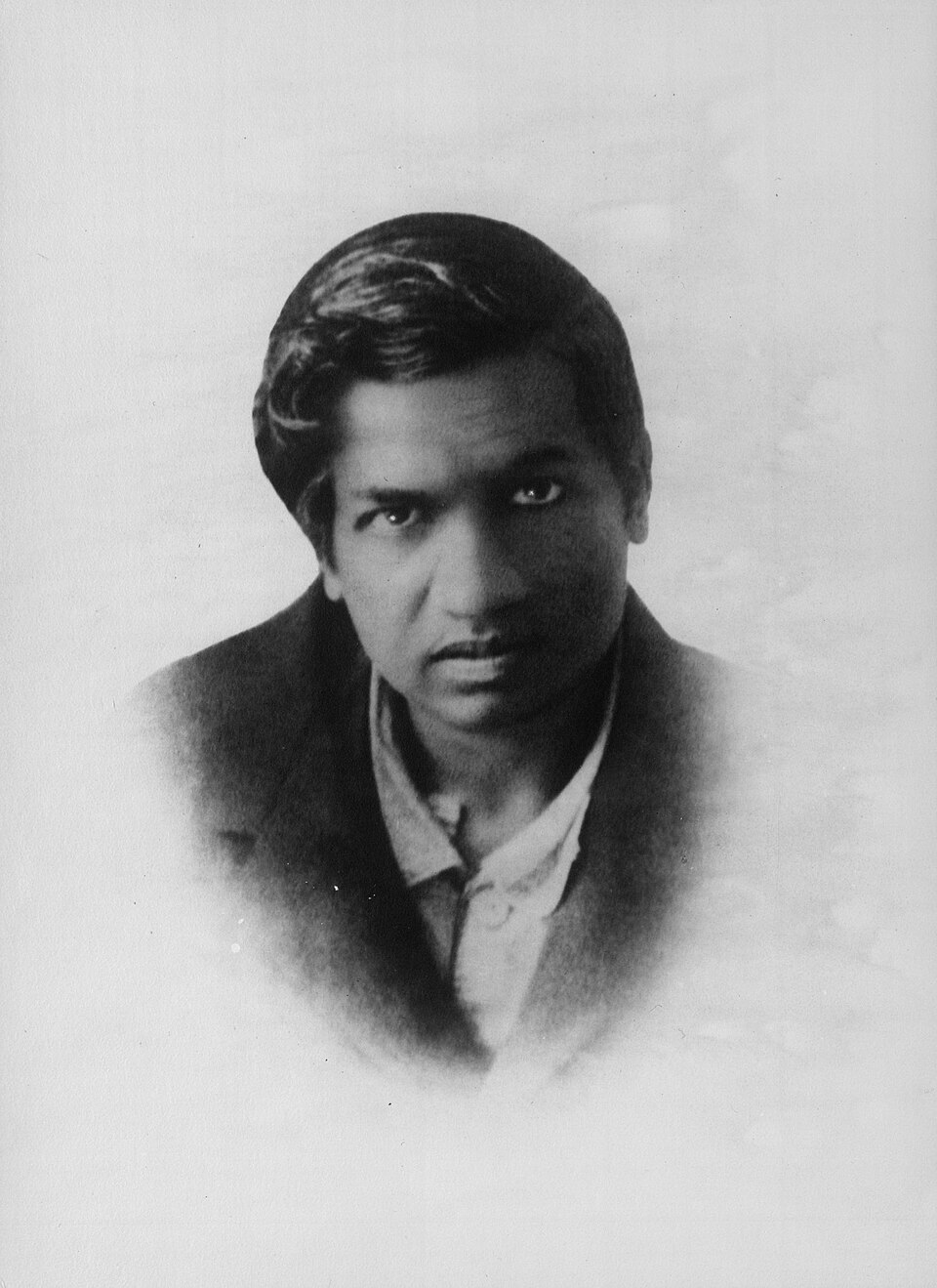
—What's the use of finding things about numbers?
Good question, my child! Many people asked me that. Number theory is the study of whole numbers, the ones you count on your fingers: one, two, three. I investigated how to break a number into smaller pieces — we call that partitions. Imagine you have five marbles: in how many ways can you arrange them into piles? I found hidden rules that repeat, regular patterns. At the time, it seemed useless, just a beautiful game of the mind. But today, many of these ideas are actually useful. Beauty sometimes becomes useful much later.
What seemed like a simple game of the mind became useful much later.
—What did you eat at Cambridge? Was it good?
Ah, you touch a sore point! You know, I was a Brahmin, meaning my religion required me to be strictly vegetarian. In India, I ate rice, lentils, dosa and idli, flatbreads from the south of my country. It was simple and good. But in England, during the war, finding vegetables was very hard. Often I cooked alone, in the evening, in my cold Cambridge room. Imagine eating the same thing always, far from home, in a gray and icy country. My body suffered from it. Eating well is not a detail: it's what keeps you going.
Eating well is not a detail: it's what keeps you going.
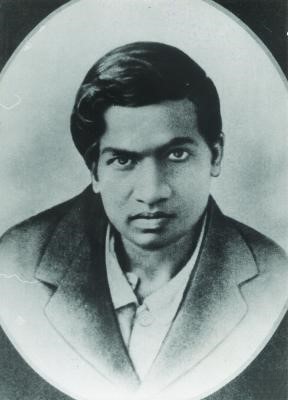
—Were you sad, far from your family?
Yes, very much. Homesickness grips your heart, you know. I constantly thought of my mother, the warmth of India, the prayers of the morning I had done since childhood. In Cambridge, I worked like mad — I was even elected to the Royal Society in 1916, a great honor for a man my age. But my health slowly declined. In 1919, exhausted, I returned home to India. Imagine coming back to the country you love, but too tired to enjoy it. Genius does not protect from sadness, nor from illness.
Homesickness grips your heart, even when you work like mad.
—What are those famous notebooks you left behind?
They are my notebooks, my child, the ones I had been filling since I was very young. Hundreds of pages, covered in formulas, but almost without demonstration: I wrote the result, without always explaining how I got there. Imagine a chest full of treasures, but without the map to understand them. After my death, in 1920, mathematicians from around the world opened that chest. They spent decades checking my pages, one by one. And almost everything was right! My notebooks occupied scholars long after me. It's as if I kept talking to them, even absent.
I left a chest of treasures, but without the map to understand them.
—If we remember one thing about you, what would it be?
I think it would be this, my child. You don't need to be rich, nor to have studied at the greatest schools, to do beautiful things. I grew up far from everything, in Kumbakonam, with just a notebook and a lot of patience. I died young, at 32, but my formulas still live. Imagine a seed planted in silence, becoming a tree long after the one who sowed it. So if an idea comes to you, even strange, even misunderstood: write it down, keep it, work on it. You never know what treasure you carry within.
You never know what treasure you carry within: write down your ideas, even the wildest ones.
This imaginary interview was generated by artificial intelligence from sources documented in Srinivasa Ramanujan's profile. It dramatises what the figure might have said based on what we know about them, but does not constitute attested historical testimony. For primary sources and factual documentation, refer to the full profile.