Imaginary dialogue between Victor Hugo and Stendhal
by Charactorium · Stendhal (1783 — 1842) · Literature · 5 min read
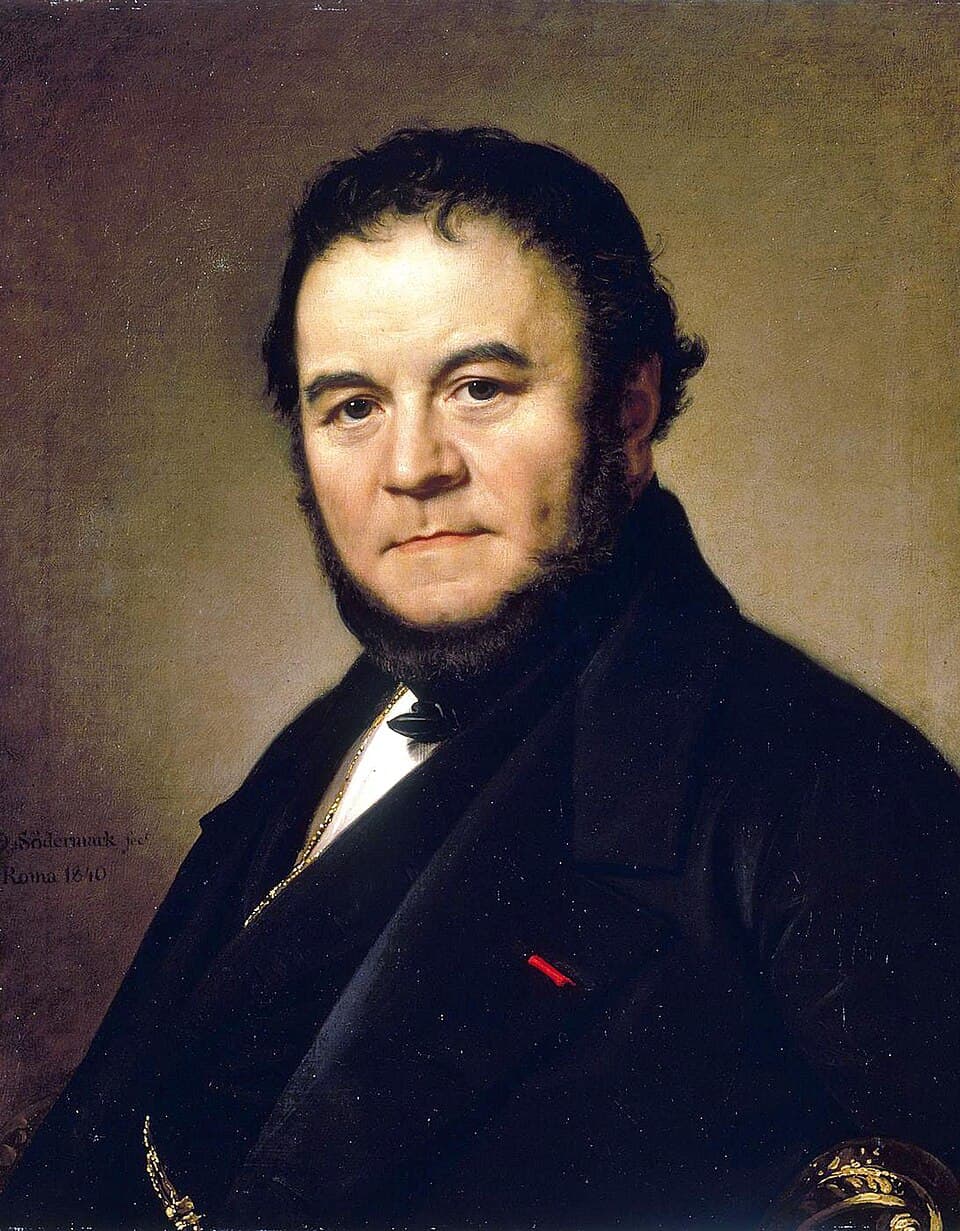
It is in a smoke-filled salon on the Rue Saint-Honoré, one winter evening in 1839, that Victor Hugo meets Henri Beyle, whom all Paris is beginning to call Stendhal. La Chartreuse de Parme has just been published; a dog-eared copy lies on the side table. The two men have known each other for a long time, crossing paths at the theater and in literary quarrels, the lyricist and the observer. Hugo, who has dominated the scene since Notre-Dame de Paris, comes to push his younger colleague into his corner as a cold painter of passions.
—My dear Beyle, it is whispered that your Julien Sorel comes not from your imagination, but from a very real news item. Is it true?
You have a keen ear, Hugo. Yes, I took my Julien from the Gazette des Tribunaux. A seminarist from the Dauphiné, a certain Antoine Berthet, a tutor in a notable family, who shot his mistress in church and ended up on the scaffold in 1829. That was my starting point. A novelist who invents everything invents falsehood; I, on the other hand, pick up the chronicle of a fact and trace the mechanism backward, spring by spring. How does a carpenter's son, intelligent and burning, climb into a society that grants him nothing but hypocrisy? Berthet's crime did not interest me; his ambition did. The real serves me only as bait. Then I dissect.
A novelist who invents everything invents falsehood; I, on the other hand, pick up the chronicle of a fact.
—You speak of ambition as a disease of our century. Why make it the driving force of your entire Le Rouge et le Noir?
Because it is the fever of the age, Hugo, and you know it as well as I. Under the Emperor, a nobody could become a colonel at thirty; under these returned Bourbons, one must grovel, flatter, lie, wear the cassock for lack of being able to wear the sword. Red or black: the uniform or the seminary. My Julien is born too late, in a France where energy no longer has an honest outlet. So he wears a mask, he calculates, and his true heart takes revenge by bursting forth at the worst moment. Ambition, for me, is not a rogue's vice: it is the sap of a strong character that society compresses until it explodes.
Red or black: the uniform or the seminary.
—One thing intrigues me. You sign Stendhal, but you were baptized Henri Beyle. Why so many assumed names under a single pen?
Count them if you wish: I must have used more than two hundred. Stendhal comes from a small German town I loved, Stendal. The rest is fancy, prudence, the pleasure of the mask. You see, Hugo, you reign under your own name, in full light, and that is your strength; I distrust the public square. A pseudonym is a window through which one observes without being seen. The police, the salons, the fools—I escape them by changing my coat. And the man who signs commits only that name; the private Beyle remains free. I write for the rare minds who will read me in fifty years, not for today's gawkers. The mask protects me from them.
A pseudonym is a window through which one observes without being seen.
—You followed the Emperor's eagles. What remains in your books of the officer you were in 1814?
Everything, perhaps. I wore the quartermaster's uniform, I saw the Grande Armée dissolve, I experienced the fall of Milan and the abdication of 1814. Believe me, whoever has seen a rout never again paints battle as in poems. The field of honor, up close, is smoke, mud, contradictory orders, a man who understands nothing of what surrounds him. That is how my Fabrice goes through Waterloo in the Chartreuse: he is there and sees nothing. War taught me the energy of men, and also the chance that crushes plans. From that armed youth, I kept the cult of momentum and the hatred of empty phrases.
The field of honor, up close, is smoke, mud, contradictory orders.
—You are said to be an enemy of fine language, you who claim to read the Code civil to regulate your style. Is that a coquetry?
Not at all, and here we part ways frankly, Hugo. You love the singing sentence, the stunning image, and no one equals you in that. I want the sentence that says exactly what it means, and nothing more. When I write, I reread a few pages of the Code civil to cleanse myself of bombast and find the clear tone. A true emotion needs no ornament; the exact word, placed without trembling, strikes harder than metaphor. Describing a man's soul requires the precision of a geometer, not the colors of a painter. You illuminate; I want to show. We serve the same century through two opposite doors.
A true emotion needs no ornament; the exact word strikes harder than metaphor.
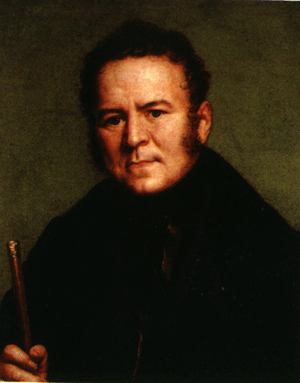
—Before the novel, you wrote De l'Amour, an almost scholarly book. Can one truly dissect feeling like a naturalist?
I attempted it, and I was little read. In De l'Amour, in 1822, I wanted to trace the birth of passion step by step, as one follows a growing plant. I named this phenomenon crystallization: think of a twig thrown into the salt mines of Salzburg; you pull it out covered in diamonds. Thus the mind adorns the beloved with a thousand imaginary perfections. Love is not a thunderbolt from heaven; it is a secret work of the soul that constantly embellishes its object. For twenty years, Hugo, I kept a diary to spy on my own heart's movements, coldly, as one observes another. From this mania for analysis all my characters were born.
Love is not a thunderbolt from heaven; it is a secret work of the soul.
—This mania of spying on yourself, even in your private diaries, does it not risk freezing the heart you claim to paint?
I am often reproached for that, and you touch a sensitive point. But look closely: to paint fire, you need a steady hand. If I grew sentimental while writing, I would lie, I would exaggerate everything. It is by observing myself coldly that I caught the heart's detours—vanity disguised as love, pride mistaken for virtue. My diary is not a confession: it is a notebook of experiments on the only subject I know thoroughly, myself. The reader thinks I invented Julien or Fabrice; in truth, I lent each a piece of Henri Beyle, sifted through. The coldness of analysis serves true warmth.
To paint fire, you need a steady hand.
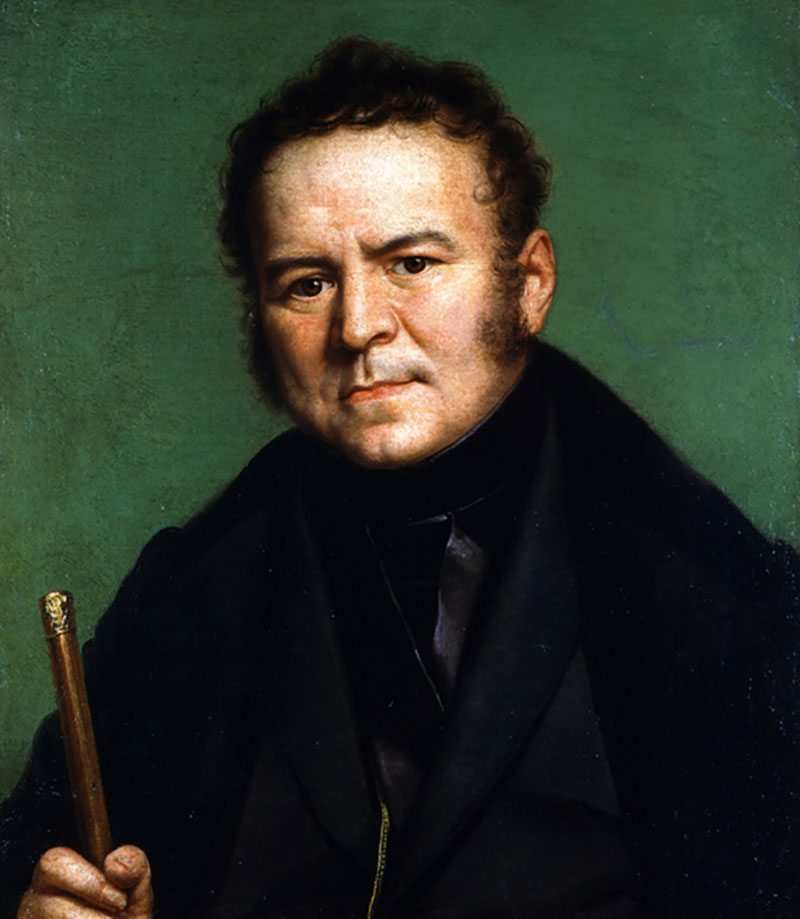
—You constantly return to Italy, to Milan, to the opera. What do you seek there that Paris denies you?
The happiness of feeling without shame, Hugo. In Milan, where I lived from 1814 to 1821, I discovered a people who do not blush at their passions. At La Scala, I heard Cimarosa and Rossini, and I wept without being thought ridiculous. Here in Paris, every feeling must pass through the filter of vanity, wit, and what people will say. There, they love, hate, and take revenge with a frankness that our polished civilization has lost. That is why I set my Chartreuse in Parma: Italy is the country where my heroes can live fully, without the corset of our conventions. I left the best part of my heart there.
Italy is the country where my heroes can live fully, without the corset of our conventions.
—Here you are, consul of the king in Civitavecchia, far from Parisian letters. Does this gilded exile not weigh on the man of the salon that I know?
It weighs, I confess. I was appointed there in 1831, in a dusty port where nothing happens, after I had hoped for Rome or a more brilliant post. The boredom is great, the consular dispatches tedious. But see the irony, Hugo: it was in this desert that I dashed off in a few weeks my entire Chartreuse de Parme. Distance returned me to myself. Far from the noise of your salons and your literary battles, I could dream of Italy instead of chasing success. A civil servant by day, a novelist by night. If fortune had showered me with positions, perhaps I would never have written that book. Failure, sometimes, is a good secretary.
Failure, sometimes, is a good secretary.
—When my Notre-Dame de Paris appeared, the public rushed to it; your novels, on the other hand, find few readers. Does that hurt you, Beyle?
Less than you might think, and I say it without bitterness, for your triumph is deserved. You speak to the crowd of today; I, I confess, write for the readers of 1880. My books are notes tossed to minds not yet born. I am found dry, abrupt, unpoetic? So be it. I prefer three readers who understand me to three thousand who applaud me out of fashion. Noisy glory passes with the season that created it; the true analysis of the human heart does not age. You reign over the present, Hugo, and that is a magnificent crown. Allow me to bet discreetly on the future—it is all I have left.
My books are notes tossed to minds not yet born.
This imaginary interview was generated by artificial intelligence from sources documented in Stendhal's profile. It dramatises what the figure might have said based on what we know about them, but does not constitute attested historical testimony. For primary sources and factual documentation, refer to the full profile.