Imaginary dialogue between Pythagore and Thales
by Charactorium · Thales (624 av. J.-C. — 545 av. J.-C.) · Sciences · 5 min read
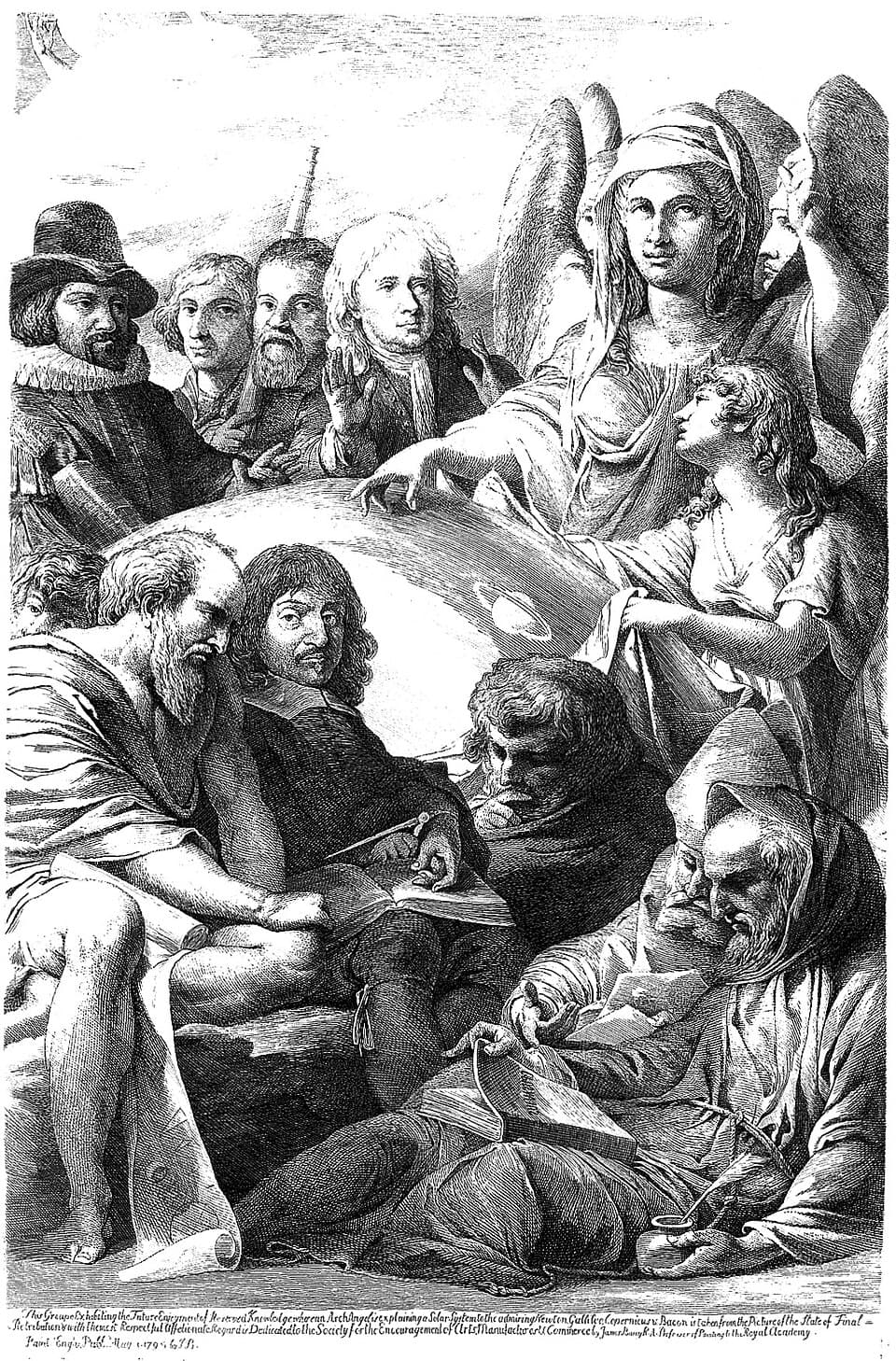
It is under the portico of a house in Miletus, swept by the salty air of the harbor, that young Pythagoras, come from Samos, meets the aging Thales in this year 545 BC. A wax tablet covered with figures lies between them, and the oblique afternoon light lengthens the shadows on the beaten earth floor. The master had once encouraged him to go study in Egypt; today the heir returns to question the founder, full of admiration and rigor, before knowledge is lost.
—Master Thales, it was you who advised me to leave Samos to learn. Why did you make Miletus the hearth of a new thought?
You remember, Pythagoras, the day I urged you to travel: it is because here, in Miletus, everything invites it. Our city is a crossroads where ships from Phoenicia, Egypt, and the Black Sea come to unload not only amphorae and grain, but also knowledge. On the agora, I listen to merchants count, measure, anticipate the seasons. I wanted my disciples to stop attributing to the gods what reason can explain. That is my school: not a temple, but a place where one seeks the natural causes of things. You who wish to found your own community one day, remember this.
Not a temple, but a place where one seeks the natural causes of things.
—They say in Ionia that you measured the Great Pyramid without climbing it. Is it true, or just a sailor's tale?
It is true, and simpler than one might imagine, my friend. In Egypt, the priests challenged me to know the height of their mountain of stone. I waited until the hour when my shadow exactly equaled my height: at that moment, the pyramid's shadow equaled its height. I only had to measure the shadow on the sand. That is the whole power of proportion: what holds for my body holds for the greatest monument. The Egyptians, who had built for a thousand years, had never thought to question their own shadow. Geometry is not a scribe's calculation; it is a way of looking at the world.
Geometry is not a scribe's calculation; it is a way of looking at the world.
—When you announced that the day would darken, many thought you mad. How did you dare predict the eclipse, a mere mortal?
I wrested nothing from the gods, Pythagoras; I only listened to what the Babylonians had observed for generations. The stars do not wander at random: their returns follow cycles that can be counted. I announced that the sun would veil itself, and it veiled itself. The warriors were stunned and laid down their arms. Understand well: I did not command the sky, I read it. That day, people saw that a man armed with patience and numbers could foresee what was believed reserved for omens. You who love numbers, know that they govern even the movements of the firmament.
I did not command the sky, I read it.
—You teach that all things come from water. I who seek the principle of things, tell me: why water rather than another element?
Look around you, Pythagoras. Seed is moist, food is moist, even heat is born from moisture and feeds on it. What lives dries up when dying; what dries completely is no more. I concluded that moisture is the foundation of everything, that water is the archê, the principle from which all proceeds and to which all returns. I do not claim to have closed the question: I open it. Others after me may say air, or fire, or a nameless principle. But the essential thing, you see, is to have dared to seek a single, natural cause, instead of telling yet another birth of the gods.
The essential thing is to have dared to seek a single cause, instead of telling a birth of the gods.
—It is whispered that a Thracian maid mocked you when you fell into a well while gazing at the stars. Did that hurt you, master?
Ah, that story will follow you to Croton, I fear! Yes, I had my eyes on the sky and did not see the hole at my feet; the girl laughed heartily, saying I wanted to know the stars without seeing the ground. I let her laugh. The scholar who fears mockery will never lift his head. But know that the same absent-minded man once, one year, foresaw a good olive harvest: I rented all the olive presses in Miletus in advance and made a fortune. I did it to silence those who claimed that philosophy does not feed its man.
The scholar who fears mockery will never lift his head.
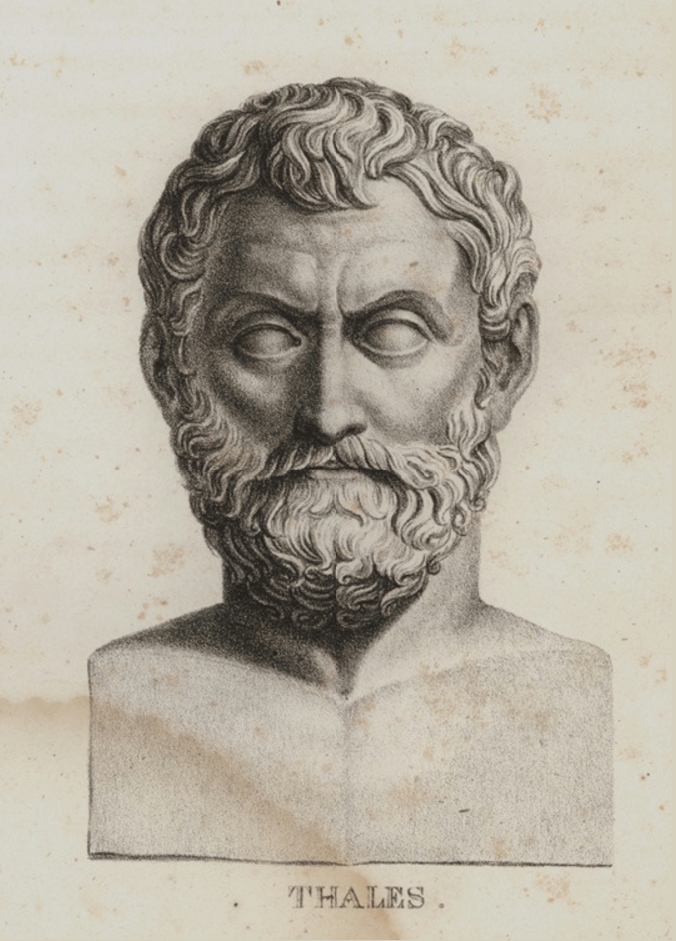
—You speak of the cycles of the sky like a clock. With your gnomon planted in the ground, what do you really read in the turning shadow?
The gnomon is my humblest master, Pythagoras. This simple upright stick tells me the hour, the season, the sun's inclination over the year. When its shadow is shortest, I know summer peaks; when it lengthens, winter approaches. By observing how this shadow moves, I understood that the sky is not a whim but a measurable order. It is through it that I linked the earth to the firmament, the foot of the stick to the distant stars. Never despise humble tools: a shadow on the sand taught me more than a thousand prayers. Meditate on this in your own quest for numbers.
A shadow on the sand taught me more than a thousand prayers.
—You studied with the priests of Egypt. What did you bring back from there that the Greeks still did not know?
The Egyptians knew how to survey their fields after the Nile floods, retracing the boundaries erased by the waters. They possessed recipes, gestures handed down for centuries. But they never asked why their rules were true. That is what I wanted to change upon returning to Miletus: not only to know that segments cut by parallels keep their proportions, but to demonstrate it, to make it necessary to the mind. That is the difference between the surveyor and the geometer. You who set out on the roads, Pythagoras, bring back the knowledge of nations, but never be content to imitate them: always demand proof.
That is the difference between the surveyor and the geometer: one measures, the other demonstrates.
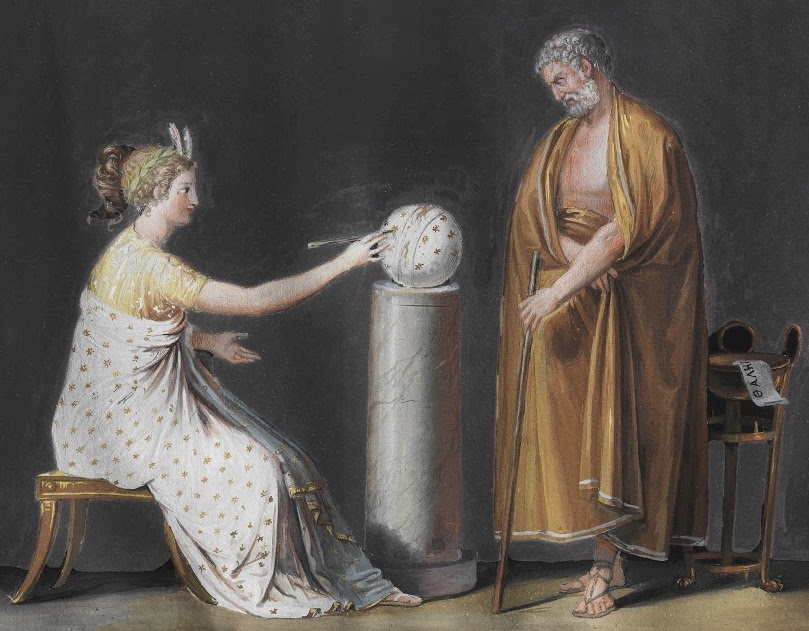
—Master, you are growing old and I am about to found my community far from here. What do you want those of the Ionian school to pass on after you?
That they continue to seek, Pythagoras, that is all I ask. I have not delivered truths carved in marble; I have opened paths. My disciples may say that air is the principle, or the infinite, and they will be right to contradict me if their reason leads them. A school that repeats its master is dead; a school that surpasses him is alive. When you gather your followers in Croton, do not impose your numbers as a faith: give them a taste for doubt and demonstration. That is the only heritage that never runs out, for it renews itself with every mind that receives it.
A school that repeats its master is dead; a school that surpasses him is alive.
—You say that even the soul contains moisture, and you are credited with the idea that all things are full of gods. How do you reconcile nature and the divine?
Do not think that I have banished the divine from the world, my friend. In saying that all things are full of gods, I mean that movement, life, soul animate even the magnet that attracts iron. But this divine is not the whim of the Olympians: it is the ordered force that runs through nature. Moist water nourishes the soul as it nourishes the seed. I do not separate the sacred from the natural; I see them united in a single order that reason can approach. Where the poet sees Poseidon's anger in the storm, I seek the cause, and I know it exists, even when I do not yet grasp it.
All things are full of gods: not the whim of the Olympians, but the ordered force of nature.
—Before I take the road back to Italy, tell me, master: did the wealth from the presses change you, or was it just a lesson?
A lesson, nothing more, Pythagoras, and I promptly forgot it. The money earned that year barely lay in my hands. What I wanted to prove, I proved: that if the scholar remains poor, it is not for lack of ability to enrich himself, but because fortune does not interest him. Foreseeing the olive harvest was for me only another demonstration—knowledge of seasons and stars turned toward the market. Keep this in mind when your disciples are mocked as dreamers: wisdom can feed its man, but it aims higher than the belly. Go, and may your journey be fruitful.
If the scholar remains poor, it is not for lack of ability to enrich himself: it is that fortune does not interest him.
Read further
This imaginary interview was generated by artificial intelligence from sources documented in Thales's profile. It dramatises what the figure might have said based on what we know about them, but does not constitute attested historical testimony. For primary sources and factual documentation, refer to the full profile.