Imaginary dialogue between Ariane and Theseus
by Charactorium · Theseus · Mythology · 5 min read
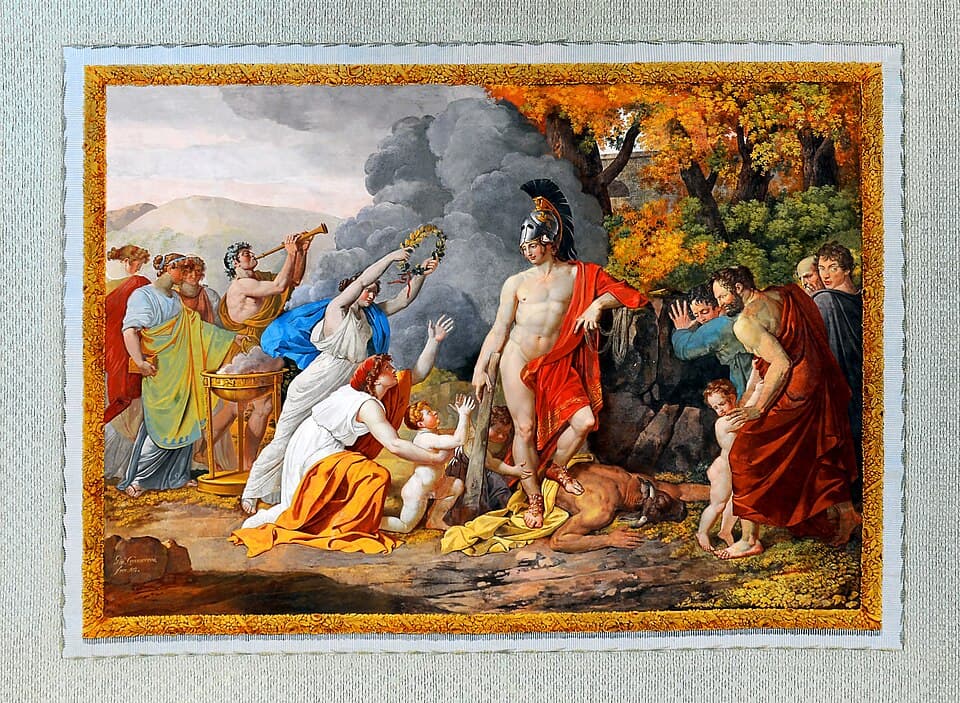
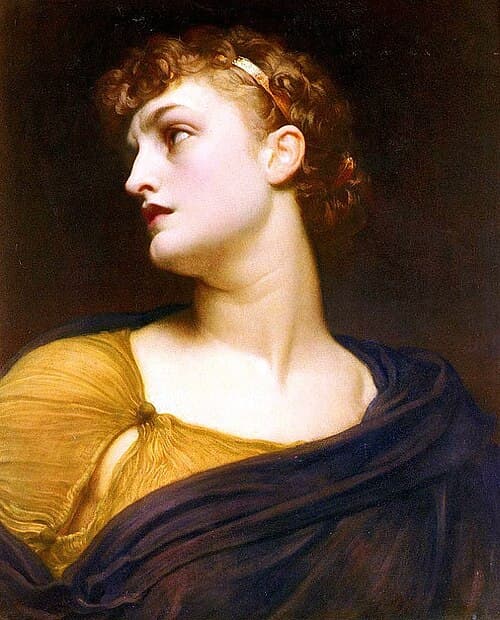
It is on the deck of the ship cutting through the Aegean Sea, fleeing Crete in its wake of foam, that Ariadne joins Theseus in the dead of night, the air still heavy with the smell of the Labyrinth. The sail snaps, the young Athenians sleep exhausted in the hold, and the hero stares at the horizon toward Athens. She is the daughter of Minos, she who handed him the thread; he is the stranger she saved from the monster. Between them, the silence after the exploit — and all the questions that a night at sea allows.
—Theseus, when I slipped that linen thread into your hand at the Labyrinth's door, did you truly believe?
I believed because it was you who gave it to me, Ariadne. Without your thread, the sharpest arm was useless: you cannot kill what you cannot find again. In those sunless corridors, I unrolled the linen as I advanced, my ear straining for the beast's breath. When the Minotaur charged, I gripped the sword and struck until the bellowing died. But it was the return that chilled me: without that thread, I would have wandered until I starved beside the corpse. You gave me the only thing a hero cannot give himself — the way back.
You gave me the only thing a hero cannot give himself — the way back.
—It is whispered that Athena armed your arm. In that darkness, what did you feel facing the monster — fear, or rage?
Fear first, I will not hide it from you who saw me tremble before entering. The sword came from the goddess, they say, but in the dark a blade is only as good as the hand that wields it. I heard the monster before I saw it: that thick breath, that scraping of hooves on stone. Half-man, half-bull — there was something almost pleading in its cry. I did not strike out of hatred, Ariadne, but because my people were bleeding because of him. When he fell, I did not shout victory. I thought of the fourteen children who would no longer cross the sea to die.
—My father Minos demanded seven boys and seven girls. You, a prince, were not among them — why did you offer yourself with them?
Because a king who lets the children of others die is not worthy to rule, Ariadne. Every ninth year, Athens wept as it drew lots for those it handed over to your father. I saw mothers tearing their hair on the harbor. How could I one day mount the throne of Aegeus knowing that others paid with their blood for my peace? I enrolled myself among the fourteen, against my father's wishes, who wept. A leader does not ask others to die in his place: he walks first toward danger. That is what I wanted my people to remember, even before knowing if I would return.
—That last night before the sea, you slept among the other victims. Were you afraid you would never see Troezen again, nor the faces of your own?
I was afraid, yes — but not of dying. I was afraid of dying for nothing, Ariadne, of ending up at the bottom of that maze with no one even finding my bones. That night, I listened to the young Athenians breathing around me; some were not yet fifteen. I had promised to bring them back, and a promise weighs heavier than a sword. When you came to me in the shadows, with your thread and your look, I understood that I would not fight alone. Strange: it was the enemy, the daughter of Minos, who gave me hope. Without you, I think fear would have devoured me before the monster.
It was the enemy, the daughter of Minos, who gave me hope.
—Before Crete, they tell of your exploits on the road of the Isthmus: Sinis, Sciron, the brigands. Were they monsters, or men?
Men, Ariadne, and that made them worse than monsters. Sinis bent two pines and tied travelers between the treetops, then let go of the trees — the bodies were found torn in two. Sciron forced passersby to wash his feet at the cliff's edge, then hurled them into the sea where a turtle devoured them. Those roads were the shame of Greece: no merchant, no pilgrim dared take them. I gave each the torture he inflicted — that is the only justice they understood. When a man makes the roads safe, he does as much for the city as by winning a battle.
—And the bull of Marathon that ravaged the plain — how does a single man tame such a beast before reaching Athens?
The same blood as the Minotaur ran in its veins, you know — that bull from your Crete, which Heracles once brought back. It devastated the fields of Marathon, and the people no longer dared to sow. I tracked it for days, I took it by the horns when it charged, and I dragged it alive to Athens to sacrifice it. The people came out to watch me pass; it was that day, I think, that Aegeus truly saw me as his son. Taming the beast is not about strength: it is about not backing down when everything in you wants to flee.
—Soon you will be king of Athens. What will you do with that throne — rule over a single city, or over all scattered Attica?
Over all Attica, Ariadne, if the gods grant me life. Today each village has its council, its altar, its quarrels; the hamlets war over a field or a spring. I want to gather them around Athens, one single common hearth, one single council — what the ancients will perhaps call the synoecism. And I do not want to rule like your father, as an absolute master who demands tribute. I have seen where power that answers to nothing leads. I will give citizens a share in decision-making; a king is only great if he serves free men. A united city is worth a hundred villages tearing each other apart.
A king is only great if he serves free men.
—Renouncing the absolute power of your father Aegeus — is that not dangerous? Do free men not turn against those who give them too much?
The danger, Ariadne, is not giving too much, but keeping everything. A people treated like a herd will eventually rear up; a people treated as partners will defend their city like their own home. I want laws known to all, the same for rich and poor, and a hill where justice is done in broad daylight rather than in the shadow of a palace. Call me less a king, if you will, if you call me more a founder. I want my name not on trophies, but on a city that will outlive me. That is the exploit that cannot be won with a sword.
—I know you well enough to fear it: even as king, will you know peace? Or do you still dream of distant peoples, of the Amazons?
You know me well, indeed — better than myself, perhaps. Peace weighs on me, Ariadne, I admit it. A man who has held a monster by the horns sleeps poorly in too soft a bed. They tell me of those warrior women on the shores of the Euxine, the Amazons, a people of women who ride horses like no other and bow to no man. Something in me wants to see that with my own eyes, to measure my strength against theirs. Is it wisdom? Surely not. But the hero who stops walking ceases to be himself. I sometimes fear that this hunger will one day cost me more than all my battles combined.
—And what about me, Theseus? I betrayed my father and my homeland to follow you. This hunger that drives you — will it take me along, or leave me by the wayside?
How could I forget what you risked? You opened the Labyrinth to a stranger, against your own blood. Without you, Ariadne, this ship would bring back corpses, mine among them. I owe you my life, and such a debt a man carries his whole life. For now, look: the sea is calm, the children sleep, Athens awaits us. Do not ask the gods what tomorrow will be made of — they are jealous of those who think they hold the future. Tonight, you are at my side on this deck, and that is enough for me. Let the road tell us the rest.
This imaginary interview was generated by artificial intelligence from sources documented in Theseus's profile. It dramatises what the figure might have said based on what we know about them, but does not constitute attested historical testimony. For primary sources and factual documentation, refer to the full profile.