Imaginary interview with Theseus
by Charactorium · Theseus · Mythology · 5 min read
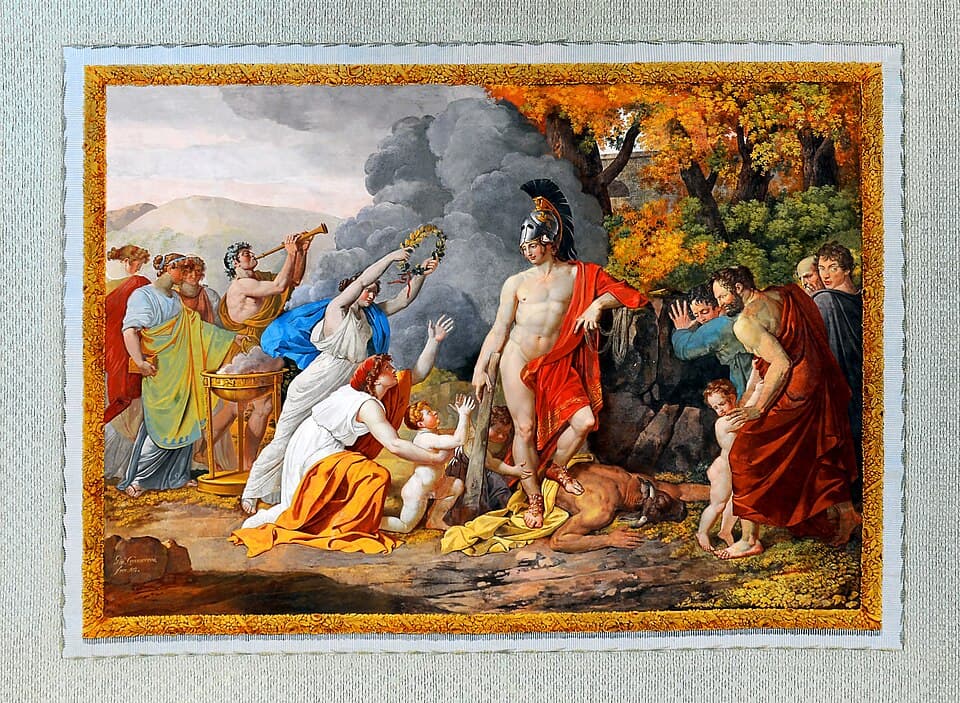
On the terrace of the palace of Athens, at the hour when the sun sinks behind the Acropolis, the king receives us. A bronze sword rests against the column of the megaron, and the sea gleams in the distance, toward Crete. Theseus, son of Aegeus, agrees to look back on the roads he has traveled and the monsters he has slain.
—Before Athens, there was the road from Troezen. How did you take it?
I could have reached Athens by sea, safe and calm. I chose the land, the Isthmus of Corinth, where no honest man passed without losing his life. Sinis bent two pine trees and tore travelers apart; Sciron forced passersby to wash his feet before hurling them from his cliff into the jaws of a turtle. I gave each the very torture they inflicted. A hero does not invent his justice: he turns it back on the one who defiled it. When I arrived beneath my father's walls, the road behind me was clean, and that, more than anything, made me his son.
I gave each the very torture they inflicted.
—What did the plain of Marathon mean to you?
A bull was ravaging Marathon, crushing crops and shepherds, its breath full of fire. The farmers no longer dared to bring out their livestock. Killing brigands on a road is one thing; freeing an entire plain from fear is another. I took the beast by the horns and dragged it alive to the city, so that they could see it, so that they would know the monster had a master. You see, a king is measured not only by his armies: he is measured by what he makes possible. A field that can be plowed again, a child who returns to tend his goats—these are my true feats, the ones that don't always make it into songs.
A king is measured by what he makes possible: a field that can be plowed again.
—Let us speak of Crete. Why did you want to enter the Labyrinth?
Each year, Athens delivered seven young men and seven young women to Crete, to feed a beast lurking in the darkness. I wanted to be among them. My father begged me to stay; I boarded the boat anyway. In the palace of Knossos, Daedalus had built a maze of corridors where no one could find their way—that was the true torment: not the beast, but the confusion before it. The Minotaur, half-man half-bull, awaited me at the heart of that stone. I struck him there, in the dark, and his bellow died against the walls. People always talk about the blade. They forget that you must first have the courage to enter.
The true torment was not the beast, but the confusion before it.
—How did you get out of that maze from which no one returned?
By a thread. Ariadne, the daughter of Minos, slipped me a ball of linen before I went down. I tied it to the entrance and unrolled it behind me, step by step, in the darkness. Without her, I would have killed the beast only to die of hunger between the walls, victorious and lost. That is why I cannot stand it when people sing of my arm without naming her cunning: strength opens the fight, but it is intelligence that leads back to the light. Even today, when a man seeks the way out of a tangled affair, he speaks of Ariadne's thread without knowing that he pronounces the name of a princess to whom I owe my life.
Strength opens the fight, but it is intelligence that leads back to the light.
—What would you say about that monster you faced, to those who never saw it?
The Minotaur was not just a beast: it was the shame of a palace, a fury born of a fault, which they had preferred to lock away rather than look at. They hid it in the depths of the Labyrinth as one hides what one does not want to name. To fight it was to descend into what men refuse to see. When my blade found its throat, I understood that I was not killing an animal, but the tribute, the fear, the habit of yielding. That is what a monster is, you see: not what is ugly, but what a city has resigned itself to feed.
A monster is not what is ugly, but what a city has resigned itself to feed.
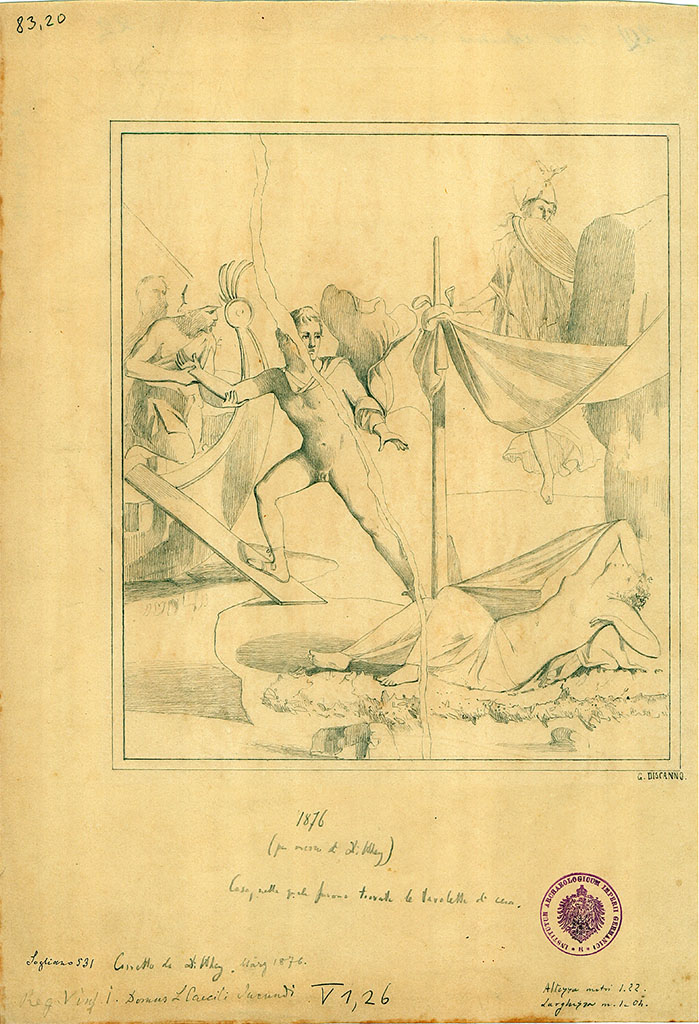
—Do you remember the return voyage, on that boat?
I see again the boat laden with the fourteen young people I had snatched from the beast, laughing and crying at once on the deck. We had left Crete with a sail, and my father, on the shore of Athens, was to watch for its color: white if I lived, black if I was dead. Joy made me forgetful. I did not change the sail. Aegeus, seeing the black rising from the sea, threw himself from the high rocks, and that sea now bears his name. I returned victorious and orphaned on the same day. No monster ever cost me as dearly as a sail I forgot to hoist.
I returned victorious and orphaned on the same day.
—They tell of your war against the Amazons. How did it begin?
Beyond the seas lived the Amazons, those warrior women who bowed to no man. I brought one back, Antiope, their queen, and took her as my wife. Their people would not suffer it: they crossed the straits, traversed entire lands, and brought war even to Athens itself, camping at the foot of my walls. That was the only time I fought in my own streets. I had faced brigands, a bull, the Minotaur—but seeing the enemy beneath my windows, that teaches a king that glory always attracts its own vengeance. No victory comes without a debt.
Glory always attracts its own vengeance; no victory comes without a debt.
—You carry a sword said to be of divine origin. What does it represent to you?
This blade I owe to Athena, the goddess who watches over my city. A hero without a god is merely a bandit stronger than the rest; what separates me from Sinis or Sciron is not my strength, but that I was chosen. In my lineage flows more than human blood—that is what is called the genealogy of heroes, those whom a deity has marked for a task. I do not draw the sword for my own anger alone; I draw it for Athens, and it is she who guides my wrist. When a warrior forgets this, he in turn becomes the monster he thought he was fighting.
A hero without a god is merely a bandit stronger than the rest.
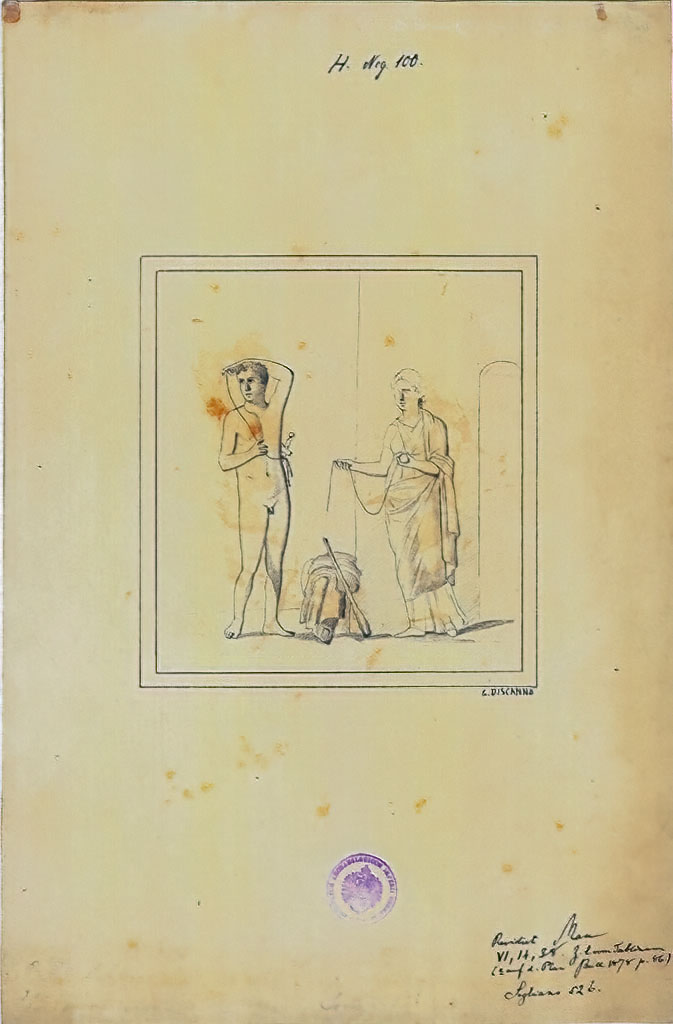
—Having become king, you transformed Attica. What did you want to build?
Before me, Attica was only a handful of jealous villages, each with its own chief, its own altar, its own quarrels. I wanted them to become a single people, under a single hearth: Athens. That is what is called synoecism—living together under one roof. I abolished the scattered councils to make a single heart. Killing a monster I already knew how to do; but uniting men who do not love each other, convincing them to give up a little of their pride to gain a city—that is the feat of which I am most proud, the one no blade could accomplish.
Uniting men who do not love each other: that is the feat no blade could accomplish.
—Why would a king give up part of his own power?
Because a power that rests on one man dies with him. I wanted Athens to last longer than Theseus. I handed over a share of affairs to the citizens, keeping for myself war and the laws, leaving them the city. On the hill of the Areopagus, I wanted justice to depend no longer on the whim of a king, but on a place, a rule. The wise will one day say that I laid there the first stones of what they call the government of the people. I will say more simply: I preferred to rule over free men than over slaves. One obeys better those whom one chooses.
I preferred to rule over free men than over slaves.
—What does a king's day look like, far from the battlefields?
At dawn, I make offerings to the gods, to Athena first, then I gather my council in the megaron, under the palace roof, to settle quarrels and judge men. In the afternoon, I do not lay down arms: a king who ceases to be a warrior soon ceases to be king, so I still practice wrestling and javelin. When evening comes, I receive nobles and citizens over wine mixed with water, and we talk, and we sing. You see, people imagine the hero always with sword in hand. But the hardest thing is not to slay a beast: it is to keep a city awake, day after day, without respite.
The hardest thing is not to slay a beast: it is to keep a city awake.
This imaginary interview was generated by artificial intelligence from sources documented in Theseus's profile. It dramatises what the figure might have said based on what we know about them, but does not constitute attested historical testimony. For primary sources and factual documentation, refer to the full profile.