Imaginary dialogue between Jules Ferry and Victor Schoelcher
by Charactorium · Victor Schoelcher (1804 — 1893) · Politics · 5 min read
It is in the book-cluttered study of Victor Schœlcher, in Paris, in the autumn of 1885, that Jules Ferry comes knocking. A kerosene lamp lights the proofs of a manuscript, and the smell of ink still lingers. The senator from the West Indies receives with deference this former minister who has just imposed free, secular, and compulsory schooling. Between the aging abolitionist and the republican of public education, it is the same struggle—that of emancipation through freedom—that extends from one generation to the next.
—You who have traveled so much, it is said that a stay in the West Indies in 1833 changed your youth. What did you see there?
I left as a lighthearted young man, more curious about porcelain and music than politics, Monsieur Ferry. I believed the question of slavery was a matter of numbers, sugar, and customs. Then I saw. I saw men sold like cattle in Martinique, backs branded with irons, families separated on the dock of a market. One does not return the same from such a spectacle. What my reading had not done, my eyes accomplished in a few months. I returned to France with a certainty that has never left me for sixty years: no economic reason, no state prudence can justify one man owning another.
What my reading had not done, my eyes accomplished in a few months.
—Before the decrees, you had to convince. Your book of 1840 became a weapon. How do you turn public opinion in a country?
With the pen, Monsieur le Ministre, patiently, page after page. In Des colonies françaises - Suppression de l'esclavage, I did not just cry out in indignation: I answered, one by one, all the objections of the colonists. They told me abolition would be ruinous? I proved the opposite, with figures in hand. They told me the Black man was incapable of freedom? I reported what I had observed with my own eyes. I wrote that slavery is a crime against humanity, but also that it was a bad deal for France itself. One must speak to conscience and interest at the same time. You know this well, you who had to convince an entire country to send its children to school: one reforms mores only by first enlightening minds.
One must speak to conscience and interest at the same time.
—You told me one evening how the decree of 1848 was born. Allow me to ask again for posterity: how did it happen?
The February Republic had just been born; everything was fever and disorder. I was appointed secretary of the Commission for the Abolition of Slavery—and I refused to temporize. Many wanted a slow emancipation, spread over years, with compensation and delays. I wanted the decree, immediately, without transition. "Decretist," they said, as if it were an insult: I wore it as a title. I held the pen on April 27, 1848, and with a stroke more than two hundred and fifty thousand men ceased to be things and became citizens. Think of it: slaves in the morning, voters in the evening. It was the most beautiful day of my life, and I have known none since that equals it.
Slaves in the morning, voters in the evening—it was the most beautiful day of my life.
—Your struggle began under Louis-Philippe and only triumphed under the Republic. Do you believe a monarchy could not have accomplished it?
I am deeply convinced of it. Under the July Monarchy, I wrote, petitioned, fought for fifteen years: they listened politely, put things off, and accommodated colonial interests. A throne always needs the powerful, and the powerful in the colonies clung to their slaves. It took 1848 to sweep away the king and proclaim universal suffrage for the impossible to suddenly become natural. England had preceded us in 1833, and we were constantly reproached for it. The truth is that the freedom of some calls for the freedom of others: you could not give the ballot to the worker in Paris and the chain to the cultivator in Guadeloupe. The Republic was the condition for abolition.
You could not give the ballot to the worker in Paris and the chain to the cultivator in Guadeloupe.
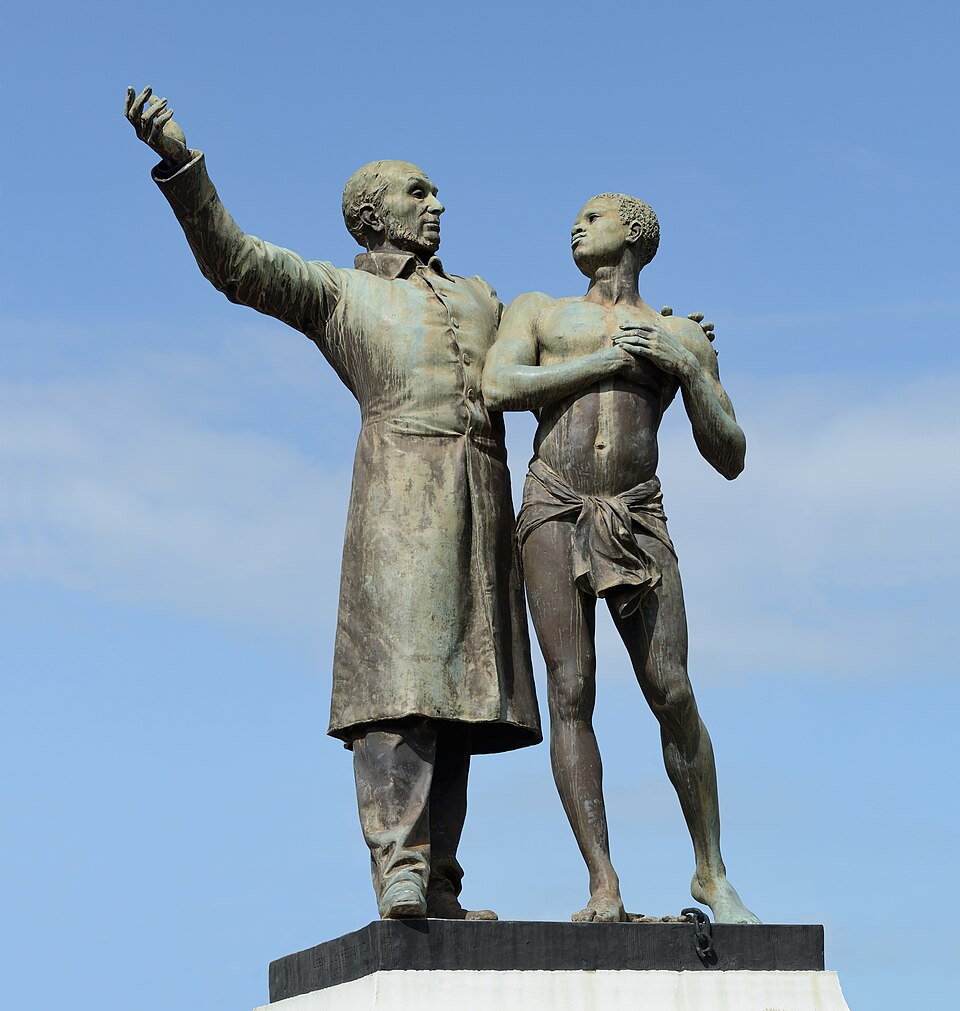
—Once the decree was signed, many thought you would rest. You were elected from Guadeloupe and went back to battle. Why not stop there?
Because breaking the chains is not enough, Monsieur Ferry—and you are better placed than anyone to understand me. A free man without land, without a fair wage, without education, remains half-enslaved. Elected representative of Guadeloupe, I fought for real equality: full civil rights, paid work, and above all schools. School, always school! I repeated tirelessly that the freedman would only truly be free when he could read, reason, and vote knowledgeably. That is why your work touches me so deeply: the free education you give to the children of France is the completion of what I began. Without it, my decree would have been only a half-emancipation.
A free man without land, without a fair wage, without education, remains half-enslaved.
—The coup d'état of 1851 drove you from France. What becomes of a man who sees his Republic struck down the very year of his triumph?
We took up arms; I was among those who resisted in the streets of Paris on December 2. When all was lost, we had to flee—exile or prison. I lived nearly twenty years outside the country, mostly in England, watching from afar the Empire trample what we had built. They were bitter years, I will not hide it. But exile did not disarm my pen: I continued to write, to bear witness, to keep the memory of 1848 alive. And when the Republic returned, in 1870, I immediately came back to take my seat. You can drive a man from his country; you cannot drive a just idea from the history of peoples.
You can drive a man from his country; you cannot drive a just idea from the history of peoples.
—You are finishing, they say, a life of Toussaint Louverture. Why devote your last strength to this hero of Haiti?
Because they wanted to erase him, and to erase such a man is to lie about what our people are capable of achieving. Toussaint Louverture was a slave who became a general, a legislator, a leader of a people—living proof that the color of one's skin determines neither intelligence nor greatness. By writing his life, I answer those who still claim that the freedman would remain a perpetual minor. I want French and West Indian youth to know that a man born in chains stood up to the greatest powers of his time. This is my last plea, perhaps: no longer to abolish slavery, which is dead, but to abolish prejudice, which survives it.
Slavery is dead; what remains is to abolish prejudice, which survives it.
—When I look at you at your desk, among your papers, I wonder: what, every morning, put your pen back to work?
Anger, Monsieur le Ministre, and it has never died. The anger of knowing that while I drank my coffee in Paris, in the comfort of a bourgeois study, men were bending their backs under the whip so that sugar could arrive in my cup. I could never drink in peace. So I wrote: books, articles, pamphlets, reports for the Assembly. The pen was my weapon, the printed page my battlefield. I believe a man is worth only as much as the cause he serves beyond himself. Mine took sixty years; I do not regret an hour. You may find me stubborn—I prefer to say faithful.
The pen was my weapon, the printed page my battlefield.
—One last thing. When you extend your hand to a child of a freedman in the West Indies, what would you like him to remember of you?
That he remember not my name—but his freedom. I did not free those men: I only gave them back what was theirs by birth and had been stolen from them. If that child remembers anything, let him know that he is the equal of all, that no birth condemns him, and that he has the duty, in turn, to defend the freedom of another. That is what matters to me. You give school, I give example; together, perhaps, we will have made these children truly free men. The rest—statues, honors—I leave to those who like ceremonies. I prefer to be continued rather than celebrated.
I prefer to be continued rather than celebrated.
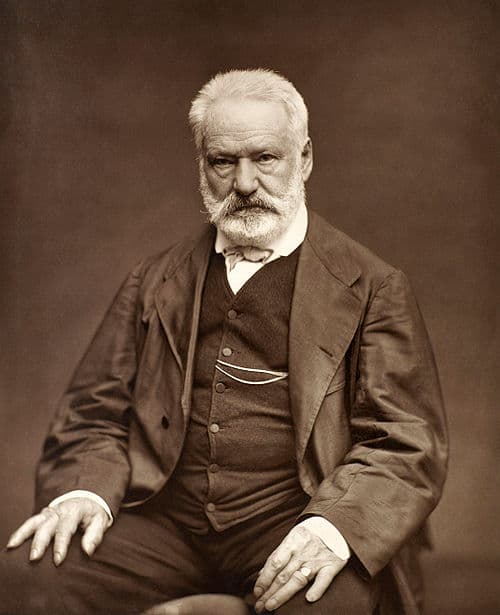
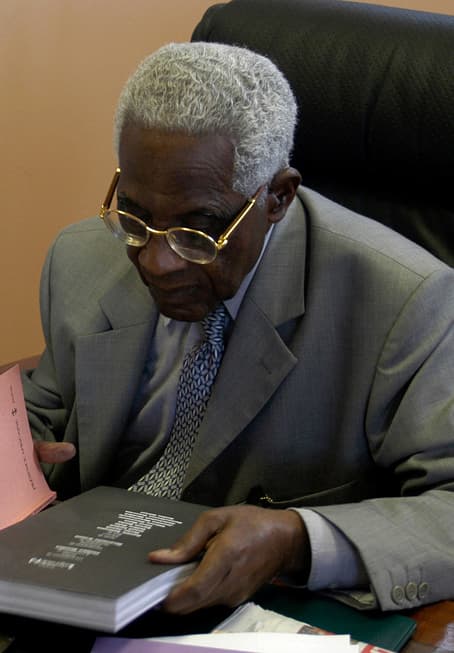
This imaginary interview was generated by artificial intelligence from sources documented in Victor Schoelcher's profile. It dramatises what the figure might have said based on what we know about them, but does not constitute attested historical testimony. For primary sources and factual documentation, refer to the full profile.