Imaginary interview with Victor Schoelcher
by Charactorium · Victor Schoelcher (1804 — 1893) · Politics · 6 min read
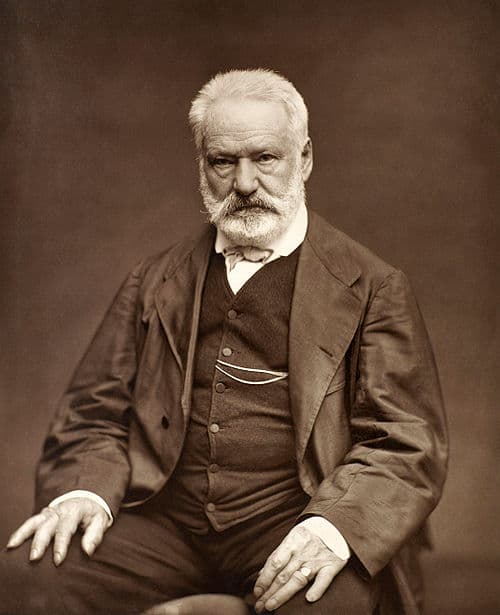
Paris, winter 1890. In an apartment cluttered with books and maps of the colonies, an old man with white whiskers receives visitors near his window. At eighty-six, Victor Schœlcher still speaks of slavery as an open wound, and his hand constantly brushes the inkwell on his desk.
—How did you become an abolitionist, you who were not born into this struggle?
One is not born a rebel, Sir; one becomes one by seeing. In 1833, I was a lukewarm young man, almost indifferent, convinced that slavery could be reformed in small doses, like a poison to be sweetened. And then I traveled. I saw the Antilles, I saw Cuba, I saw men sold like sugar. Lukewarmness cannot withstand that. Once you have laid eyes on the scarred back of a slave, you can no longer discuss half-measures without being ashamed of yourself. I returned to France with a cold certainty: there is no possible compromise with crime. Upon my return, I ceased to be a dilettante of the arts and became a man of a single idea.
Lukewarmness cannot withstand the sight of a man sold like sugar.
—What do you remember from those long stays in Guadeloupe and Martinique?
The silence of the plantations, above all. One imagines slavery as noisy, full of chains and cries; in truth, what chilled me was the mute obedience. In Martinique, I followed the workshops from dawn to dusk, notebook in hand, because I wanted facts, not drawing-room indignations. I noted rations, punishments, children born into slavery. Later, in my Voyages aux Antilles, I wanted the Parisian reader to feel the sugarcane, the heat, the everyday injustice. For the great lie of the colonists was to say that their slaves were happy. I saw that happiness with my own eyes: it was the happiness of a man forbidden to desire anything other than his own cage.
The great lie of the colonists was to say that their slaves were happy.
—Why did you choose the pen over the political podium alone?
Because one does not change a people by decree before having changed them through reading. In 1840, I published Des colonies françaises — Suppression de l'esclavage, and I put into it everything my travels had taught me. I wanted to disarm the planters' economic argument, to demonstrate with figures that France would not collapse without slaves. A book, you see, enters a bourgeois library through the door of reason, where a speech runs into prejudices. I wrote tirelessly, pamphlets and articles, convinced that slavery is first a crime — and a clearly named crime loses half its force. My pen cost me many nights, but it prepared the ground where the decree could later take root.
One does not change a people by decree before having changed them through reading.
—What did you reply to those who predicted the ruin of the colonies without slavery?
I turned their calculations back on them. They told me: without servile labor, no more sugar, no more prosperity. I replied that prosperity built on enchained men is merely prolonged theft, and no balance sheet can wash away blood. In my writings, I always argued that abolition was not only an act of justice, but a measure of true policy — for a free people works better than a resigned one. Great Britain had freed its colonies in 1833 without the world collapsing; why should France lag behind, she who claims to be the mother of human rights? My weapon was to meet the colonists on their own ground, self-interest, and to prove that they were even defending their pockets poorly.
Prosperity built on enchained men is merely prolonged theft.
—Do you remember the moment when you drafted the abolition decree?
As if it were yesterday morning. February 1848, the Republic had just been born in the streets, and I was appointed secretary of the Commission for the Abolition of Slavery. I refused to wait, to temporize, to talk of a ten-year transition as some wished. Leaning over my desk, the inkwell within reach, I wrote that slavery would be abolished in all French colonies and possessions, and that all men, without distinction of color, would enjoy civil and political rights. Each word weighed a destiny. On April 27, 1848, this text became law, and more than two hundred fifty thousand men awoke free. No fortune in the world is worth the memory of that sentence traced in one stroke of the pen.
Each word I traced weighed a destiny.
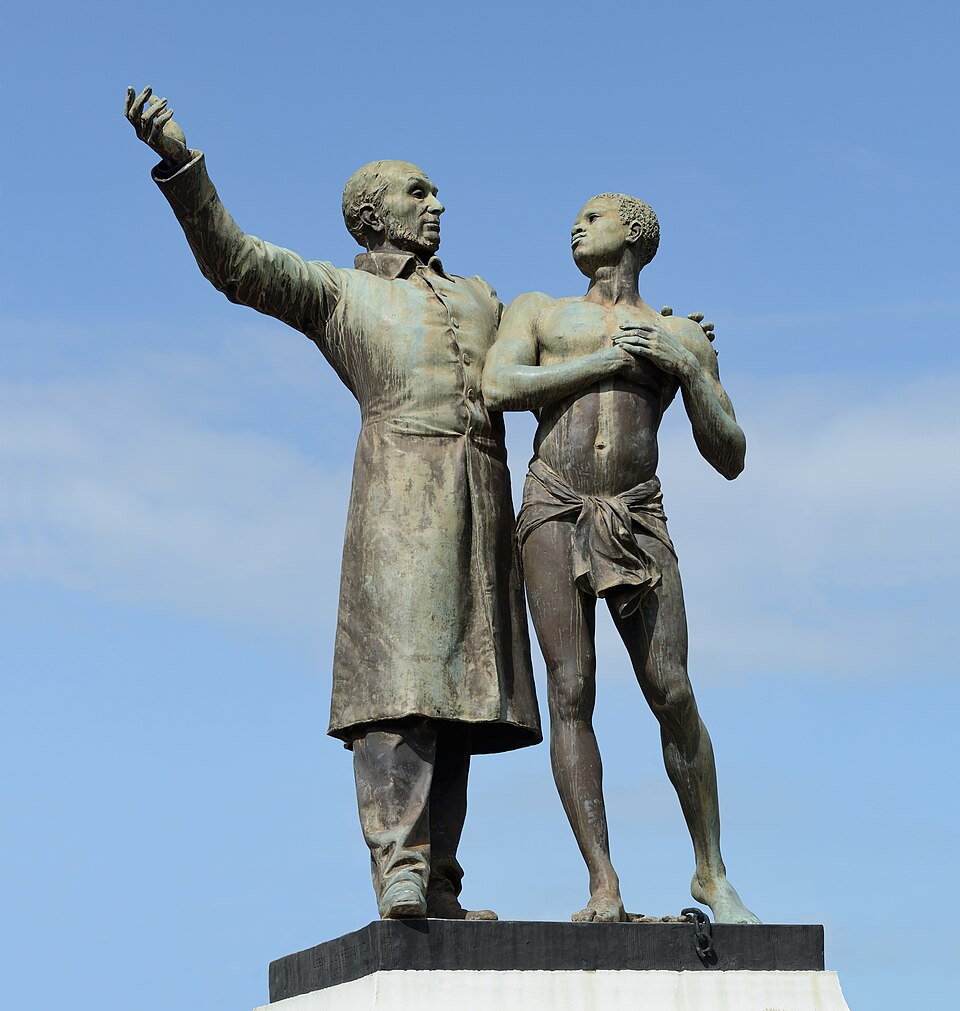
—Why this insistence on abolishing at once, without an intermediate period?
Because slowness, in this matter, is complicity. They proposed gradual emancipation, as if one could be half-free, as if one could return dignity to a man in installments. I never believed in such half-measures; they only served to reassure the masters and to perpetuate crime under a gentler name. A slave freed in five years remains a slave today — and during those five years, he continues to be sold, beaten, worked to death. The Second Republic offered me the chance to end it with a single act, and I seized it without trembling. Emancipation only makes sense if it is total and immediate; the rest is merely diplomacy of injustice.
Slowness, in matters of slavery, is merely well-dressed complicity.
—Once abolition was signed, did your struggle end there?
On the contrary, Sir, it changed its face. Elected representative of Guadeloupe in 1848, I quickly understood that one can break an iron chain and leave intact an invisible chain — that of poverty and ignorance. A freed man without land, without school, without real rights, remains at the mercy of his former master turned employer. So I pleaded for full civic equality, for a fair wage, and above all for education. For I believe that school is the second abolition: the first frees the body, the second frees the mind. One does not give freedom to a people; one gives them the means — and these means are called knowledge, the right to vote, bread earned with dignity.
School is the second abolition: the first frees the body, the second frees the mind.
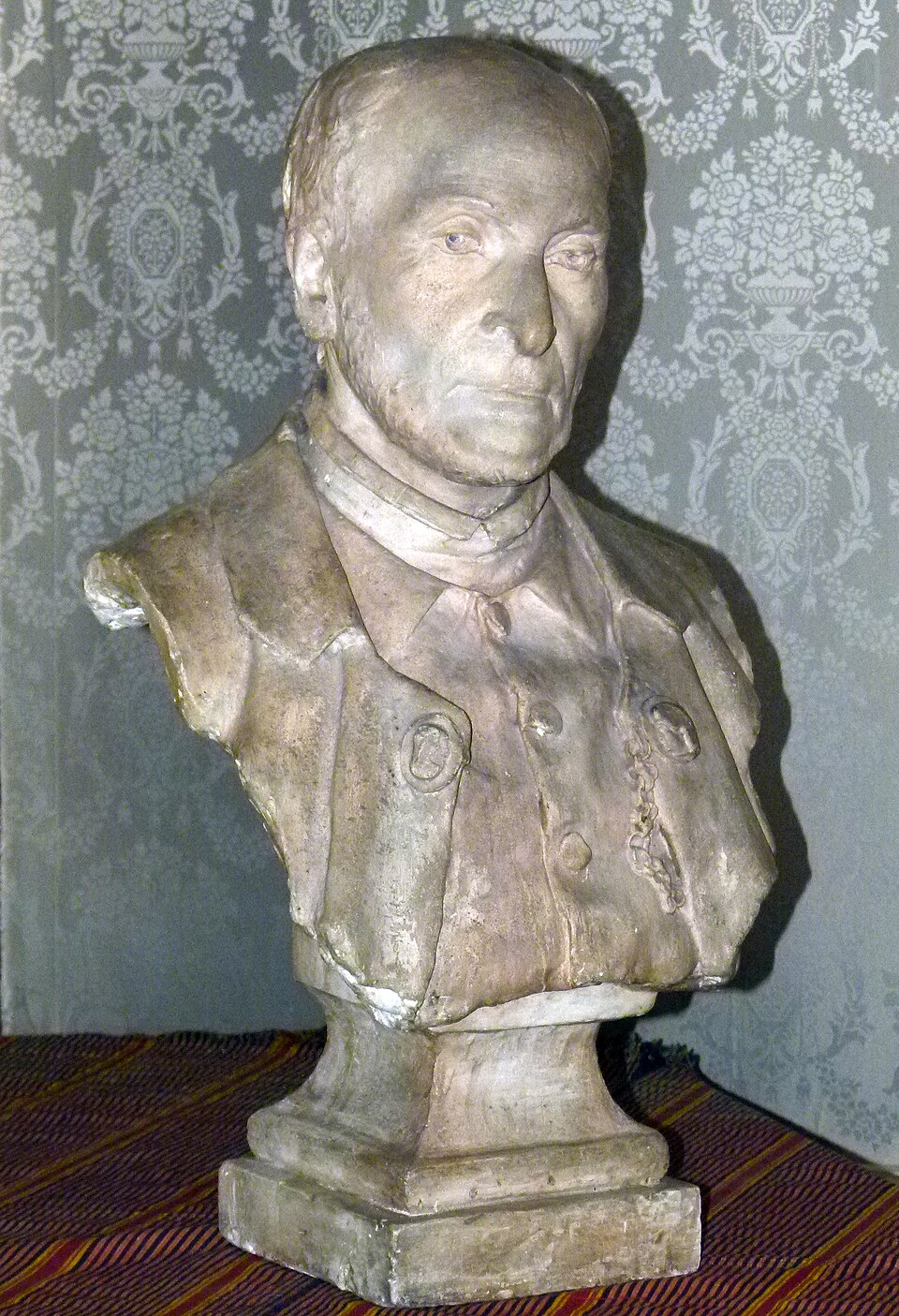
—How did you feel when the coup d'état of 1851 shattered the Republic you served?
Rage, and the bitter taste of exile. In December 1851, Louis-Napoléon Bonaparte strangled the Second Republic, the very one that had abolished slavery and established universal suffrage. I resisted on the barricades, then had to flee, and spent nearly twenty years far from France, mostly in England. People think a proscribed man fades away; on the contrary, I kept writing, denouncing, keeping the flame alive. Exile taught me one thing: liberties that are won are never permanently acquired; they must be defended in every generation. When I returned after the fall of the Empire, I was older but unbroken — the idea itself had not aged a day.
Liberties that are won are never permanently acquired.
—At your age, why devote so much effort to writing the life of Toussaint Louverture?
Because there are debts of memory that one cannot take to the grave. Toussaint Louverture was the first to prove, arms in hand, that a people of slaves could conquer their own freedom without waiting for a generous decree from Paris. I held the pen; he held the sword. In writing his Vie in 1889, I wanted to give this man of Haïti the place that official history denied him, out of color prejudice. An old man of eighty-five still bent over his inkwell — that is not stubbornness: it is the refusal to let those who paved the way die twice. I wanted young people to know where their freedom comes from.
He held the sword; I only held the pen.
—What would you say to those who will read you long after you are gone?
If I could imagine being read a century from now, I would tell them to beware of easy consciences. I saw my era applaud the decree of 1848 and then fall back asleep, as if naming a crime sufficed to erase it. Freedom is not a monument inaugurated once; it is a daily labor, thankless, never finished. Let those who come not wait for slavery to wear exactly the same chains as the one I fought — it will take other forms, more discreet, better disguised. I bequeath to them not a closed victory, but vigilance. And if my name is ever engraved somewhere, let it be less to honor me than to remind the living of their unfinished task.
Freedom is not a monument inaugurated once; it is a labor never finished.
This imaginary interview was generated by artificial intelligence from sources documented in Victor Schoelcher's profile. It dramatises what the figure might have said based on what we know about them, but does not constitute attested historical testimony. For primary sources and factual documentation, refer to the full profile.