Imaginary interview with Virgil
by Charactorium · Virgil (69 av. J.-C. — 18 av. J.-C.) · Literature · 7 min read
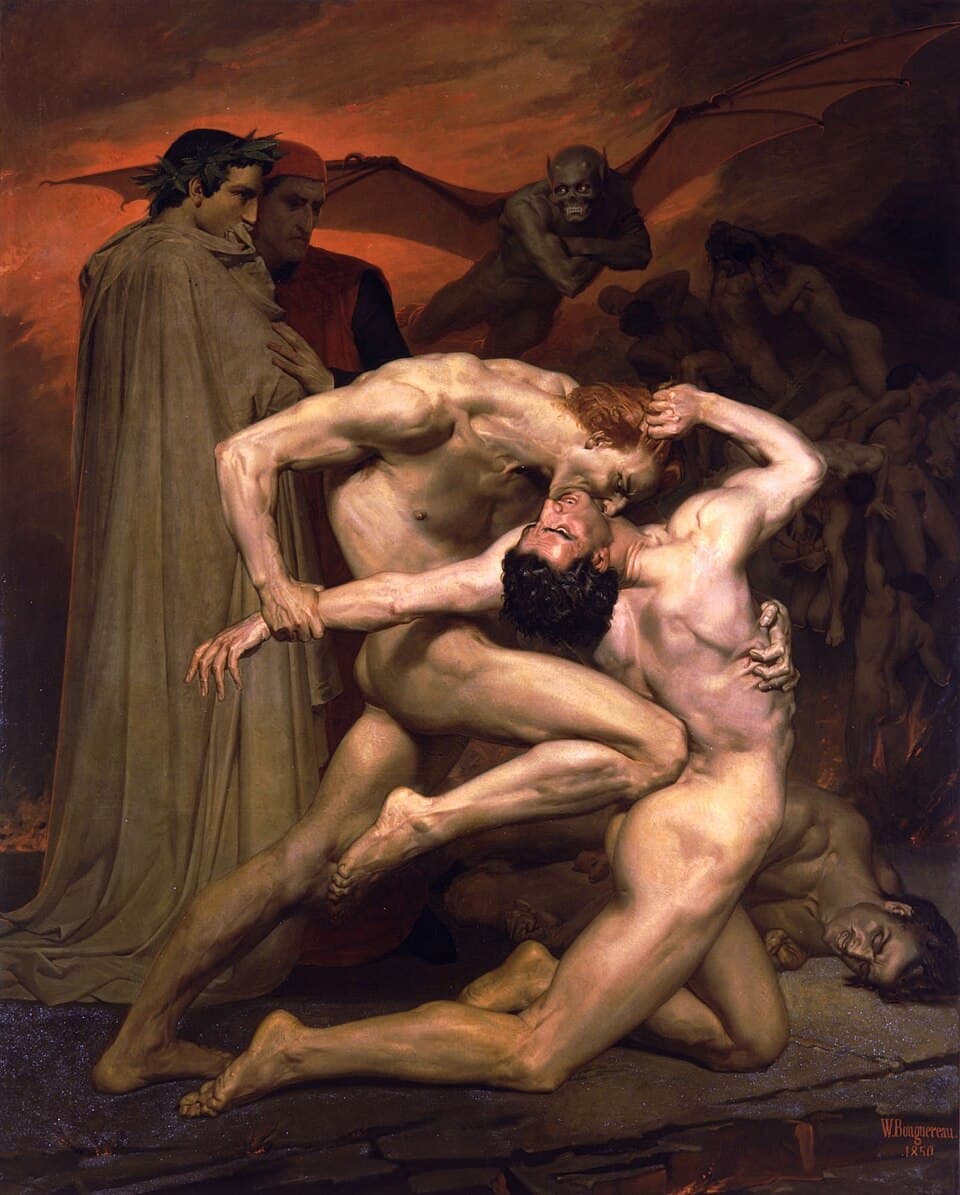
Naples, his final years. In a domus open to the bay, where the light falls slantwise on the papyrus rolls, Rome's most famous poet reluctantly receives visitors — he prefers, he says, shadow to the gaze of men. Between two silences, he nevertheless agrees to revisit the shepherds, the lost lands, and that epic he never believed he had finished.
—It is said that you fled the streets of Rome as soon as a passerby recognized you. What happened to you in those moments?
In Rome, it was enough for a stranger to whisper my name in the Forum for me to immediately seek an alley where I could disappear. People followed me, they wanted to touch the hem of my toga as if I were some actor applauded in the theater — and I never desired anything less. I left the city more than once for that sole reason, retreating to the calm of Naples where no one stared at me. The strangest thing is that Augustus himself urged me to appear, to read, to continue my work. A man who commands the whole world, and I who could not command my own embarrassment before three curious onlookers. I believe the poet is not made for the public square: he needs shade, as the vine needs a stake. I wanted glory for my verses, but not for my face.
I wanted glory for my verses, but not for my face.
—Your first verses, the Eclogues, were born in the midst of the civil wars' turmoil. How does one sing of shepherds when Rome is tearing itself apart?
I had in mind the hills of my childhood when I wrote: “Tityrus, lying under the spreading beech, you practice the rustic pipe with your light melodies.” Outside, armies were dividing Italy, proscriptions were emptying houses — and I was setting up ten little scenes of herdsmen, shadows, and flutes. I have been reproached, sometimes, for this sweetness in a time of iron. But it is precisely because everything was burning that these eclogues pleased: they offered a patch of grass to breathe, the memory of a world not yet trampled by war. The shepherd singing under his beech is not ignorant of violence; he knows that another, further away, has lost his field. My pipe did not erase misfortune — it opposed it with another voice, lower, more tenacious.
It is precisely because everything was burning that these eclogues pleased.
—Why shepherds, exactly? What does the rustic flute say that the sword does not?
The shepherd owns almost nothing: a flock, a flute, the shade of a tree. That is why he can sing everything. In my Eclogues, I wanted a world where time is measured by seasons and not by victories, where one mourns a lost love rather than a battle. The sword cuts, it concludes; the flute, on the other hand, prolongs, it leaves the question open. When Rome no longer knew how to speak except through proscriptions, I lent my voice to simple men who answer each other from one meadow to another. Many saw it as an escape; I believe rather it was a refuge, and a refuge is not a flight. One enters it to catch one's breath, then returns to the world a little less hard — and that, perhaps, is all a poem can offer.
A refuge is not a flight.
—You yourself experienced such dispossession. What remains in you of the loss of your family lands?
The scar has never fully closed. After the civil wars, the lands around Mantua were confiscated for distribution to veterans — and my family's lands at Andes were taken along with the others. I saw what so many of my shepherds see: a man driven from the furrow his father had plowed. According to what I was allowed to hope, it was the young Octavian who intervened to have them returned to me. How, afterward, could I not think of him when composing my verses? I do not claim that a favor makes a poem; but I know that a field returned warms a man's gratitude, and that warmth colored many pages where I sing of Rome and its destiny. Debt is not a chain — it is a root.
Debt is not a chain — it is a root.
—How does one go from gratitude toward a man who returned your field to praising the master of Rome in an entire epic?
I would refrain from saying that I wrote to repay a debt — a purchased poem rings false, and the Roman ear detects falsehood at the first syllable. But it is true that the man who returned Andes to me is also the one who closed the doors of civil war after Actium. I had before my eyes both things at once: my private gratitude and the public peace. In the circle of Maecenas, I was not ordered to produce flattery; I was left to seek how to express the greatness of Rome without lying. I found that by tracing back to Aeneas, I could celebrate Augustus without kneeling before him — by inscribing him in a destiny larger than his person. Personal debt gave me the impetus; the sense of Rome gave it its form.
By tracing back to Aeneas, I could celebrate Augustus without kneeling before him.
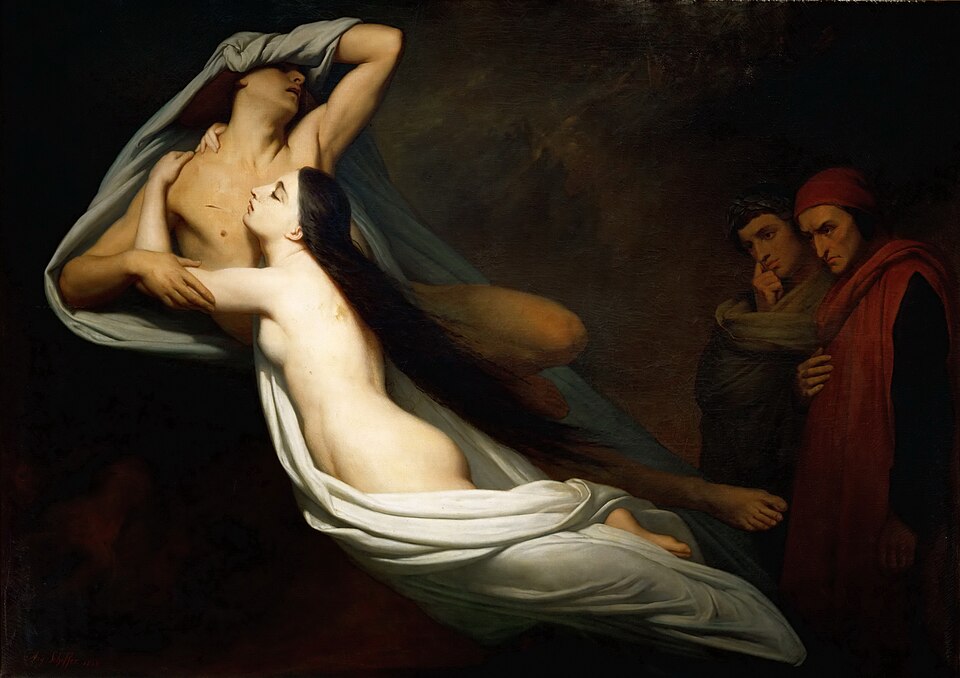
—The Aeneid opens with a famous declaration. What did you want to announce from that first line?
“I sing of arms and the man who, fleeing the shores of Troy, came to Italy by fate and storms, long tormented by Juno's power and by war.” Everything is there, from the opening: arms, because it is an epic; the man, because at the heart of so much fury I wanted a heart that doubts, suffers, perseveres. Aeneas is not a thunderbolt of war like the Greeks' Achilles; he carries his father on his shoulders and his son by the hand. He flees a city in ashes to found another he will not see. That is what I wanted to sing: not the easy glory of the victor, but the weight of a destiny not chosen and yet assumed. The rest — twelve books — is only the unfolding of that first breath.
Aeneas carries his father on his shoulders and his son by the hand.
—Many read in this epic a service rendered to power. Was this work meant to glorify Rome and its prince?
I will not deny it: my poem links Troy to Rome, and Rome to the house of Augustus, as one links the trunk to its roots. Showing that the Roman destiny was written long ago, that the city of Aeneas was one day to give the world a master of peace — yes, that served the prince. But to glorify is not to lie, and a praise that speaks only of good is but a hollow statue. I put into the Aeneid tears, faults, an abandoned queen who takes her own life, wars in Italy that bear a striking resemblance to our own. The attentive reader also hears the cost of greatness. A poem that only flatters would die with the one it flatters; I wanted mine to last longer than any man's favor.
A praise that speaks only of good is but a hollow statue.
—Why did you make precisely Aeneas, a defeated Trojan, the ancestor of the Romans?
Because a people recognizes itself better in a survivor than in a conqueror. Aeneas, the Trojan escaped from disaster, carries with him his household gods, the Penates, which he transplants into Italian soil: Rome is thus born of fidelity, not of plunder. And then the family of Augustus, the Iulii, traced its bloodline back to Iulus, Aeneas' son — there was a thread that no one had yet woven into a great story. By choosing a defeated man, I also gave Rome a lesson: one can lose everything — one's city, one's roof — and build greater on the ashes. That was true for Aeneas; it was true, I believe, for an Italy drained by its wars. The ancestor I offered them was not a fearless man, but a man who continues.
A people recognizes itself better in a survivor than in a conqueror.
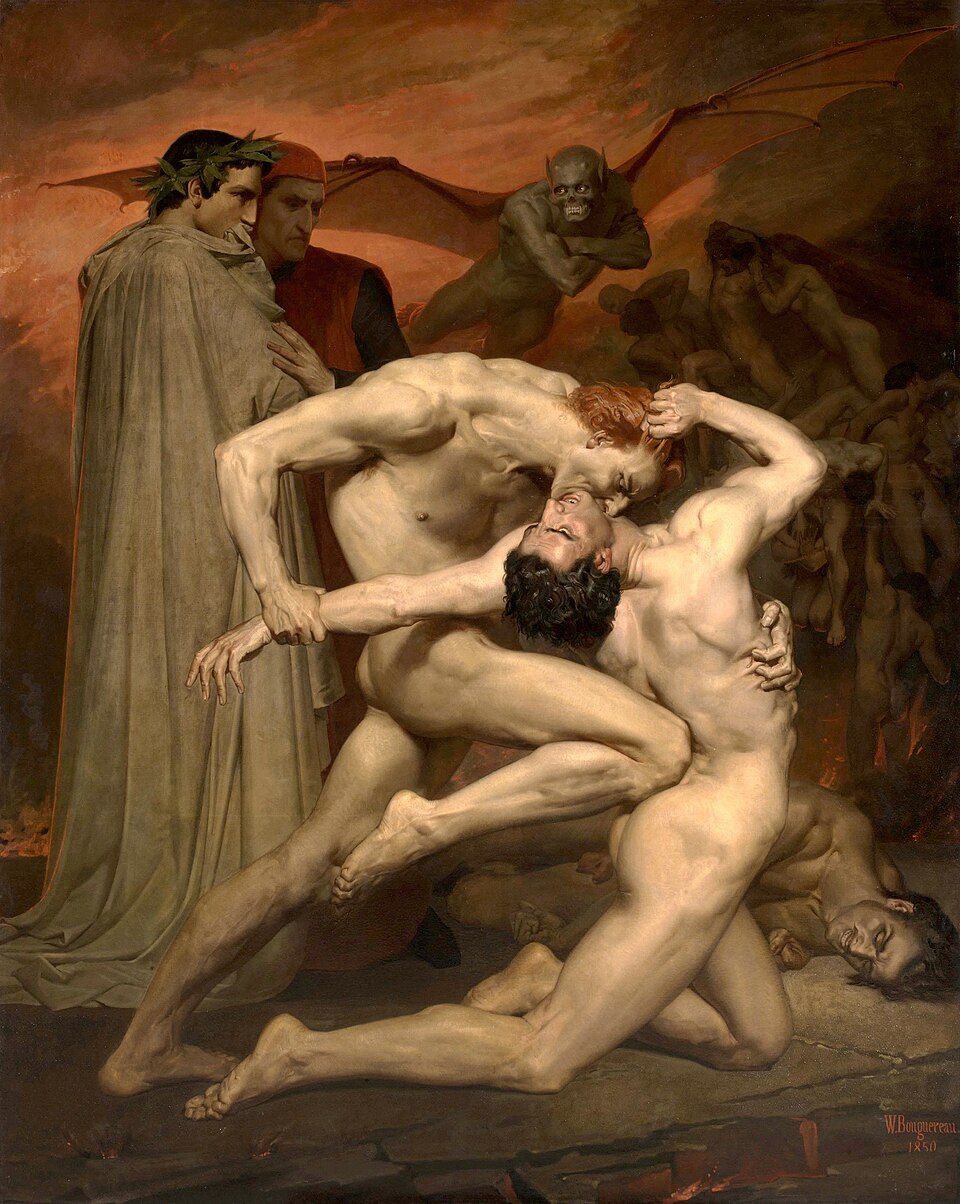
—What would you say about the contrast between the shy man you are and the immense place your verses occupy in Rome?
There are two Virgils, and they get along poorly. One, at Maecenas' table, listens to others recite and barely opens his mouth; the other, on the papyrus roll, speaks in a voice said to be assured even in the palaces. I am more at ease with the calamus than with my own tongue. When I am invited to read my verses before Augustus, my hands tremble like a beginner's — and yet these same verses, they say, silence the room. I believe writing is the refuge of the timid: on wax, one can erase, start over, weigh each word, which conversation never allows. The laurel crown I gladly leave to my verses; for the man, the shade of a portico suffices.
Writing is the refuge of the timid.
—It is reported that at your final hour, you demanded that the Aeneid be burned. Is this true?
Returning from Greece, ill, I had only one thought: this poem was not finished. Twelve years of work that I never deemed complete — there were lame verses, half-lines left hanging, passages I wanted to rework. At Brundisium, feeling the end approaching, I asked for the rolls to be brought to me and thrown into the fire. Not out of disdain, understand: out of scruple. Delivering an imperfect work to men seemed to me a fault, almost an impiety toward the craft. I was refused. Augustus himself ordered that the manuscript be kept, against my dying wish. I do not know whether to resent him or be grateful — perhaps both, as one always is toward those who save us despite ourselves.
I wanted to burn it not out of disdain, but out of scruple.
—If the work survived you despite yourself, who took care of it, and what remains of your unsatisfied rigor?
Two friends, Varius and Plotius Tucca, gathered my rolls and published them according to what Augustus had decided. I had, it is said, recommended that they add nothing of their own, complete nothing in my place — that I be read unfinished rather than retouched. If they respected that wish, then my broken half-lines still run through the epic, those lines that death cut short before I could complete them. Strangely, I take comfort: perhaps a poem should never appear entirely closed, like a temple where one column still awaits its carver. Unsatisfied rigor is what keeps a work alive. I would have liked three more years to polish it; they were denied me. Imperfection must, too, be a form of beauty.
A poem should never appear entirely closed.
Read further
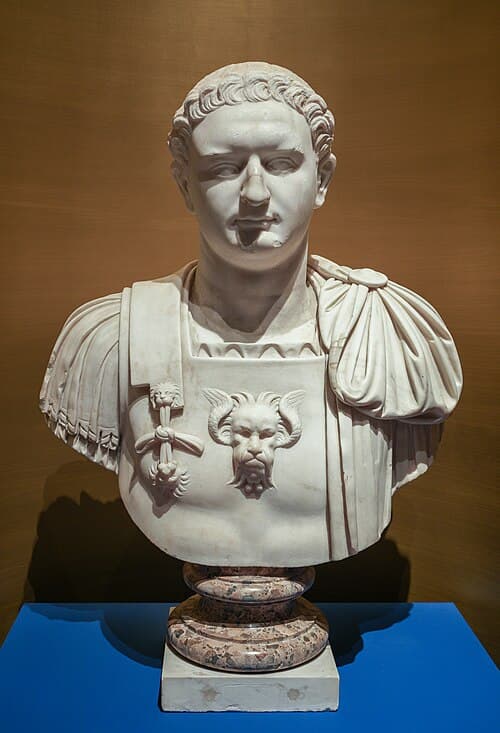
This imaginary interview was generated by artificial intelligence from sources documented in Virgil's profile. It dramatises what the figure might have said based on what we know about them, but does not constitute attested historical testimony. For primary sources and factual documentation, refer to the full profile.