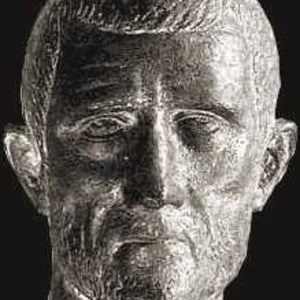

Roman general and statesman during the age of Augustus. As governor of Germania, he suffered a catastrophic defeat in AD 9 in the Teutoburg Forest, where three Roman legions were annihilated by a Germanic coalition led by Arminius. He took his own life on the battlefield.
Varus
Varus
7 min read
Frequently asked questions
Famous Quotes
« Quintili Vare, legiones redde! (Quintilius Varus, give me back my legions!) — attributed to Augustus by Suetonius»
Key Facts
- Born into a patrician family, he served as consul in Rome in 13 BC
- Governor of Syria around 6-4 BC, then legate of Augustus in Germania
- In AD 9, he was lured into an ambush by Arminius at the Battle of the Teutoburg Forest
- Three legions (XVII, XVIII, XIX) were destroyed; Varus killed himself to avoid capture
- His defeat permanently fixed the Roman frontier along the Rhine and marked the end of the conquest of Germania
Works & Achievements
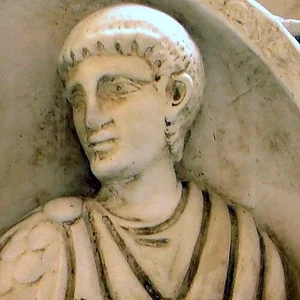
Varus rises to Rome's highest magistracy alongside Tiberius, crowning his political ascent and his ties to the house of Augustus.
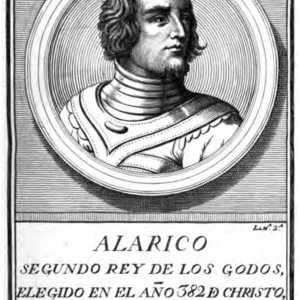
Administration of one of the richest and most strategic provinces of the Empire, where he commands four legions and intervenes in Judea.
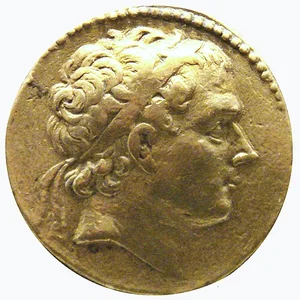
After the death of Herod, Varus crushes the revolt by crucifying two thousand insurgents, an episode that became famous as the “War of Varus.”
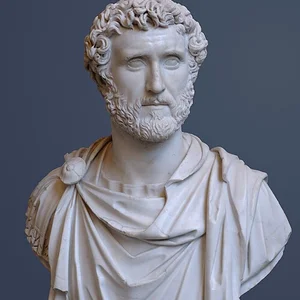
Tasked with transforming the lands between the Rhine and the Elbe into a Roman province, he introduces Roman administration, taxation, and law among the Germanic peoples.
His final military operation, which ends in the annihilation of three legions and becomes one of the greatest disasters in the history of Rome.
Anecdotes
In 9 AD, Varus was marching through the forests of Germania with three legions when he was trapped in a muddy ravine. For three days, under pouring rain, the Germanic warriors burst from the woods to massacre the Romans, who were unable to form up for battle.
Arminius, the Germanic chieftain who annihilated Varus's army, had served as an auxiliary officer in the Roman army and even held Roman citizenship. Varus trusted him completely and ignored the warnings of another Germanic noble, Segestes, who cautioned him about the betrayal.
According to the historian Suetonius, when news of the defeat reached Rome, the emperor Augustus was so distraught that he let his beard and hair grow for months and would sometimes bang his head against a door, crying out: “Quintilius Varus, give me back my legions!”
To avoid being captured and paraded as a trophy, Varus took his own life by throwing himself onto his sword during the battle. The Germans nonetheless dug up his half-burned body, severed his head, and sent it to King Maroboduus before it was forwarded to Rome for burial.
The three destroyed legions (XVII, XVIII, and XIX) bore numbers that were never again reassigned by the Roman army, so deeply did the disaster scar the collective memory. Six years later, the general Germanicus came upon the battlefield strewn with bleached bones and skulls nailed to the trees.
Primary Sources
It is reported that he was so deeply affected that he let his beard and hair grow for several months, and that he would sometimes strike his head against the doors, crying out: “Quintilius Varus, give me back my legions!”
Varus was a man of mild and quiet character, more accustomed to the leisure of the camp than to the hardships of war. Hemmed in by forests, marshes, and ambushes, he was slaughtered along with his army by that enemy whom he had always treated like cattle.
In the middle of the plain bones lay scattered or heaped together, according to whether the men had fled or stood their ground. Nearby lay broken weapons and the carcasses of horses, and human skulls were nailed to the trunks of the trees.
A violent rain and a powerful wind kept them from advancing and made even standing upright difficult; they had lost the use of their weapons, which they could neither wield nor hurl properly.
Key Places
Likely site of the ambush of 9 AD in which Varus's three legions were annihilated. There he met his death by throwing himself on his sword.
Capital of the Empire where Varus built his career, served as consul in 13 BC, and where the news of his defeat plunged Augustus into despair.
Capital of the wealthy province of Syria, which Varus governed around 7-6 BC before his appointment to Germania.
City where Varus, governor of Syria, put down violent unrest after the death of Herod the Great, having two thousand rebels crucified.
Large legionary camp on the Rhine serving as a base for Roman operations in Germania, from which Varus's expeditions set out.
Typical Objects

Sacred metal standard depicting an eagle, carried by each Roman legion. Losing it was considered the worst of all military disgraces.

Short double-edged sword, the Roman legionary's main weapon for close combat. Varus is said to have used it to take his own life.

Large curved shield of wood and leather that made the tortoise formation (testudo) possible. Useless in the narrow defiles of Teutoburg.

Throwing spear with an iron tip designed to bend on impact and render the enemy's shield unusable. The rain at Teutoburg had turned it into an ineffective weapon.

Armor made of articulated metal strips protecting the legionary's torso. Heavy and ill-suited to guerrilla warfare in wooded, marshy terrain.

Bronze or iron helmet protecting the legionary's head, neck, and cheeks. Many were found nailed to trees by the Germanic tribes after the battle.

Loose draped woolen garment worn by Roman citizens in civilian life. Varus, a former consul and governor, wore it in his political duties.
School Curriculum
Vocabulary & Tags
Key Vocabulary
Daily Life
Morning
On campaign, Varus was woken at dawn by the trumpet calls of the camp. He received the reports of his officers, consulted the scouts about the route to follow, and gave the order to break camp for the day's march.
Afternoon
A governor as much as a general, he devoted his afternoons to dispensing justice and administering the province: hearings, the collection of taxes, and the settling of disputes between Romans and Germanic notables — an activity that often drew his thoughts away from the war.
Evening
In the evening, in his commander's tent (the praetorium), he dined with his senior officers and his Germanic guests, among them Arminius. There they discussed the affairs of the province over wine and food, in a false atmosphere of trust.
Food
A Roman general like Varus ate far better than his soldiers: wheat bread, meats, fish, fruit, olives, and cheeses, all washed down with wine diluted with water. The rank and file made do mostly with grain, cereal porridge, and bacon.
Clothing
In his military duties, Varus wore an officer's cuirass, a red cloak (paludamentum) marking his command, and leather boots. In civilian life, he donned the white toga of the Roman citizen and magistrate.
Housing
In Rome, Varus owned a wealthy townhouse (domus) built around an atrium, a sign of his senatorial rank and his fortune. On campaign, he lodged in a vast leather tent at the center of the fortified camp, laid out according to a regular plan that was identical everywhere in the Empire.
Historical Timeline
Period Vocabulary
Liens externes & ressources
Références
Œuvres
Consulat de l'an 13 av. J.-C.
13 av. J.-C.
Gouvernement de la province de Syrie
vers 7-6 av. J.-C.
Répression des troubles de Judée
4 av. J.-C.
Légation impériale de Germanie
vers 7-9 apr. J.-C.