 flip
flipThe Cup of Honeyed Spiced Wine (the Cup of Wrath)
The Cup of Honeyed Spiced Wine (the Cup of Wrath)
Why this dish? The Apocalypse where Abaddon appears multiplies the image of the cup: the wine of God's wrath given to the nations (Rev 14:10; 16:19). This warm honeyed spiced wine, the Roman 'conditum' drunk on the Aegean shores, here becomes the cup raised with trembling — sweet and burning with spices.
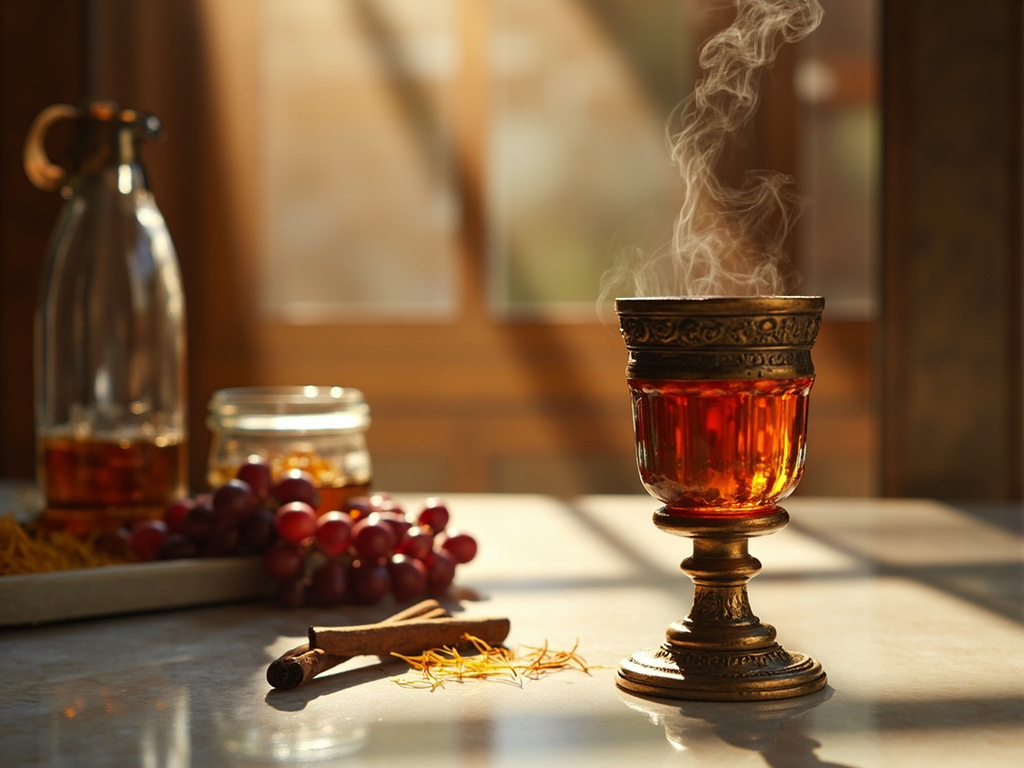
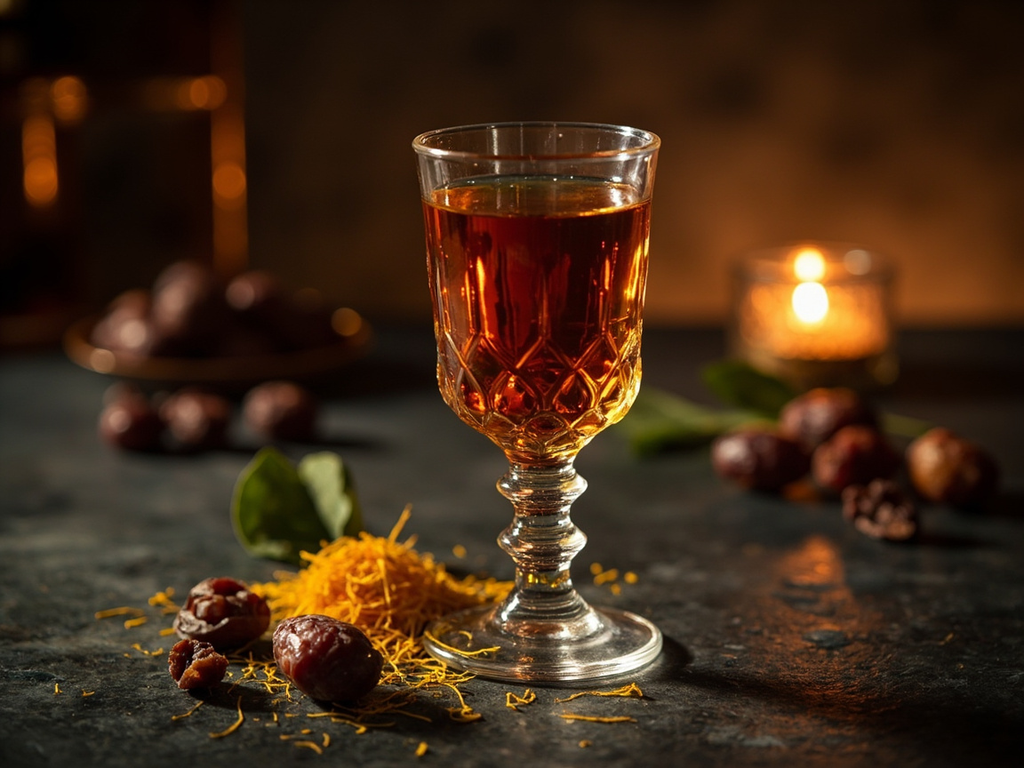
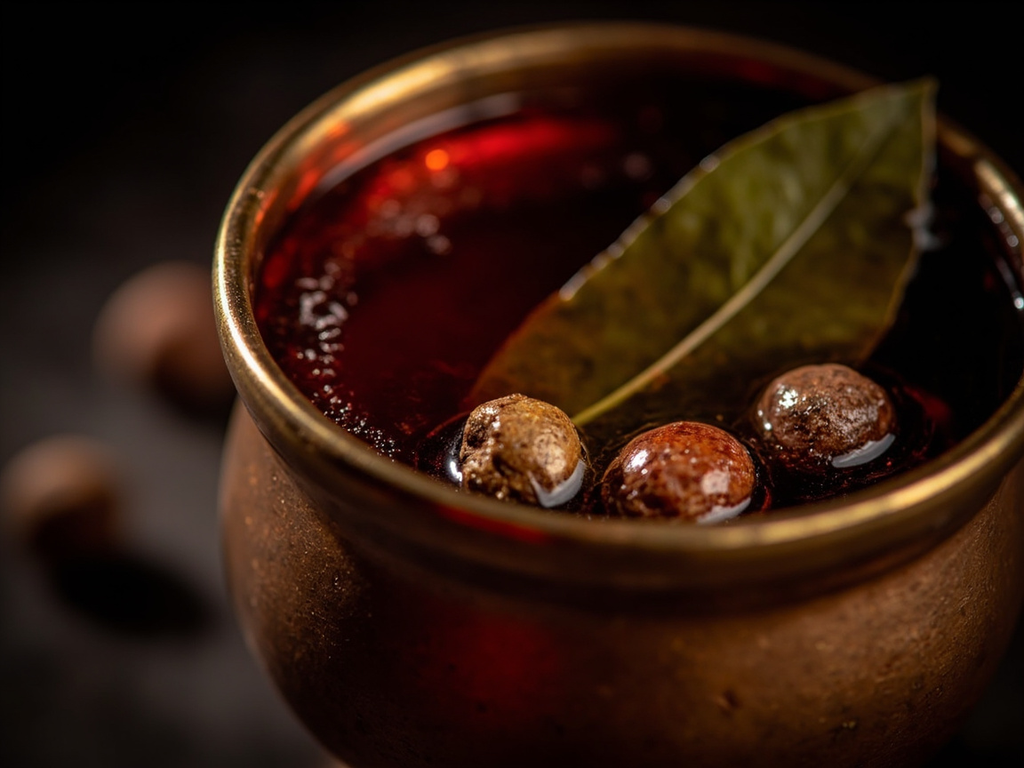
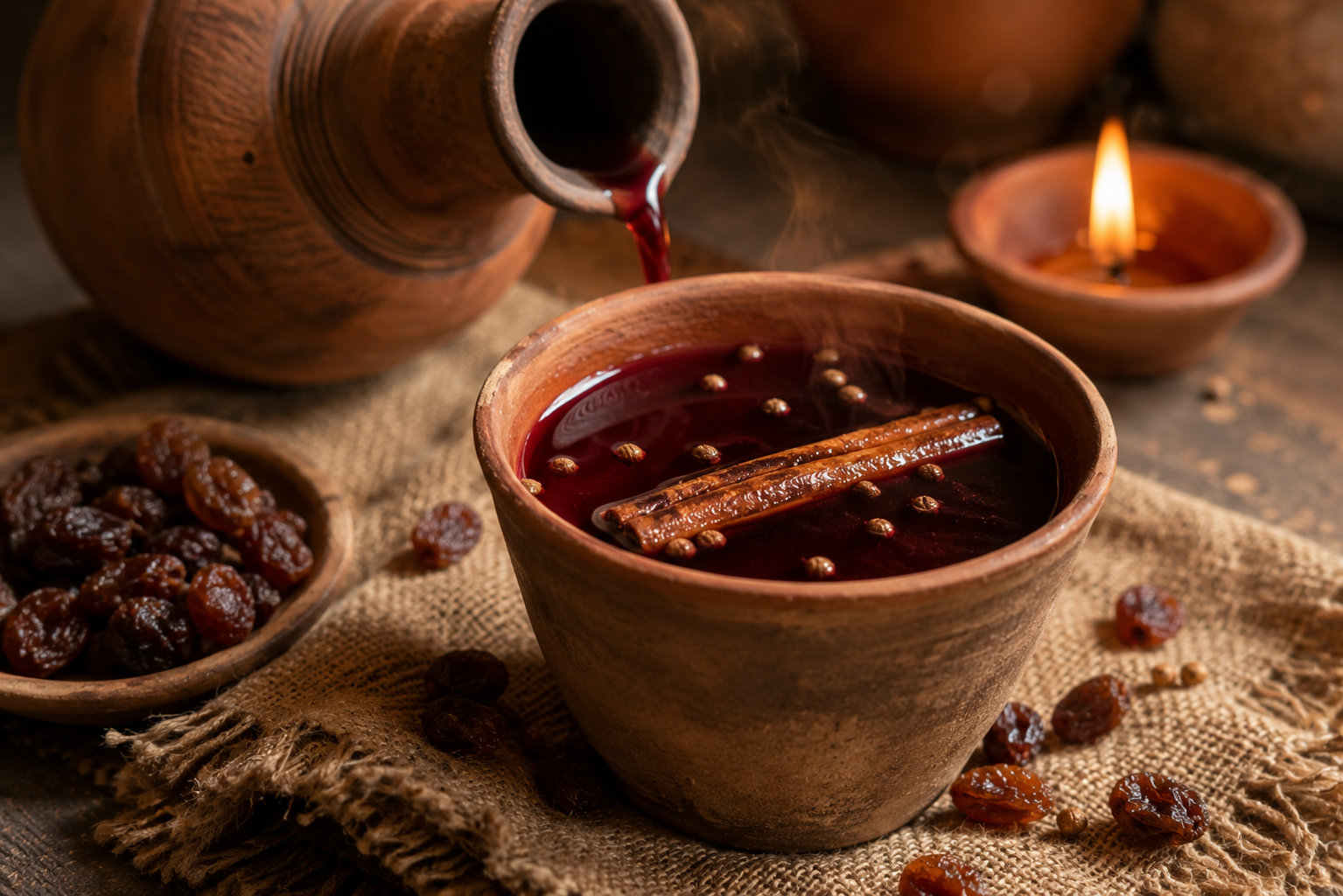
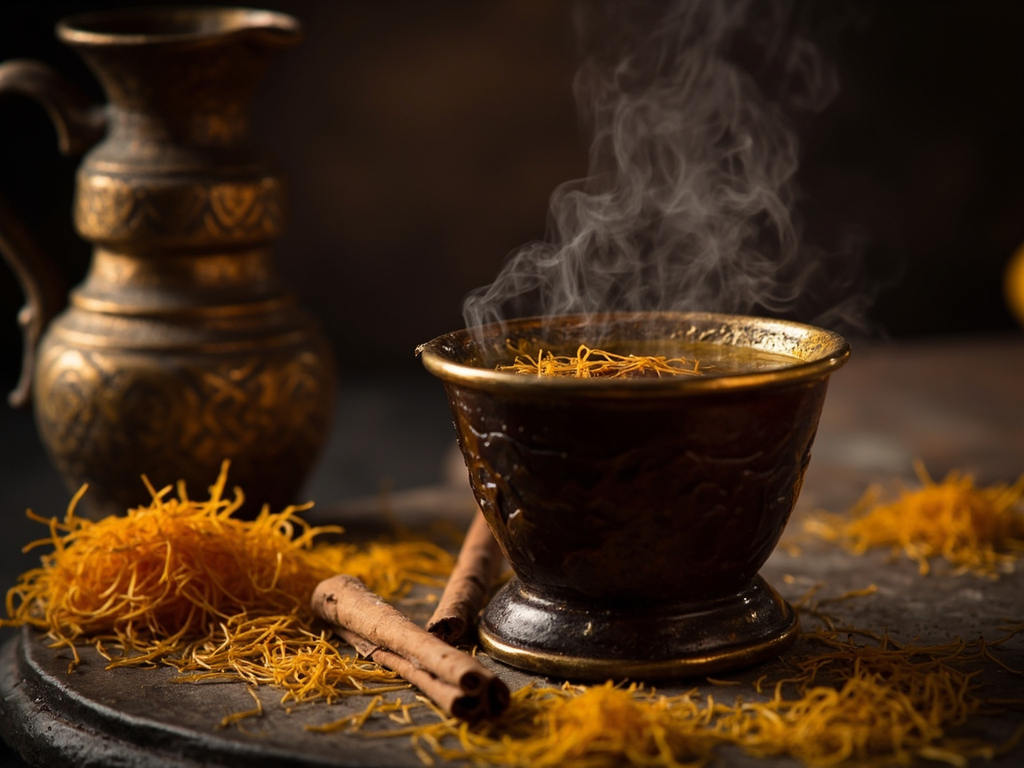
A warmed wine, sweetened with honey and infused with pepper, cinnamon, and saffron, in the style of Greco-Roman conditum — the ceremonial drink of the symposion, here charged with the apocalyptic symbol of the cup.
Raise the cup now. The Romans called it conditum: wine warmed, thickened with honey, bitten by pepper and saffron, sipped when the meal ended and speech loosened. Sweet at the first sip, then fiery, it rises to the head like an omen. Drink, mortal — but know that in my texts, the cup offered to the nations is not of honey. May this one, at least, be sweet to you.
- •Wine — a pitcher (base)
- •Honey — generous (sweetness, signature)
- •Pepper — a few grains (spicy heat)
- •Saffron — a few threads (color and perfume)
- •Cinnamon / nard — a piece (aromatic spice)
- •Water — to cut (Greek style)
The Cup of Honeyed Spiced Wine (the Cup of Wrath)
A warmed wine, sweetened with honey and infused with pepper, cinnamon, and saffron, in the style of Greco-Roman conditum — the ceremonial drink of the symposion, here charged with the apocalyptic symbol of the cup.
Why this dish? The Apocalypse where Abaddon appears multiplies the image of the cup: the wine of God's wrath given to the nations (Rev 14:10; 16:19). This warm honeyed spiced wine, the Roman 'conditum' drunk on the Aegean shores, here becomes the cup raised with trembling — sweet and burning with spices.
Raise the cup now. The Romans called it conditum: wine warmed, thickened with honey, bitten by pepper and saffron, sipped when the meal ended and speech loosened. Sweet at the first sip, then fiery, it rises to the head like an omen. Drink, mortal — but know that in my texts, the cup offered to the nations is not of honey. May this one, at least, be sweet to you.
Ingredients (period version)
- Wine — a pitcher (base)
- Honey — generous (sweetness, signature)
- Pepper — a few grains (spicy heat)
- Saffron — a few threads (color and perfume)
- Cinnamon / nard — a piece (aromatic spice)
- Water — to cut (Greek style)
Ingredients
- Red or sweet white wine — 75 cl (base)
- Honey — 4 tbsp (sweetness, signature)
- Black peppercorns — 6, crushed (heat)
- Saffron threads — a few (color and perfume)
- Cinnamon stick — 1 (spice)
- Bay leaf — 1 (aroma)
- Water — to taste for mellowing (optional) (cut the wine)
Method
- Pour wine into a saucepan with honey.
- Add crushed pepper, saffron, cinnamon, and bay leaf.
- Heat gently without boiling for 10 minutes to infuse spices.
- Taste and adjust honey; cut with a little hot water if desired lighter, Greek style.
- Strain and serve warm in cups.
How it was made : The 'conditum paradoxum' heads Apicius's book: wine, honey, pepper, saffron, nard, and other spices heated together. Greeks always cut their wine with water at the symposion; drinking it neat was considered barbaric. Wine was central to sociability and to nascent Jewish and Christian liturgy.
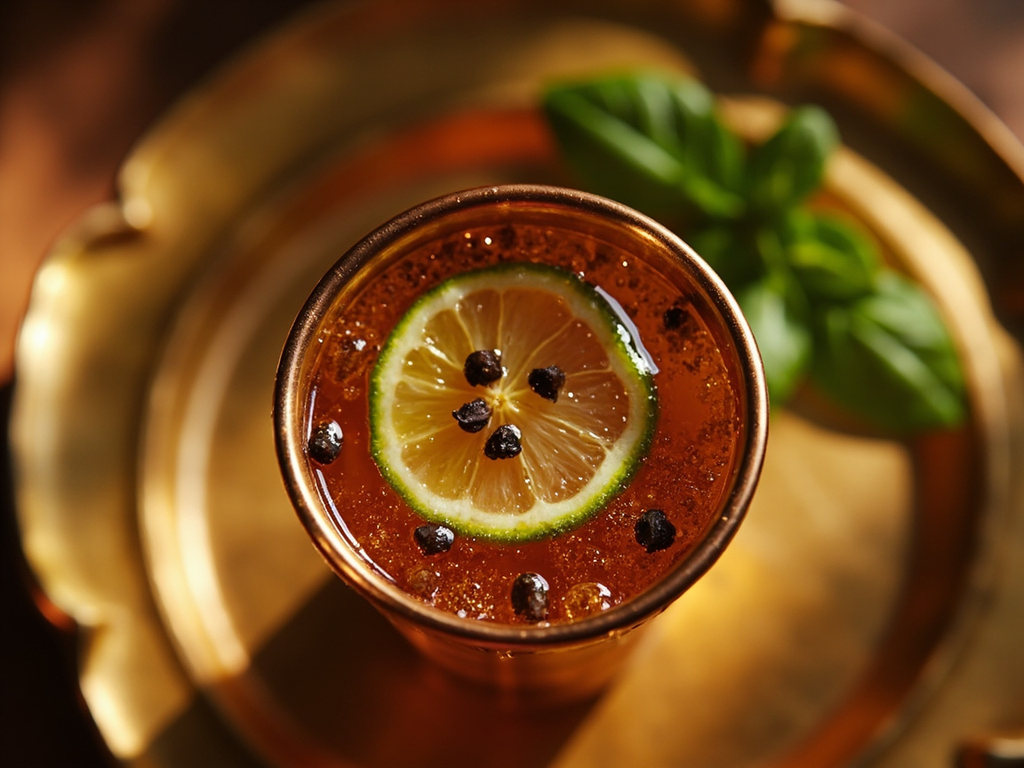
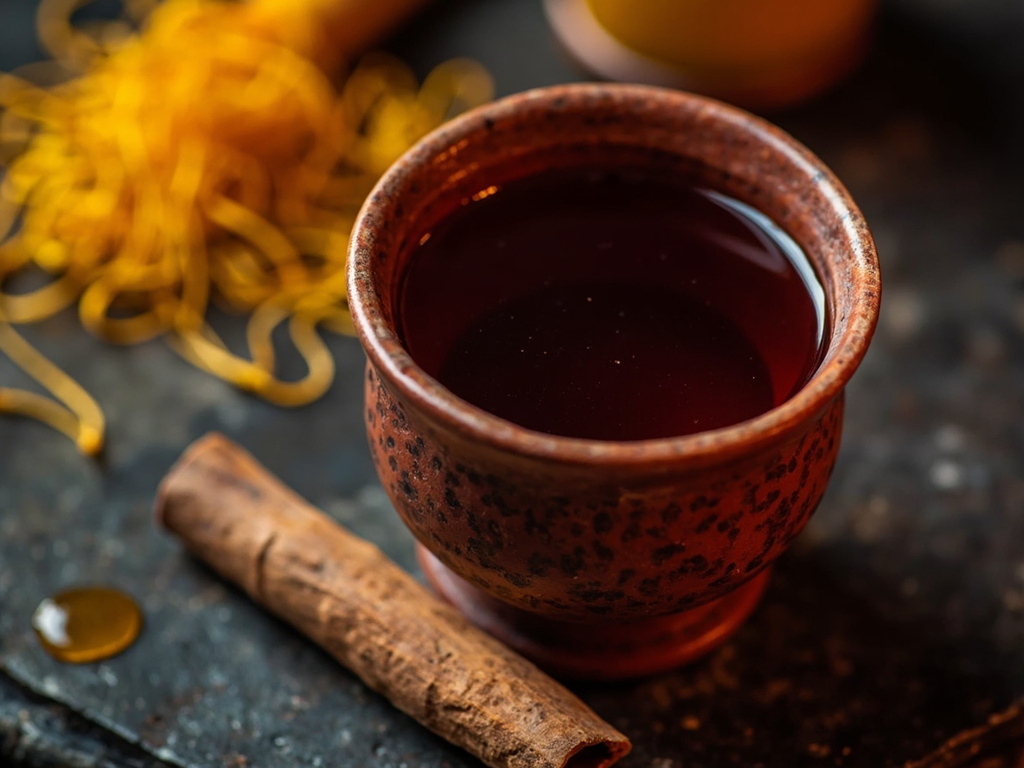
The contemporary twist : Serve in dark cups, a thin spiral of zest floating like a broken 'seal' — non-alcoholic version possible with spiced grape juice for younger ones.
Sources : Apicius, De re coquinaria I (conditum paradoxum) · Revelation of John 14:10 and 16:19 (the cup of wrath)
Abaddon · Charactorium