 flip
flipConditum Paradoxum, Spiced Honeyed Wine
Conditum Paradoxum, Spiced Honeyed Wine
Why this dish? At the Roman banquets Apollodorus frequented, the meal often opened with a honeyed, spiced wine. For this Syrian from the East, these spices—pepper, saffron—were those of the caravan routes from his native Damascus, crossed all the way to Rome.
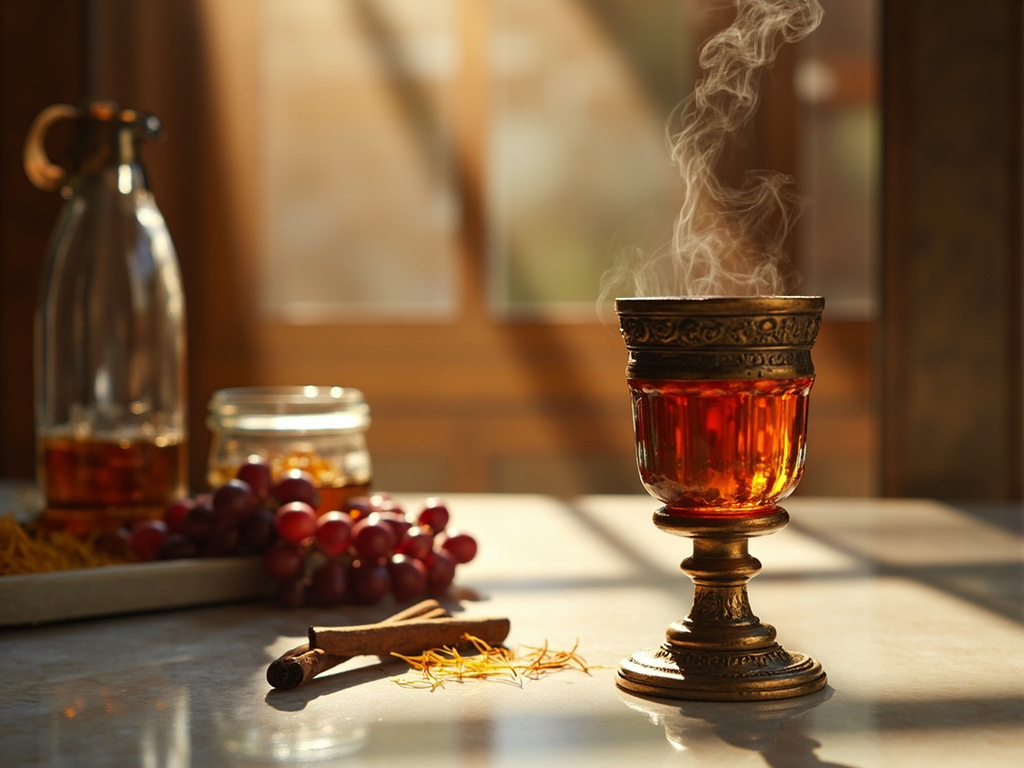
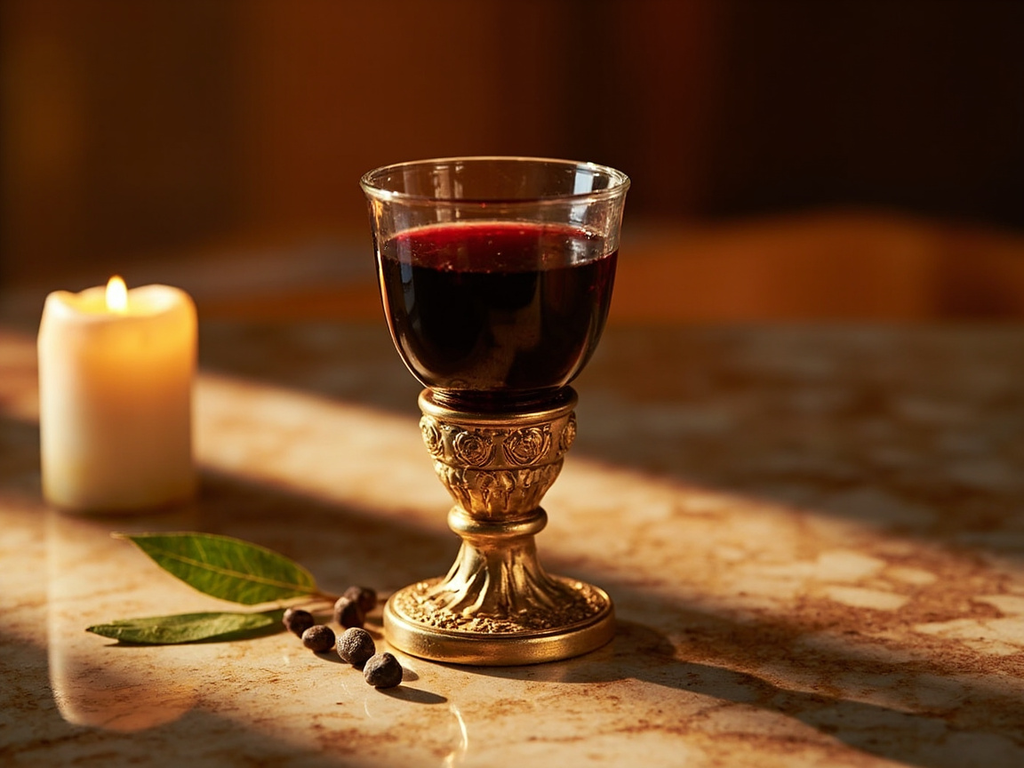
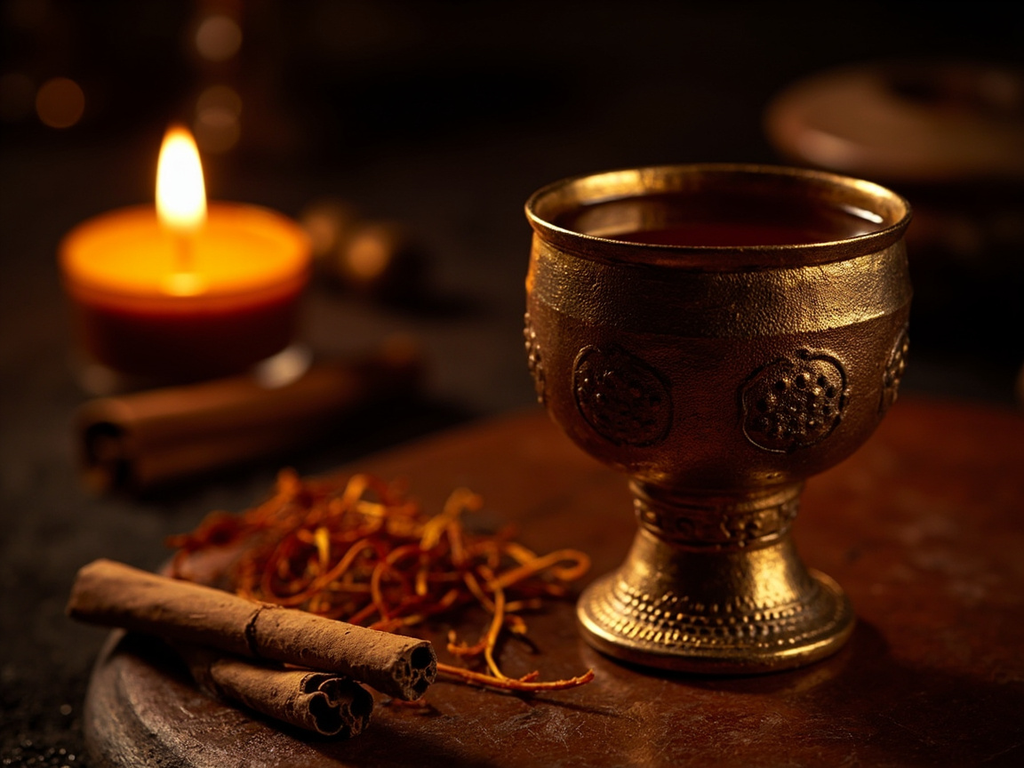
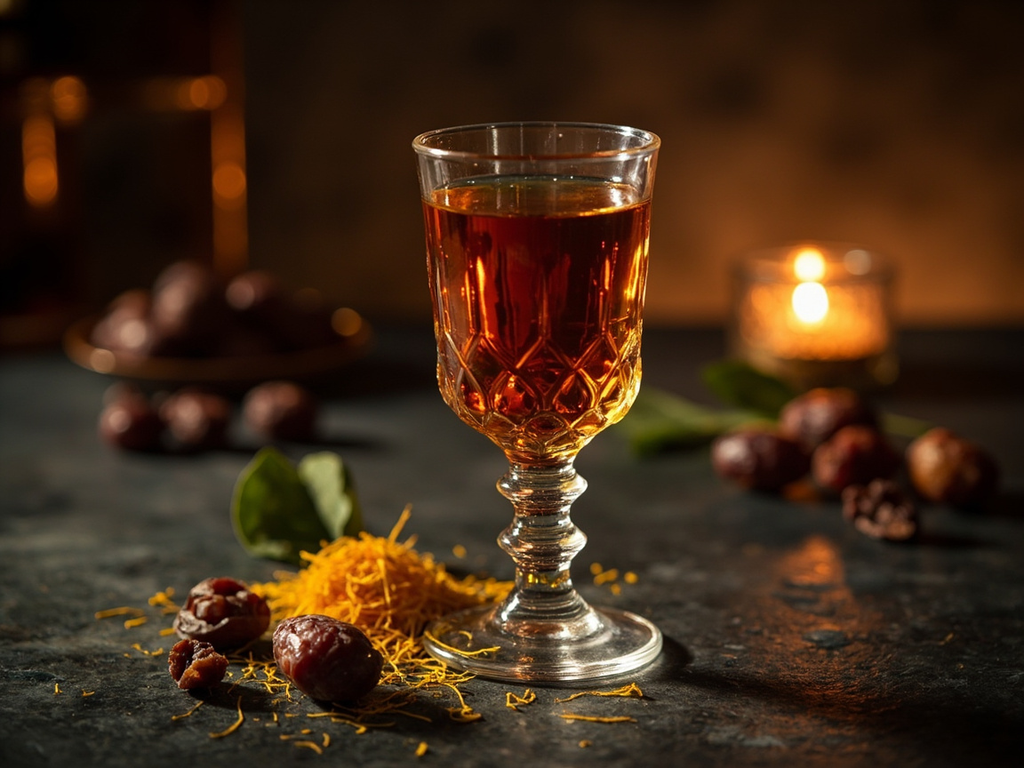
A wine heated, then sweetened with honey and perfumed with spices, filtered until clear and bright. The Roman aperitif wine, drunk cool or warm to whet the appetite.
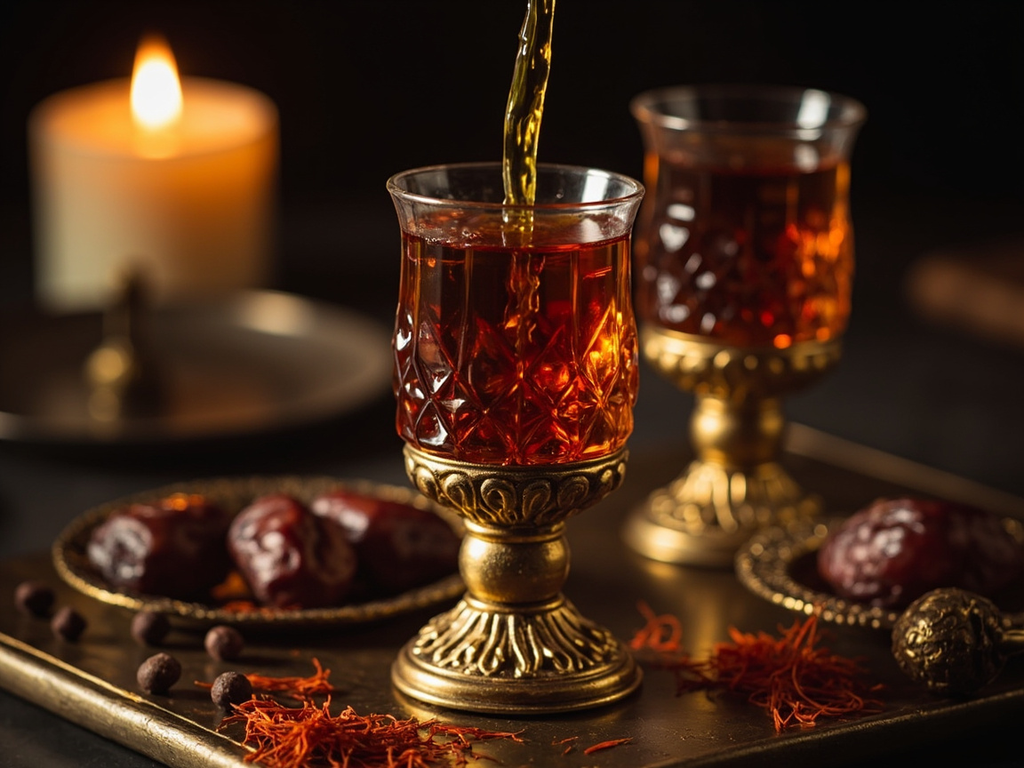
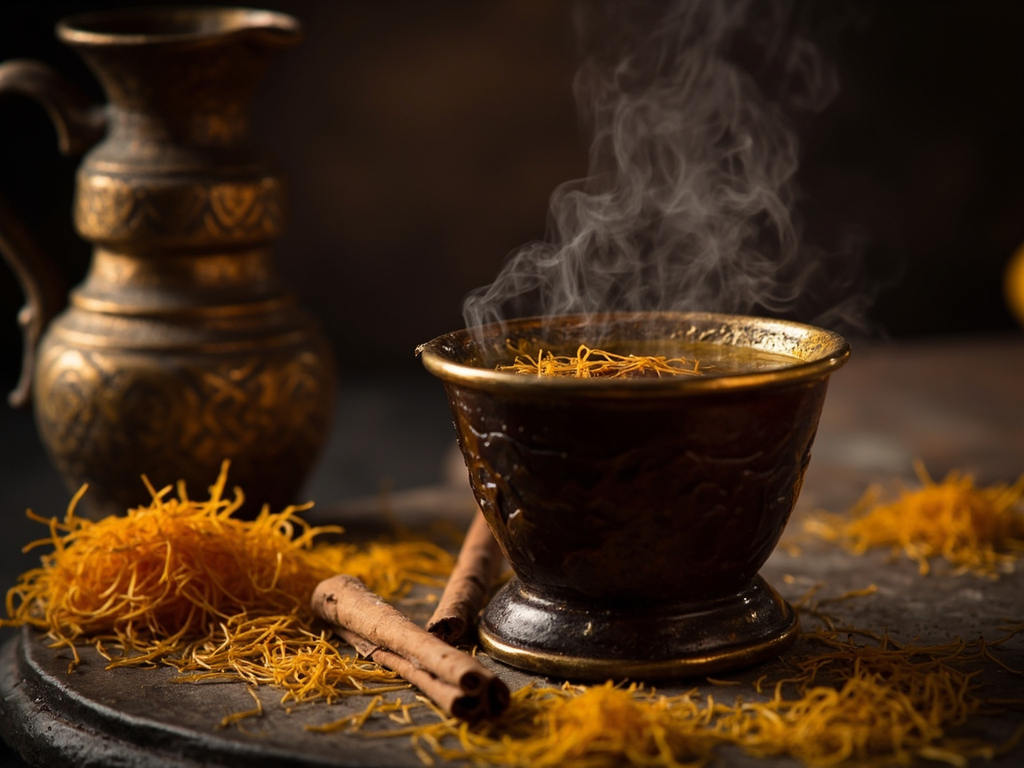
Before we begin the feast, I heat the honey with a little wine, gently, as one heats lime before binding it—you must skim, always skim. I throw in the crushed pepper, a touch of saffron, a few bay leaves, then I pour in the rest of the wine. We filter until the cup is clear as Sidonian glass. In Damascus, my city, these spices came from the ends of the earth on camelback; here, I find them in my Roman cup, and the whole journey fits in a single sip.
- •Wine (red or white) — a measure (base)
- •Honey — a good portion (sweetness)
- •Pepper — a few crushed grains (warm spice)
- •Saffron — a few pistils (flavor and color)
- •Bay leaf, mastic — a little (aromas)
- •Dates — a few (sweet roundness)
Conditum Paradoxum, Spiced Honeyed Wine
A wine heated, then sweetened with honey and perfumed with spices, filtered until clear and bright. The Roman aperitif wine, drunk cool or warm to whet the appetite.
Why this dish? At the Roman banquets Apollodorus frequented, the meal often opened with a honeyed, spiced wine. For this Syrian from the East, these spices—pepper, saffron—were those of the caravan routes from his native Damascus, crossed all the way to Rome.
Before we begin the feast, I heat the honey with a little wine, gently, as one heats lime before binding it—you must skim, always skim. I throw in the crushed pepper, a touch of saffron, a few bay leaves, then I pour in the rest of the wine. We filter until the cup is clear as Sidonian glass. In Damascus, my city, these spices came from the ends of the earth on camelback; here, I find them in my Roman cup, and the whole journey fits in a single sip.
Ingredients (period version)
- Wine (red or white) — a measure (base)
- Honey — a good portion (sweetness)
- Pepper — a few crushed grains (warm spice)
- Saffron — a few pistils (flavor and color)
- Bay leaf, mastic — a little (aromas)
- Dates — a few (sweet roundness)
Ingredients
- Decent red or white wine — 75 cl (base)
- Honey — 150 g (sweetness)
- Crushed black pepper — 1/2 tsp (warm spice)
- Saffron — 1 pinch of pistils (flavor and color)
- Bay leaves — 2 (aroma)
- Pitted dates — 3 (sweet roundness)
Method
- In a saucepan, gently heat the honey with a glass of wine over low heat, without boiling, skimming off the foam that forms.
- Add the crushed pepper, saffron, bay leaves, and dates; let infuse for 5 minutes at a gentle simmer.
- Pour in the rest of the wine and warm without boiling.
- Filter through a fine cloth or a strainer lined with muslin until you get a clear liquid.
- Serve warm in cups, or let cool: conditum keeps for a few days and can also be drunk cool, diluted with water.
How it was made : The recipe for "conditum paradoxum" opens the book of Apicius. Honey heated and skimmed, then married with pepper, saffron, and dates, gave an aromatic wine that was stored and diluted with water in Roman fashion. It is the direct ancestor of medieval hypocras.
The contemporary twist : Served chilled over ice with a zest, it makes a very summery ancient-style homemade vermouth.
Sources : Apicius, De re coquinaria, Book I ("Conditum paradoxum")
Apollodorus of Damascus · Charactorium