 flip
flipBarley Talbina with Milk and Honey — The Prophet's Comfort
Barley Talbina with Milk and Honey — The Prophet's Comfort
Why this dish? Talbina, a barley flour porridge with milk, is named in a hadith narrated by Aisha — Abu Bakr's own daughter and wife of the Prophet. She said that the Messenger of God recommended talbina for the heart of the sick and the afflicted, for it 'comforts the heart of the sufferer and drives away part of the sorrow.' It is the remedy of Abu Bakr's own household.
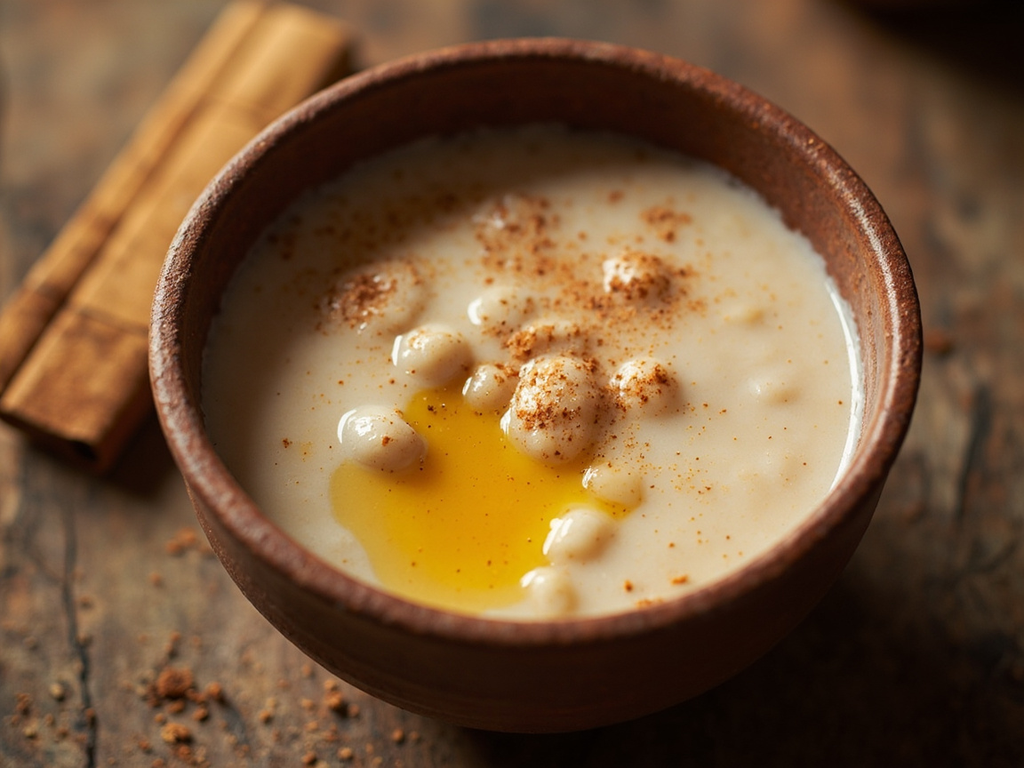
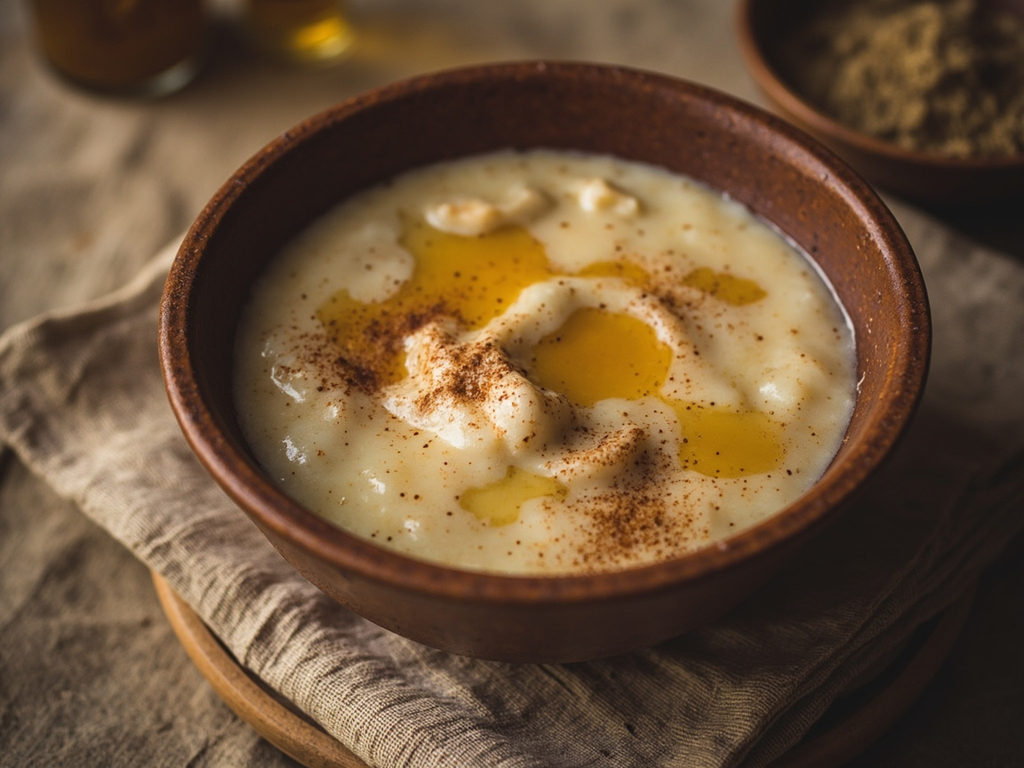
A creamy, warm porridge of barley flour cooked in milk, sweetened with a little honey. Gentle on the stomach and the heart, it is given to the sick, the bereaved, and the weak.
When sorrow weighs on the chest or fever weakens one of us, my daughter Aisha knows it well: prepare talbina. Cook the barley flour in milk over low heat, stir constantly until it is smooth like thickened milk, and sweeten with a drizzle of honey. The Messenger of God, peace be upon him, said it soothes the heart of the afflicted. Give it warm to the one who suffers, and may sweetness restore their strength.
- •Whole barley flour — a few spoonfuls (porridge base)
- •Milk (camel, goat, or sheep) — a bowl (nourishing liquid)
- •Honey — a drizzle (sweetness and comfort)
- •Water — as needed for texture (thinning)
Barley Talbina with Milk and Honey — The Prophet's Comfort
A creamy, warm porridge of barley flour cooked in milk, sweetened with a little honey. Gentle on the stomach and the heart, it is given to the sick, the bereaved, and the weak.
Why this dish? Talbina, a barley flour porridge with milk, is named in a hadith narrated by Aisha — Abu Bakr's own daughter and wife of the Prophet. She said that the Messenger of God recommended talbina for the heart of the sick and the afflicted, for it 'comforts the heart of the sufferer and drives away part of the sorrow.' It is the remedy of Abu Bakr's own household.
When sorrow weighs on the chest or fever weakens one of us, my daughter Aisha knows it well: prepare talbina. Cook the barley flour in milk over low heat, stir constantly until it is smooth like thickened milk, and sweeten with a drizzle of honey. The Messenger of God, peace be upon him, said it soothes the heart of the afflicted. Give it warm to the one who suffers, and may sweetness restore their strength.
Ingredients (period version)
- Whole barley flour — a few spoonfuls (porridge base)
- Milk (camel, goat, or sheep) — a bowl (nourishing liquid)
- Honey — a drizzle (sweetness and comfort)
- Water — as needed for texture (thinning)
Ingredients
- Barley flour (or blended barley flakes) — 3 tbsp (base)
- Milk — 400 ml (liquid)
- Water — 100 ml (thinning)
- Honey — 1 to 2 tsp (sweetness)
- Pinch of cinnamon (optional) — 1 pinch (comforting flavor)
Method
- Dissolve the barley flour in cold water to avoid lumps.
- Pour the milk into a saucepan and bring to a gentle simmer.
- Add the flour-water mixture, whisking constantly.
- Cook over low heat for 8 to 10 minutes, stirring, until smooth and creamy.
- Remove from heat, let cool slightly, then stir in the honey (never at boiling to preserve its sweetness).
- Serve warm in a bowl, optionally sprinkled with a pinch of cinnamon.
How it was made : Talbina (تلبينة) takes its name from the word laban (milk), as its color and texture resemble milk. The hadith of Aisha, daughter of Abu Bakr, makes it a medicinal food reserved for the sick and mourners. Barley, reputed to be gentle on the stomach, was the medicinal cereal par excellence in the ancient Arab world.
The contemporary twist : Serve it as an 'ancestral porridge' with soft dates and slivered almonds — talbina as a comforting breakfast for gray mornings.
Sources : Sahih al-Bukhari, kitab al-at'ima (book of foods), hadith of talbina narrated by Aisha · Peter Heine, Food Culture in the Near East, Middle East, and North Africa, 2004
Abu Bakr as-Siddiq · Charactorium