 flip
flipSikanjabīn — Oxymel of Honey, Vinegar, and Mint
Sikanjabīn — Oxymel of Honey, Vinegar, and Mint
Why this dish? Al-Fârâbî was interested in medicine and wrote on the relationship between soul and body. Sikanjabīn, a sweet-and-sour drink that physicians like al-Rāzī, his near-contemporary, recommended for refreshment and digestion, naturally accompanies the tempered sobriety of a scholar attentive to the balance of humors.
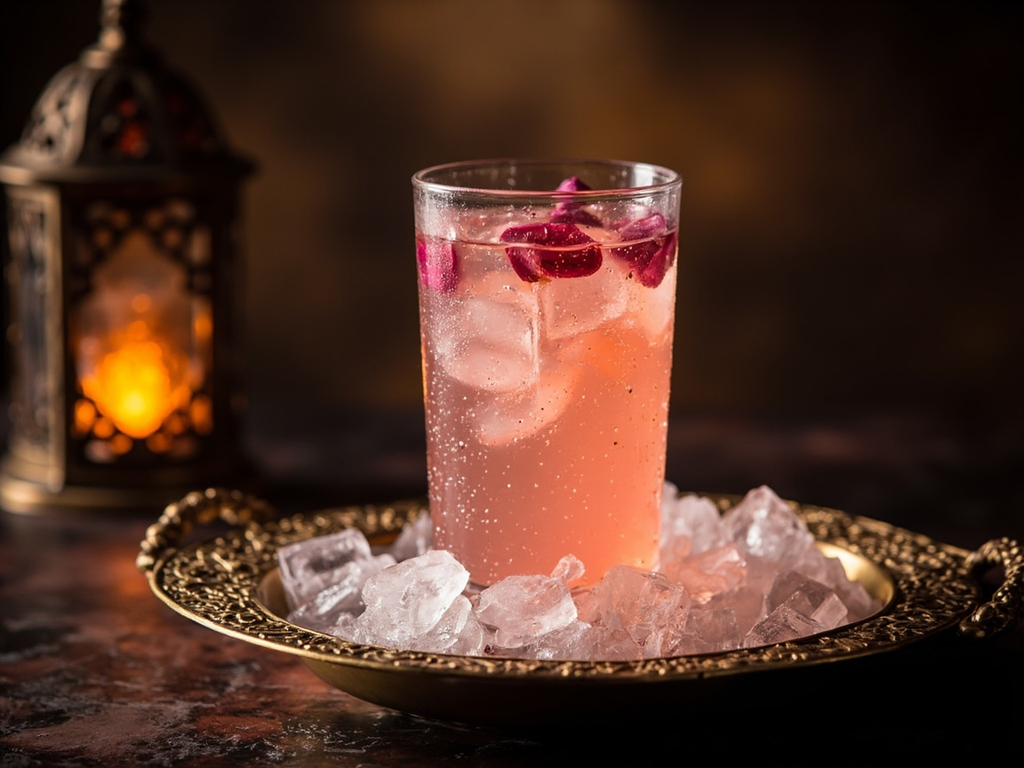
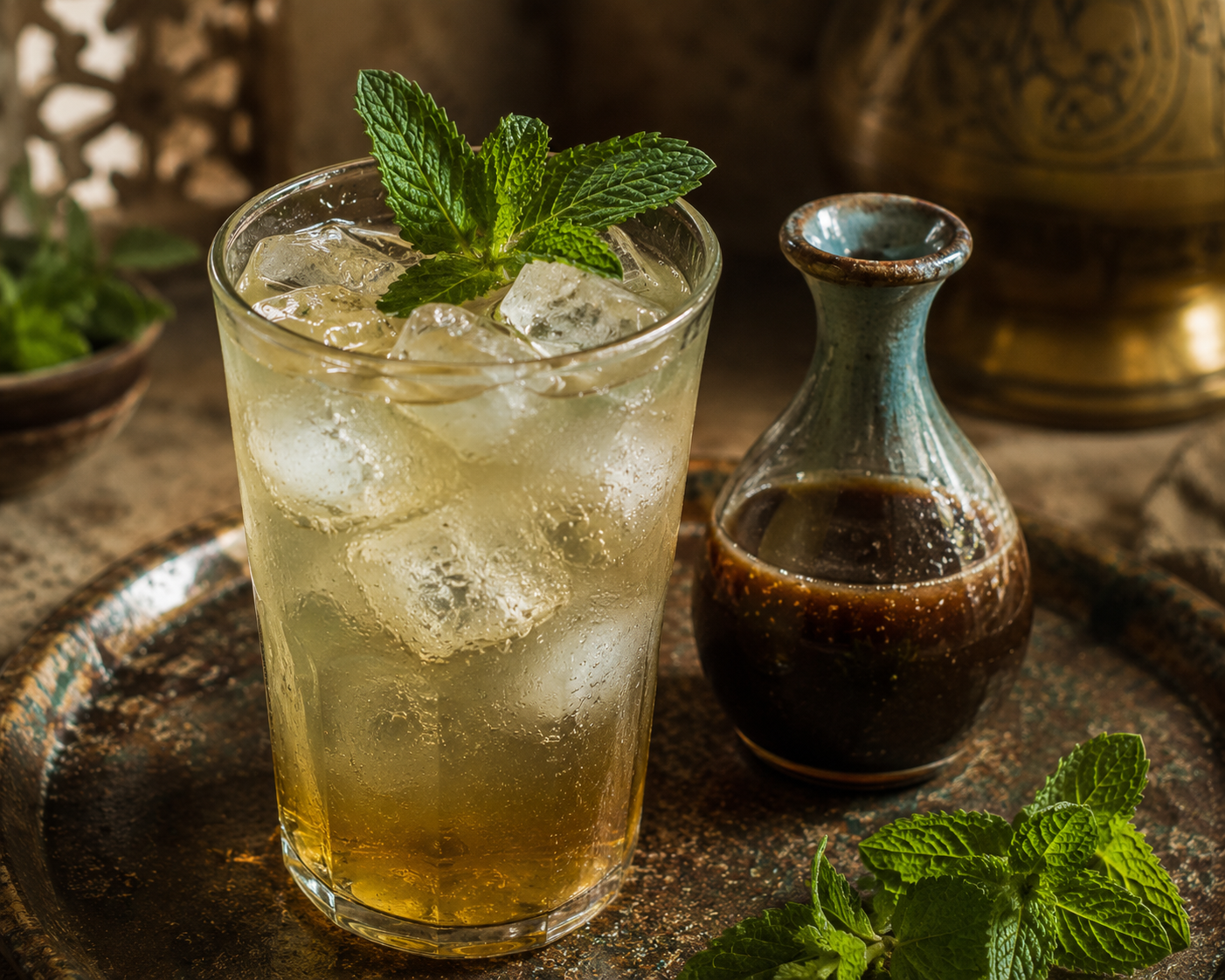
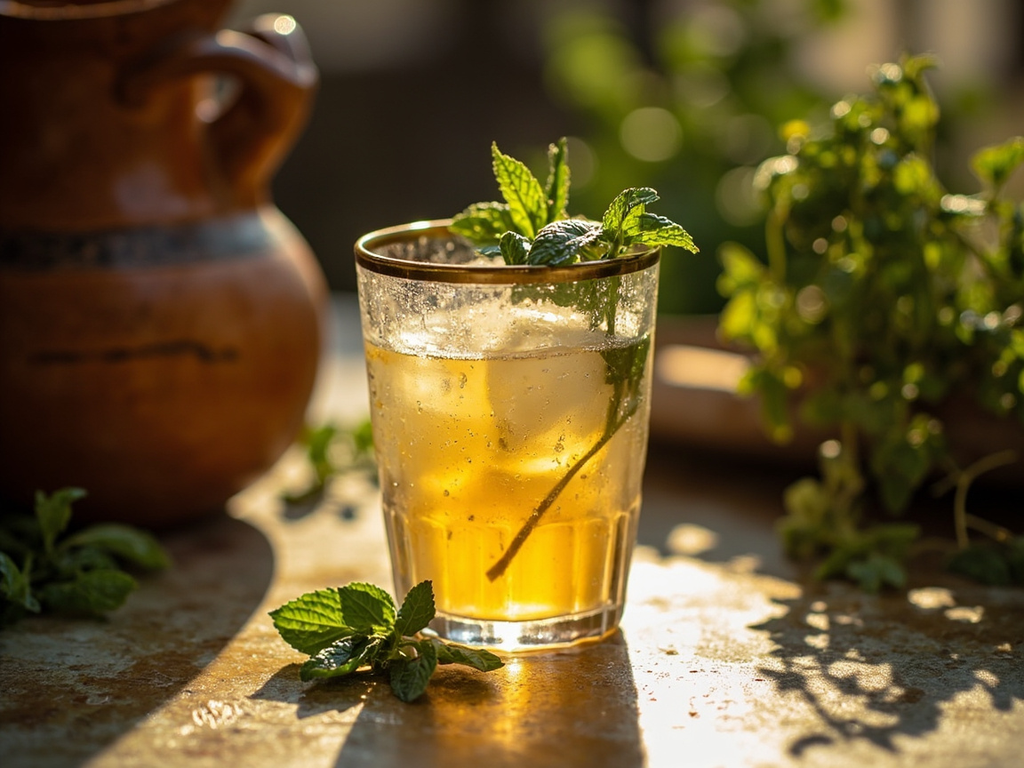
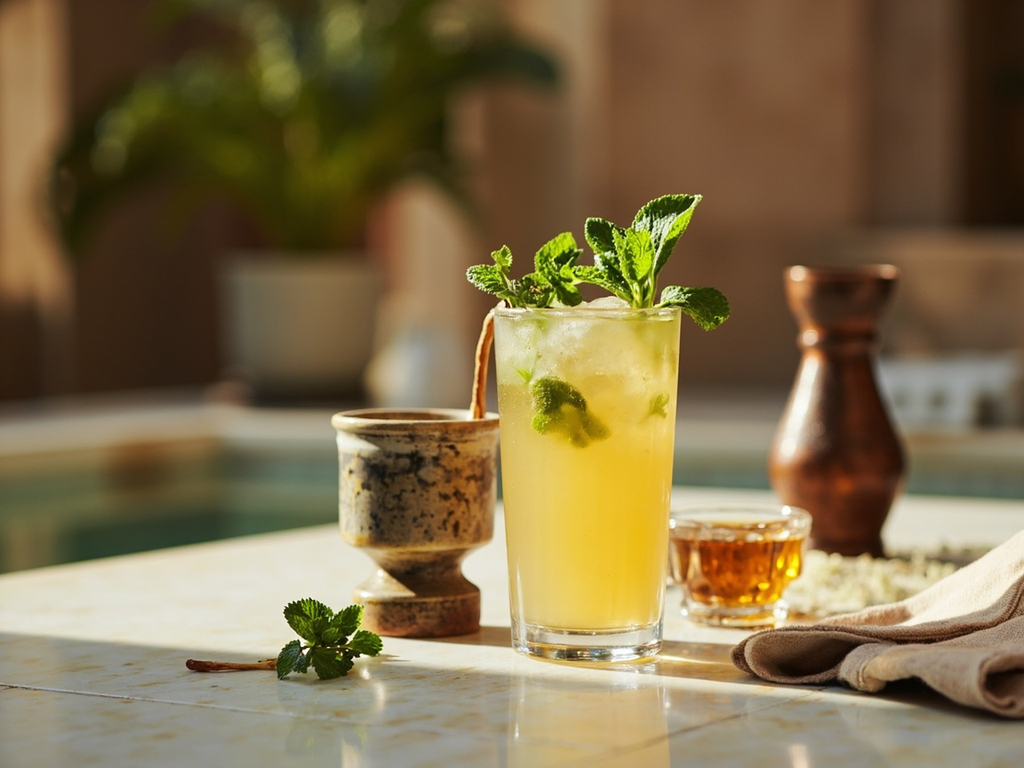
A syrup of honey and vinegar cooked and then diluted with fresh water and perfumed with mint: refreshing, sharp, and sweet at once, it is the lemonade of the sages of the Abbasid world.
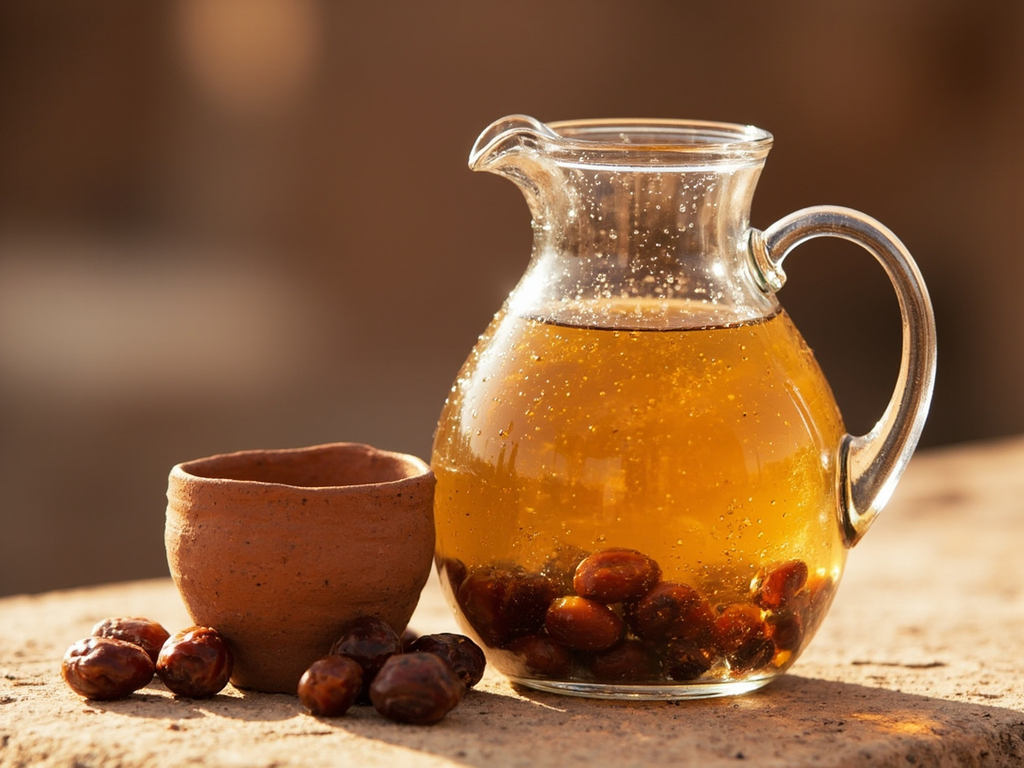
When Baghdad's heat weighed on the mind and clouded reasoning, I had this syrup of sour and sweet prepared. Honey and vinegar cook together until they form a liquid thick as amber; one pours a little into cold water and crushes a few mint leaves in it. Drink, and you will feel the bilious humor calm and attention return. The physician and the philosopher agree here: a tempered body better serves right thought.
- •Honey — two parts (sweetness)
- •Wine vinegar — one part (acidity)
- •Fresh mint — one bunch (aroma)
- •Water — to dilute (base)
Sikanjabīn — Oxymel of Honey, Vinegar, and Mint
A syrup of honey and vinegar cooked and then diluted with fresh water and perfumed with mint: refreshing, sharp, and sweet at once, it is the lemonade of the sages of the Abbasid world.
Why this dish? Al-Fârâbî was interested in medicine and wrote on the relationship between soul and body. Sikanjabīn, a sweet-and-sour drink that physicians like al-Rāzī, his near-contemporary, recommended for refreshment and digestion, naturally accompanies the tempered sobriety of a scholar attentive to the balance of humors.
When Baghdad's heat weighed on the mind and clouded reasoning, I had this syrup of sour and sweet prepared. Honey and vinegar cook together until they form a liquid thick as amber; one pours a little into cold water and crushes a few mint leaves in it. Drink, and you will feel the bilious humor calm and attention return. The physician and the philosopher agree here: a tempered body better serves right thought.
Ingredients (period version)
- Honey — two parts (sweetness)
- Wine vinegar — one part (acidity)
- Fresh mint — one bunch (aroma)
- Water — to dilute (base)
Ingredients
- Honey — 300 g (sweetness)
- White wine vinegar — 150 ml (acidity)
- Water — 150 ml (for the syrup) (base)
- Fresh mint — 1 good handful (aroma)
- Cold water — to taste for serving (dilution)
Method
- Combine honey, vinegar, and water in a saucepan and bring to a simmer.
- Let it reduce for 15–20 minutes until a slightly thick syrup forms.
- Remove from heat, add the mint to the hot syrup, and let it steep as it cools.
- Strain and store the syrup in a bottle.
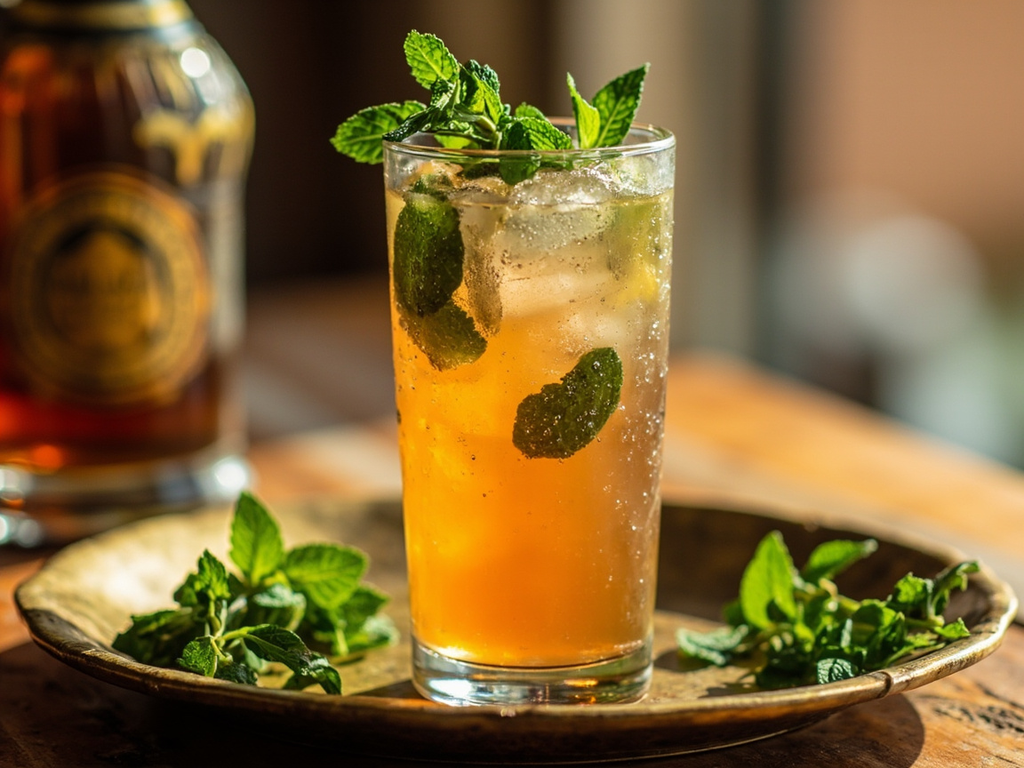
- To serve: pour 2–3 tablespoons of syrup into a large glass of cold water; add a few mint leaves.
How it was made : Sikanjabīn (from Arabic-Persian for oxymel, a mixture of vinegar and honey) is attested since Greek antiquity as a remedy, later becoming a table drink in the medieval Islamic world. Abbasid medical treatises prescribed it to refresh and purify; it was also drunk simply for pleasure, diluted with water or snow for the wealthier.
The contemporary twist : Serve over crushed ice with a cucumber ribbon, like a historical mocktail for summer evenings.
Sources : Ibn Sayyâr al-Warrâq, Kitāb al-Tabīkh (10th century) · Lilia Zaouali, L'Islam à table (2007)
Al-Farabi · Charactorium