 flip
flipKrishara — rice and mung with ghee
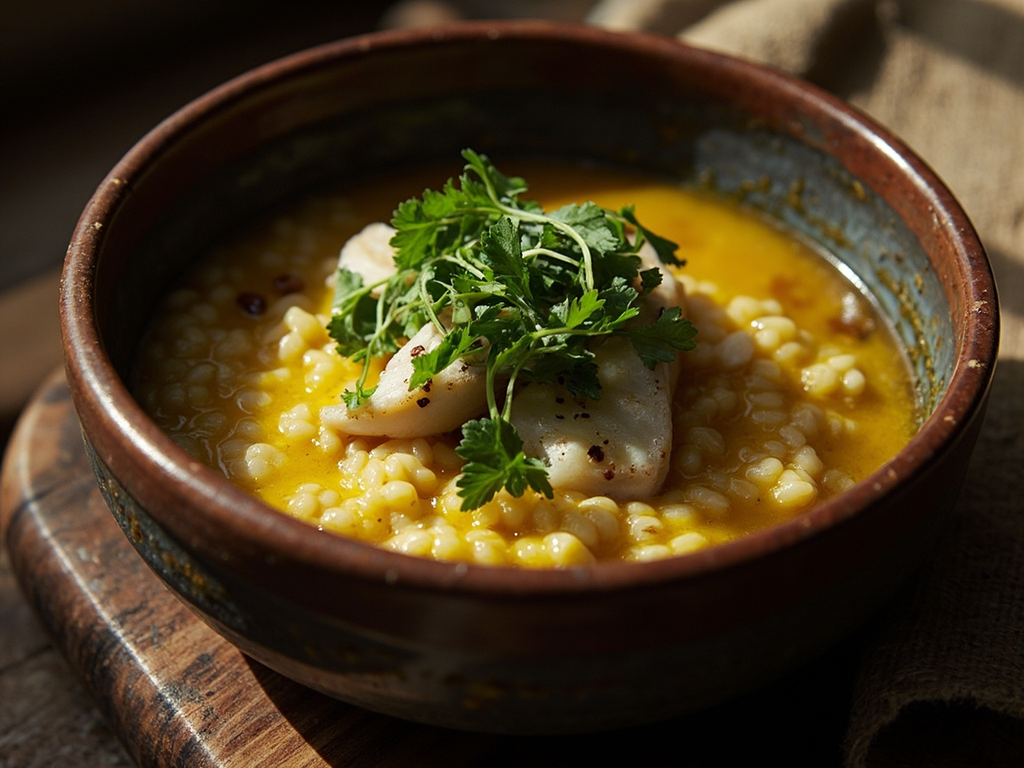
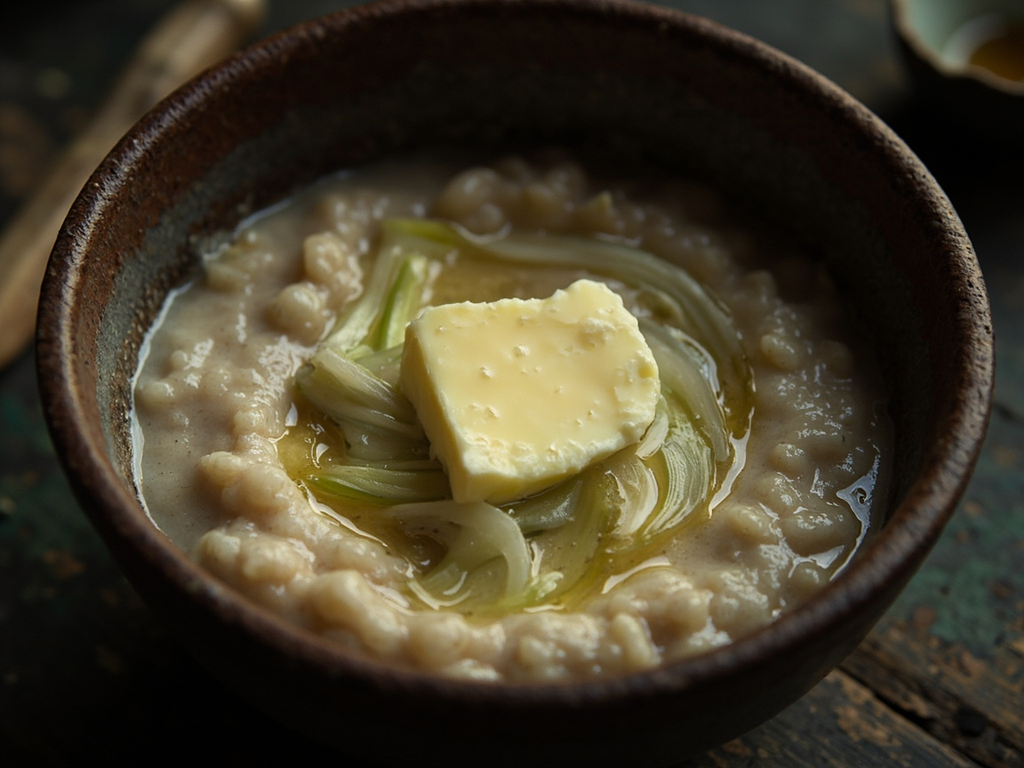
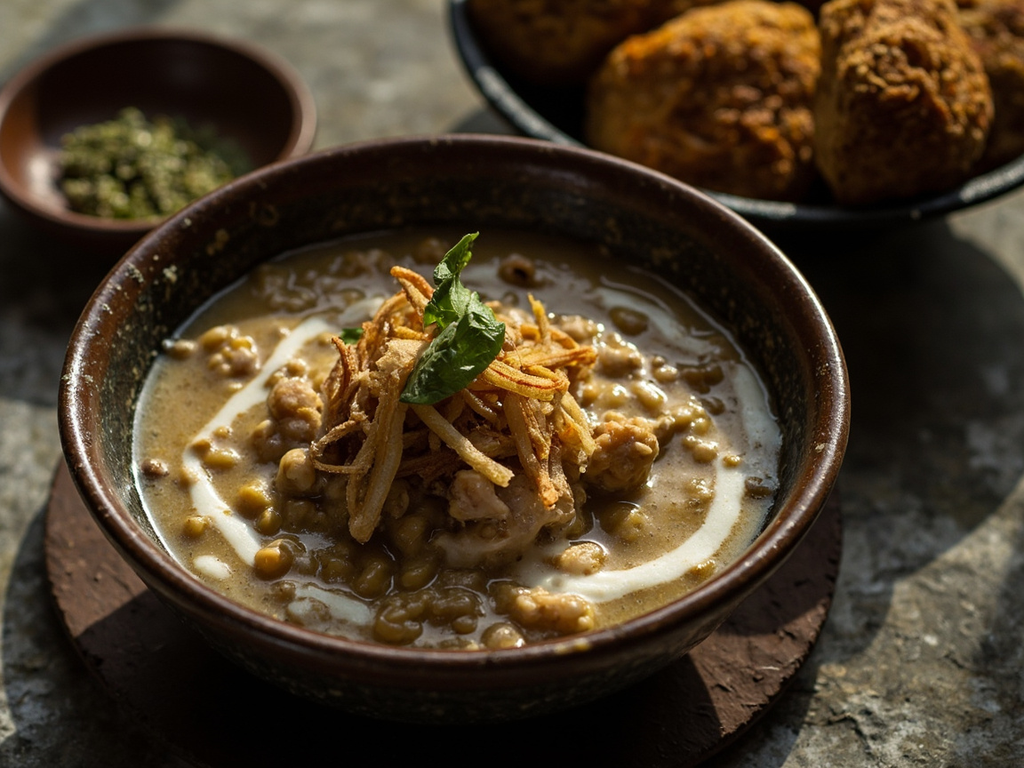
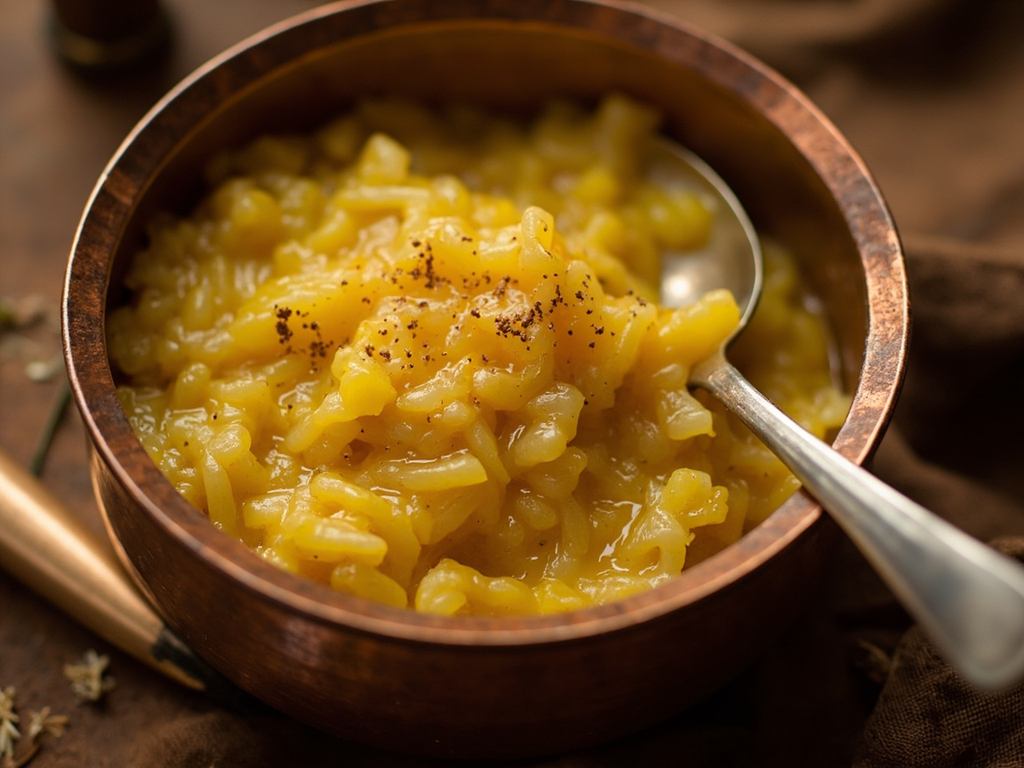
Krishara — rice and mung with ghee
Why this dish? Ambika lives in the women's quarters of the palace of Hastinapura, where ordinary days are vegetarian. Krishara, the marriage of rice and mung bean found as early as the Vedic texts, is the humble and nourishing dish that rhythms the mornings of a queen between griefs and dynastic duties.
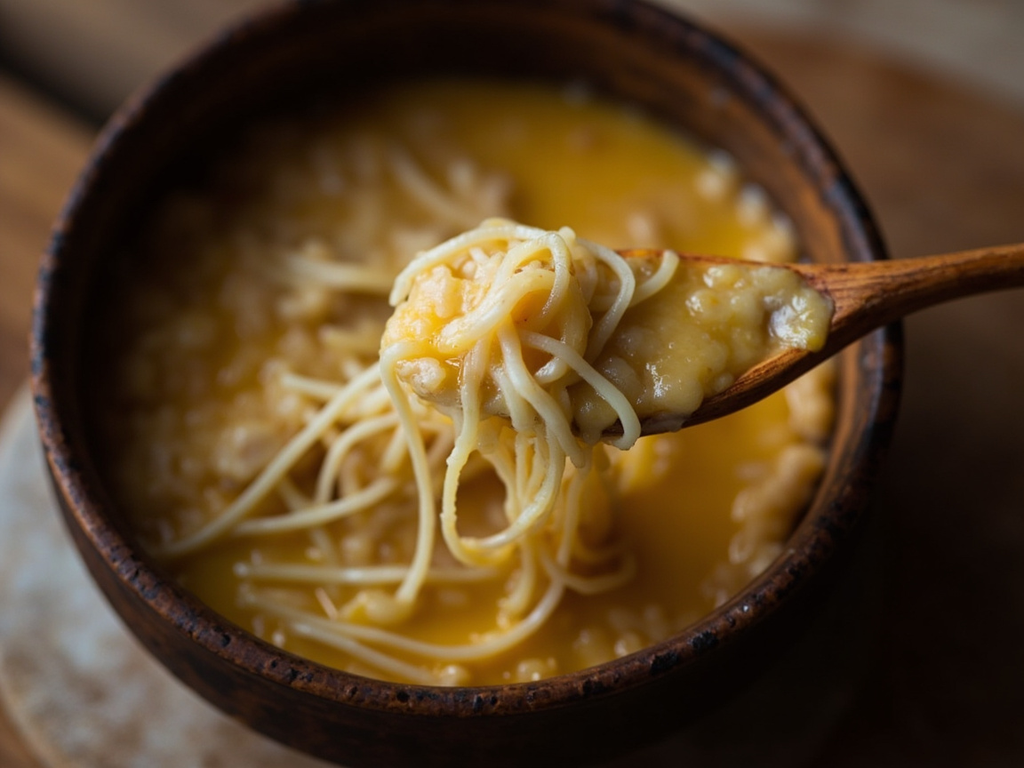
A tender porridge of rice and hulled mung, melted in ghee and seasoned with ginger and cumin. Direct ancestor of khichari, it is domestic comfort par excellence: gentle on the stomach, simple, complete.
Draw near, and do not trust the humility of this dish. When the palace of Hastinapura still sleeps, I cook the rice and mung together until they become one — like two houses joined by a marriage. Pour the hot ghee over it, generously: it brings luck to the lineage. A pinch of pounded ginger awakens the blood, and we eat in silence, hearts turned toward the ancestors.
- •White rice — one measure (base cereal)
- •Hulled mung bean (mung dal) — half a measure (legume)
- •Ghee (clarified butter) — generously (fat and ritual binder)
- •Fresh pounded ginger — a little (digestive aromatic)
- •Cumin — a pinch (spice)
- •Fresh turmeric — a touch (color and warmth)
- •Rock salt — to taste (seasoning)
Krishara — rice and mung with ghee
A tender porridge of rice and hulled mung, melted in ghee and seasoned with ginger and cumin. Direct ancestor of khichari, it is domestic comfort par excellence: gentle on the stomach, simple, complete.
Why this dish? Ambika lives in the women's quarters of the palace of Hastinapura, where ordinary days are vegetarian. Krishara, the marriage of rice and mung bean found as early as the Vedic texts, is the humble and nourishing dish that rhythms the mornings of a queen between griefs and dynastic duties.
Draw near, and do not trust the humility of this dish. When the palace of Hastinapura still sleeps, I cook the rice and mung together until they become one — like two houses joined by a marriage. Pour the hot ghee over it, generously: it brings luck to the lineage. A pinch of pounded ginger awakens the blood, and we eat in silence, hearts turned toward the ancestors.
Ingredients (period version)
- White rice — one measure (base cereal)
- Hulled mung bean (mung dal) — half a measure (legume)
- Ghee (clarified butter) — generously (fat and ritual binder)
- Fresh pounded ginger — a little (digestive aromatic)
- Cumin — a pinch (spice)
- Fresh turmeric — a touch (color and warmth)
- Rock salt — to taste (seasoning)
Ingredients
- Basmati rice — 150 g (base cereal)
- Mung dal (split hulled mung) — 75 g (legume)
- Ghee — 3 tbsp (fat)
- Fresh grated ginger — 1 tsp (aromatic)
- Cumin seeds — 1 tsp (spice)
- Turmeric powder — 1/2 tsp (color)
- Salt — to taste (seasoning)
- Water — 750 ml (cooking liquid)
Method
- Rinse the rice and mung dal until the water runs clear.
- Heat 1 tbsp ghee in a pot, add cumin seeds and let them crackle for a few seconds.
- Add ginger and turmeric, stir, then pour in the drained rice and dal.
- Add water, salt, bring to a boil, then reduce heat.
- Cook covered for 25–30 minutes, stirring occasionally, until a soft porridge forms.
- Off the heat, stir in the remaining ghee and serve hot.
How it was made : Krishara (krsara) appears in Vedic ritual texts as an offering dish and daily food. It was cooked in clay pots over a wood fire, mung was hulled by hand, and ghee, made at home from the milk of the estate's cows, was poured generously over the dishes of wealthy families.
The contemporary twist : A spoonful of nutty ghee perfumed with curry leaf and a few crushed pistachios on top for a festive krishara at today's table.
Sources : K. T. Achaya, Indian Food: A Historical Companion, Oxford University Press, 1994 · Om Prakash, Food and Drinks in Ancient India, Munshi Ram Manohar Lal, 1961
Ambika · Charactorium