 flip
flipAchilles' spit-roasted mutton
Achilles' spit-roasted mutton
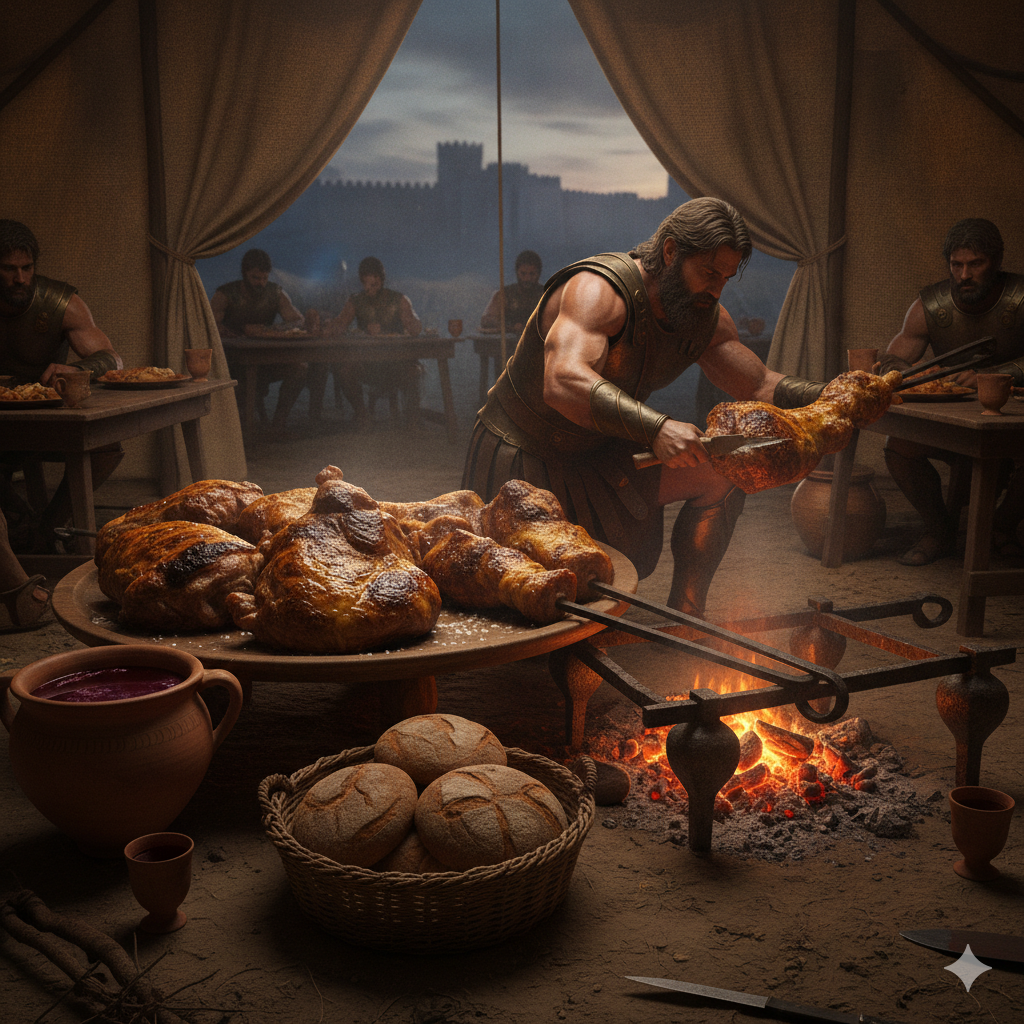
Why this dish? In Book IX of the Iliad, Achilles receives Agamemnon's ambassadors under his tent: he has a sheep and a fat goat killed, skewers the pieces with his own hands, salts the meat, and roasts it over the embers. This is THE meal of Achilles as described by Homer, a gesture of hospitality from a hero who serves his guests himself.
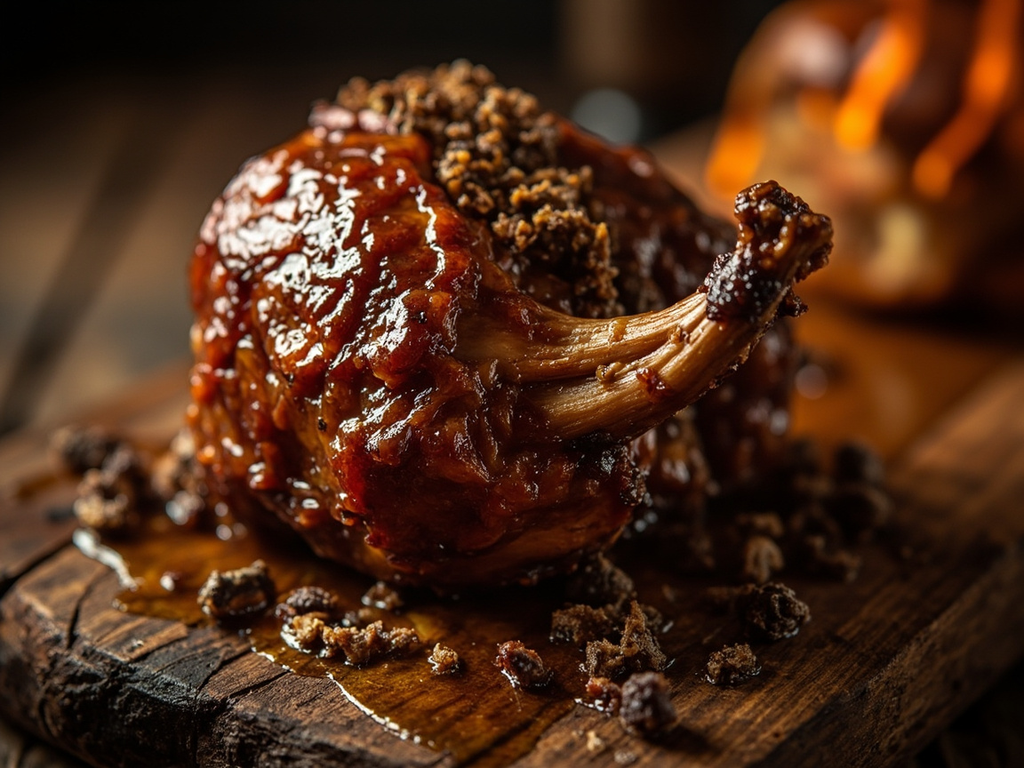
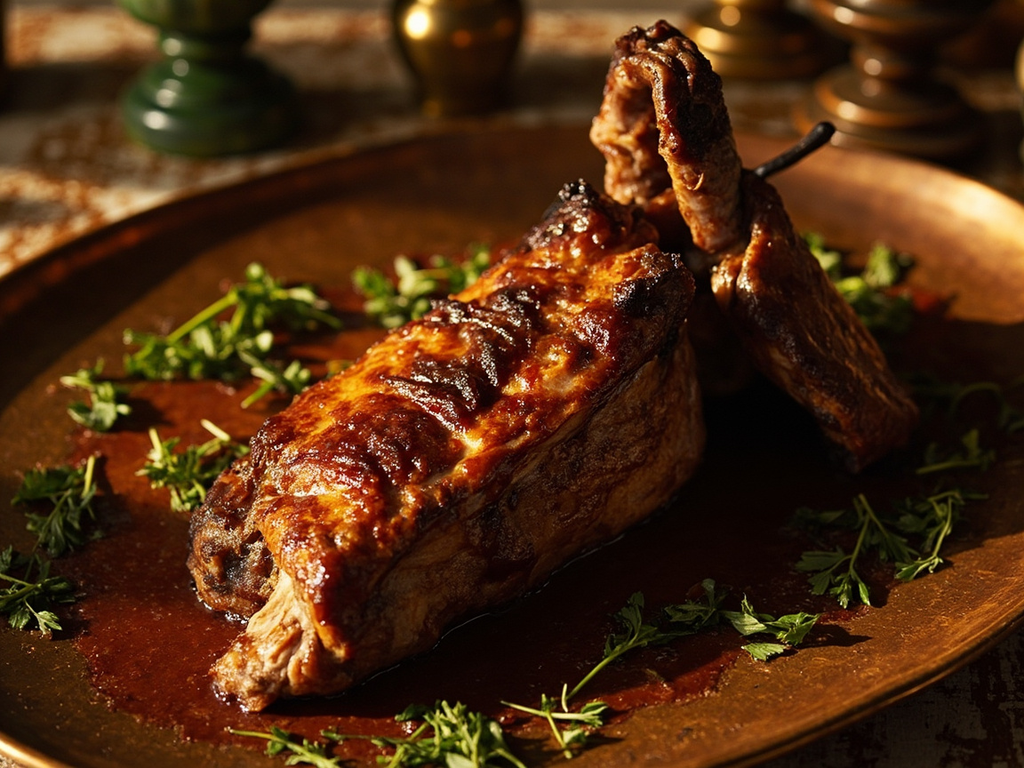
Shoulder of mutton cut into large pieces, salted and spit-roasted over charcoal, served with barley bread. The golden, smoky meat, shared with the honor portion, is the heart of the heroic banquet.
Draw near to the hearth, stranger, and do not stand in the shadows. With my own hands I have divided the flesh and held the spit over the flame, for no one serves his guest better than the one who has spilled enemy blood. Patroclus threw the salt, I turned the meat until the fat wept into the fire. Eat, and let the finest portion be yours: thus do the sons of the gods beneath the tents of the Achaeans.
- •Mutton (shoulder or leg) — a fine piece (roasted meat, source of strength)
- •Sea salt — by hand (sacred seasoning)
- •Barley bread (maza) — flat loaves (basic accompaniment)
- •Wine mixed with water — a krater (feast drink)
Achilles' spit-roasted mutton
Shoulder of mutton cut into large pieces, salted and spit-roasted over charcoal, served with barley bread. The golden, smoky meat, shared with the honor portion, is the heart of the heroic banquet.
Why this dish? In Book IX of the Iliad, Achilles receives Agamemnon's ambassadors under his tent: he has a sheep and a fat goat killed, skewers the pieces with his own hands, salts the meat, and roasts it over the embers. This is THE meal of Achilles as described by Homer, a gesture of hospitality from a hero who serves his guests himself.
Draw near to the hearth, stranger, and do not stand in the shadows. With my own hands I have divided the flesh and held the spit over the flame, for no one serves his guest better than the one who has spilled enemy blood. Patroclus threw the salt, I turned the meat until the fat wept into the fire. Eat, and let the finest portion be yours: thus do the sons of the gods beneath the tents of the Achaeans.
Ingredients (period version)
- Mutton (shoulder or leg) — a fine piece (roasted meat, source of strength)
- Sea salt — by hand (sacred seasoning)
- Barley bread (maza) — flat loaves (basic accompaniment)
- Wine mixed with water — a krater (feast drink)
Ingredients
- Boneless lamb or mutton shoulder — 1.2 kg, in large cubes (main meat)
- Olive oil — 3 tbsp (basting and binding)
- Coarse salt — 2 tsp (seasoning)
- Dried oregano — 1 tsp (Greek aroma)
- Barley bread or rustic bread — 4 portions (accompaniment)
Method
- Cut the mutton into large even chunks and thread onto skewers (or arrange on a grill rack).
- Rub with olive oil, salt generously, and sprinkle with oregano.
- Prepare a good bed of embers (barbecue) or preheat an oven to 220°C with grill.
- Roast for 20-30 minutes, turning often, until a golden crust forms and the center is juicy.
- Let rest a few minutes, carve, and serve with bread, reserving the finest piece for the guest of honor.
How it was made : Homer describes the gesture precisely (Iliad, IX): the meat is placed on spits, salted, set on firedogs over the coals, then served on tables with baskets of bread. No elaborate sauce: salt, fire, and the smoke of sacrifice sufficed. The thighs wrapped in fat were first burned for the gods.
The contemporary twist : Serve “honor portion” style: a skewer set on an olivewood board with a small bowl of oregano salt, reenacting Achilles’ gesture of serving his guests.
Sources : Homer, Iliad, Book IX (reception of the ambassadors) · Homer, Iliad, Book I (sacrifice and feast)
Achilles · Charactorium