 flip
flipAegean Fish with Garum and Herbs
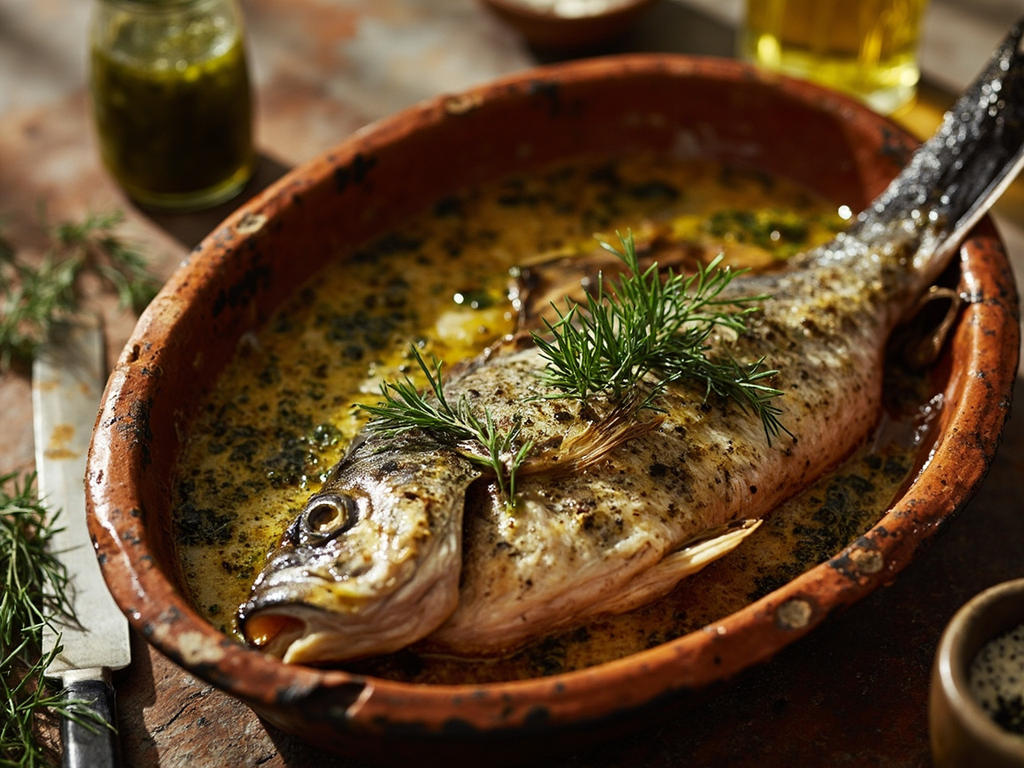
Aegean Fish with Garum and Herbs
Why this dish? Patmos, Ephesus, the Aegean ports where John's vision circulates: there, in the Greco-Roman world, they feast around fish, king of coastal tables. For the feast, this fish is enhanced with garum, the fermented fish sauce cherished by the whole Empire — the flavor of the world that the Apocalypse threatens with judgment.
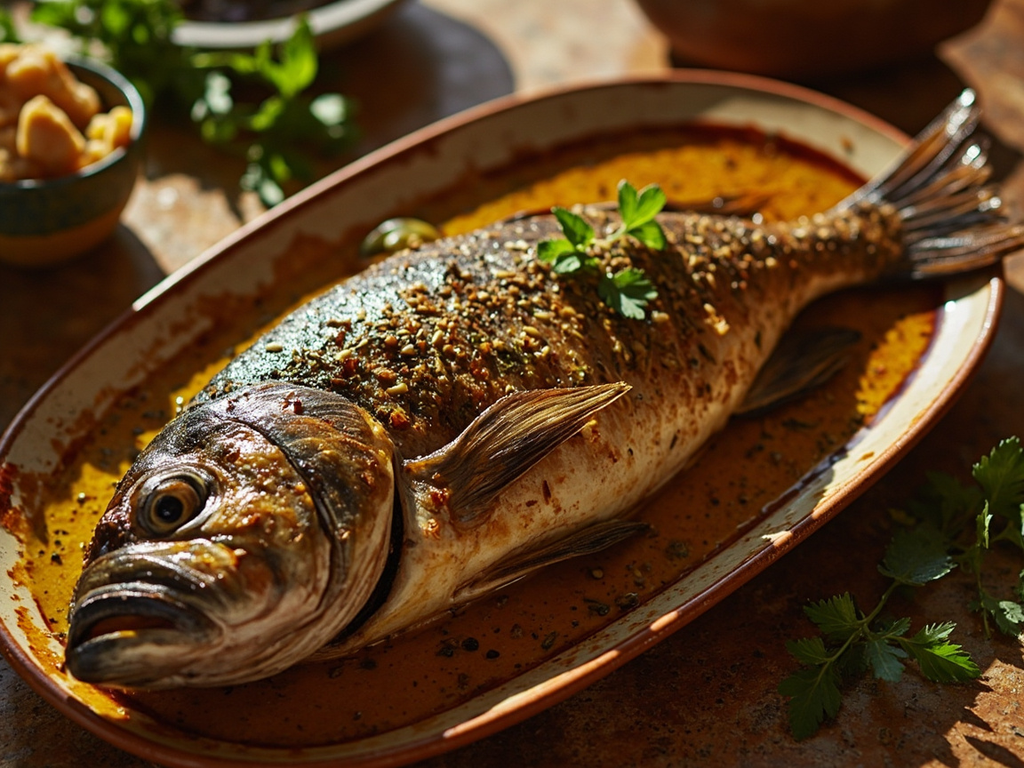
A whole Mediterranean fish roasted, drizzled with olive oil, wine, and garum, scented with dill, coriander, and cumin — the festive dish of Aegean cities, umami and deeply salty from the fermented sauce.
Ah, the cities of merchants! At Ephesus, at Patmos, they laid out gleaming fish pulled from the sea that morning, and poured over them that fermented fish juice the whole Empire craved — garum, salty to intoxication. Wine, oil, garden herbs, and they feasted as if no day of wrath would ever come. Taste then the abundance of this world, traveler. It is savory, I grant you. But remember Him who, from the pit, watches the feasts.
- •Whole Aegean fish (sea bream, sea bass) — one fine fish (centerpiece)
- •Garum (fermented fish sauce) — a few dashes (umami salt, Greco-Roman signature)
- •Olive oil — generous (cooking and binding)
- •White wine — a splash (deglazing)
- •Dill, coriander — by the bunch (herbs)
- •Cumin — a pinch (spice)
- •Honey — a drop (balance)
Aegean Fish with Garum and Herbs
A whole Mediterranean fish roasted, drizzled with olive oil, wine, and garum, scented with dill, coriander, and cumin — the festive dish of Aegean cities, umami and deeply salty from the fermented sauce.
Why this dish? Patmos, Ephesus, the Aegean ports where John's vision circulates: there, in the Greco-Roman world, they feast around fish, king of coastal tables. For the feast, this fish is enhanced with garum, the fermented fish sauce cherished by the whole Empire — the flavor of the world that the Apocalypse threatens with judgment.
Ah, the cities of merchants! At Ephesus, at Patmos, they laid out gleaming fish pulled from the sea that morning, and poured over them that fermented fish juice the whole Empire craved — garum, salty to intoxication. Wine, oil, garden herbs, and they feasted as if no day of wrath would ever come. Taste then the abundance of this world, traveler. It is savory, I grant you. But remember Him who, from the pit, watches the feasts.
Ingredients (period version)
- Whole Aegean fish (sea bream, sea bass) — one fine fish (centerpiece)
- Garum (fermented fish sauce) — a few dashes (umami salt, Greco-Roman signature)
- Olive oil — generous (cooking and binding)
- White wine — a splash (deglazing)
- Dill, coriander — by the bunch (herbs)
- Cumin — a pinch (spice)
- Honey — a drop (balance)
Ingredients
- Whole sea bream or sea bass, gutted and scaled — 1 (about 600-800 g) (centerpiece)
- Garum (or substitute nuoc-mam / colatura di alici) — 2 tbsp (umami salt, signature)
- Olive oil — 4 tbsp (cooking)
- Dry white wine — 100 ml (deglazing)
- Fresh dill — a few sprigs (herb)
- Fresh coriander — a few sprigs (herb)
- Ground cumin — 1/2 tsp (spice)
- Honey — 1 tsp (balance)
Method
- Preheat oven to 200°C.
- Mix olive oil, garum, wine, cumin, and honey for a marinade.
- Score the fish, stuff the belly with dill and coriander, place in a dish.
- Pour marinade over, lay some herbs on top.
- Roast for 20-25 minutes, basting once halfway with the juices.
- Serve whole in its juices, to share directly from the dish with bread.
How it was made : Fish dominated Greco-Roman coastal tables, and garum — fish sauce long fermented with salt — was the universal seasoning of the Empire, produced industrially in coastal workshops. Apicius is full of recipes mixing garum, wine, honey, and herbs. Fish was roasted or poached in earthenware dishes, always generously oiled.
The contemporary twist : Present the fish on a bed of fresh herbs with a small pitcher of warm garum to pour at the table, in the style of a 'Banquet of Ephesus ceremony'.
Sources : Apicius, De re coquinaria (garum sauces, fish) · Pliny the Elder, Natural History (garum production)
Abaddon · Charactorium