 flip
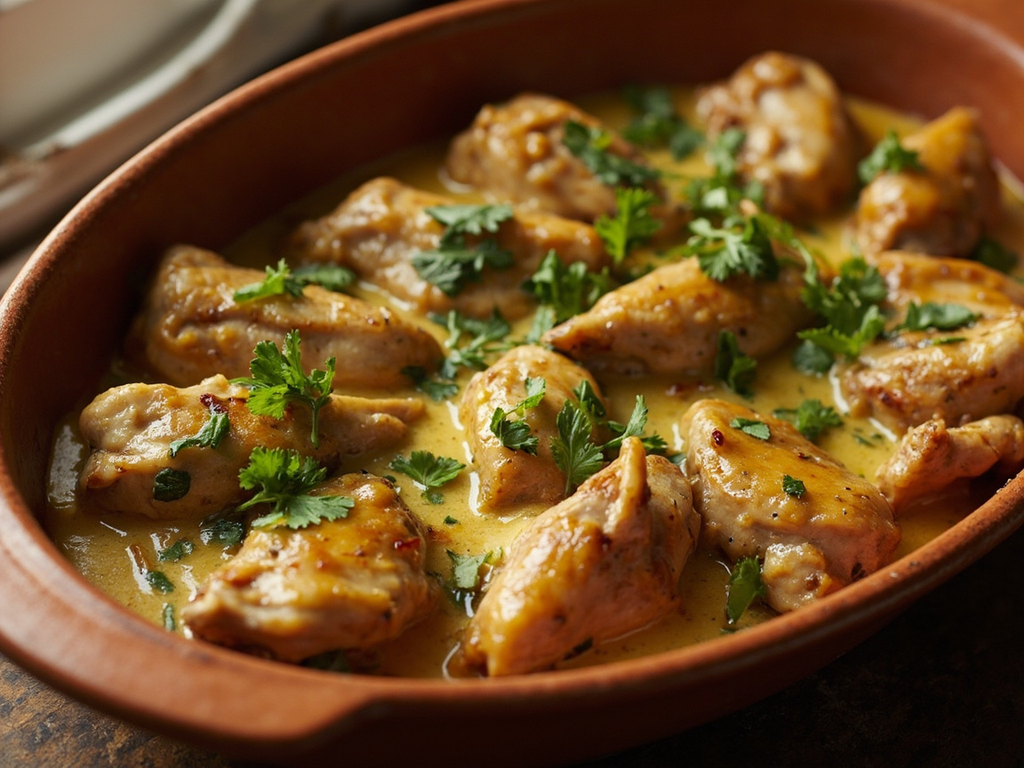
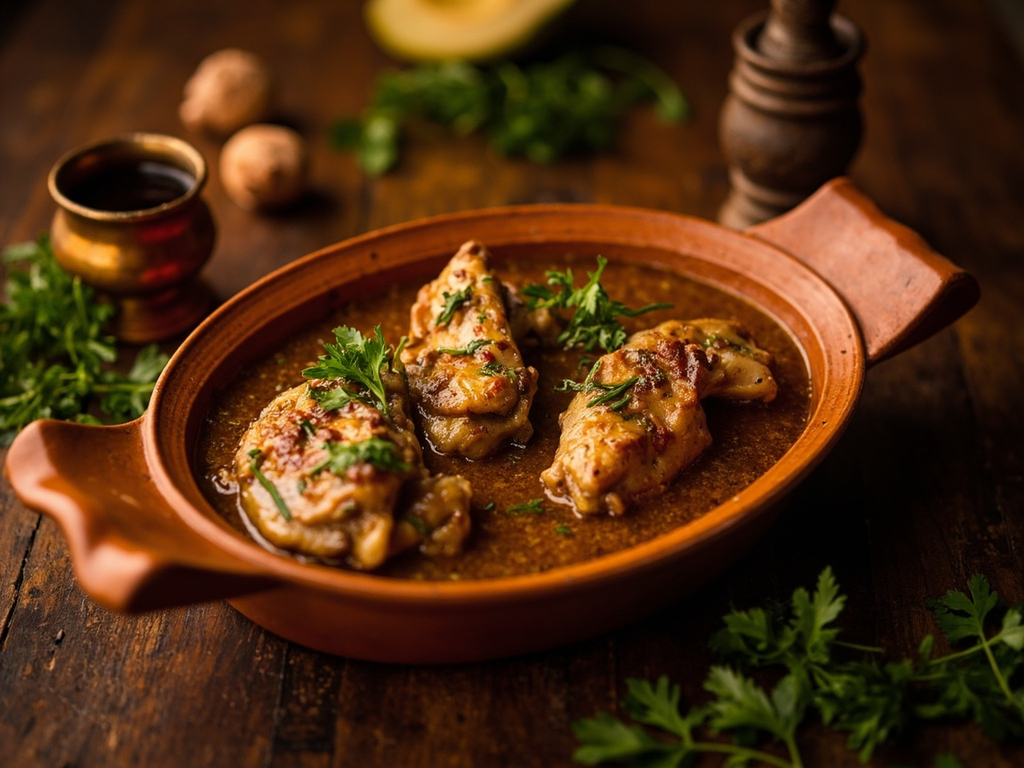
flipPullum Oxyzomum, Chicken with Garum and Herbs for the Patrician Cena
Pullum Oxyzomum, Chicken with Garum and Herbs for the Patrician Cena
Why this dish? Patrician of the Empire, three-time consul, Aetius sat at the banquets of Ravenna where the fate of the West was decided. At those tables, a poultry dish perfumed with garum and spices from the East affirmed rank and refinement — a terrain as decisive as the battlefield.
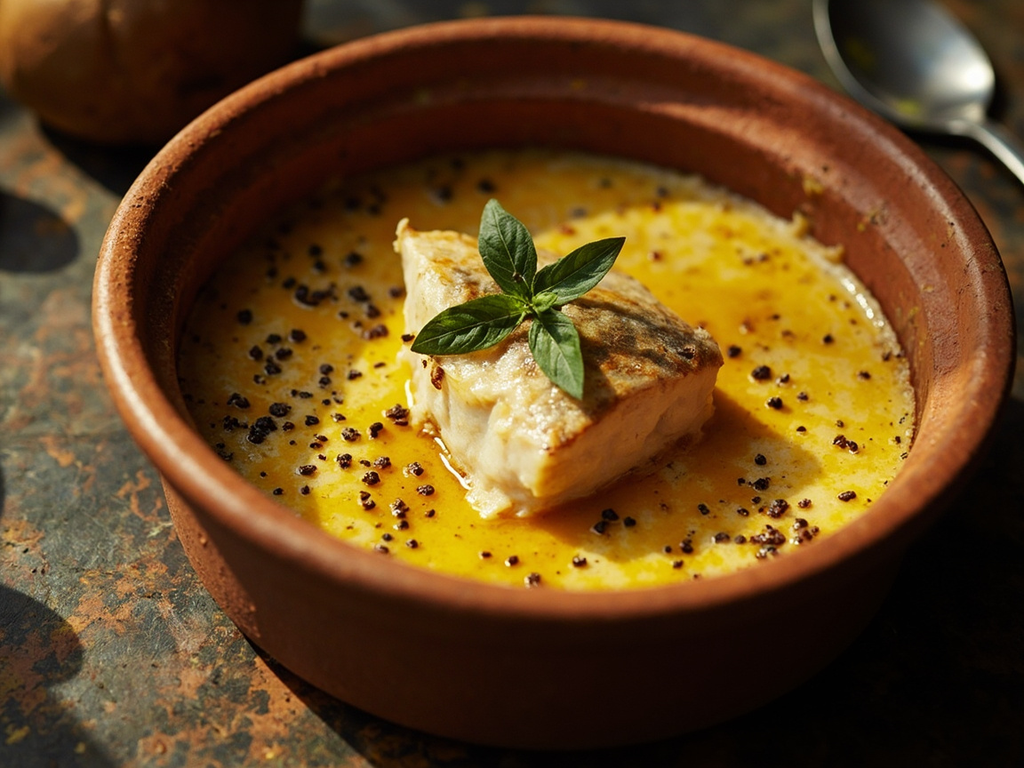
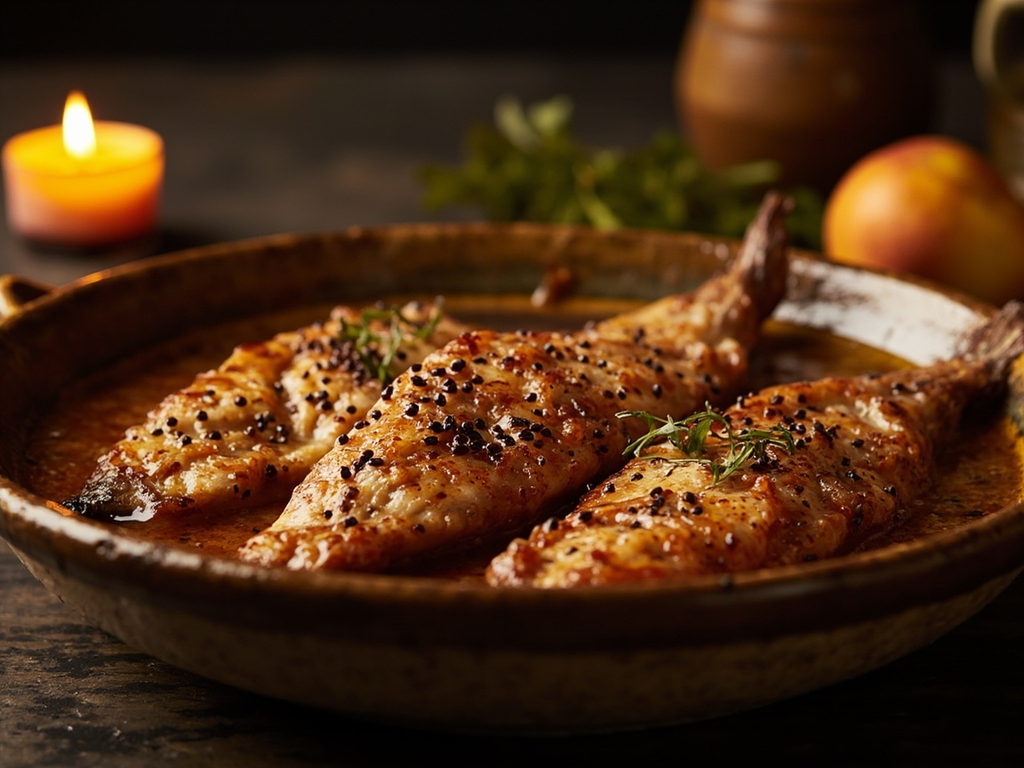
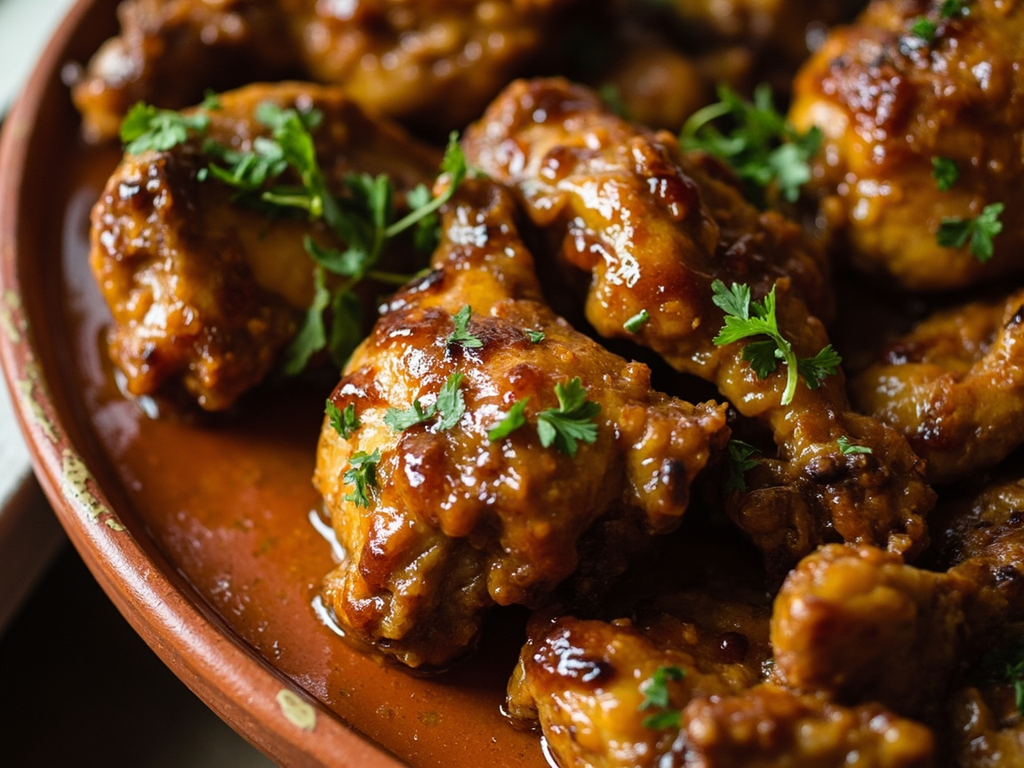
Inspired by Apicius's recipes, this chicken simmers in a sauce where garum meets vinegar, honey, and a bouquet of spices and herbs. Sweet-and-sour and deep, it is the kind of dish that made the reputation of a wealthy Roman table.
In Ravenna, a man is judged not only by his victories, but by what he serves at his table. For my guests, I had poultry simmered in garum, wine, and honey, seasoned with lovage, coriander, and a touch of pepper from the ends of the East. The hot sauce is poured over the tender meat, and we speak of Empire with goblet in hand. Let the palate be conquered before the words begin.
- •Young chicken (pullus) — one, in pieces (noble meat)
- •Garum — a good dash (salty umami)
- •White wine and a little vinegar — a goblet (acidity)
- •Honey — a spoonful (balancing sweetness)
- •Lovage, coriander, dried mint — to hand (aromatic herbs)
- •Pepper, cumin seeds — pounded (Eastern spices)
- •Olive oil — generous (cooking)
Pullum Oxyzomum, Chicken with Garum and Herbs for the Patrician Cena
Inspired by Apicius's recipes, this chicken simmers in a sauce where garum meets vinegar, honey, and a bouquet of spices and herbs. Sweet-and-sour and deep, it is the kind of dish that made the reputation of a wealthy Roman table.
Why this dish? Patrician of the Empire, three-time consul, Aetius sat at the banquets of Ravenna where the fate of the West was decided. At those tables, a poultry dish perfumed with garum and spices from the East affirmed rank and refinement — a terrain as decisive as the battlefield.
In Ravenna, a man is judged not only by his victories, but by what he serves at his table. For my guests, I had poultry simmered in garum, wine, and honey, seasoned with lovage, coriander, and a touch of pepper from the ends of the East. The hot sauce is poured over the tender meat, and we speak of Empire with goblet in hand. Let the palate be conquered before the words begin.
Ingredients (period version)
- Young chicken (pullus) — one, in pieces (noble meat)
- Garum — a good dash (salty umami)
- White wine and a little vinegar — a goblet (acidity)
- Honey — a spoonful (balancing sweetness)
- Lovage, coriander, dried mint — to hand (aromatic herbs)
- Pepper, cumin seeds — pounded (Eastern spices)
- Olive oil — generous (cooking)
Ingredients
- Chicken thighs and drumsticks — 6 pieces (meat)
- Fish sauce (substitute for garum) — 2 tablespoons (umami)
- Dry white wine — 150 ml (degreasing)
- Wine vinegar — 1 tablespoon (acidity)
- Honey — 1 tablespoon (sweetness)
- Fresh coriander + lovage (or celery stalk) — 1 small bunch (herbs)
- Ground cumin and black pepper — 1 teaspoon each (spices)
- Olive oil — 3 tablespoons (cooking)
Method
- Brown the chicken pieces in olive oil on all sides, then set aside.
- In the same pot, add the cumin and pepper, toast for 30 seconds.
- Deglaze with white wine and vinegar, add honey and fish sauce.
- Return the chicken, cover, and simmer for 35 minutes over low heat.
- Add the chopped herbs at the end of cooking, let the sauce reduce uncovered for a few minutes.
- Serve coated with the sweet-and-sour sauce, with bread for dipping.
How it was made : The book De re coquinaria attributed to Apicius is full of sauces balancing garum (salty-umami), vinegar or verjuice (sour), and honey (sweet). Wealthy Romans loved these sweet-and-sour combinations and used expensive imported spices — pepper from India, nard, lovage — as markers of wealth. Home-raised poultry was a choice dish without being big game.
The contemporary twist : Plated on a barley purée and glazed with the sauce reduced to a shiny glaze, under the name "Patrician's Chicken" — a nod to Aetius's supreme title.
Sources : Apicius, De Re Coquinaria, Book VI (Aves)
Aetius · Charactorium