 flip
flipShabbat Challah
Shabbat Challah
Why this dish? An Israeli born in Jerusalem into a modest Jewish family, Ada Yonath grew up with the rhythm of Shabbat. Challah, that braided, shiny bread broken on Friday evening, structures the week like an experiment structures a career. It is the quintessential festive dish of her culture.
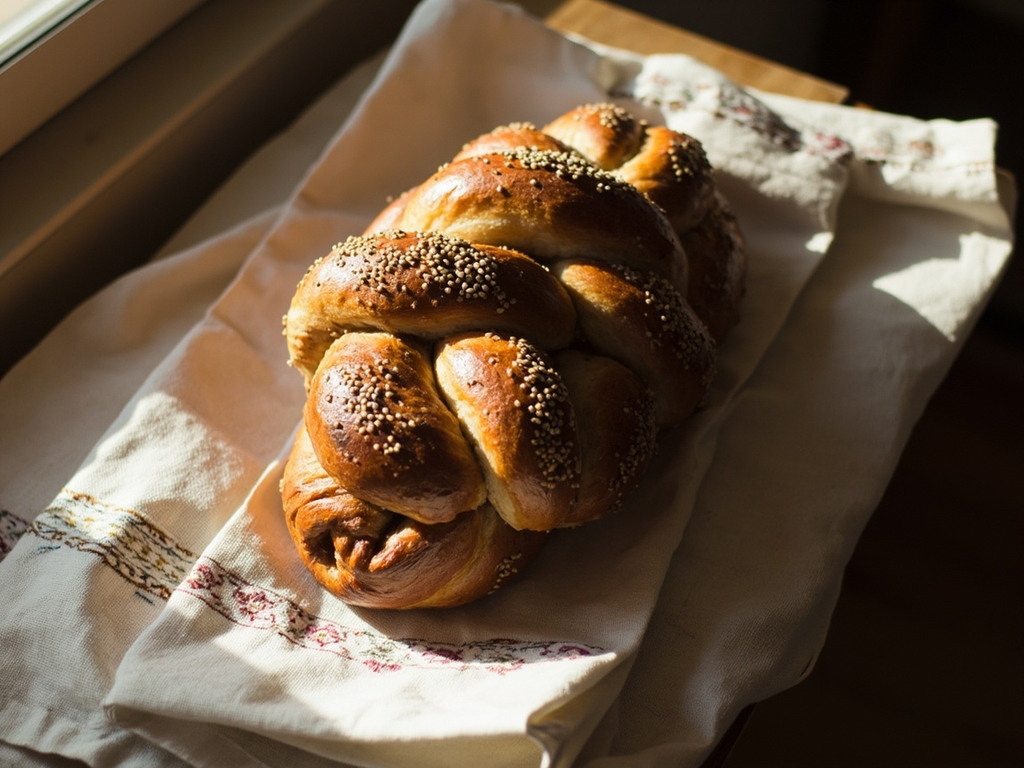
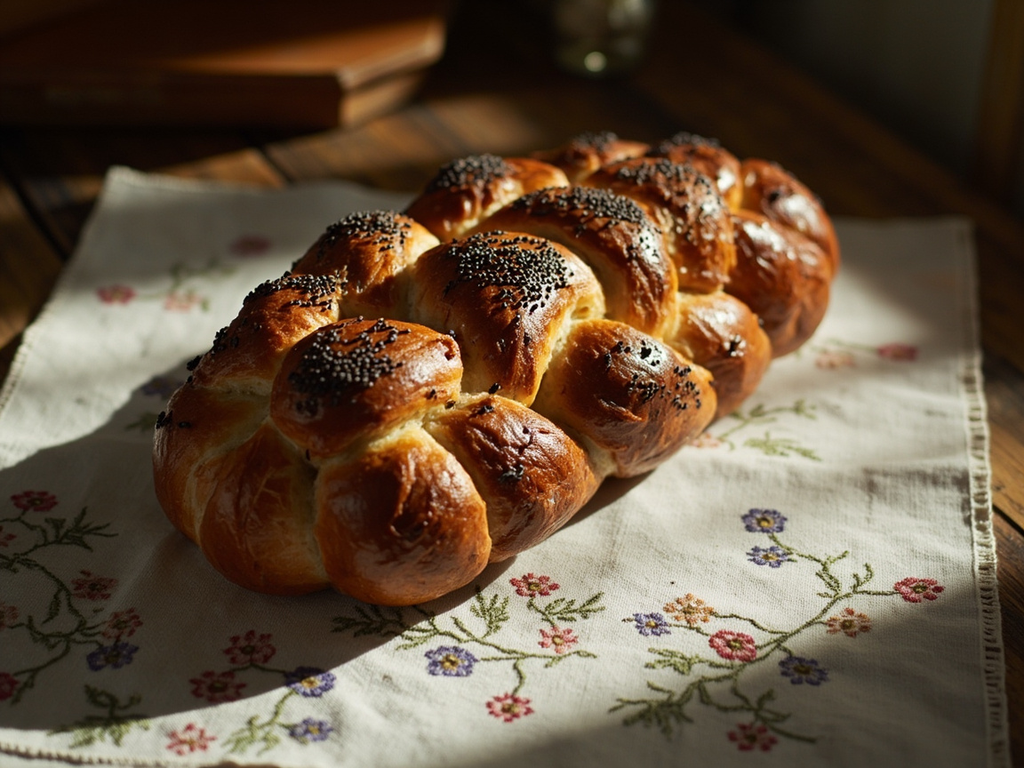
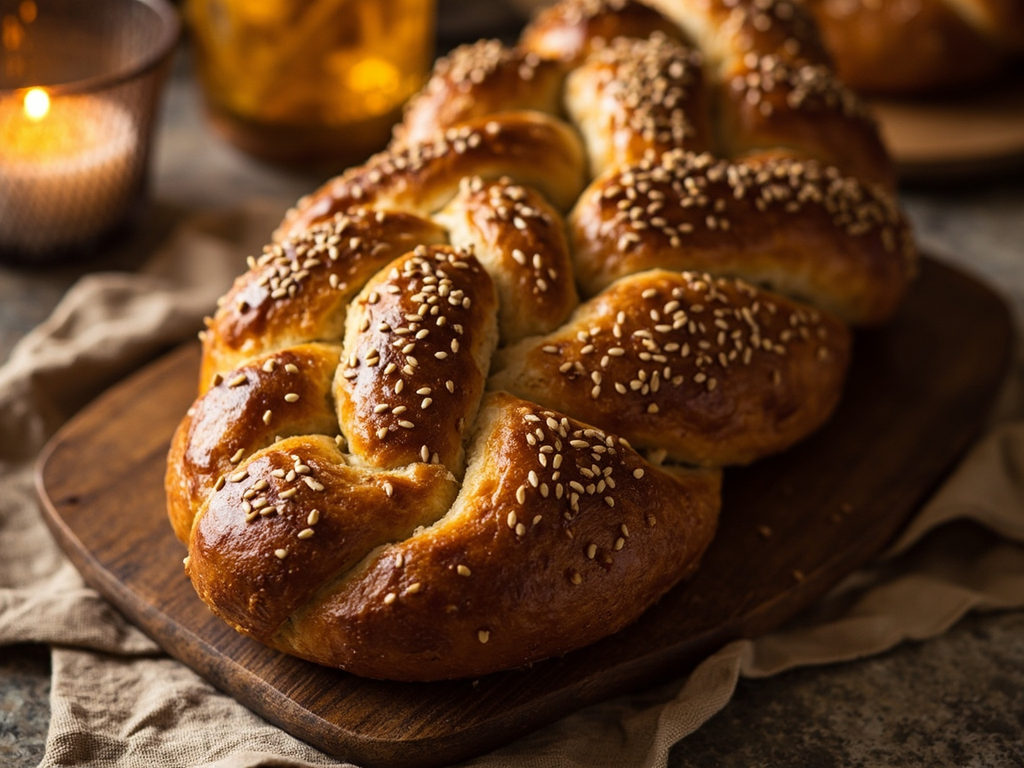
A slightly sweet brioche-style bread, braided and golden with egg, soft inside. It is shared by tearing by hand, never with a knife, at the festive meal.
At home, Friday changed everything: even when the cupboard was nearly empty, my mother would find something to make a challah rise. We braid three strands — as we braid three things we don't want to forget — and let them swell patiently; patience, you see, is the first virtue of a crystallographer as of a baker. I tell you straight: you don't cut a challah with a knife, you break it with your hands and pass it around. When the smell of golden bread filled the room, I forgot for a moment that we were poor — and that's the real wealth.
- •Wheat flour — several bowlfuls (base)
- •Sourdough or fresh yeast — as customary (leavening)
- •Eggs — a few (richness and glaze)
- •Honey — a spoonful (sweetener)
- •Oil — a little (softness)
- •Sesame or poppy seeds — a pinch (finishing)
Shabbat Challah
A slightly sweet brioche-style bread, braided and golden with egg, soft inside. It is shared by tearing by hand, never with a knife, at the festive meal.
Why this dish? An Israeli born in Jerusalem into a modest Jewish family, Ada Yonath grew up with the rhythm of Shabbat. Challah, that braided, shiny bread broken on Friday evening, structures the week like an experiment structures a career. It is the quintessential festive dish of her culture.
At home, Friday changed everything: even when the cupboard was nearly empty, my mother would find something to make a challah rise. We braid three strands — as we braid three things we don't want to forget — and let them swell patiently; patience, you see, is the first virtue of a crystallographer as of a baker. I tell you straight: you don't cut a challah with a knife, you break it with your hands and pass it around. When the smell of golden bread filled the room, I forgot for a moment that we were poor — and that's the real wealth.
Ingredients (period version)
- Wheat flour — several bowlfuls (base)
- Sourdough or fresh yeast — as customary (leavening)
- Eggs — a few (richness and glaze)
- Honey — a spoonful (sweetener)
- Oil — a little (softness)
- Sesame or poppy seeds — a pinch (finishing)
Ingredients
- All-purpose flour — 500 g (base)
- Active dry yeast — 1 packet (7 g) or 20 g fresh (leavening)
- Eggs — 2 + 1 yolk for glaze (richness and glaze)
- Honey — 2 tbsp (sweetener)
- Neutral oil — 60 ml (softness)
- Warm water — 180 ml (hydration)
- Salt — 1.5 tsp (seasoning)
- Sesame seeds — 1 tbsp (finishing (nod to sesame signature))
Method
- Dissolve yeast in warm water with honey, let foam 10 min.
- Mix flour and salt, add eggs, oil, and yeast mixture. Knead 10 min until smooth and elastic.
- Let rise 1 h 30 in a covered bowl until doubled.
- Punch down, divide into 3 strands, roll and braid, tucking ends under.
- Let rise again 45 min, brush with egg yolk and sprinkle sesame seeds.
- Bake 25 to 30 min at 180 °C until golden; bread should sound hollow when tapped.
How it was made : Braided Shabbat bread has existed in Ashkenazi Jewish communities since the Middle Ages; traditionally two are served, in memory of the double portion of manna. Before industrial yeast, a sourdough was maintained from week to week. Recipe presented here as inspired by a living tradition, without reproducing the religious ritual that accompanies it.
The contemporary twist : Braid with six strands for an architectural challah, or add a spoonful of sesame seeds into the dough itself — so the sesame is inside and on top.
Ada Yonath · Charactorium