 flip
flipFriday Night Braided Challah
Friday Night Braided Challah
Why this dish? Challah bread is explicitly listed among the festive dishes Golda prepared for her loved ones. Kneading and braiding two challahs for Friday night is the gesture that opens Shabbat in every Ashkenazi Jewish home: Golda, born in Kiev and raised in Milwaukee, did it all her life.
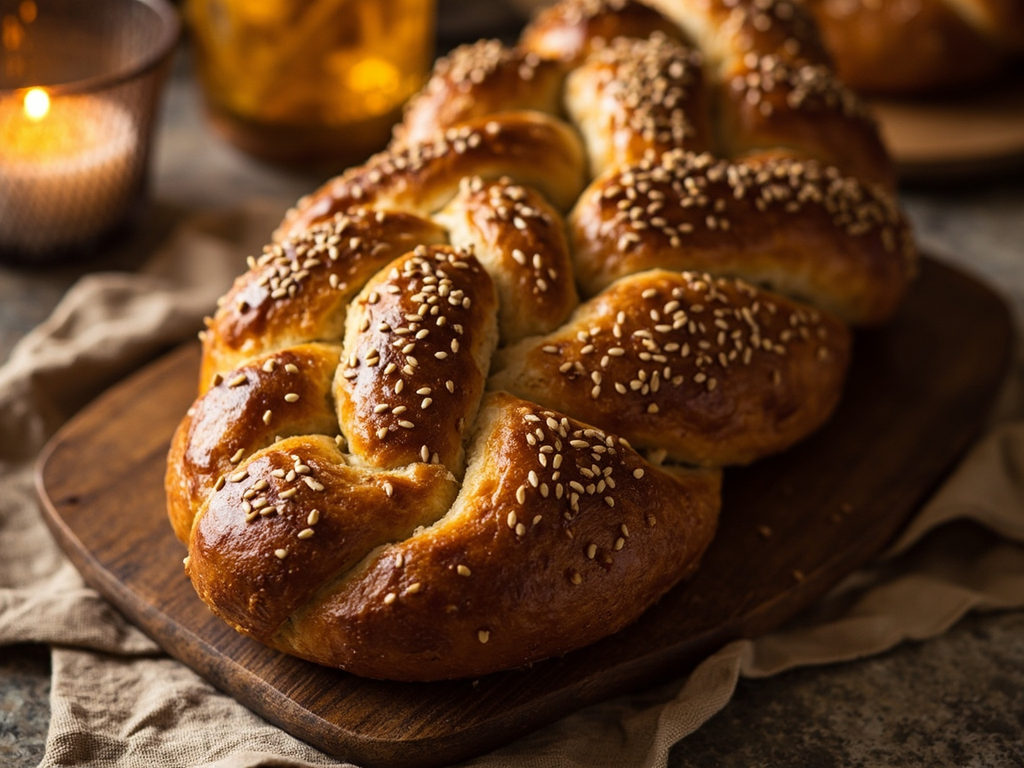
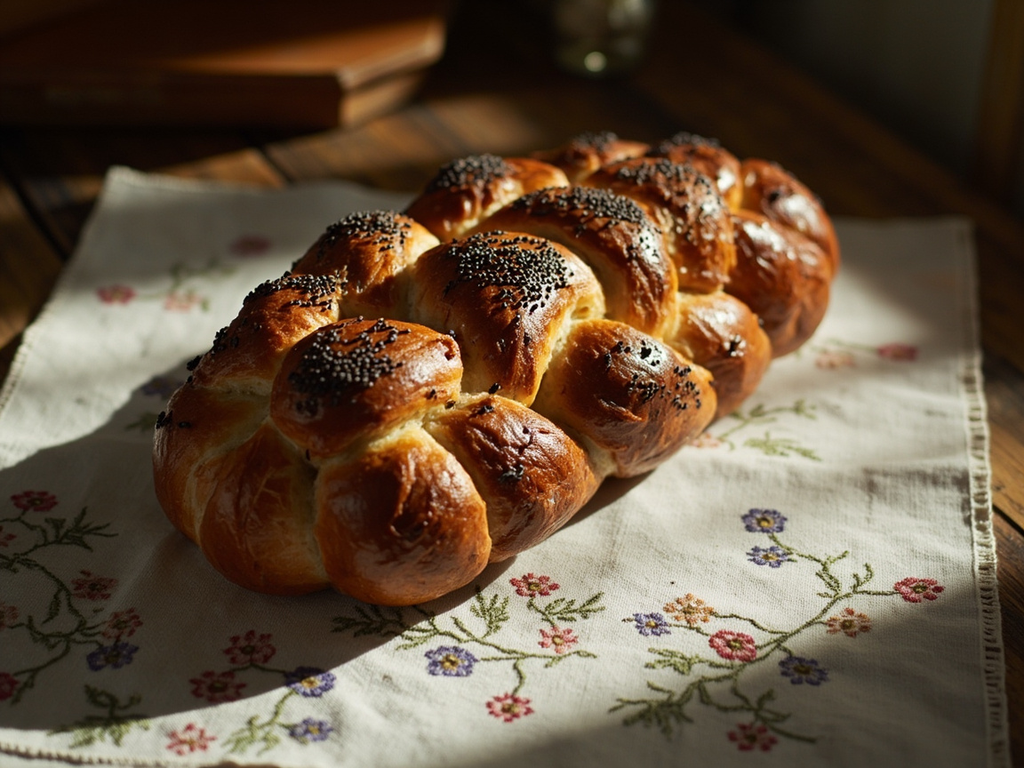
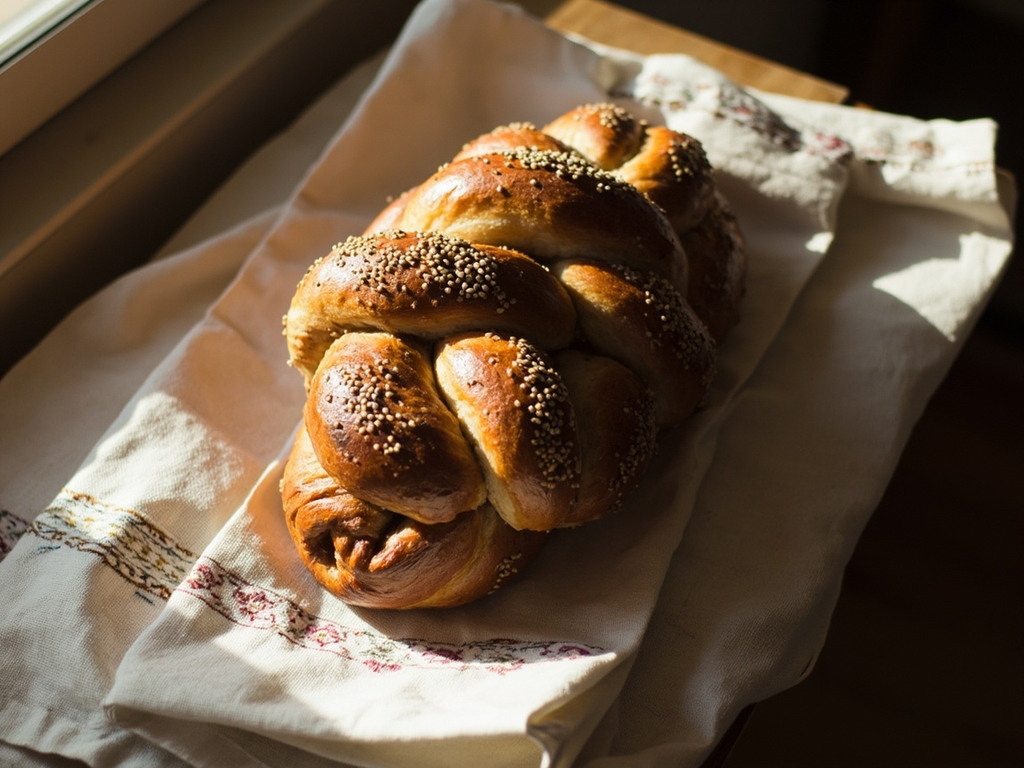
A braided brioche bread, egg-washed, lightly sweet and soft. Traditionally two loaves are placed side by side on the Friday night table, covered with an embroidered cloth, in memory of the double portion of manna in the desert.
You know, we didn't have much, not in Kiev nor in Milwaukee, but on Friday the challah had to be on the table, golden and properly braided. I kneaded the dough by hand, for a long time, until it answered me under my fingers — a soft dough doesn't lie. Three tight strands, an egg wash for color, and we'd wait for the house to smell good. At my home, Shabbat doesn't start without it, even when you're running a country.
- •Wheat flour — a good measure (dough base)
- •Fresh yeast — a piece (leavening)
- •Eggs — a few (softness and glaze)
- •Oil (or schmaltz for dairy-free days) — a drizzle (richness)
- •Honey or sugar — a little (sweetness)
- •Salt — a pinch (flavor)
Friday Night Braided Challah
A braided brioche bread, egg-washed, lightly sweet and soft. Traditionally two loaves are placed side by side on the Friday night table, covered with an embroidered cloth, in memory of the double portion of manna in the desert.
Why this dish? Challah bread is explicitly listed among the festive dishes Golda prepared for her loved ones. Kneading and braiding two challahs for Friday night is the gesture that opens Shabbat in every Ashkenazi Jewish home: Golda, born in Kiev and raised in Milwaukee, did it all her life.
You know, we didn't have much, not in Kiev nor in Milwaukee, but on Friday the challah had to be on the table, golden and properly braided. I kneaded the dough by hand, for a long time, until it answered me under my fingers — a soft dough doesn't lie. Three tight strands, an egg wash for color, and we'd wait for the house to smell good. At my home, Shabbat doesn't start without it, even when you're running a country.
Ingredients (period version)
- Wheat flour — a good measure (dough base)
- Fresh yeast — a piece (leavening)
- Eggs — a few (softness and glaze)
- Oil (or schmaltz for dairy-free days) — a drizzle (richness)
- Honey or sugar — a little (sweetness)
- Salt — a pinch (flavor)
Ingredients
- All-purpose flour — 500 g (base)
- Active dry yeast — 7 g (leavening)
- Warm water — 180 ml (hydration)
- Eggs — 2 whole + 1 yolk (glaze) (softness and glaze)
- Neutral oil — 60 ml (richness)
- Sugar — 40 g (sweetness)
- Salt — 1 tsp (flavor)
- Sesame or poppy seeds — for sprinkling (finish)
Method
- Dissolve yeast in warm water with a pinch of sugar, let foam 10 min.
- Mix flour, sugar, and salt; add 2 eggs, oil, and yeast mixture. Knead 10 min until smooth and elastic.
- Cover and let rise until doubled, about 1.5 hours in a warm place.
- Divide into 3 strands, roll into ropes, braid, pinching ends well.
- Let rise 45 min, brush with egg yolk, sprinkle with sesame or poppy seeds.
- Bake 25–30 min at 180°C until golden brown and hollow-sounding when tapped.
How it was made : In shtetl homes and later emigrant communities, challah was made with what was available — oil or chicken fat instead of butter, which is forbidden with meat. The three- or six-strand braid and the Shabbat cloth are ancient customs, passed from mother to daughter.
The contemporary twist : A contemporary version adds a handful of raisins or a round braid for autumn holidays — a nod to Rosh Hashanah challahs.
Sources : Claudia Roden, The Book of Jewish Food (1996)
Golda Meir · Charactorium