 flip
flipChicken Broth with Almonds and Saffron
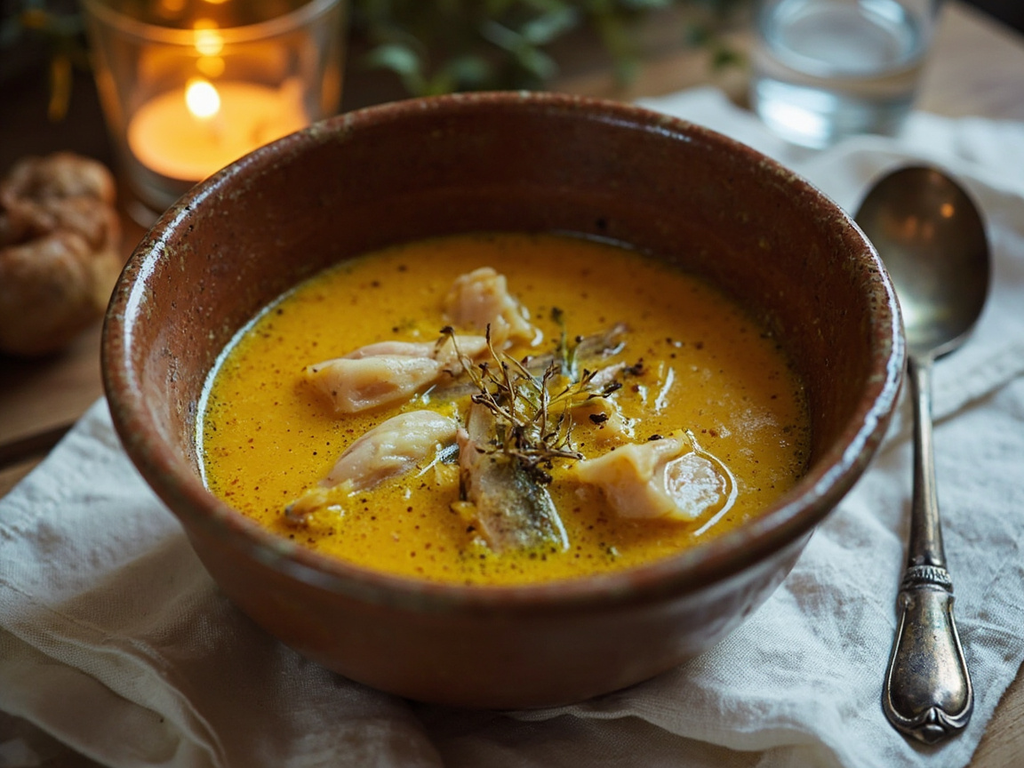
Chicken Broth with Almonds and Saffron
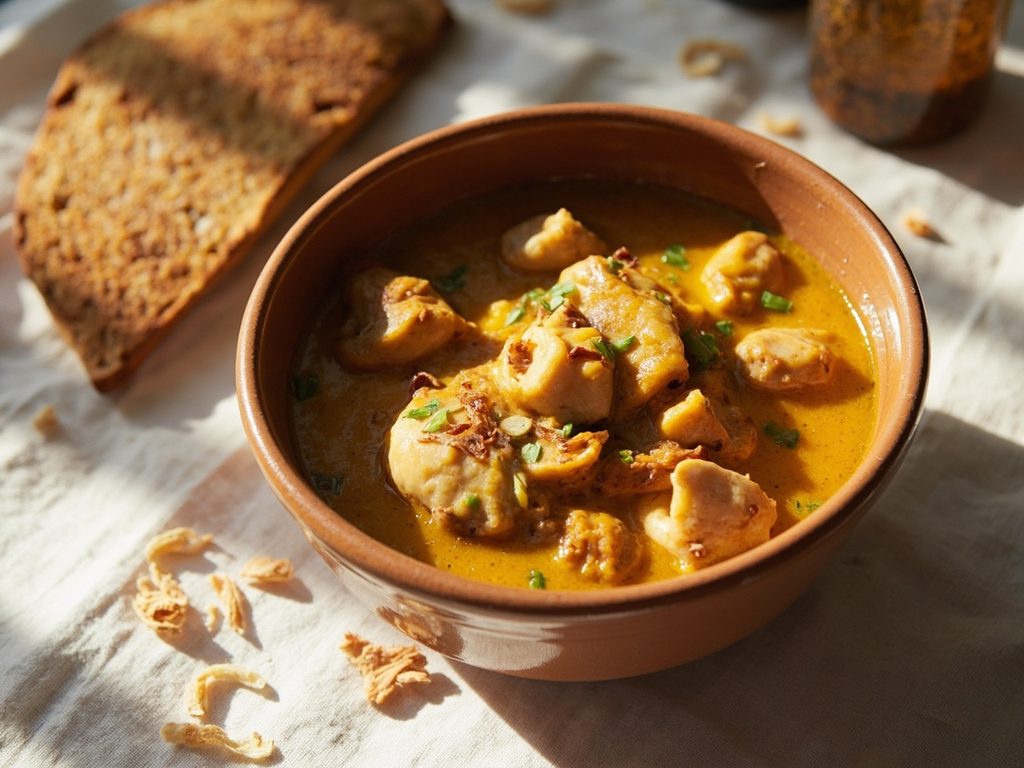
Why this dish? This chicken broth, sweet and golden with saffron, is the kind of dish served day after day at the queen's table in the Palais de la Cité, without the pomp of grand banquets: white meat bound with almond milk, enhanced by the spices that the fairs of her native Champagne brought to Paris.
A velvety stewed chicken, bound with almond milk and bread, perfumed with ginger and saffron, sharpened with a dash of verjuice. A noble everyday dish: nourishing, fragrant, but without the splendor reserved for feasts.
Draw near and see this broth that suits any well-kept table. Take a fine chicken, boil it until tender, then bind it with milk of pounded almonds and a little soaked bread, for the sauce should be neither too thin nor too thick. I want saffron for the golden color, ginger for warmth, and a dash of verjuice that wakes it all up. Remember: spice is not thrown in by the handful, it is measured, for it is worth its weight in silver at the fairs of Troyes.
- •Hen or capon — a fine piece (master meat)
- •Almonds — two handfuls (binding into almond milk)
- •Wheat bread crumb — a few slices (thickener)
- •Saffron — a few threads (color and perfume)
- •Ginger — a pinch (warm spice)
- •Verjuice — a dash (acidity)
Chicken Broth with Almonds and Saffron
A velvety stewed chicken, bound with almond milk and bread, perfumed with ginger and saffron, sharpened with a dash of verjuice. A noble everyday dish: nourishing, fragrant, but without the splendor reserved for feasts.
Why this dish? This chicken broth, sweet and golden with saffron, is the kind of dish served day after day at the queen's table in the Palais de la Cité, without the pomp of grand banquets: white meat bound with almond milk, enhanced by the spices that the fairs of her native Champagne brought to Paris.
Draw near and see this broth that suits any well-kept table. Take a fine chicken, boil it until tender, then bind it with milk of pounded almonds and a little soaked bread, for the sauce should be neither too thin nor too thick. I want saffron for the golden color, ginger for warmth, and a dash of verjuice that wakes it all up. Remember: spice is not thrown in by the handful, it is measured, for it is worth its weight in silver at the fairs of Troyes.
Ingredients (period version)
- Hen or capon — a fine piece (master meat)
- Almonds — two handfuls (binding into almond milk)
- Wheat bread crumb — a few slices (thickener)
- Saffron — a few threads (color and perfume)
- Ginger — a pinch (warm spice)
- Verjuice — a dash (acidity)
Ingredients
- Free-range chicken thighs and breasts — 800 g (master meat)
- Almond powder — 100 g (or 40 cl unsweetened almond milk) (binding)
- Stale white bread crumb — 2 slices (thickener)
- Saffron — 1 good pinch of pistils (color and perfume)
- Ground ginger — 1/2 tsp (spice)
- Verjuice (or green grape juice + 1 tbsp mild vinegar) — 3 tbsp (acidity)
- Salt — to taste (seasoning)
Method
- Poach the chicken in lightly salted water for 35-40 minutes, then reserve the broth.
- Infuse the saffron in a ladleful of hot broth.
- Prepare almond milk: mix almond powder with 40 cl of hot broth, let infuse 15 minutes, strain by pressing (or use ready-made almond milk).
- Soak the bread crumb in a little broth, then blend to a smooth paste.
- Shred the chicken. Combine almond milk, bread paste, and saffron broth in a saucepan; add ginger.
- Bring to a simmer, add the chicken, and let thicken gently for 10 minutes without boiling hard.
- Off the heat, add verjuice, adjust salt, and serve warm on bread.
How it was made : "Broths" were the backbone of medieval cuisine: pottages thickened with bread and almonds, endlessly varied with spices. Almond milk advantageously replaced animal milk, which soured quickly and was forbidden on lean days. Saffron, verjuice, and ginger appear in all contemporary recipe collections such as Le Viandier attributed to Taillevent (slightly later, but faithful to these practices).
The contemporary twist : Serve the broth in a clear bowl, sprinkled with toasted slivered almonds and a few saffron pistils: a "royal velouté" that surprises with its spiced sweetness.
Sources : Le Viandier de Taillevent (French collection from the 13th-14th c., heir to earlier practices) · Bruno Laurioux, Manger au Moyen Âge, Hachette, 2002
Adela of Champagne · Charactorium