 flip
flipHarisa of Wheat and Lamb for Alms
Harisa of Wheat and Lamb for Alms
Why this dish? When Azrael takes a soul, the living feed the poor in its name. In Baghdad and Toledo, harisa—a thick porridge of pounded wheat and meat simmered for hours—was the great-pot dish: cauldrons were cooked for wakes and charity distributions, because it fills for a long time and can be shared endlessly.
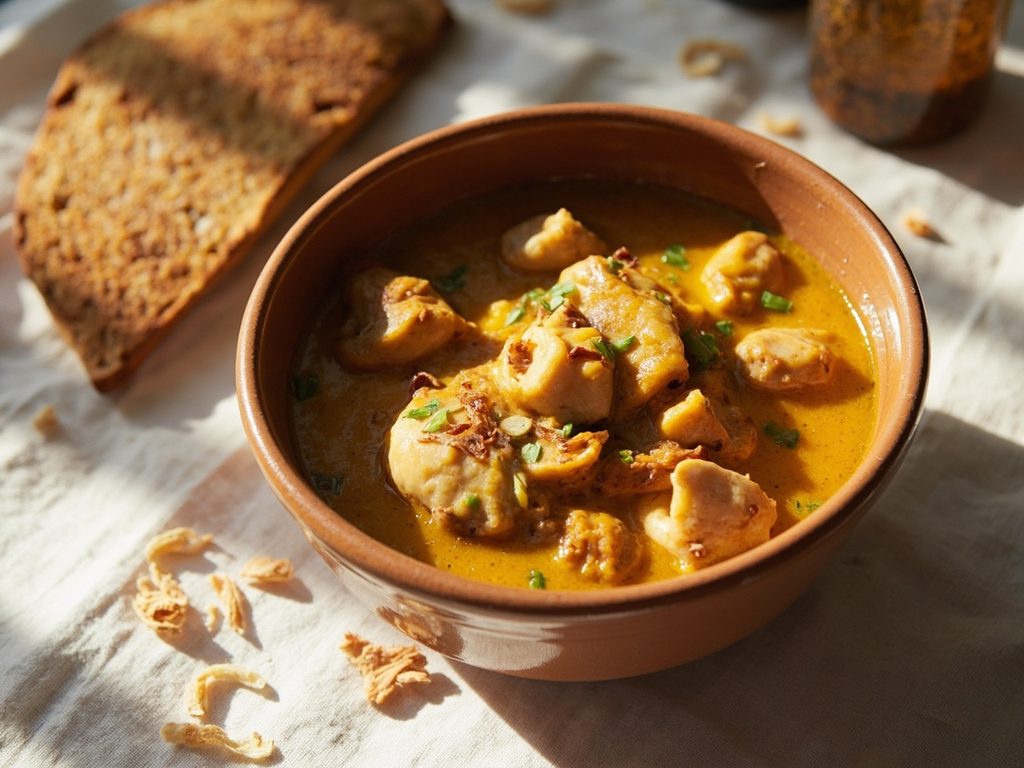
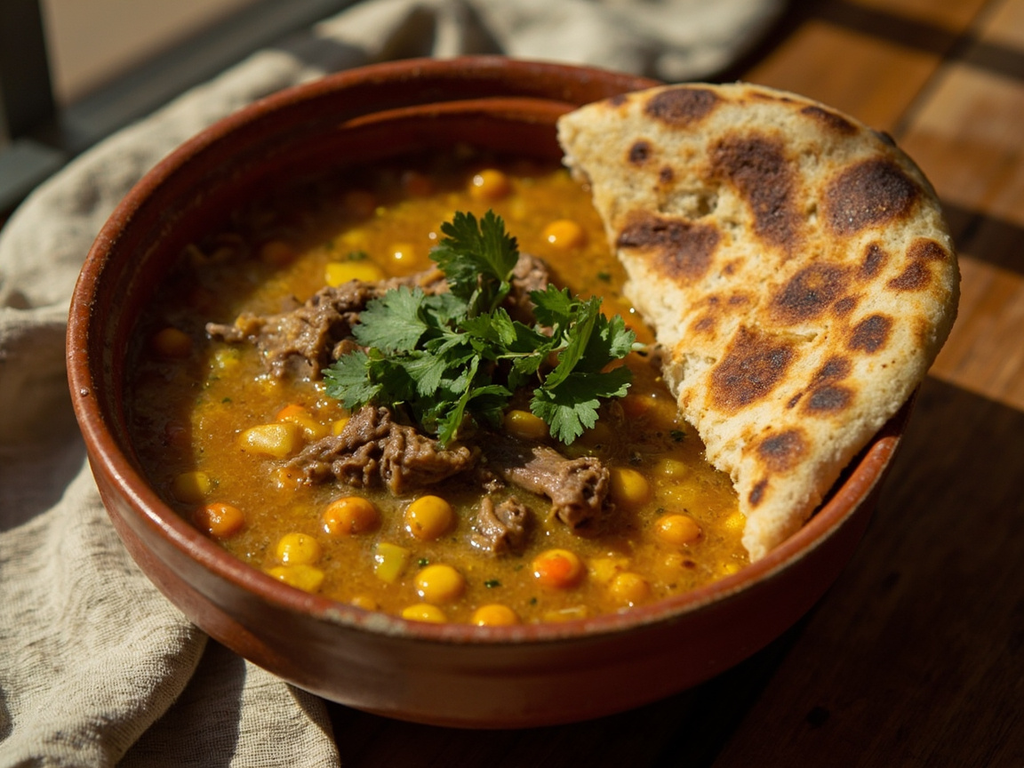
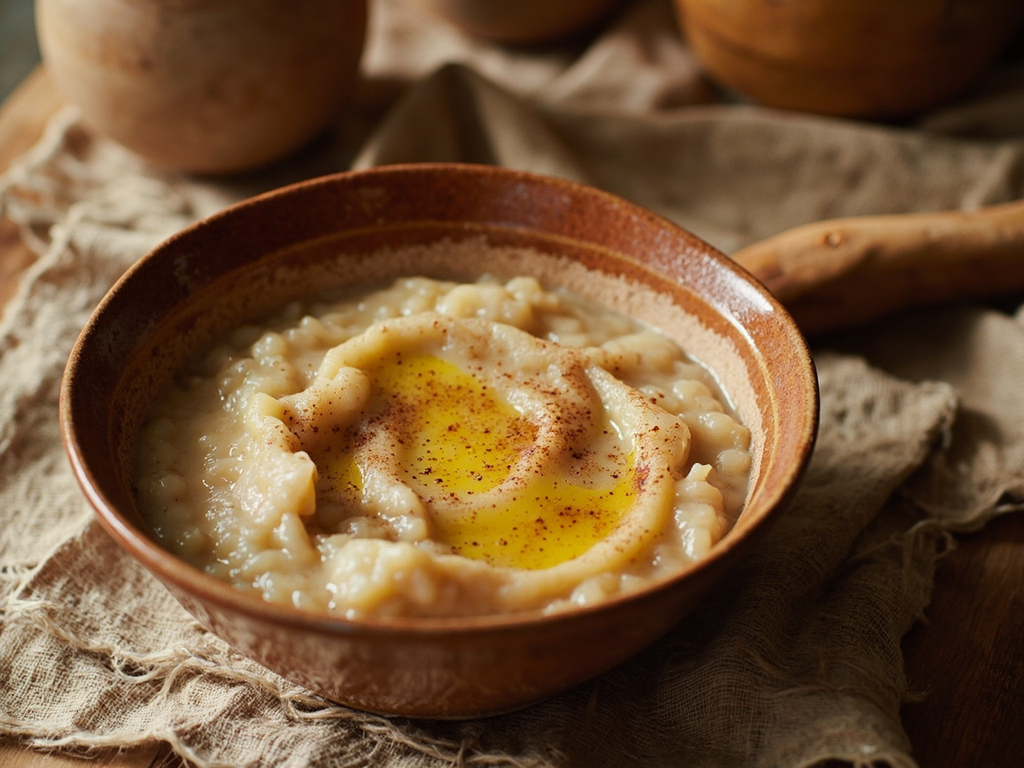
A creamy, nourishing porridge of whole wheat slowly simmered with lamb until grain and meat merge into a smooth paste. Served hot, perfumed with cinnamon and drizzled with melted butter—comfort for long vigils and food of the humble.
Where I pass, the living light the fire under the great cauldron. They throw in the wheat and the meat, and they stir, and stir again, for hours, until everything becomes one tender flesh—as the soul and body were one before I separated them. Then they fill the bowls of the poor, in the name of the one I have taken. Eat hot, traveler: this patient wheat will hold your belly as prayer holds the spirit.
- •Hulled whole wheat — one measure (base of the porridge)
- •Lamb or mutton shoulder — a good piece with bone (meat)
- •Clarified butter (samn) — for drizzling (final richness)
- •Cinnamon — a pinch (period flavor)
- •Salt — to taste (seasoning)
Harisa of Wheat and Lamb for Alms
A creamy, nourishing porridge of whole wheat slowly simmered with lamb until grain and meat merge into a smooth paste. Served hot, perfumed with cinnamon and drizzled with melted butter—comfort for long vigils and food of the humble.
Why this dish? When Azrael takes a soul, the living feed the poor in its name. In Baghdad and Toledo, harisa—a thick porridge of pounded wheat and meat simmered for hours—was the great-pot dish: cauldrons were cooked for wakes and charity distributions, because it fills for a long time and can be shared endlessly.
Where I pass, the living light the fire under the great cauldron. They throw in the wheat and the meat, and they stir, and stir again, for hours, until everything becomes one tender flesh—as the soul and body were one before I separated them. Then they fill the bowls of the poor, in the name of the one I have taken. Eat hot, traveler: this patient wheat will hold your belly as prayer holds the spirit.
Ingredients (period version)
- Hulled whole wheat — one measure (base of the porridge)
- Lamb or mutton shoulder — a good piece with bone (meat)
- Clarified butter (samn) — for drizzling (final richness)
- Cinnamon — a pinch (period flavor)
- Salt — to taste (seasoning)
Ingredients
- Soft whole wheat (or hulled barley) — 300 g (base)
- Lamb shoulder — 500 g (meat)
- Clarified butter or ghee — 50 g (finishing)
- Ground cinnamon — 1 tsp (flavor)
- Salt — 1.5 tsp (seasoning)
- Water or broth — 2 to 2.5 liters (cooking liquid)
Method
- Soak the wheat for several hours (ideally overnight).
- In a large pot, cover the lamb and drained wheat generously with water; bring to a simmer and skim.
- Simmer over very low heat for 2.5 to 3 hours, stirring regularly and adding hot water if needed.
- Remove the lamb, debone, shred the meat, and return it to the pot.
- Beat vigorously with a spoon (or whisk) until a smooth, homogeneous porridge forms; season with salt.
- Serve hot in bowls, drizzled with melted clarified butter and sprinkled with cinnamon.
How it was made : Harisa (not to be confused with spicy harissa, which is post-1492 and impossible here) is a wheat-and-meat porridge attested in al-Warraq's Kitab al-Tabikh and in Andalusian cuisine. Cooked for hours and beaten until fused, it was the dish for large communal tables, religious vigils, and charitable distributions, as it feeds many mouths at low cost.
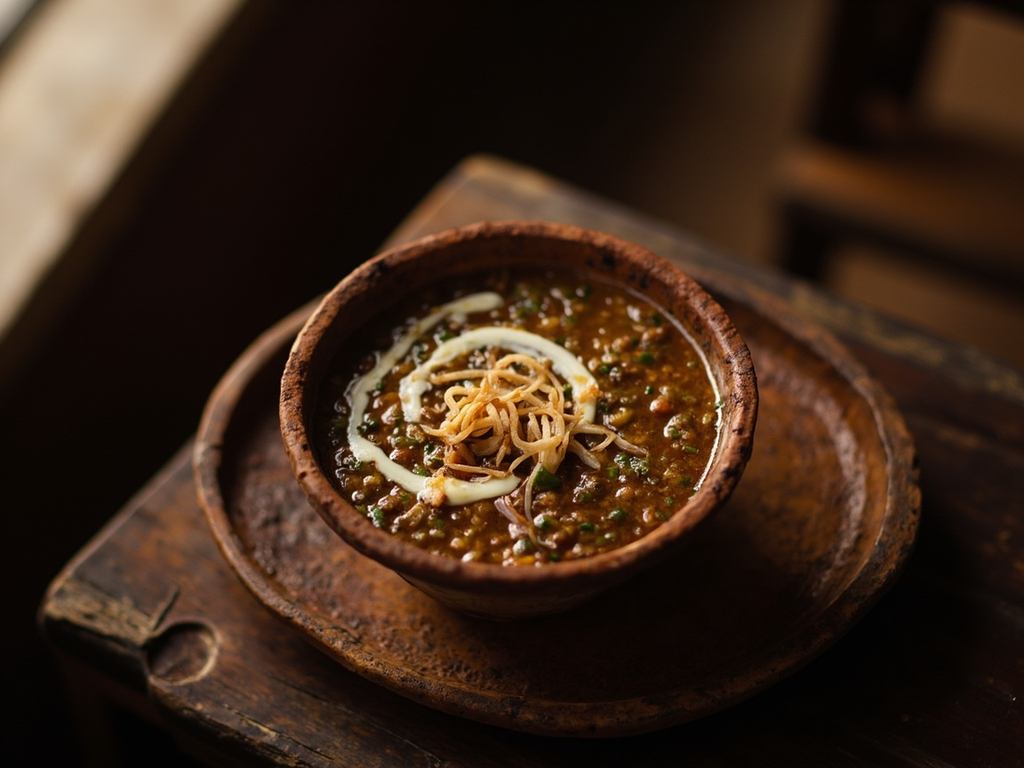
The contemporary twist : Plated in a deep bowl, smoothed with a spoon and marked with hazelnut butter and cinnamon in a spiral: a savory porridge with character, halfway between tradition and comfort food.
Sources : al-Warraq, Kitab al-Tabikh (Baghdad, 10th century) · Lucie Bolens, La cuisine andalouse, un art de vivre (1990) · Charles Perry (trans.), Medieval Arab Cookery (2001)
Azrael · Charactorium