 flip
flipBiancomangiare of capon
Biancomangiare of capon
Why this dish? The 'white dish' was THE prestige dish of princely banquets in the Quattrocento: immaculate white like Chigi's silverware, perfumed with sugar and rose water, it signaled to his guests — popes and cardinals — that they were dining at the richest financier in Rome.
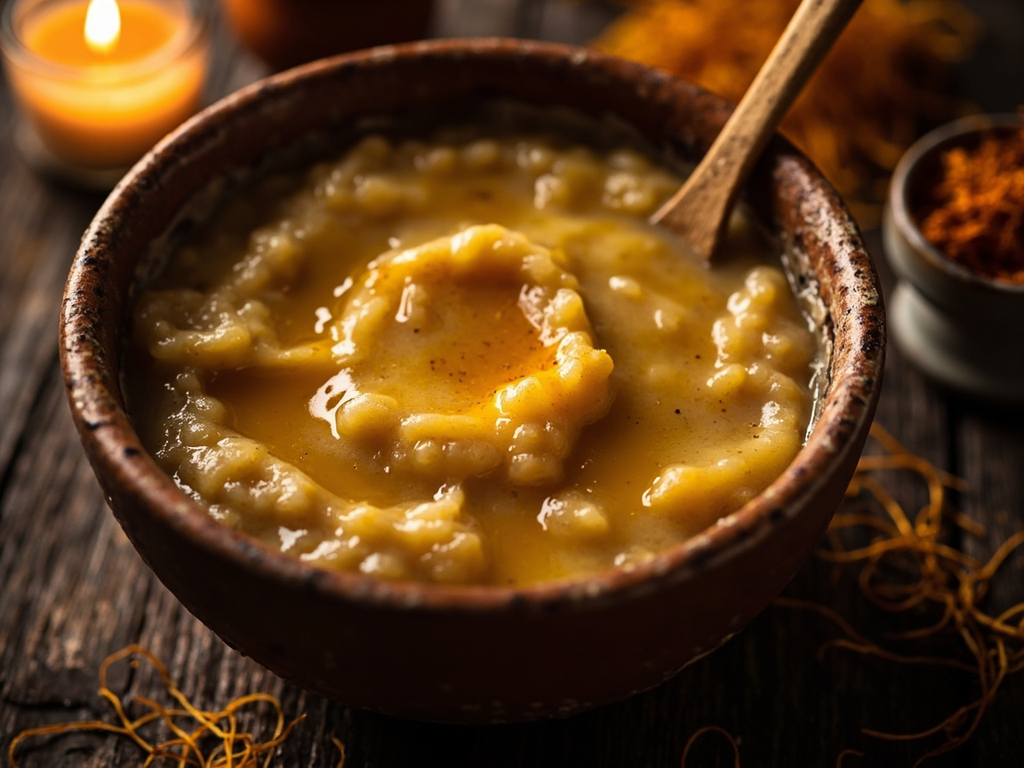
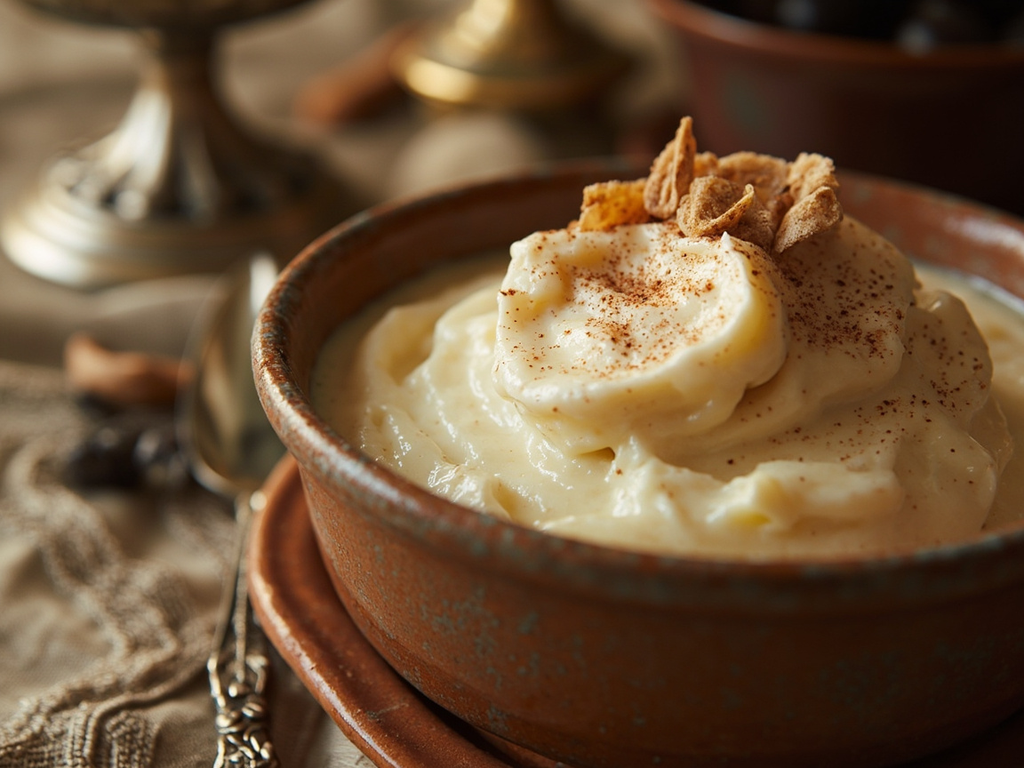
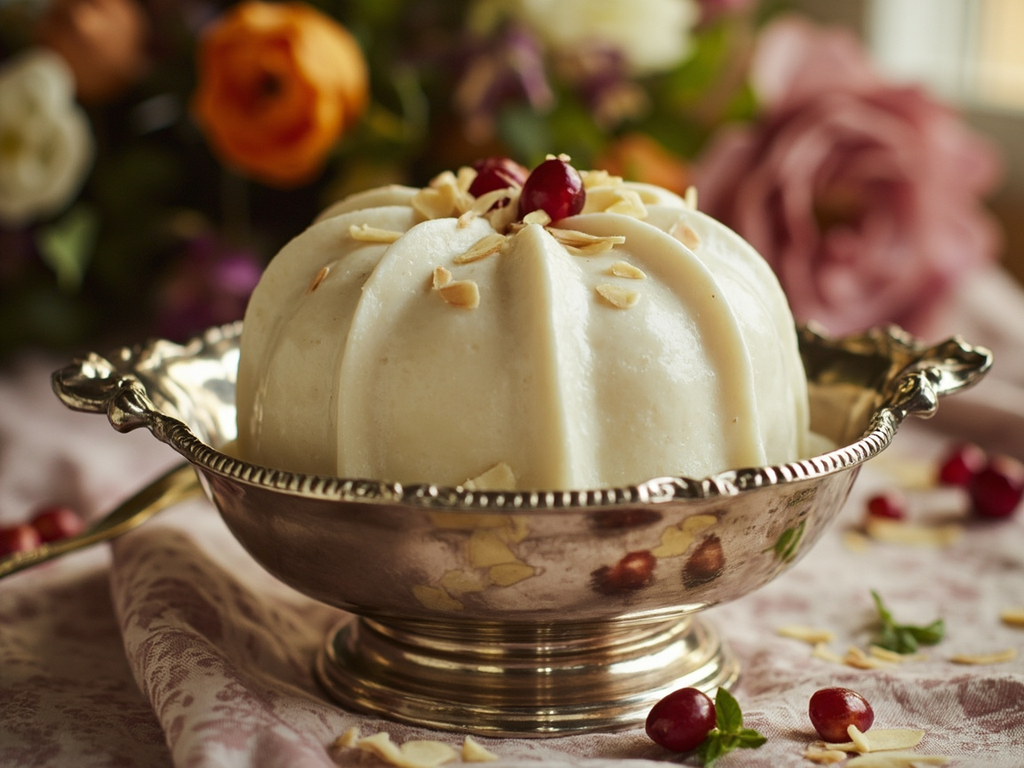
A meltingly soft sweet of perfect whiteness: shredded capon breast, melted into almond milk, bound with rice flour and sweetened with sugar. Neither quite savory nor quite dessert — a showpiece dish where wealth was measured by whiteness.
My friends, see how white this dish is! White is the color of lords, and no one in Rome serves it purer than I at the Farnesina. My cook grinds the almond until it weeps its milk, drowns the capon pulled into threads, and binds it all with rice flour over a gentle fire, never letting it take color — one spot of brown and I dismiss him! A drop of rose water, a veil of sugar, and I present it on chased silver: let my guests know that here one eats as one spends.
- •Boiled capon breast — the flesh of one breast, finely shredded (soft protein base)
- •Pounded almond milk — three bowls (nourishing liquid and whiteness)
- •Rice flour — two handfuls (binder)
- •White sugar — a generous hand (prestige sweetness)
- •Rose water — a few drops (noble perfume)
- •Powdered ginger — a pinch (subtle spicy warmth)
- •Fine salt — a pinch (balance)
Biancomangiare of capon
A meltingly soft sweet of perfect whiteness: shredded capon breast, melted into almond milk, bound with rice flour and sweetened with sugar. Neither quite savory nor quite dessert — a showpiece dish where wealth was measured by whiteness.
Why this dish? The 'white dish' was THE prestige dish of princely banquets in the Quattrocento: immaculate white like Chigi's silverware, perfumed with sugar and rose water, it signaled to his guests — popes and cardinals — that they were dining at the richest financier in Rome.
My friends, see how white this dish is! White is the color of lords, and no one in Rome serves it purer than I at the Farnesina. My cook grinds the almond until it weeps its milk, drowns the capon pulled into threads, and binds it all with rice flour over a gentle fire, never letting it take color — one spot of brown and I dismiss him! A drop of rose water, a veil of sugar, and I present it on chased silver: let my guests know that here one eats as one spends.
Ingredients (period version)
- Boiled capon breast — the flesh of one breast, finely shredded (soft protein base)
- Pounded almond milk — three bowls (nourishing liquid and whiteness)
- Rice flour — two handfuls (binder)
- White sugar — a generous hand (prestige sweetness)
- Rose water — a few drops (noble perfume)
- Powdered ginger — a pinch (subtle spicy warmth)
- Fine salt — a pinch (balance)
Ingredients
- Poached chicken or capon breast — 200 g (protein base)
- Unsweetened almond milk — 750 ml (liquid)
- Rice flour — 80 g (binder)
- Sugar — 70 g (sweetness)
- Rose water — 1 tablespoon (perfume)
- Powdered ginger — 1/2 teaspoon (spice)
- Salt — 1 pinch (balance)
- Slivered almonds and pomegranate seeds — for decoration (garnish)
Method
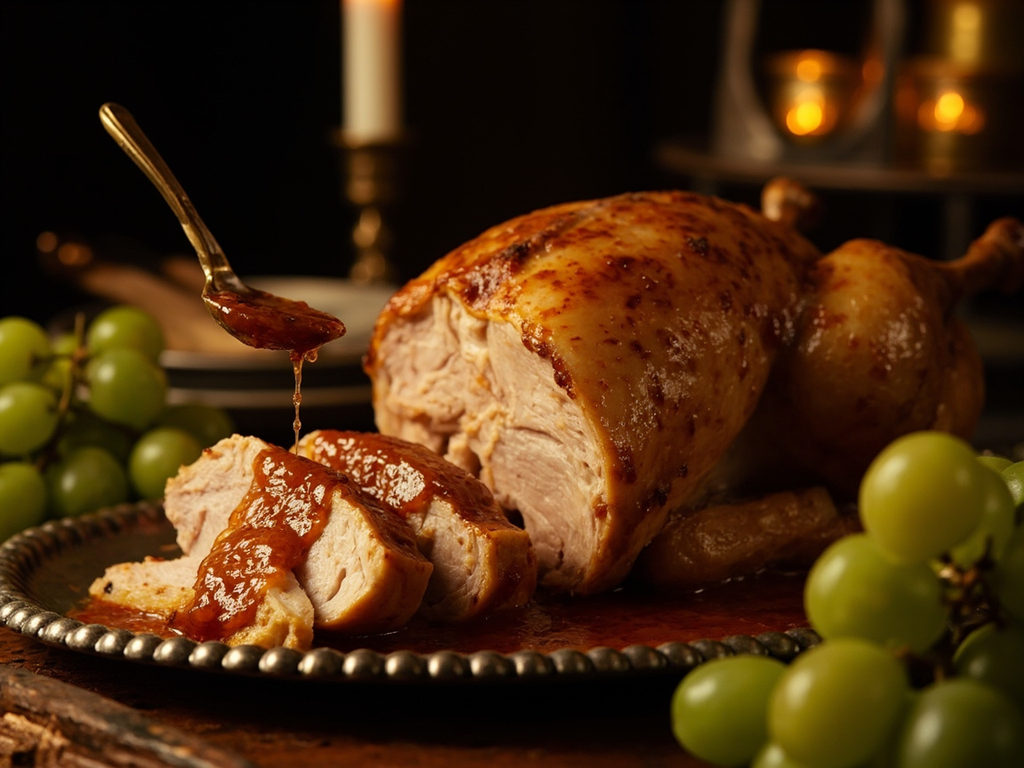
- Poach the poultry breast in simmering salted water, then shred it as finely as possible, almost into threads.
- Dissolve the rice flour in a little cold almond milk to avoid lumps.
- Pour the remaining almond milk into a saucepan, add the shredded poultry, sugar, salt, and ginger.
- Stir in the dissolved rice flour and thicken over low heat, stirring constantly, without ever letting it color (10–15 minutes).
- Remove from heat, perfume with rose water. Let cool slightly: the texture should be creamy and coating.
- Mound into a small white dome, sprinkle with slivered almonds and a few pomegranate seeds.
How it was made : The biancomangiare appears in almost all medieval and Renaissance recipe collections, notably Maestro Martino's 'Libro de arte coquinaria' (c. 1465). It was meant to be absolutely white: cooks avoided any colored ingredient and worked over very low heat. Depending on the version, it was served either sweet or savory, proof that the boundary between sweet and savory did not exist at the time.
The contemporary twist : Served in a verrine with an almond tuile stuck into it, it becomes a chic dessert that surprises with its poultry note — 'sweet-savory' cuisine ahead of its time.
Sources : Maestro Martino, Libro de arte coquinaria (c. 1465) · Platina (Bartolomeo Sacchi), De honesta voluptate et valetudine (1474)
Agostino Chigi · Charactorium