 flip
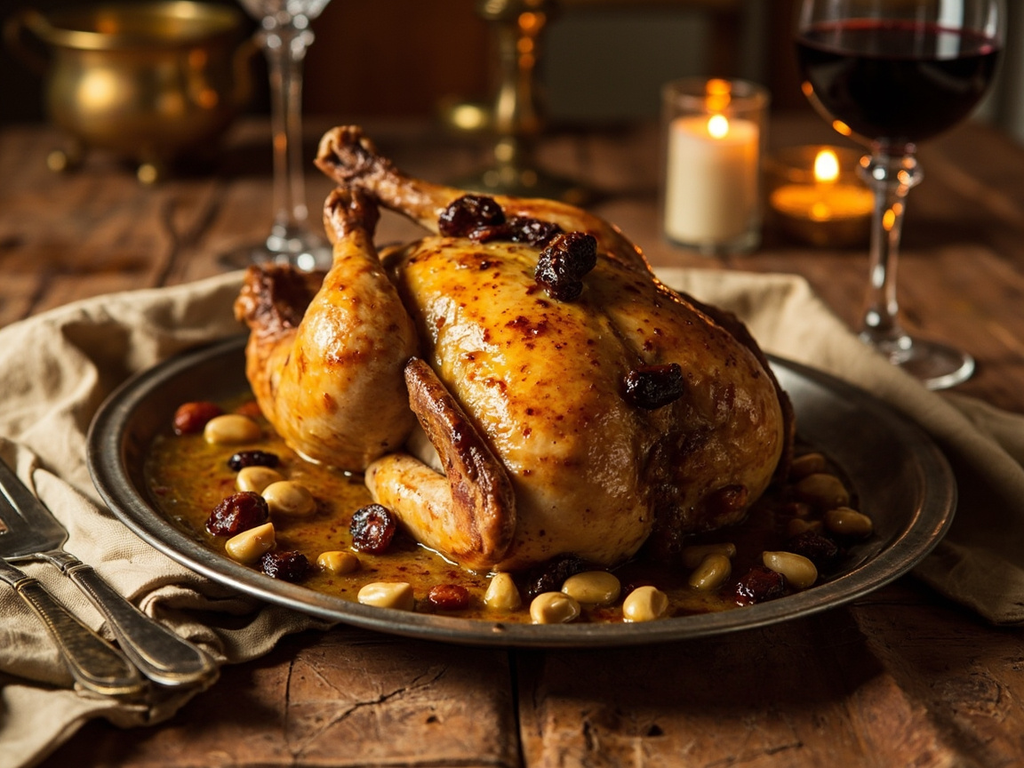
flipCapone in savore d'agresto (capon in sweet-and-sour verjuice sauce)
Capone in savore d'agresto (capon in sweet-and-sour verjuice sauce)
Why this dish? At the tables of Europe's royal and episcopal courts — the very ones where De Beatis dined during Cardinal Louis of Aragon's embassy — noble roast poultry coated with a sweet-and-sour savore was the prestige dish par excellence, exactly the kind of dish an attentive secretary noted with delight.
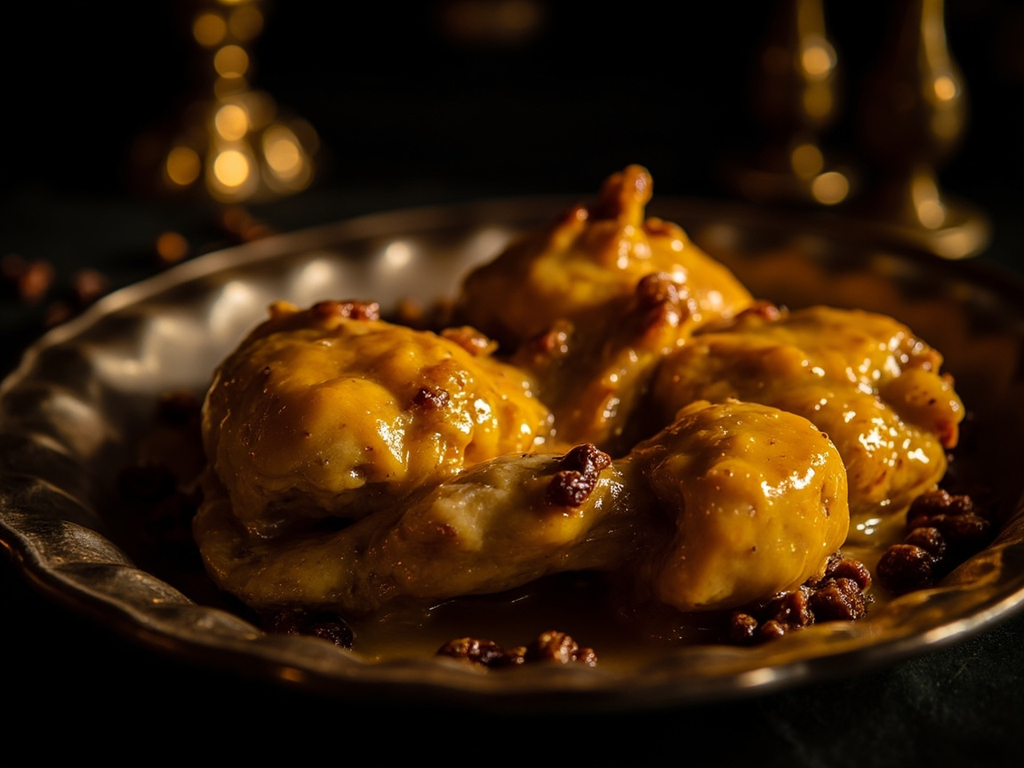
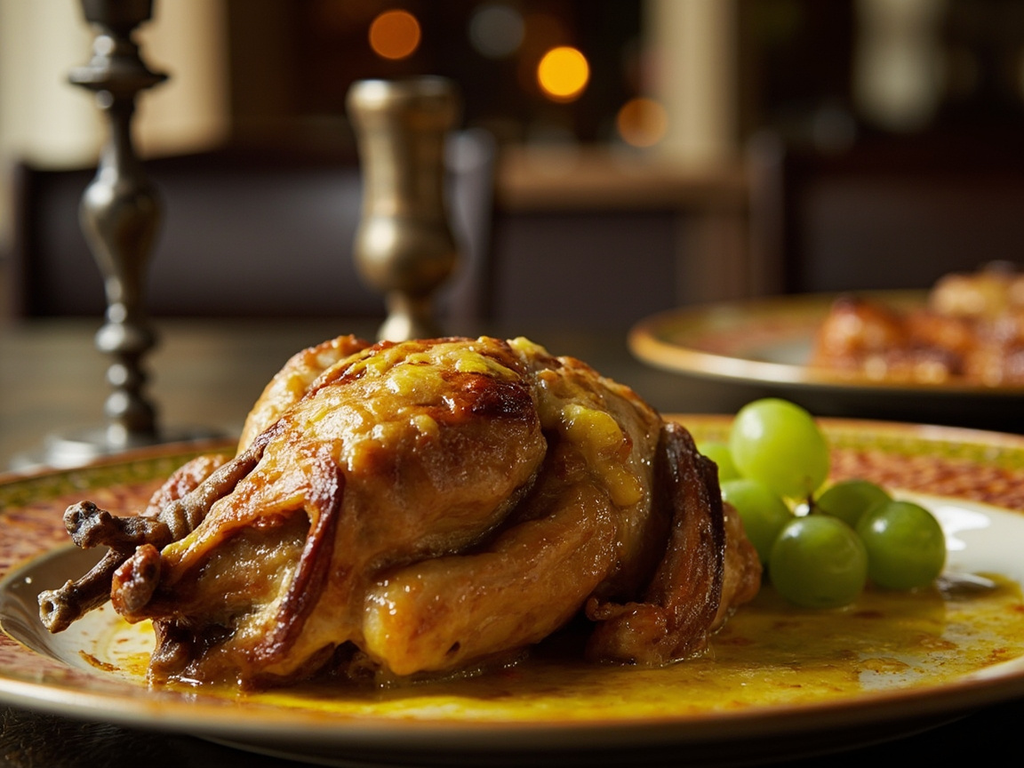
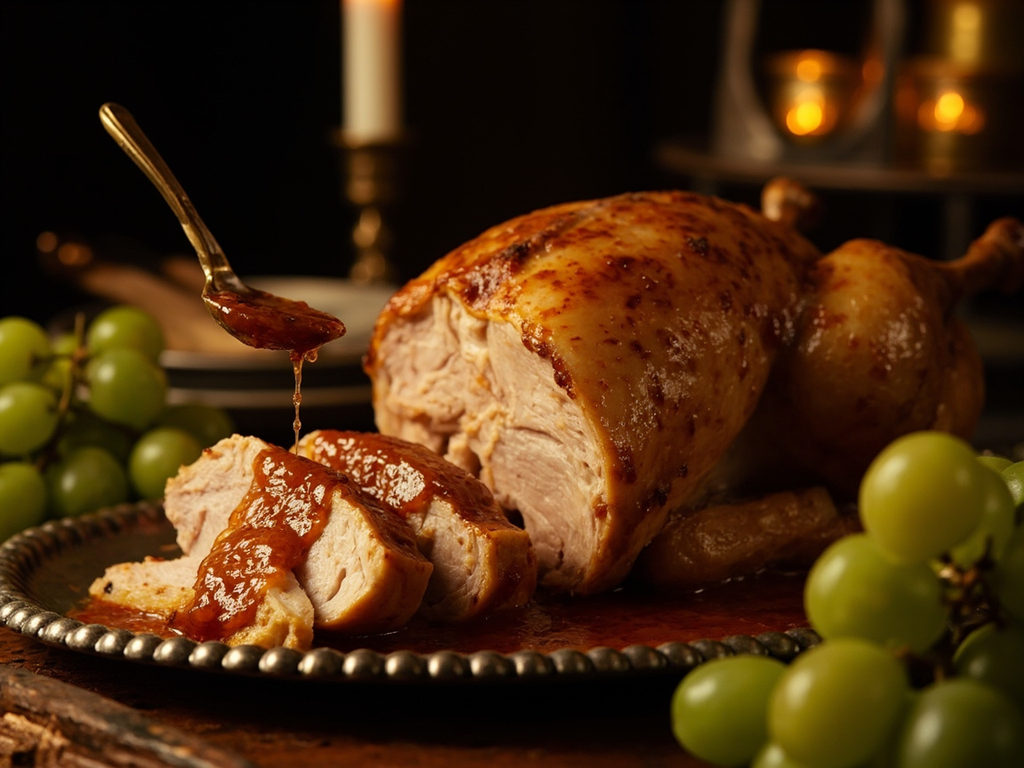
A roasted capon, carved and coated with a festive sauce: tangy verjuice, sweet spices (cinnamon, ginger, clove), a touch of sugar and toasted bread to thicken. The spicy sweet-and-sour, absolute signature of Italian Renaissance banquets.
At the feast, my dear reader, poultry is never served naked! Here is how it is prepared at the tables of the princes we visited: a fine capon roasted on the spit, then drizzled with a savore that Italian cooks know better than any. One grinds cinnamon, ginger, and clove, moistens them with agresto — that green grape juice which pleasantly bites — with a little sugar and bread toasted over the fire. Believe me, this sauce, sour and sweet together, so flattered the lords' palates that I saw more than one ask for more, forgetting for a moment the affairs of the embassy.
- •Capon (or good farm capon) — one, roasted on a spit (centerpiece)
- •Agresto (verjuice of green grapes) — a goblet (acidity of the savore)
- •Cinnamon, ginger, clove — spices ground in a mortar (spiced flavor)
- •Sugar — a spoonful (balancing sweetness)
- •Toasted breadcrumbs — a crust (sauce thickener)
- •Salt — as needed (seasoning)
Capone in savore d'agresto (capon in sweet-and-sour verjuice sauce)
A roasted capon, carved and coated with a festive sauce: tangy verjuice, sweet spices (cinnamon, ginger, clove), a touch of sugar and toasted bread to thicken. The spicy sweet-and-sour, absolute signature of Italian Renaissance banquets.
Why this dish? At the tables of Europe's royal and episcopal courts — the very ones where De Beatis dined during Cardinal Louis of Aragon's embassy — noble roast poultry coated with a sweet-and-sour savore was the prestige dish par excellence, exactly the kind of dish an attentive secretary noted with delight.
At the feast, my dear reader, poultry is never served naked! Here is how it is prepared at the tables of the princes we visited: a fine capon roasted on the spit, then drizzled with a savore that Italian cooks know better than any. One grinds cinnamon, ginger, and clove, moistens them with agresto — that green grape juice which pleasantly bites — with a little sugar and bread toasted over the fire. Believe me, this sauce, sour and sweet together, so flattered the lords' palates that I saw more than one ask for more, forgetting for a moment the affairs of the embassy.
Ingredients (period version)
- Capon (or good farm capon) — one, roasted on a spit (centerpiece)
- Agresto (verjuice of green grapes) — a goblet (acidity of the savore)
- Cinnamon, ginger, clove — spices ground in a mortar (spiced flavor)
- Sugar — a spoonful (balancing sweetness)
- Toasted breadcrumbs — a crust (sauce thickener)
- Salt — as needed (seasoning)
Ingredients
- Capon or large free-range chicken — 1 (about 2 kg) (centerpiece)
- Verjuice (or half green grape juice, half sweet wine vinegar) — 150 ml (acidity of the savore)
- Ground cinnamon — 1 tsp (sweet spice)
- Ground ginger — 1/2 tsp (pungent spice)
- Ground clove — 1 pinch (deep spice)
- Sugar — 1 to 2 tsp (sweet-sour balance)
- Toasted white bread — 1 slice, crumbled (thickener)
- Salt — to taste (seasoning)
Method
- Season the capon with salt, roast in the oven at 180 °C, basting regularly with its juices, until the skin is golden and the meat cooked (1 h 30 to 2 h depending on weight).
- Meanwhile, toast the bread slice, crumble it, and soak in the verjuice.
- Blend or pound the soaked bread with spices and sugar to obtain a smooth sauce; adjust with a little of the capon's cooking juices.
- Gently warm this savore for a few minutes without boiling: it should coat a spoon, lively in acidity and round in spices.
- Carve the capon, arrange on a platter, and coat with the warm savore; serve the remaining sauce on the side.
How it was made : Maestro Martino and Platina describe many savori — sauces served on roasts — thickened with toasted bread and acidulated with verjuice or vinegar. Agresto (verjuice) was the noble acidic base of cooking, lemon being rarer north of the Alps. These sauces were served on the side or coated, and the salty-sour-sweet-spicy mix was the height of aristocratic refinement.
The contemporary twist : Serve the savore in a small pitcher on the side, as a dipping sauce, and add a few fresh grapes burst in a pan for plating: color and crunch work wonders.
Sources : Maestro Martino da Como, Libro de arte coquinaria, c. 1465 (chapter on savori) · Bartolomeo Platina, De honesta voluptate et valetudine, 1474
Antonio de Beatis · Charactorium