 flip
flipSheera, the offering at the temple threshold
Sheera, the offering at the temple threshold
Why this dish? Ahilyabai rebuilt countless sanctuaries, as far as the Kashi Vishwanath temple in Varanasi in 1780. Inspired by the offerings placed in those temples, this sheera golden with ghee and saffron is the simplest and purest prasad shared after prayer.
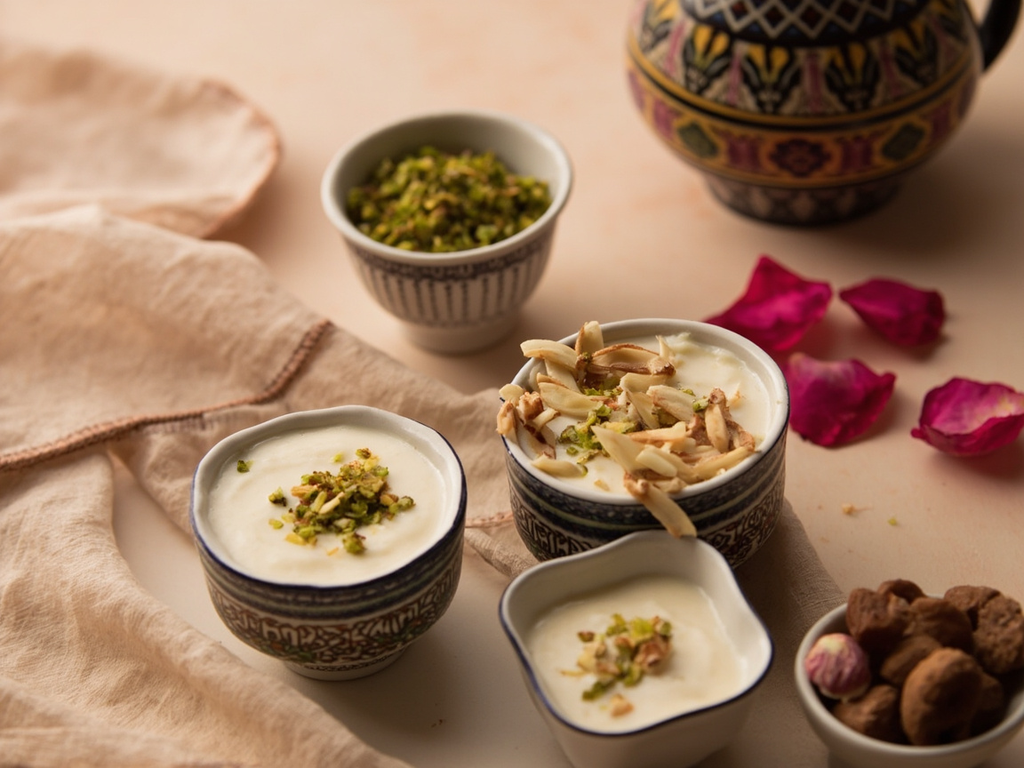
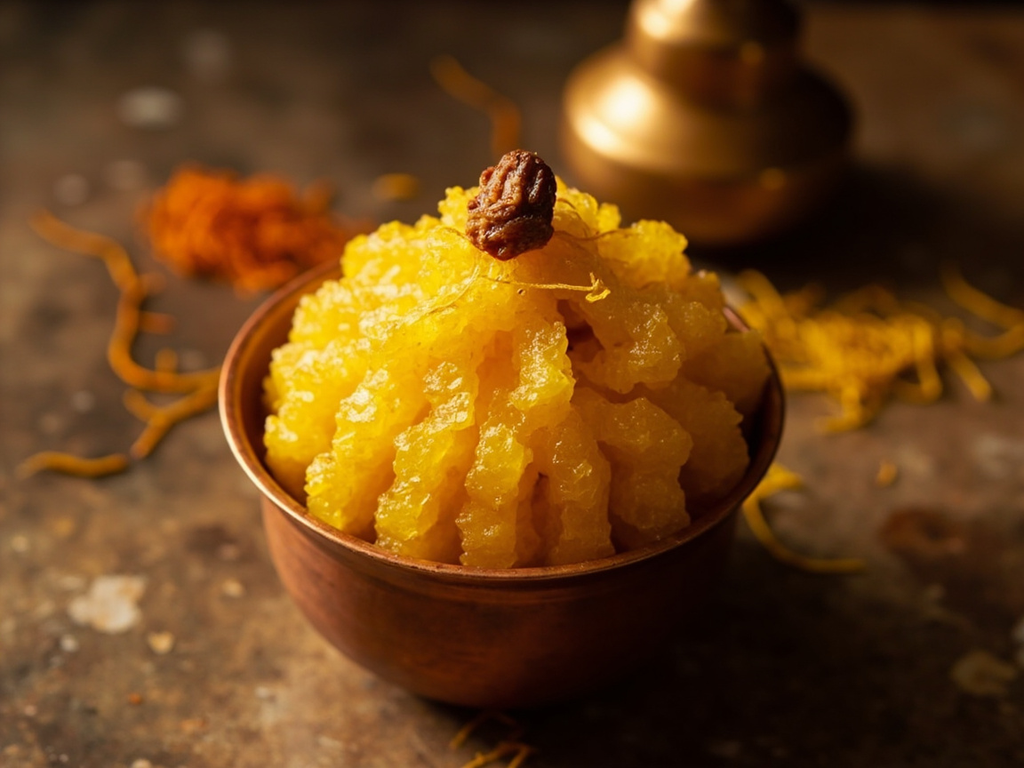
Wheat semolina roasted in ghee, swollen with sweetened milk, perfumed with cardamom and saffron, studded with raisins. Creamy, glossy, it is shaped into a small dome for offering and then shared as prasad.
Before you touch it, know that this dish is not first for us. When a temple rises by my hand, this golden sheera is placed before the linga, then redistributed to all as blessed prasad. My cook browns the semolina in tup until fragrant, then floods it with hot milk — watch out for splatters, it roars like the monsoon! A pinch of kesar, a few raisins, and the humble grain becomes worthy of the gods.
- •Wheat semolina (rava) — one bowl (base)
- •Ghee (tup) — generously (roasting)
- •Milk — two bowls (liquid)
- •Jaggery or sugar — half a bowl (sweetener)
- •Saffron (kesar) — a few threads (flavor and color)
- •Cardamom — a pinch (flavor)
- •Raisins — a handful (garnish)
Sheera, the offering at the temple threshold
Wheat semolina roasted in ghee, swollen with sweetened milk, perfumed with cardamom and saffron, studded with raisins. Creamy, glossy, it is shaped into a small dome for offering and then shared as prasad.
Why this dish? Ahilyabai rebuilt countless sanctuaries, as far as the Kashi Vishwanath temple in Varanasi in 1780. Inspired by the offerings placed in those temples, this sheera golden with ghee and saffron is the simplest and purest prasad shared after prayer.
Before you touch it, know that this dish is not first for us. When a temple rises by my hand, this golden sheera is placed before the linga, then redistributed to all as blessed prasad. My cook browns the semolina in tup until fragrant, then floods it with hot milk — watch out for splatters, it roars like the monsoon! A pinch of kesar, a few raisins, and the humble grain becomes worthy of the gods.
Ingredients (period version)
- Wheat semolina (rava) — one bowl (base)
- Ghee (tup) — generously (roasting)
- Milk — two bowls (liquid)
- Jaggery or sugar — half a bowl (sweetener)
- Saffron (kesar) — a few threads (flavor and color)
- Cardamom — a pinch (flavor)
- Raisins — a handful (garnish)
Ingredients
- Fine wheat semolina (rava/suji) — 150 g (base)
- Ghee — 5 tbsp (roasting)
- Whole milk — 400 ml (liquid)
- Sugar (or jaggery) — 100 g (sweetener)
- Saffron — 1 pinch soaked in a little warm milk (flavor and color)
- Ground cardamom — 1/2 tsp (flavor)
- Raisins — 2 tbsp (garnish)
Method
- Melt ghee, roast semolina over low heat until golden and nutty (8-10 min).
- Heat milk separately with saffron.
- Slowly pour hot milk into semolina (watch for splashes), stirring constantly.
- Add sugar and cardamom, cook until mixture thickens and leaves the sides.
- Stir in raisins, cover off heat for 2 min.
- Shape into small smoothed domes for serving.
How it was made : Sheera (or sooji halwa) is among the most widespread prasad in India: made without onion or garlic, rich in ghee, it suits purity rites. The proportion of ghee, semolina, and liquid often follows a 1-2-3 rule passed down orally from cook to cook.
The contemporary twist : Serve as a quenelle in a small copper cup with a saffron thread on top, like a festive prasad.
Ahilyabai Holkar · Charactorium