 flip
flipFirni
Firni
Why this dish? Firni is the quintessential Afghan celebration sweet, served at weddings, religious festivals, and victories. When Ahmad Shah was elected king by the jirga of Kandahar in 1747, the festivities following his coronation necessarily included this type of sweet distributed to the crowd — a tradition of hospitality and largesse still alive in Afghanistan.
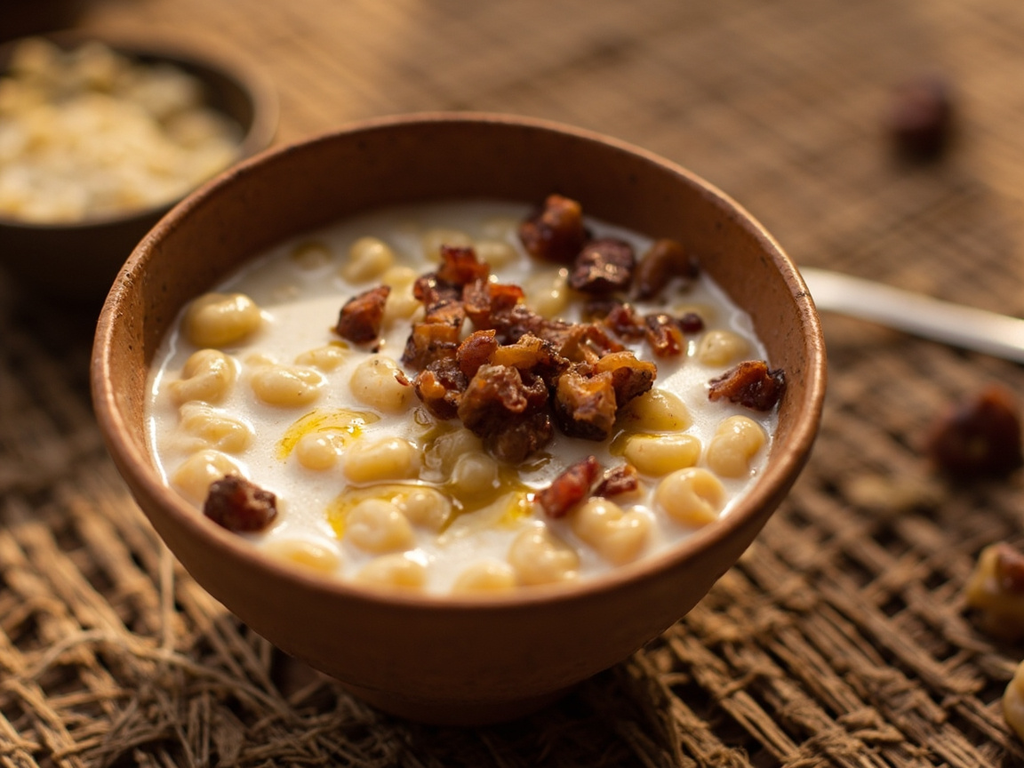
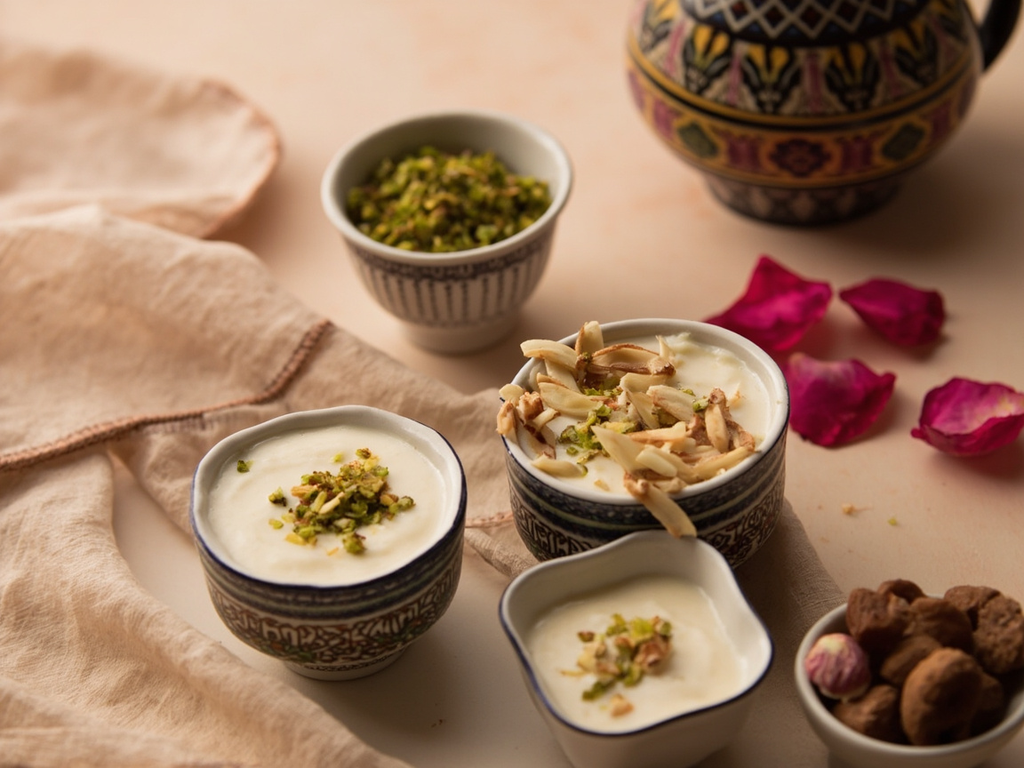
A thick, silky cream made from rice flour or cornstarch cooked in milk, perfumed with cardamom and rose water, set in small bowls and decorated with crushed pistachios. A delicate, fragrant sweet with a texture between flan and cream.
The day the tribal chiefs placed a barley spike on my head in Kandahar, my people distributed firni to the entire populace. That is how we do it, among us: a joy not shared at table is no joy at all. Firni is milk, rice flour, and patience — you must stir, stir constantly so it does not catch at the bottom. And when you pour the rose water, you know it is ready. The pistachios on top are the mark of a host who does not count his purse.
- •Whole milk — a good measure (base)
- •Rice flour — a few spoonfuls (thickener)
- •Sugar — to taste (sweetener)
- •Green cardamom — a few crushed pods (main aroma)
- •Rose water — a dash (aroma)
- •Pistachios — a handful, crushed (decoration)
Firni
A thick, silky cream made from rice flour or cornstarch cooked in milk, perfumed with cardamom and rose water, set in small bowls and decorated with crushed pistachios. A delicate, fragrant sweet with a texture between flan and cream.
Why this dish? Firni is the quintessential Afghan celebration sweet, served at weddings, religious festivals, and victories. When Ahmad Shah was elected king by the jirga of Kandahar in 1747, the festivities following his coronation necessarily included this type of sweet distributed to the crowd — a tradition of hospitality and largesse still alive in Afghanistan.
The day the tribal chiefs placed a barley spike on my head in Kandahar, my people distributed firni to the entire populace. That is how we do it, among us: a joy not shared at table is no joy at all. Firni is milk, rice flour, and patience — you must stir, stir constantly so it does not catch at the bottom. And when you pour the rose water, you know it is ready. The pistachios on top are the mark of a host who does not count his purse.
Ingredients (period version)
- Whole milk — a good measure (base)
- Rice flour — a few spoonfuls (thickener)
- Sugar — to taste (sweetener)
- Green cardamom — a few crushed pods (main aroma)
- Rose water — a dash (aroma)
- Pistachios — a handful, crushed (decoration)
Ingredients
- Whole milk — 750 ml (base)
- Rice flour (or cornstarch) — 60 g (thickener)
- Powdered sugar — 80 g (sweetener)
- Ground cardamom — 1/2 tsp (aroma)
- Rose water — 1 tbsp (aroma)
- Unsalted pistachios — 30 g, crushed (decoration)
- Slivered almonds — 15 g (optional decoration)
Method
- Dissolve the rice flour in a little cold milk (about 100 ml) to form a smooth paste without lumps.
- In a saucepan, bring the remaining milk to a simmer with the sugar and cardamom, stirring to dissolve.
- Pour the rice flour-milk mixture into the hot milk in a thin stream, whisking constantly.
- Cook over low heat, stirring continuously, for 10-15 minutes, until the cream thickens noticeably and coats the spoon.
- Remove from heat, add the rose water, and mix.
- Pour into small individual bowls (traditionally ceramic cups). Smooth the surface.
- Decorate with crushed pistachios and slivered almonds. Let cool to room temperature, then refrigerate for at least 2 hours.
- Serve well chilled. Firni should have a firm but wobbly texture, between flan and set cream.
How it was made : Firni is a Persian-origin dessert widespread across the Iranian and Afghan world for centuries. It is mentioned in Timurid and Mughal court culinary traditions. In Afghanistan, it is inseparable from celebrations: births, weddings, Eid festivals, and coronations. The Afghan version is distinguished by generous use of cardamom and rose water, and by serving in small individual glazed earthenware bowls.
The contemporary twist : Pour the firni into clear glass verrines to showcase the cream's whiteness, and add a streak of infused saffron on top for a golden gradient.
Sources : Helen Saberi, Noshe Djan: Afghan Food and Cookery, Prospect Books, 2000 · Najmieh Batmanglij, Food of Life: Ancient Persian and Modern Iranian Cooking and Ceremonies, Mage Publishers, 2011 — traditions of firni/fereni in the Persian sphere
Ahmad Shah Durrani · Charactorium