 flip
flipMillet Dégué with Soured Milk, Dates and Honey
Millet Dégué with Soured Milk, Dates and Honey
Why this dish? A man of the Sankoré mosque and scholarly circles, al-Saadi lived in a city where alms (sadaqa) and sharing food during religious festivals and mosque gatherings were a duty. This milky, sweet treat — inspired by these charitable gestures, without reproducing any rite — is what was offered to children, travelers, and the poor on days of celebration.
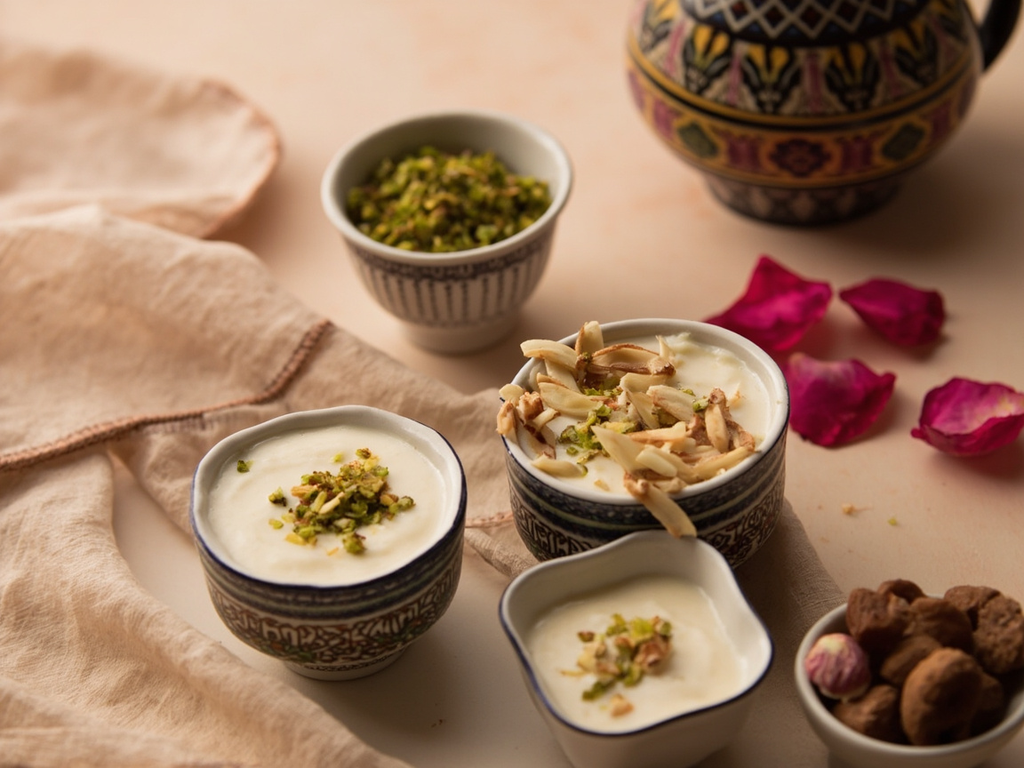
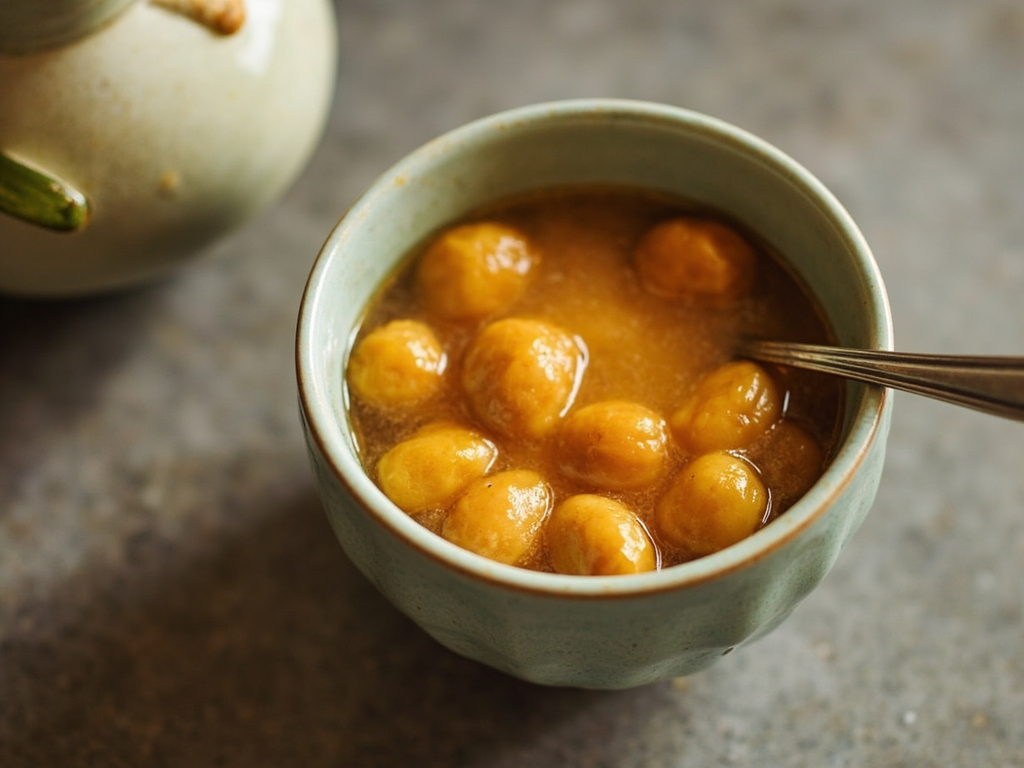
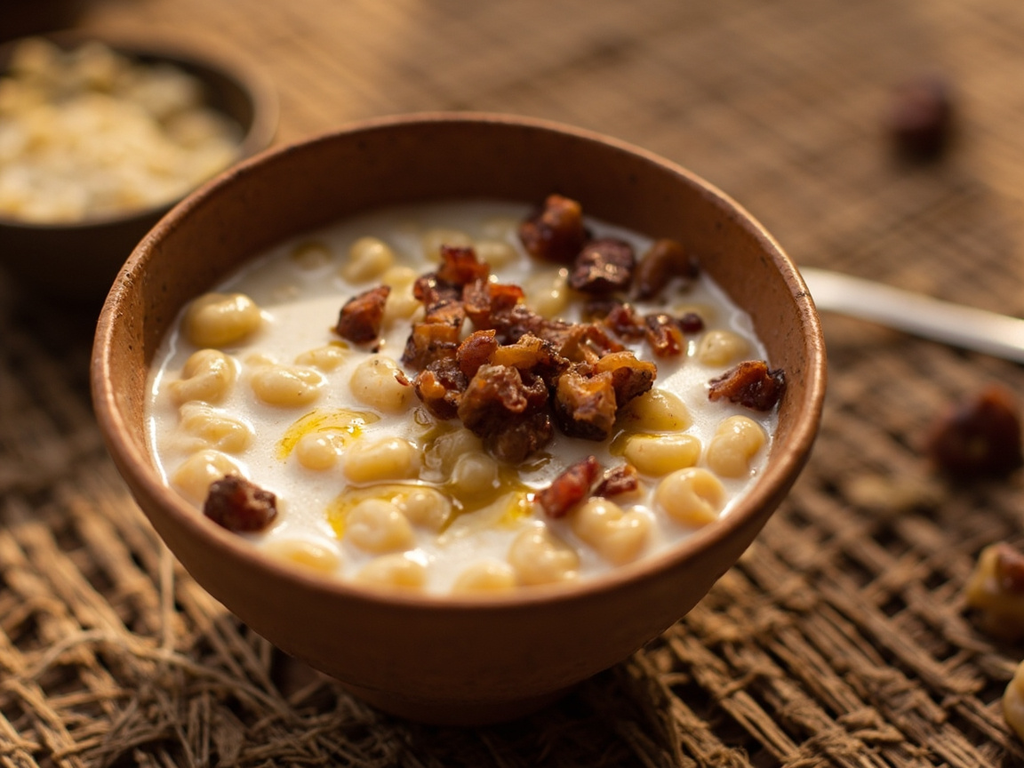
Small steamed millet pearls mixed with tangy soured milk, sweetened with honey and pounded dates. Cool, sweet, and lightly fermented: the generous confection offered by hand to others.
Hold out your bowl, my child, and may God keep you. On feast days, one does not keep for oneself: we roll millet into small pearls, steam them, and drown them in the milk the Fulani bring us, milk that has soured just enough to tingle the tongue. I add bush honey and a few dates brought from the north by caravan, crushed under the stone. Eat, then give some to one poorer than you: this is how a sweetness becomes a blessing.
- •Small rolled millet pearls (fine millet couscous) — two handfuls (the base)
- •Soured milk (milk from Fulani herds, slightly turned) — one bowl (tangy fermented binder)
- •Bush honey — to taste (sweetness)
- •Dates from the north — a handful, pounded (sweetness and fruit)
Millet Dégué with Soured Milk, Dates and Honey
Small steamed millet pearls mixed with tangy soured milk, sweetened with honey and pounded dates. Cool, sweet, and lightly fermented: the generous confection offered by hand to others.
Why this dish? A man of the Sankoré mosque and scholarly circles, al-Saadi lived in a city where alms (sadaqa) and sharing food during religious festivals and mosque gatherings were a duty. This milky, sweet treat — inspired by these charitable gestures, without reproducing any rite — is what was offered to children, travelers, and the poor on days of celebration.
Hold out your bowl, my child, and may God keep you. On feast days, one does not keep for oneself: we roll millet into small pearls, steam them, and drown them in the milk the Fulani bring us, milk that has soured just enough to tingle the tongue. I add bush honey and a few dates brought from the north by caravan, crushed under the stone. Eat, then give some to one poorer than you: this is how a sweetness becomes a blessing.
Ingredients (period version)
- Small rolled millet pearls (fine millet couscous) — two handfuls (the base)
- Soured milk (milk from Fulani herds, slightly turned) — one bowl (tangy fermented binder)
- Bush honey — to taste (sweetness)
- Dates from the north — a handful, pounded (sweetness and fruit)
Ingredients
- Millet couscous (or millet semolina) — 150 g (the base)
- Fermented milk or plain stirred yogurt — 300 g (tangy fermented binder)
- Honey — 2 to 3 tbsp (sweetness)
- Pitted dates — 8, chopped or pounded (sweetness and fruit)
- Orange blossom water (optional) — a few drops (fragrance)
- Pinch of salt — 1 pinch (balance)
Method
- Moisten the millet couscous with a little salted water, let swell 10 min, then steam for 15 min until tender; fluff with a fork and let cool slightly.
- Mix the fermented milk with the honey (and orange blossom water if using).
- Fold the cooled millet pearls into the sweetened milk; they should float without being drowned.
- Add the pounded dates, gently mix.
- Serve cool, in small bowls, to share.
How it was made : Dégué — millet couscous with soured milk — is a very ancient and still living preparation throughout the Sahel, linked to exchanges between farmers (millet) and Fulani herders (milk). Honey and dates, the latter arriving by Saharan caravans, made it a festive sweet. Sharing food during major religious occasions was a strong social practice in scholarly cities like Timbuktu.
The contemporary twist : Layer the dégué in a glass: layer of millet pearls, layer of fermented milk, date crumbles, and a drizzle of honey — a 'café' version of the sharing sweetness.
Sources : Ethnographic documentation on dégué and dairy cuisines of the Sahel · Works on farmer-herder exchanges in West Africa
Abd al-Rahman al-Saadi · Charactorium