Arpa Nani (Dervish Barley Bread)
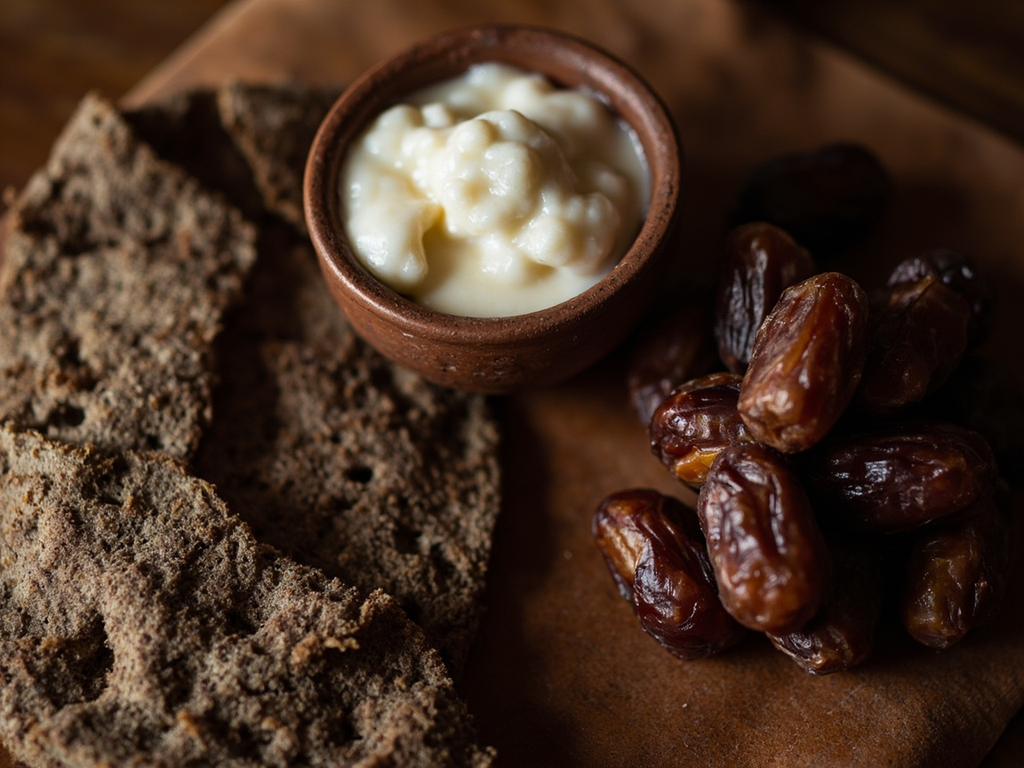
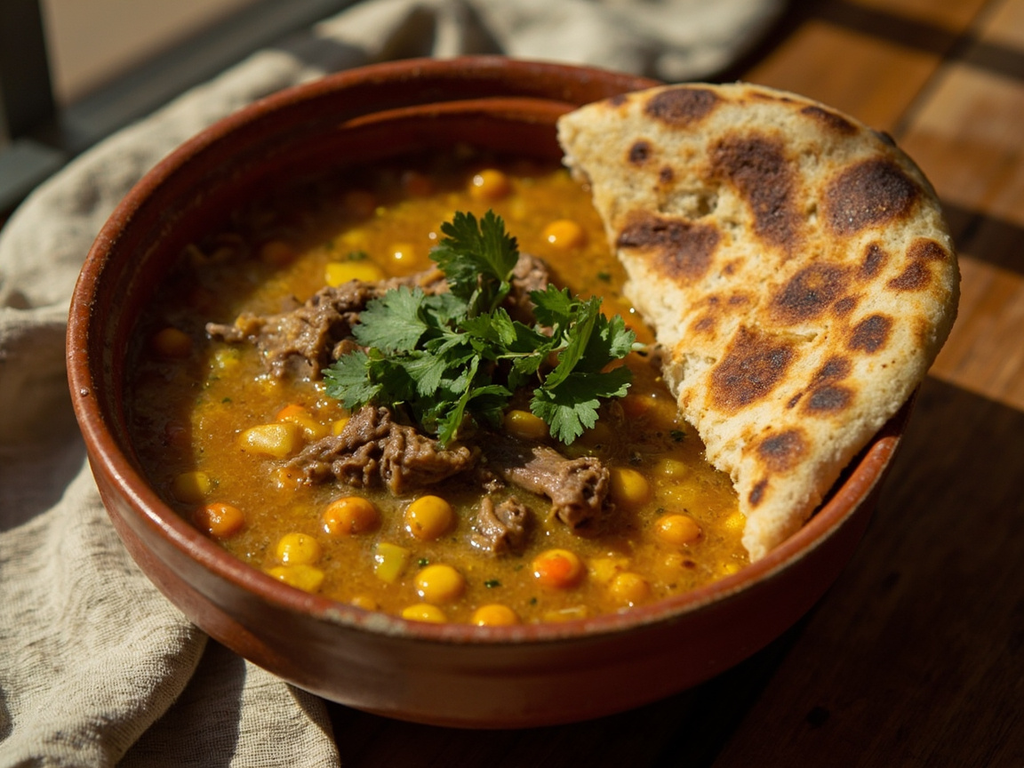
A dense, flat griddle cake made from barley flour, cooked directly on the scorching walls of a tandyr (clay oven). Its golden, crackling crust contrasts with a compact crumb that tastes of toasted hazelnut. It is broken by hand to accompany soup or dip into sour milk.
A dense, flat griddle cake made from barley flour, cooked directly on the scorching walls of a tandyr (clay oven). Its golden, crackling crust contrasts with a compact crumb that tastes of toasted hazelnut. It is broken by hand to accompany soup or dip into sour milk.
O you who seek, know that this barley bread is worth more than the feasts of emirs. When the belly is light, the soul rises to the Most High like the smoke of the tandyr. In Yasi, we knead the flour with a little salt and spring water, nothing more — the dervish's hand needs no leaven for grace to rise. Place this nan before you and break it with your brother: thus begins the dhikr of the heart.
- •Barley flour — Two handfuls per flatbread (Bread base)
- •Spring water — Enough to bind (Hydration)
- •Rock salt — A pinch (Seasoning)
Arpa Nani (Dervish Barley Bread)
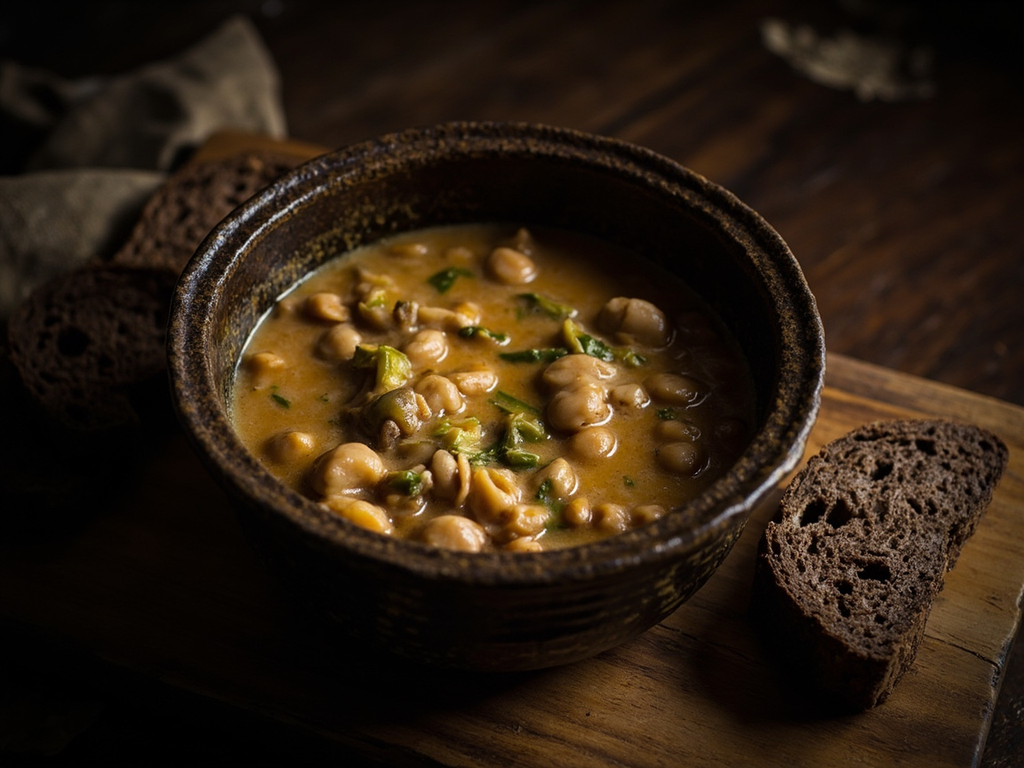
A dense, flat griddle cake made from barley flour, cooked directly on the scorching walls of a tandyr (clay oven). Its golden, crackling crust contrasts with a compact crumb that tastes of toasted hazelnut. It is broken by hand to accompany soup or dip into sour milk.
Why this dish? Barley bread is the staple food of Ahmad Yasawi, mentioned in Yasawi traditions as a symbol of frugal life. In Yasi, wheat was scarce and expensive; barley, cultivated on the dry lands of Turkestan, fed both nomads and settled dervishes around the khanqah.
O you who seek, know that this barley bread is worth more than the feasts of emirs. When the belly is light, the soul rises to the Most High like the smoke of the tandyr. In Yasi, we knead the flour with a little salt and spring water, nothing more — the dervish's hand needs no leaven for grace to rise. Place this nan before you and break it with your brother: thus begins the dhikr of the heart.
Ingredients (period version)
- Barley flour — Two handfuls per flatbread (Bread base)
- Spring water — Enough to bind (Hydration)
- Rock salt — A pinch (Seasoning)
Ingredients
- Whole barley flour — 250 g (Bread base)
- T80 wheat flour — 50 g (Binder (easier shaping))
- Warm water — 180 ml (Hydration)
- Fine salt — 1 tsp (Seasoning)
- Vegetable oil — 1 tbsp (Dough suppleness)
Method
- Mix the flours and salt in a bowl. Make a well, gradually pour in the warm water and oil.
- Knead for 5 minutes until a firm but smooth dough forms. Cover with a cloth and let rest for 20 minutes.
- Divide into 4 balls. Roll each ball into a 15 cm disc, 5 mm thick. Prick the surface with a fork.
- Heat a cast-iron pan over medium-high heat without fat. Cook each flatbread for 3-4 minutes per side until golden spots appear.
- Serve warm, broken by hand.
How it was made : Barley bread was baked in a tandyr, a semi-buried clay oven heated with wood or dried livestock dung. The dough, simply water-flour-salt, was slapped onto the scorching inner wall. This unleavened bread kept for several days in the dry steppe air.
The contemporary twist : Sprinkle with nigella seeds (çörek otu) before cooking for a nod to the bazaars of Bukhara.
Sources : Zubaida, Sami & Tapper, Richard, A Taste of Thyme: Culinary Cultures of the Middle East, I.B. Tauris, 2000 · Perry, Charles, Medieval Arab Cookery, Prospect Books, 2001
Ahmad Yasawi · Charactorium