 flip
flipKhmelnoy Uzvar (Honey-Sweetened Dried Fruit Compote)
Khmelnoy Uzvar (Honey-Sweetened Dried Fruit Compote)
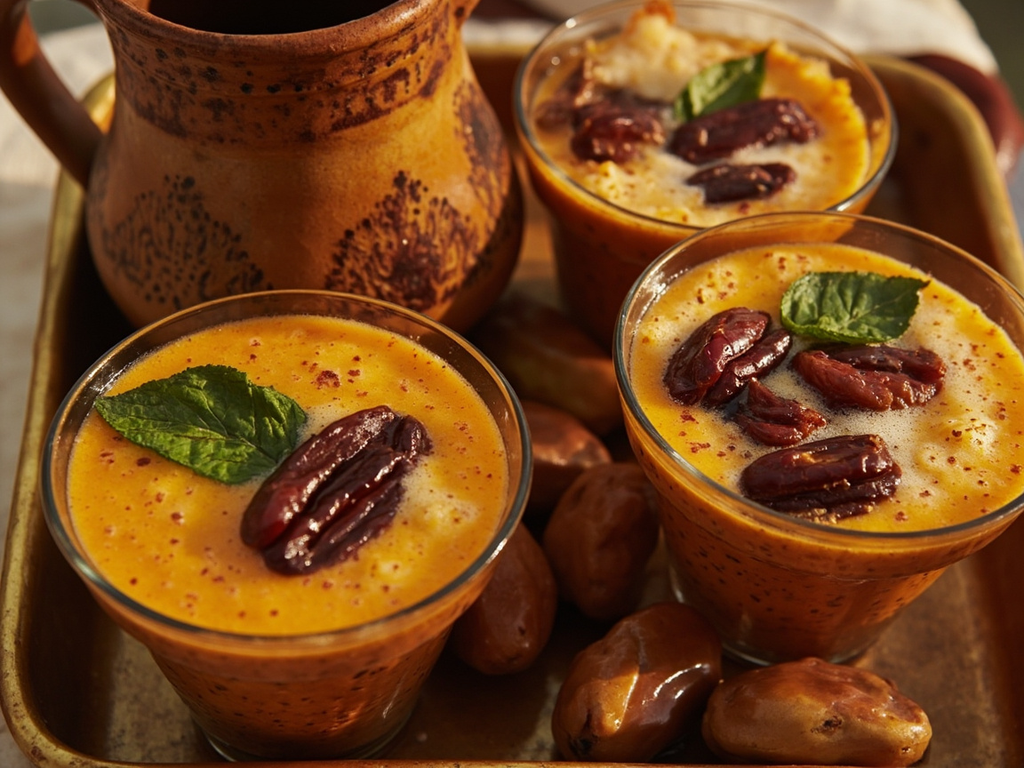
Why this dish? Dried fruits — apricots, raisins, jujubes — were brought by caravans passing through Bukhara and Merv, two major cities in Yasawi's life. This warm honey-sweetened compote, served during dhikr vigils in the khanqah, warmed the disciples without violating the Sufi prohibition of any intoxicating drink.
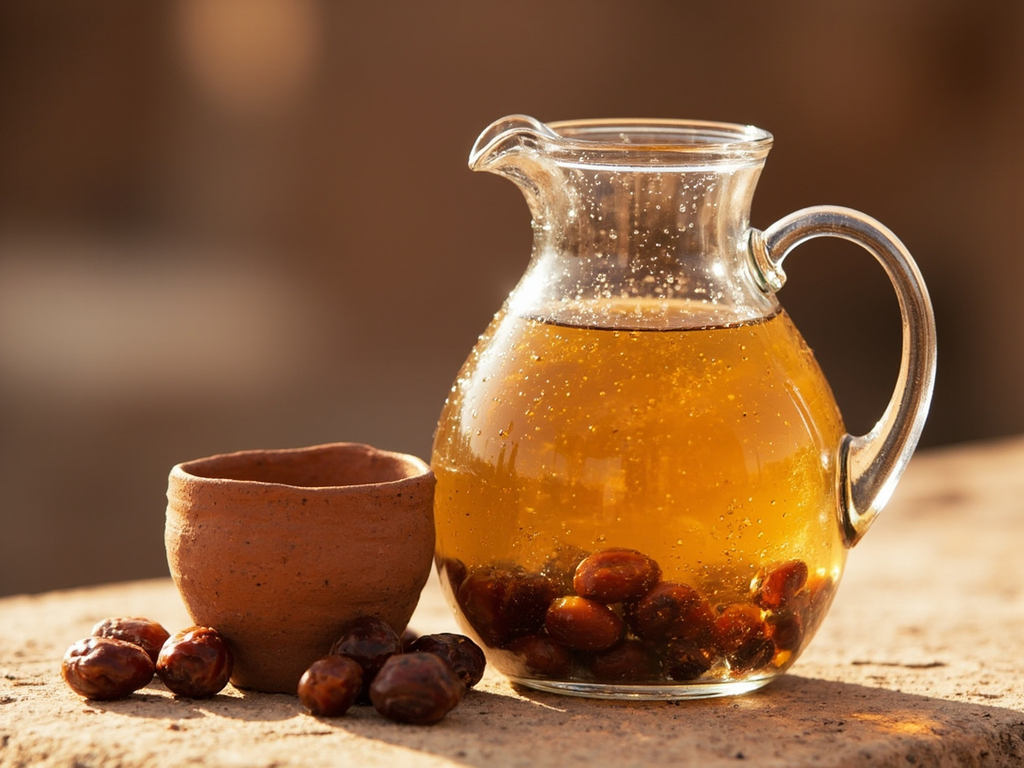
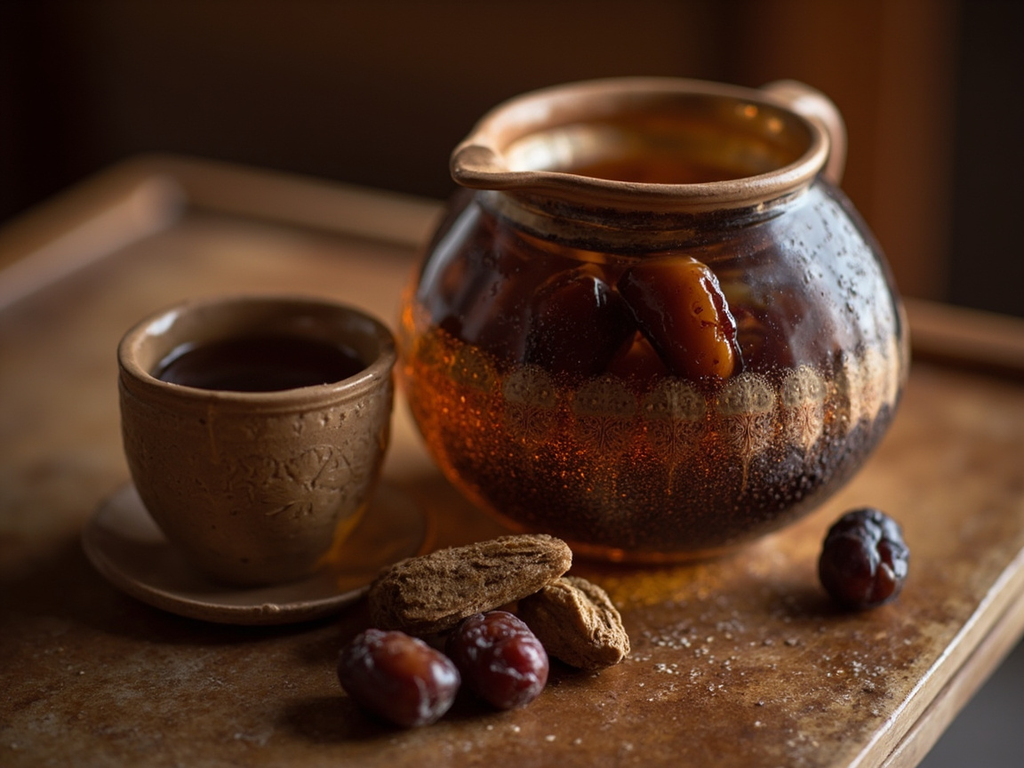
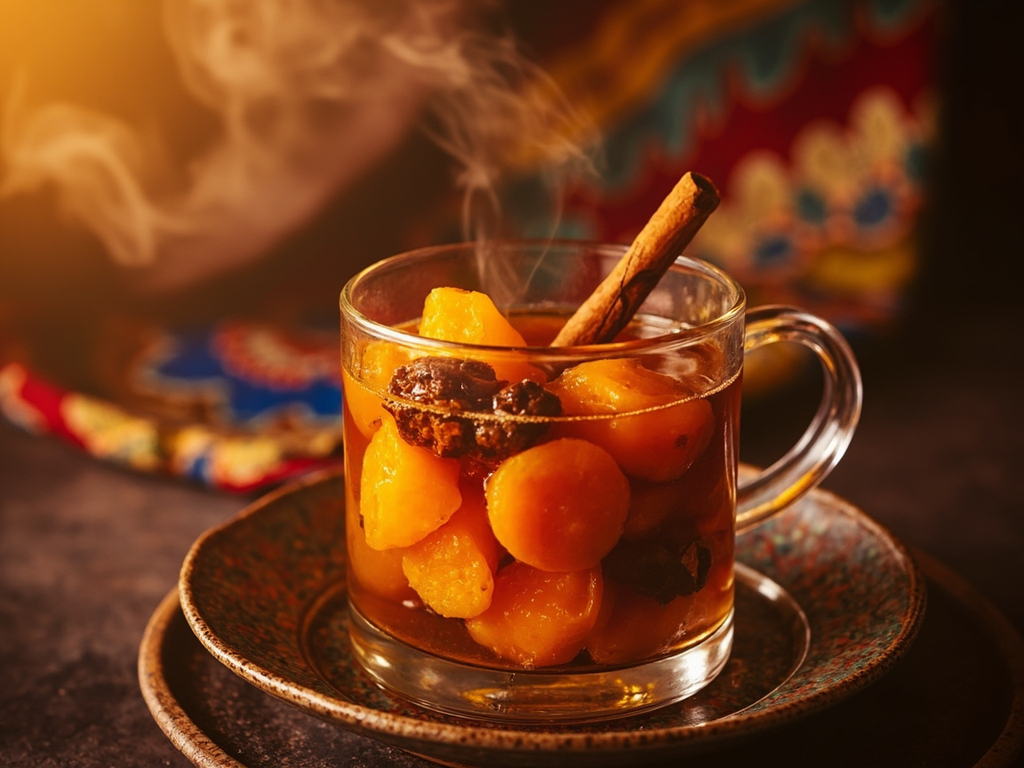
A hot or cold infusion of dried fruits long-simmered in water with honey and a hint of spice. The amber, fragrant liquid concentrates the natural sweetness of the fruits. One drinks the juice and eats the plumped fruits with a spoon.
After the evening dhikr, when voices fall silent and the heart still vibrates, the fruit compote is brought. The apricots of Bukhara and the raisins of Samarkand have traveled weeks to reach our humble khanqah in Yasi. The honey awakens them in hot water, and their sweetness descends into the chest like peace after prayer. Drink, O traveler — this sweetness is lawful, and it consoles the soul as much as the body.
- •Dried apricots — A handful (Main fruit)
- •Raisins — A handful (Sweetness)
- •Jujubes or dried quince — A few (Acidity and variety)
- •Honey — A good drizzle (Sweetener)
- •Spring water — Enough to cover (Base)
Khmelnoy Uzvar (Honey-Sweetened Dried Fruit Compote)
A hot or cold infusion of dried fruits long-simmered in water with honey and a hint of spice. The amber, fragrant liquid concentrates the natural sweetness of the fruits. One drinks the juice and eats the plumped fruits with a spoon.
Why this dish? Dried fruits — apricots, raisins, jujubes — were brought by caravans passing through Bukhara and Merv, two major cities in Yasawi's life. This warm honey-sweetened compote, served during dhikr vigils in the khanqah, warmed the disciples without violating the Sufi prohibition of any intoxicating drink.
After the evening dhikr, when voices fall silent and the heart still vibrates, the fruit compote is brought. The apricots of Bukhara and the raisins of Samarkand have traveled weeks to reach our humble khanqah in Yasi. The honey awakens them in hot water, and their sweetness descends into the chest like peace after prayer. Drink, O traveler — this sweetness is lawful, and it consoles the soul as much as the body.
Ingredients (period version)
- Dried apricots — A handful (Main fruit)
- Raisins — A handful (Sweetness)
- Jujubes or dried quince — A few (Acidity and variety)
- Honey — A good drizzle (Sweetener)
- Spring water — Enough to cover (Base)
Ingredients
- Dried apricots — 80 g (Main fruit)
- Golden raisins — 50 g (Sweetness)
- Prunes — 50 g (Depth)
- Honey — 3 tbsp (Sweetener)
- Water — 1 liter (Base)
- Green cardamom — 2 crushed pods (Spice)
- Cinnamon stick — 1 small (Flavor)
Method
- Rinse all dried fruits in clear water.
- Bring water to a boil in a saucepan. Add the dried fruits, crushed cardamom, and cinnamon stick.
- Reduce to low heat and simmer for 25-30 minutes, until the fruits are plumped and the liquid is amber.
- Remove from heat. Add honey, stir until dissolved. Let steep for 15 minutes.
- Serve warm or cold in bowls, with the fruits and juice. Remove cardamom and cinnamon if desired.
How it was made : Dried fruit compotes are attested throughout the medieval Turco-Persian world under various names (khoshaf, uzvar). Dried fruits from Transoxiana — especially apricots from the Bukhara region — were renowned throughout the Islamic world. Steppe honey served as the universal sweetener, cane sugar being a luxury item reserved for princely courts.
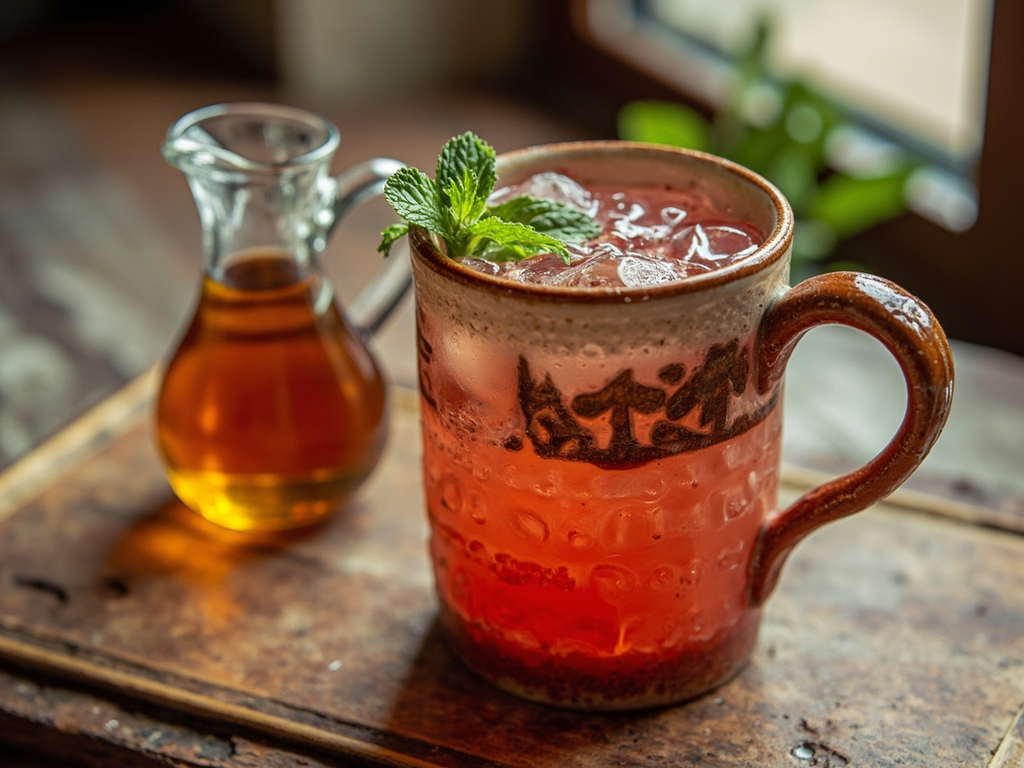
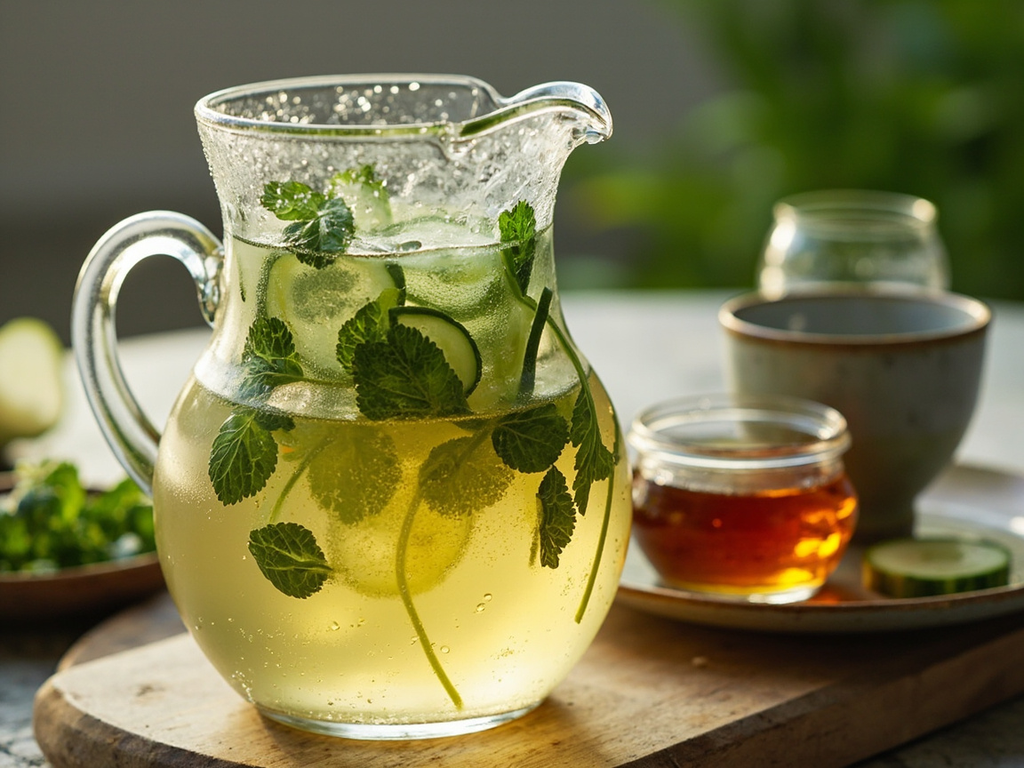
The contemporary twist : Serve chilled in summer with a few mint leaves and a squeeze of lemon — a summer mocktail reminiscent of golden sangria, 100% halal.
Sources : Zaouali, Lilia, Medieval Cuisine of the Islamic World, University of California Press, 2007 · Perry, Charles, Medieval Arab Cookery, Prospect Books, 2001
Ahmad Yasawi · Charactorium