 flip
flipMorning Ful Medames
Morning Ful Medames
Why this dish? Born in Damanhour and raised in Alexandria, Zewail kept a lifelong attachment to ful, the slow-cooked fava bean dish that opens every Egyptian morning. Legumes, lemon, oil: the most persistent food habit of his childhood, which he would rediscover when returning home.
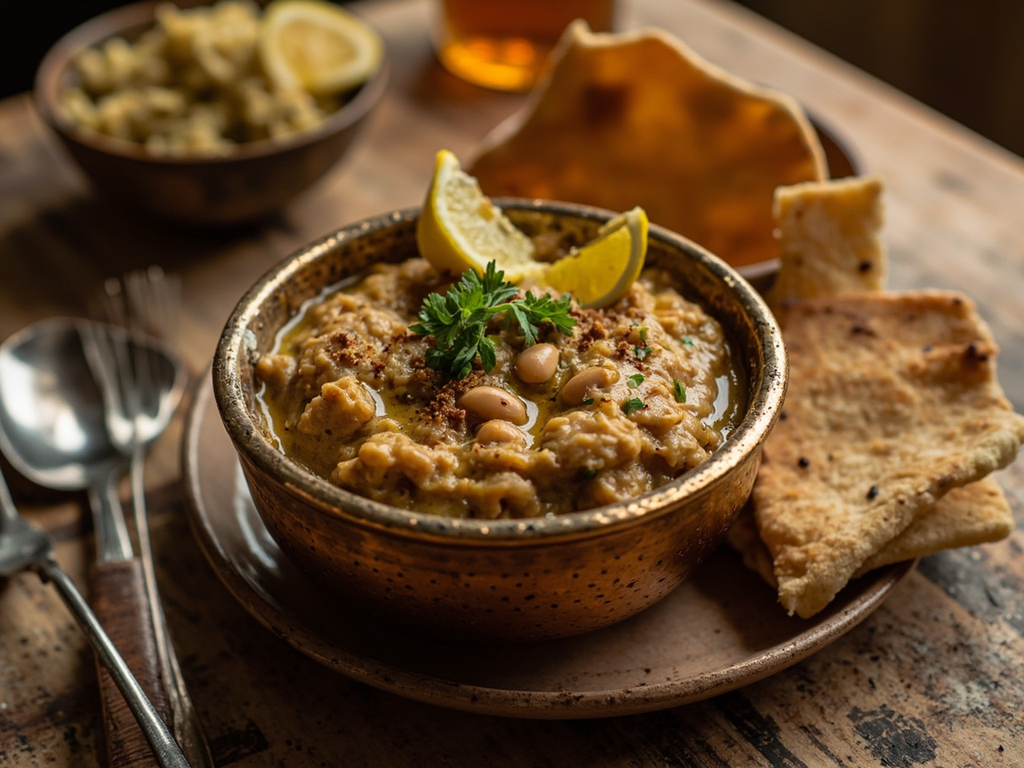
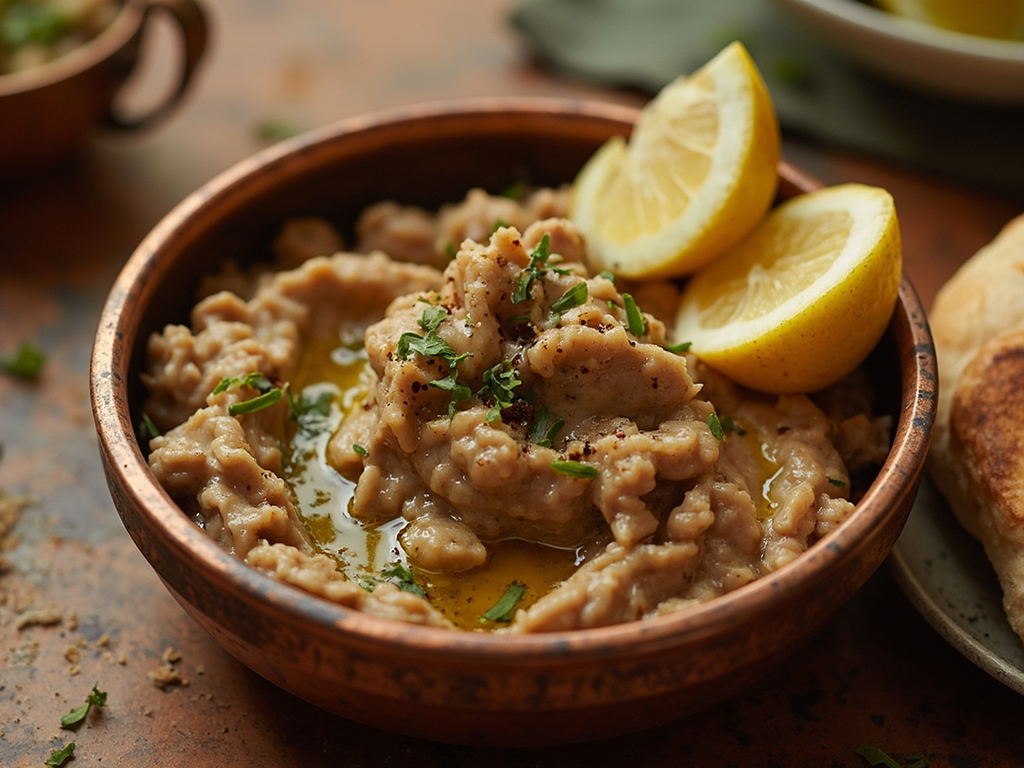
Dark brown fava beans cooked very slowly until they melt, coarsely mashed, seasoned with cumin, garlic, lemon juice and a drizzle of olive oil. Eaten hot, scooped up with flatbread, from daybreak.
Allow me to begin at the beginning: before lasers and femtoseconds, there was, every morning in Damanhour, the pot of ful that had been left to simmer all night on the embers. We would barely mash it, squeeze a lemon over it, pour a drizzle of oil, a pinch of kamoun, and tear the warm bread by hand. Believe me, no atomic clock measures time like that slow cooking — the patience of an entire night for a bean that melts on the tongue. That is where, I think, I learned that beautiful things take time.
- •Dried brown fava beans (ful hammam) — two handfuls per person (base, soaked then simmered overnight)
- •Garlic — a few cloves (crushed aromatic)
- •Ground cumin — to taste (signature spice)
- •Lemon — as desired (acidity)
- •Olive oil — a generous drizzle (binding and richness)
- •Salt — to taste (seasoning)
Morning Ful Medames
Dark brown fava beans cooked very slowly until they melt, coarsely mashed, seasoned with cumin, garlic, lemon juice and a drizzle of olive oil. Eaten hot, scooped up with flatbread, from daybreak.
Why this dish? Born in Damanhour and raised in Alexandria, Zewail kept a lifelong attachment to ful, the slow-cooked fava bean dish that opens every Egyptian morning. Legumes, lemon, oil: the most persistent food habit of his childhood, which he would rediscover when returning home.
Allow me to begin at the beginning: before lasers and femtoseconds, there was, every morning in Damanhour, the pot of ful that had been left to simmer all night on the embers. We would barely mash it, squeeze a lemon over it, pour a drizzle of oil, a pinch of kamoun, and tear the warm bread by hand. Believe me, no atomic clock measures time like that slow cooking — the patience of an entire night for a bean that melts on the tongue. That is where, I think, I learned that beautiful things take time.
Ingredients (period version)
- Dried brown fava beans (ful hammam) — two handfuls per person (base, soaked then simmered overnight)
- Garlic — a few cloves (crushed aromatic)
- Ground cumin — to taste (signature spice)
- Lemon — as desired (acidity)
- Olive oil — a generous drizzle (binding and richness)
- Salt — to taste (seasoning)
Ingredients
- Dried brown fava beans — 250 g (or 2 cans cooked fava beans for speed) (base)
- Garlic — 2 cloves, crushed (aromatic)
- Ground cumin — 1 tsp (signature spice)
- Lemon juice — 1 lemon (acidity)
- Olive oil — 3 tbsp (richness)
- Salt — 1 tsp (seasoning)
- Flat-leaf parsley and diced tomato — for serving (optional) (fresh garnish)
Method
- The night before, soak the dried fava beans in plenty of cold water (skip this step if using canned beans).
- Drain, cover with fresh water and simmer over very low heat for 1 to 2 hours, until the beans are tender (15 minutes is enough with canned beans).
- Coarsely mash some of the beans with a fork, keeping some whole for texture.
- Stir in the crushed garlic, cumin, salt, lemon juice and olive oil; taste and adjust.
- Serve piping hot, drizzled with a final splash of oil, with warm flatbread and, if desired, parsley and diced tomatoes.
How it was made : Originally, ful cooked all night in a narrow-necked copper jar (the qidra) buried in the ashes of neighborhood ovens or bathhouses — hence the name "ful hammam." Families would leave their pot with the fawwal (ful seller) in the evening and collect it in the morning. The ultra-slow, low-temperature cooking is what gives the beans their creamy texture.
The contemporary twist : Serve the ful in "layers" in a clear glass bowl — mashed beans, oil, lemon, herbs in neat strata — like a sample ready for analysis, a nod to the spectroscopist.
Sources : Claudia Roden, A Book of Middle Eastern Food · Ahmed Zewail, Voyage Through Time: Walks in Life and the Science (autobiography, 2002)
Ahmed Zewail · Charactorium