 flip
flipBarley Porridge with Kashk and Herbs
Barley Porridge with Kashk and Herbs
Why this dish? The faithful of Ahura Mazda began and ended their day with a prayer toward the light, then shared a simple and pure meal. Barley and kashk — dried fermented whey — formed the staple of daily meals on the Iranian plateau since high antiquity, under the watch of the domestic fire.
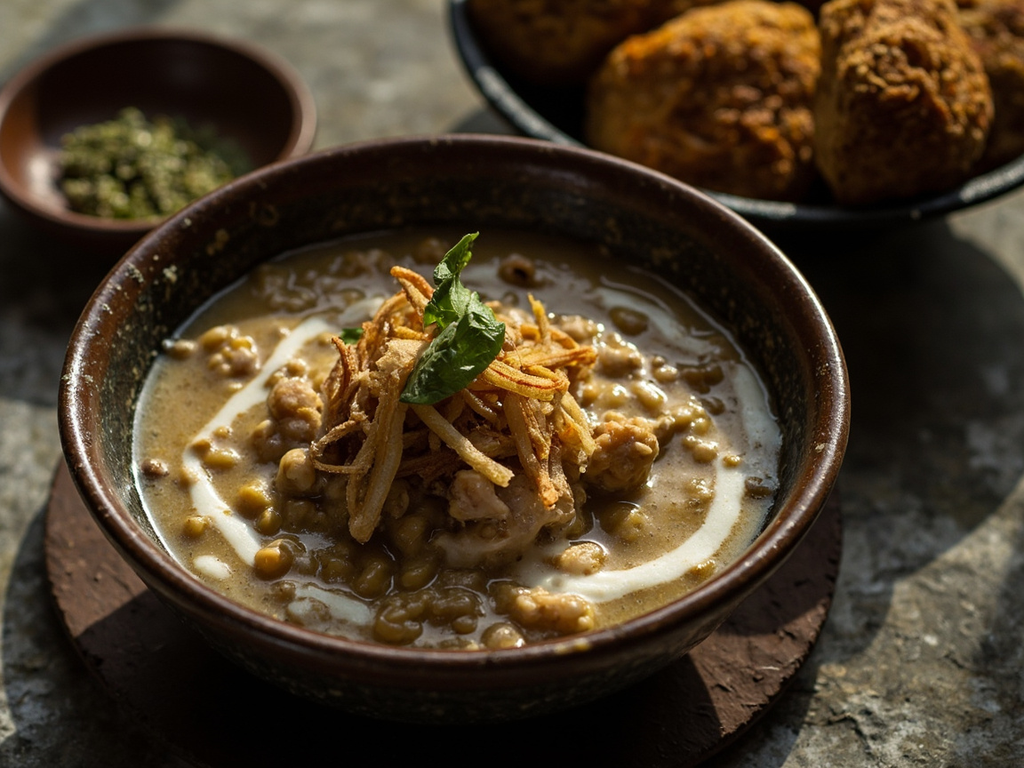
A comforting barley porridge, enlivened with tangy fermented whey (kashk) and fresh herbs: the everyday dish, humble and nourishing, of the servants of the god of wisdom.
Do not think that feasts are needed to honor Me. The household that, at daybreak, turns its face toward the light and shares a barley porridge in cleanliness pleases Me as much as a great banquet. My followers pounded the barley, soaked it in water, then mixed in the sour kashk that the women had dried in the summer sun. Add the green herbs from the garden, eat with a good thought, then go work to make the world better: that is the true prayer.
- •Hulled barley — two handfuls (staple grain)
- •Kashk (dried fermented whey) — a piece, dissolved (fermented acidity and protein)
- •Fresh herbs (mint, cilantro) — a bunch (freshness)
- •Onion — one (aromatic base)
- •Salt — a pinch (seasoning)
Barley Porridge with Kashk and Herbs
A comforting barley porridge, enlivened with tangy fermented whey (kashk) and fresh herbs: the everyday dish, humble and nourishing, of the servants of the god of wisdom.
Why this dish? The faithful of Ahura Mazda began and ended their day with a prayer toward the light, then shared a simple and pure meal. Barley and kashk — dried fermented whey — formed the staple of daily meals on the Iranian plateau since high antiquity, under the watch of the domestic fire.
Do not think that feasts are needed to honor Me. The household that, at daybreak, turns its face toward the light and shares a barley porridge in cleanliness pleases Me as much as a great banquet. My followers pounded the barley, soaked it in water, then mixed in the sour kashk that the women had dried in the summer sun. Add the green herbs from the garden, eat with a good thought, then go work to make the world better: that is the true prayer.
Ingredients (period version)
- Hulled barley — two handfuls (staple grain)
- Kashk (dried fermented whey) — a piece, dissolved (fermented acidity and protein)
- Fresh herbs (mint, cilantro) — a bunch (freshness)
- Onion — one (aromatic base)
- Salt — a pinch (seasoning)
Ingredients
- Pearl barley — 150 g (staple grain)
- Liquid kashk (or very thick Greek yogurt) — 4 tbsp (fermented acidity)
- Onion — 1 medium, sliced (aromatic)
- Dried mint — 1 tsp (traditional flavor)
- Fresh cilantro or parsley — a few sprigs (green garnish)
- Clarified butter or oil — 2 tbsp (for cooking the onion)
- Salt — to taste (seasoning)
Method
- Rinse the barley, then cook it in a large amount of salted water for 40 to 50 minutes, until tender and slightly creamy.
- Meanwhile, gently brown the sliced onion in clarified butter until amber-colored.
- Roughly mash the cooked barley with a spoon to obtain a thick porridge.
- Off high heat, stir the kashk into the hot porridge (do not boil, or it may curdle).
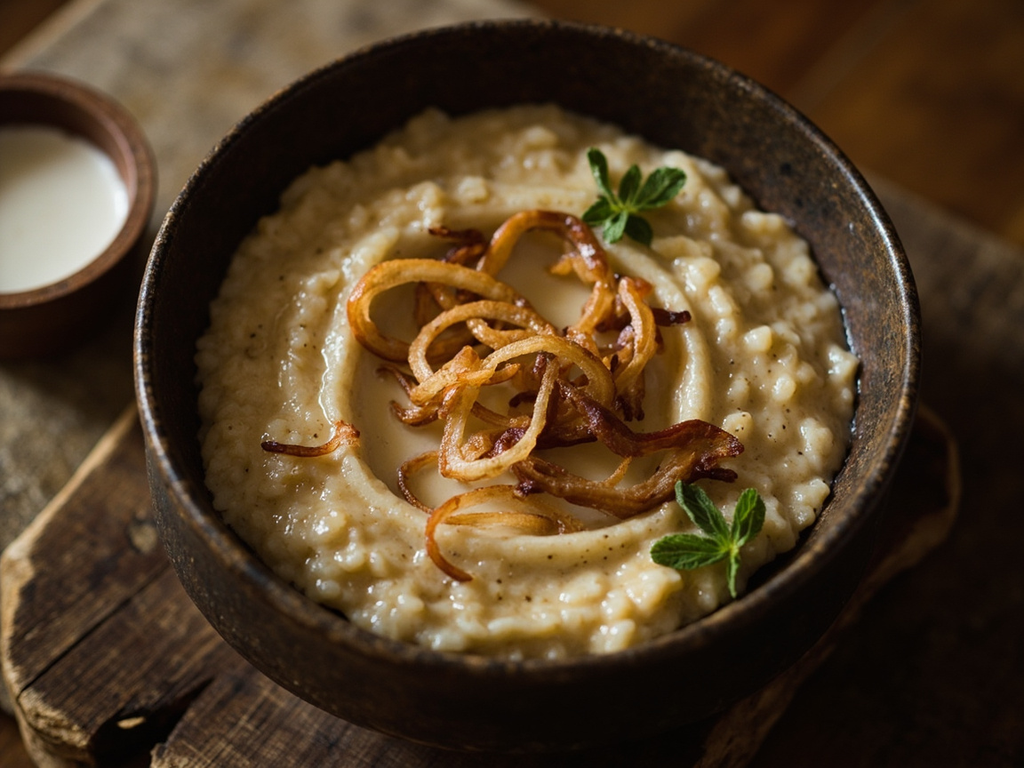
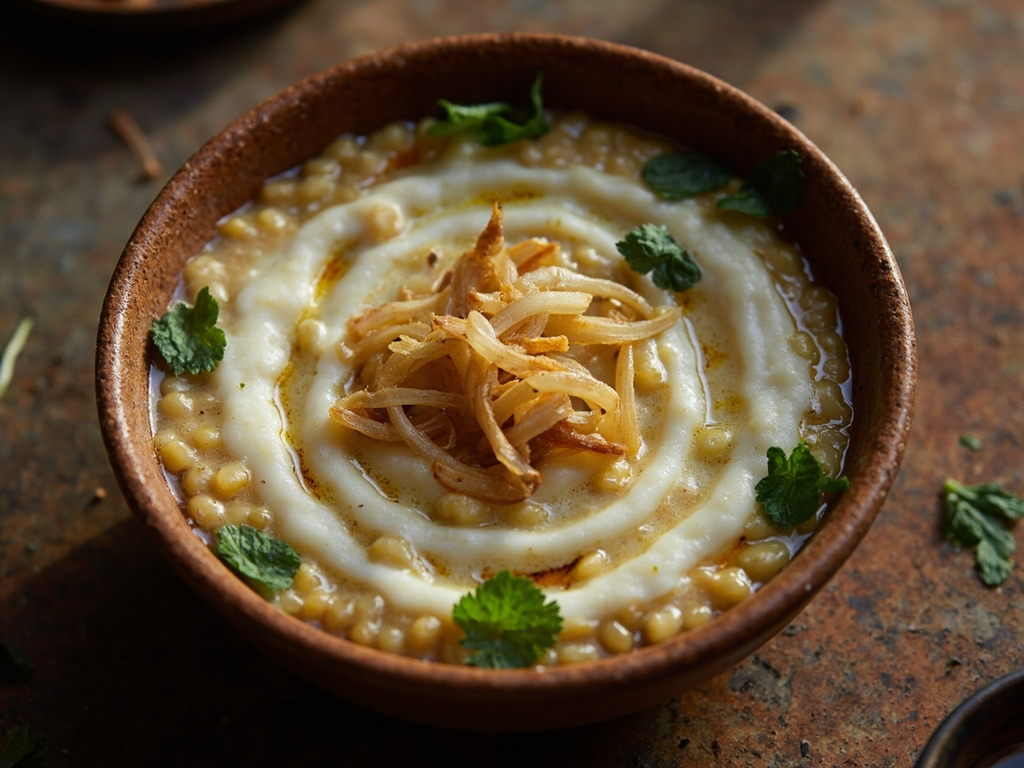
- Pour into a bowl, top with the golden onion, sprinkle with dried mint and fresh herbs, serve hot.
How it was made : Barley was one of the first cereals cultivated on the Iranian plateau, and kashk — drained whey dried into hard balls and reconstituted in water — was the dairy preserve that brought acidity and protein to humble meals. This resulted in a single porridge, cooked at the hearth, shared by the whole household: ordinary food, but prepared with the purity dear to Mazdaism.
The contemporary twist : A swirl of kashk drawn on the porridge, with well-browned fried onions in the center: the "comfort bowl" version of a three-thousand-year-old dish.
Sources : Naomi F. Miller, Agricultural origins on the Iranian Plateau (archaeobotanical studies) · Mary Boyce, Zoroastrians: Their Religious Beliefs and Practices, Routledge, 1979 · H. E. Wulff, The Traditional Crafts of Persia, MIT Press, 1966 (kashk and dried dairy)
Ahura Mazda · Charactorium