 flip
flipBarley Porridge with Kashk, the Shepherd's Meal under Anahita's Protection
Barley Porridge with Kashk, the Shepherd's Meal under Anahita's Protection
Why this dish? Anahita watches over the fertility of herds, and the shepherd owes her the milk from which he makes kashk, the fermented and dried whey that sustains him all year. This barley porridge with kashk is the humble everyday dish under her protection—she who makes the beasts live also feeds the herdsman.
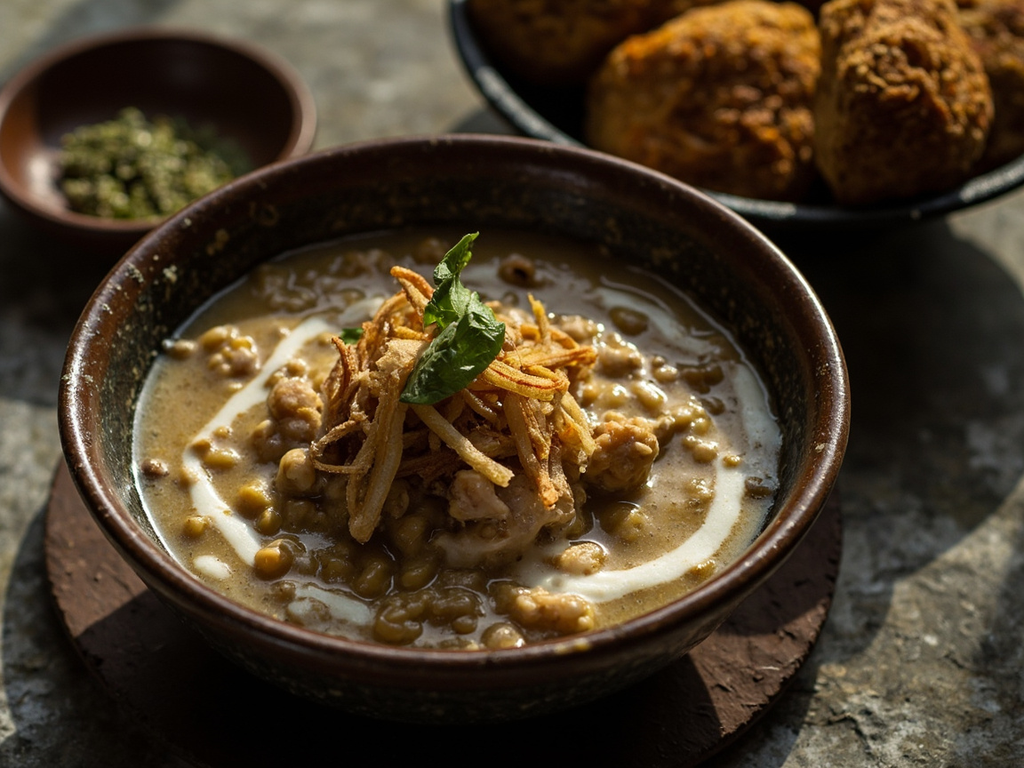
A nourishing barley porridge, whisked with tangy kashk and melted onions. Comforting, frugal, the daily meal.
You are not a king, shepherd, and your table has neither gold nor chariot—but it is still I who keep you. The milk that I make flow in your ewes, you have turned, dried, kept in hard balls for winter: that is your kashk. Dissolve it in boiled barley, melt the onion in it, and you will be warm in the belly when the wind comes down from the mountains. The poor man who thanks me with a bowl of barley honors me as much as the king with his hundred horses.
- •Hulled barley — a good measure (staple grain)
- •Kashk (fermented and dried whey) — a few balls, dissolved (fermented flavor, protein)
- •Onions — two (aromatic base)
- •Dried mint — a pinch (flavor)
- •Salt — to taste (seasoning)
Barley Porridge with Kashk, the Shepherd's Meal under Anahita's Protection
A nourishing barley porridge, whisked with tangy kashk and melted onions. Comforting, frugal, the daily meal.
Why this dish? Anahita watches over the fertility of herds, and the shepherd owes her the milk from which he makes kashk, the fermented and dried whey that sustains him all year. This barley porridge with kashk is the humble everyday dish under her protection—she who makes the beasts live also feeds the herdsman.
You are not a king, shepherd, and your table has neither gold nor chariot—but it is still I who keep you. The milk that I make flow in your ewes, you have turned, dried, kept in hard balls for winter: that is your kashk. Dissolve it in boiled barley, melt the onion in it, and you will be warm in the belly when the wind comes down from the mountains. The poor man who thanks me with a bowl of barley honors me as much as the king with his hundred horses.
Ingredients (period version)
- Hulled barley — a good measure (staple grain)
- Kashk (fermented and dried whey) — a few balls, dissolved (fermented flavor, protein)
- Onions — two (aromatic base)
- Dried mint — a pinch (flavor)
- Salt — to taste (seasoning)
Ingredients
- Pearl barley — 200 g (staple grain)
- Liquid kashk (Persian grocery) or, failing that, very thick beaten Greek yogurt — 150 g (tangy fermented flavor)
- Onions — 2, thinly sliced (aromatic base)
- Dried mint — 1 tsp (flavor (garnish))
- Oil (or clarified butter) — 2 tbsp (cooking onions)
- Salt, black pepper — to taste (seasoning)
Method
- Rinse the barley and cook it in 3 times its volume of salted water, over low heat, for 45 to 60 minutes, until tender and creamy (add water if needed).
- Meanwhile, slowly fry the sliced onions in oil until golden; set aside some for garnish.
- Stir the melted onions into the cooked barley and mash roughly for a porridge texture.
- Off the heat (or over very low heat to prevent curdling), whisk in the kashk until smooth and tangy.
- Adjust salt, serve very hot, topped with the reserved golden onions and a sprinkle of fried dried mint.
How it was made : Kashk—drained, fermented, then dried whey formed into hard balls—is a very ancient method of dairy preservation among Iranian and Central Asian herding peoples; it is reconstituted in water for soups and porridges (âsh). Barley preceded rice as the staple grain in ancient Iran. This type of one-pot dish, frugal and filling, is typical of pastoral daily life.
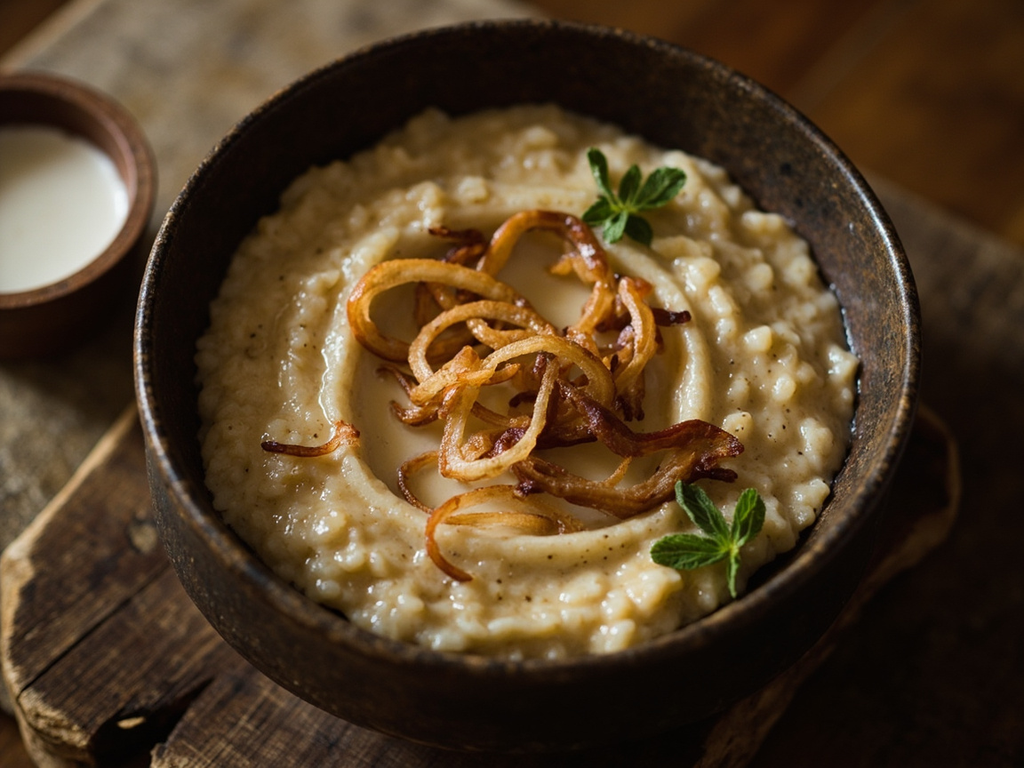
The contemporary twist : Serve in a deep bowl with a swirl of kashk on top and the fried mint: the "comfort food" version of a 2500-year-old shepherd's meal.
Sources : Mary Boyce, A History of Zoroastrianism (Brill) · Najmieh Batmanglij, Food of Life: Ancient Persian and Modern Iranian Cooking
Anahita · Charactorium