 flip
flipBarley Maza with Goat Cheese and Olives
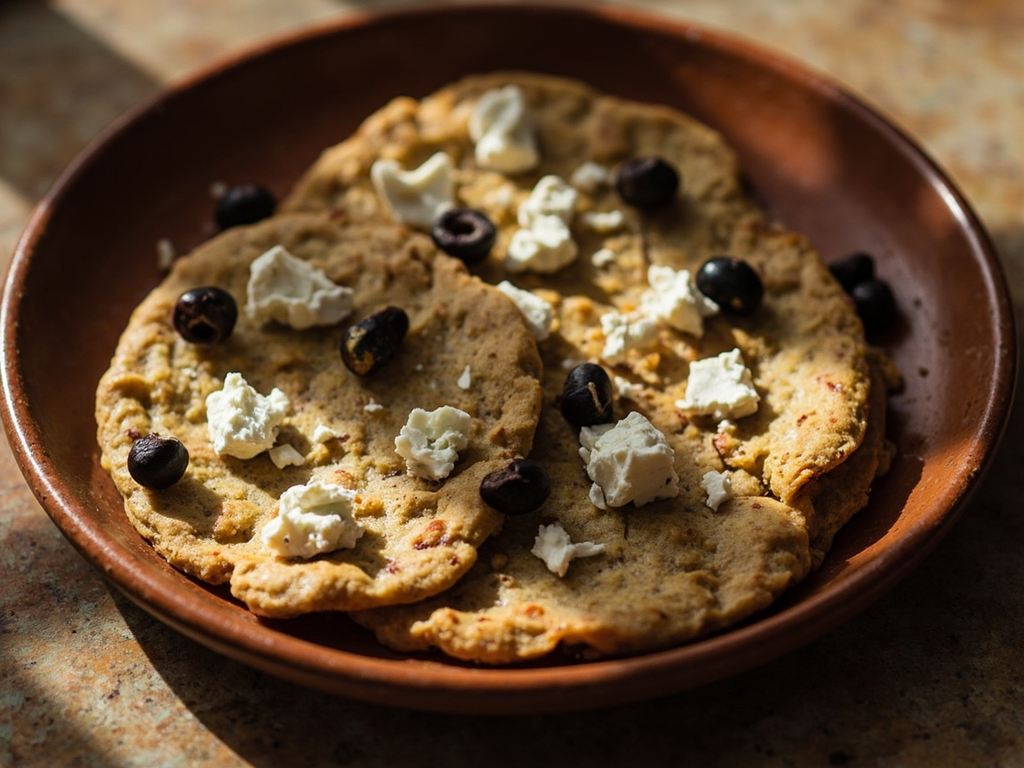
Barley Maza with Goat Cheese and Olives
Why this dish? Before becoming king, Alexander was a child of the Argead house nourished by the common barley bread that sustained all Macedonia. Maza was the foundation of the meal, from the palace of Pella to the shepherds' fires.
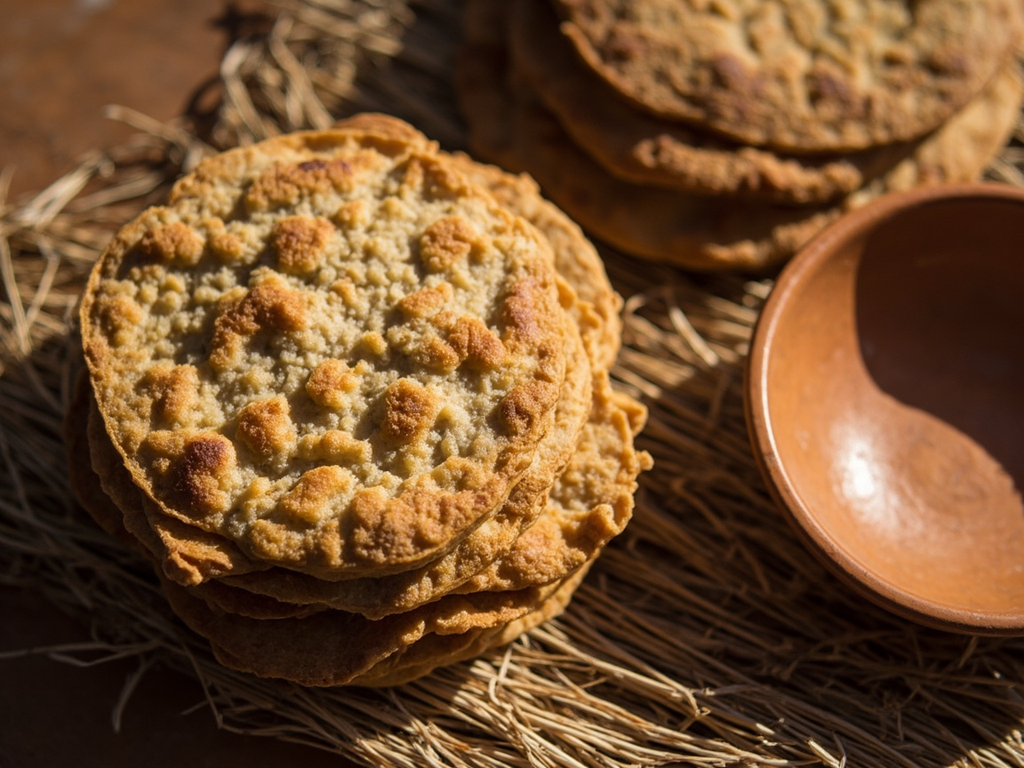
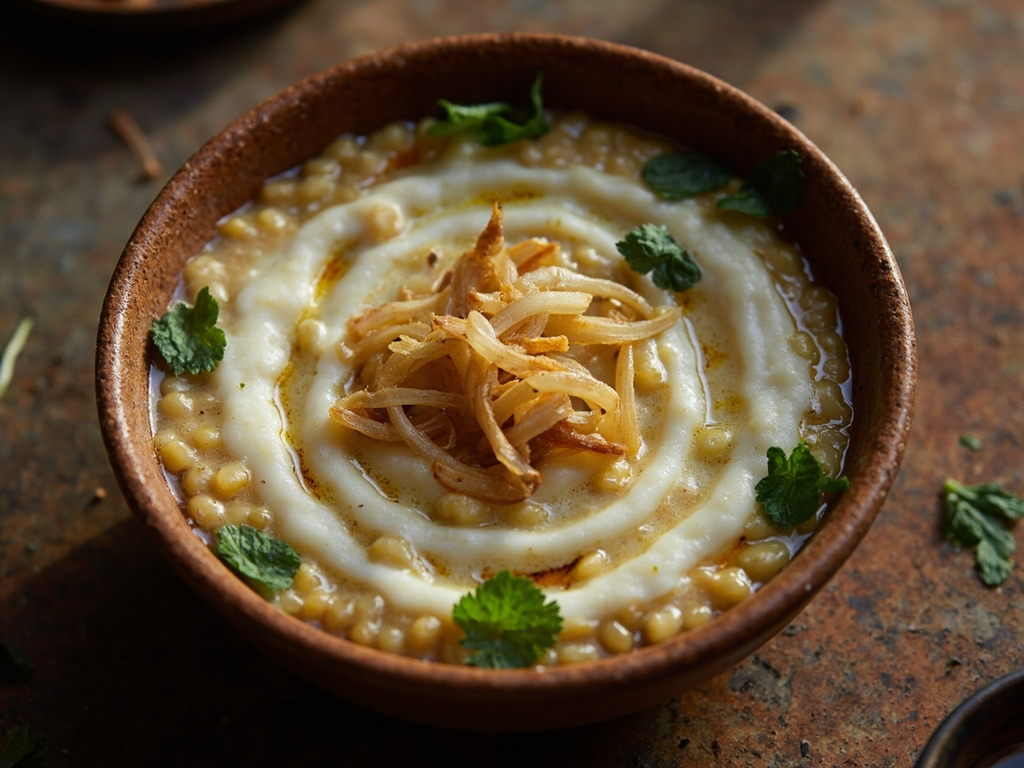
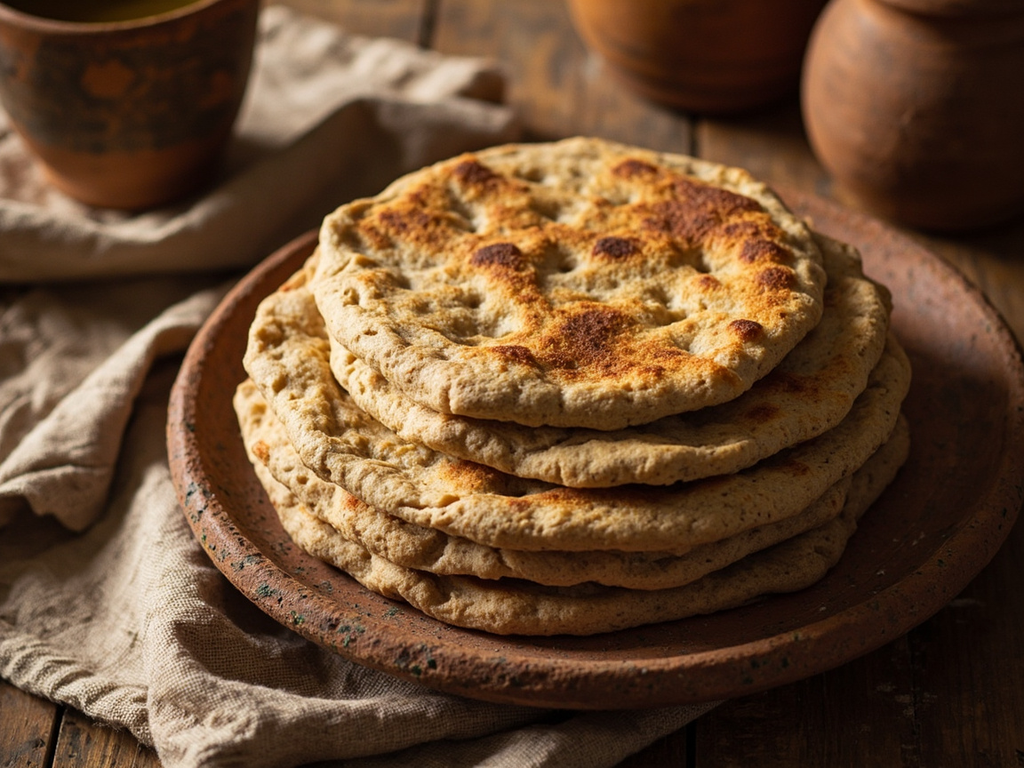
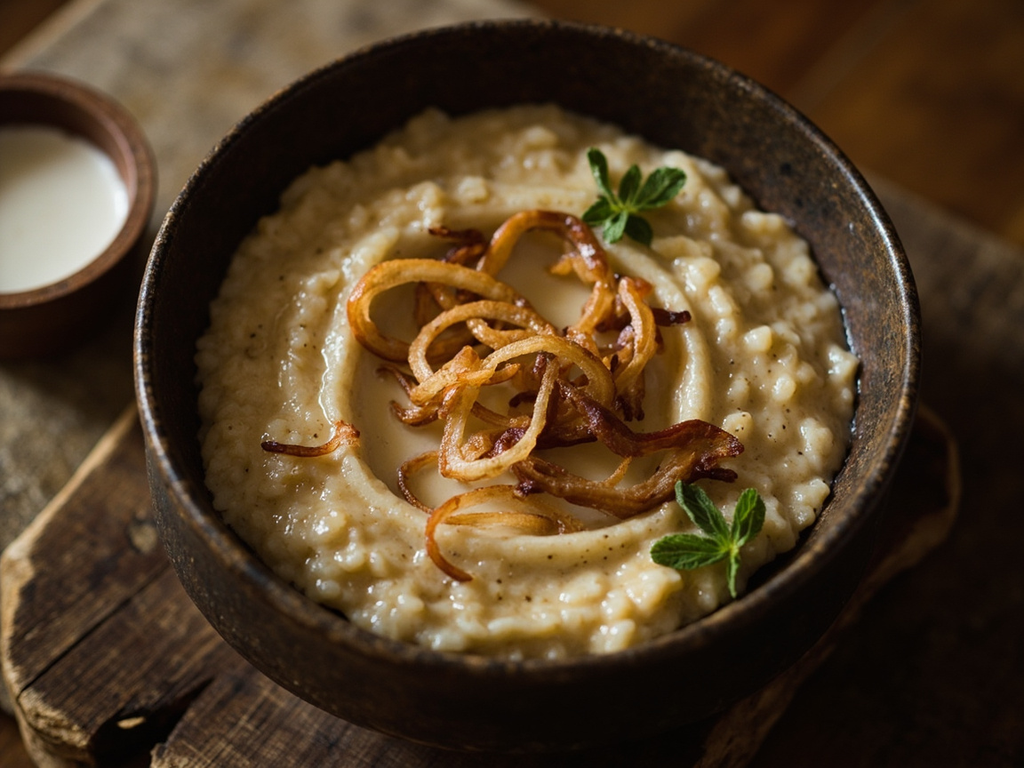
A dense barley cake, neither quite bread nor porridge, crushed with a little oil and served with fresh goat cheese and olives — the everyday food of Greeks and Macedonians.
You think perhaps that a king eats nothing but roasted beasts? Think again. In the morning, I break the same barley maza as my groom: it is barely kneaded, crushed with a finger of oil, and joined with the cheese of our goats and three black olives. It is sober, it is honest, it is the quiet strength of our land — always keep near you what nourishes without flattering.
- •Toasted barley flour — two handfuls (base of the cake)
- •Water — as needed (binder)
- •Olive oil — a drizzle (fat)
- •Fresh goat cheese — a portion (accompaniment)
- •Black olives — a handful (salty garnish)
Barley Maza with Goat Cheese and Olives
A dense barley cake, neither quite bread nor porridge, crushed with a little oil and served with fresh goat cheese and olives — the everyday food of Greeks and Macedonians.
Why this dish? Before becoming king, Alexander was a child of the Argead house nourished by the common barley bread that sustained all Macedonia. Maza was the foundation of the meal, from the palace of Pella to the shepherds' fires.
You think perhaps that a king eats nothing but roasted beasts? Think again. In the morning, I break the same barley maza as my groom: it is barely kneaded, crushed with a finger of oil, and joined with the cheese of our goats and three black olives. It is sober, it is honest, it is the quiet strength of our land — always keep near you what nourishes without flattering.
Ingredients (period version)
- Toasted barley flour — two handfuls (base of the cake)
- Water — as needed (binder)
- Olive oil — a drizzle (fat)
- Fresh goat cheese — a portion (accompaniment)
- Black olives — a handful (salty garnish)
Ingredients
- Barley flour — 200 g (base)
- Warm water — 120 ml approx. (binder)
- Olive oil — 3 tbsp (fat)
- Salt — 1 pinch (seasoning)
- Fresh goat cheese — 150 g (accompaniment)
- Black olives — 1 handful (garnish)
Method
- Lightly toast the barley flour in a dry pan for 2-3 minutes until nutty.
- Mix with salt, warm water, and 2 tbsp oil to form a thick, pliable dough.
- Shape into flat cakes and cook 4-5 minutes per side on a hot griddle.
- Roughly crush with a fork and a drizzle of oil for the rustic texture of maza.
- Serve warm with crumbled goat cheese and olives.
How it was made : Maza, made from barely cooked barley flour often simply kneaded with water and oil, was the staple food of the Greek world, less prestigious than wheat bread (artos) reserved for feast days. In Macedonia, goat cheese and olives accompanied it daily at all levels of society.
The contemporary twist : Arrange the maza as small domes topped with a cloud of whipped goat cheese and a glossy olive, a nod to modern mezzes.
Sources : Athenaeus of Naucratis, Deipnosophistae (maza and artos) · André, J., L'alimentation et la cuisine dans la Grèce antique
Alexander II of Macedon · Charactorium