 flip
flipOffering Bouquet to Aten — Figs, Dates, Grapes, and Cucumber with Honey
Offering Bouquet to Aten — Figs, Dates, Grapes, and Cucumber with Honey
Why this dish? Aten's temples at Akhetaton were unique: no hidden statue in darkness, but hundreds of open-air altars covered with fruits, breads, and flowers, offered directly to the solar disk. Reliefs show tables laden with fruit. This dish is inspired—without reproducing—by this pious gesture central to Akhenaten's religious revolution.
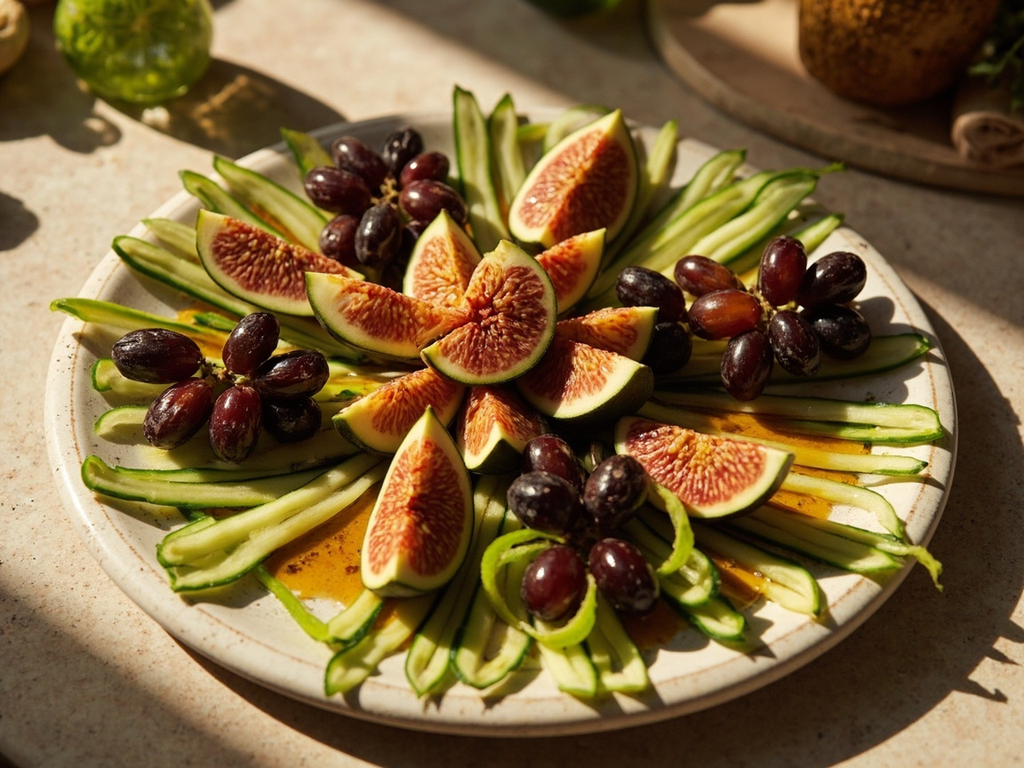
A fresh and sweet composition of figs, dates, grape clusters, and thin cucumber slices, drizzled with honey and perfumed with flower water. Raw, perfect, colorful fruit offered to the sun—then shared by the faithful.
In the morning, when Aten appears on the horizon, we hide nothing from him: no statue in the night, no closed door. We set the tables in the open air and cover them with the fruits of the black earth—figs open like smiles, amber dates, heavy clusters, fresh cucumber cut fine. Honey is poured, flower water is sprinkled. The disk shines on the offering, and when its warmth has blessed it, we eat it together: for the god gives back what is given to him.
- •Fresh figs — a bowl (fruit)
- •Ripe dates — a handful (sweet fruit)
- •Fresh grapes — a bunch (tart fruit)
- •Garden cucumber — one (freshness)
- •Honey — a drizzle (sweet binder)
- •Scented water (lotus/flower) — a few drops (flavor)
Offering Bouquet to Aten — Figs, Dates, Grapes, and Cucumber with Honey
A fresh and sweet composition of figs, dates, grape clusters, and thin cucumber slices, drizzled with honey and perfumed with flower water. Raw, perfect, colorful fruit offered to the sun—then shared by the faithful.
Why this dish? Aten's temples at Akhetaton were unique: no hidden statue in darkness, but hundreds of open-air altars covered with fruits, breads, and flowers, offered directly to the solar disk. Reliefs show tables laden with fruit. This dish is inspired—without reproducing—by this pious gesture central to Akhenaten's religious revolution.
In the morning, when Aten appears on the horizon, we hide nothing from him: no statue in the night, no closed door. We set the tables in the open air and cover them with the fruits of the black earth—figs open like smiles, amber dates, heavy clusters, fresh cucumber cut fine. Honey is poured, flower water is sprinkled. The disk shines on the offering, and when its warmth has blessed it, we eat it together: for the god gives back what is given to him.
Ingredients (period version)
- Fresh figs — a bowl (fruit)
- Ripe dates — a handful (sweet fruit)
- Fresh grapes — a bunch (tart fruit)
- Garden cucumber — one (freshness)
- Honey — a drizzle (sweet binder)
- Scented water (lotus/flower) — a few drops (flavor)
Ingredients
- Fresh figs — 6 (fruit)
- Medjool dates — 8 (sweet fruit)
- Grapes (black and white) — 1 nice bunch (tart fruit)
- Cucumber — 1 (freshness)
- Honey — 2 tbsp (binder)
- Orange blossom water (or rose water) — 1 tsp (flavor)
Method
- Wash the fruits. Cut the figs into cross shapes, pit and slice the dates, separate the grape berries.
- Slice the cucumber into thin ribbons or strips with a peeler.
- Arrange everything in a fan on a large flat plate, from darkest to lightest, like rays.
- Dilute the honey with the flower water and a little warm water so it coats without solidifying.
- Drizzle this scented syrup over the composition just before serving.
- Serve fresh, as a mid-meal course or afternoon snack.
How it was made : Fruits were eaten raw and abounded in Egyptian gardens: figs (from common fig and sycamore), dates, grapes (fresh or as wine), pomegranates, melons, and cucumbers. Thousands were offered on temple offering tables; honey, a luxury from beekeeping in clay jars, served both as sweetener and precious offering. Note: no citrus or New World fruits at this time.
The contemporary twist : Arrange the fruits in rays emanating from a date heart: the plate becomes Aten's disk, including outstretched hands (cucumber ribbons as rays).
Sources : William J. Darby, Paul Ghalioungui & Louis Grivetti, Food: The Gift of Osiris (1977) · Reliefs from the Aten temples, talatat of Akhetaton (Tell el-Amarna)
Akhenaten · Charactorium