 flip
flipSharāb al-ward (Iced Rose Syrup Drink)
Sharāb al-ward (Iced Rose Syrup Drink)
Why this dish? Sweet rose water drinks (ashriba) accompanied the intellectual work of Abbasid scholars. Al-Farghānī, writing his treatises at night by lamplight, refreshed himself with these syrups diluted in cold water — a habit attested in the learned circles of the House of Wisdom.
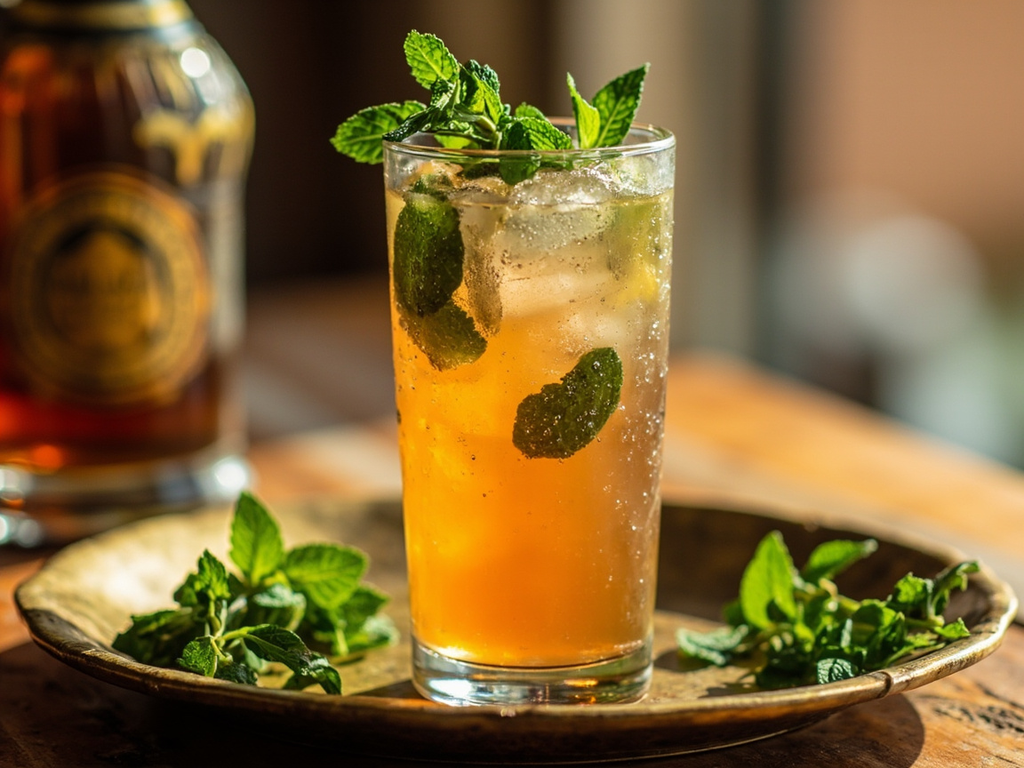
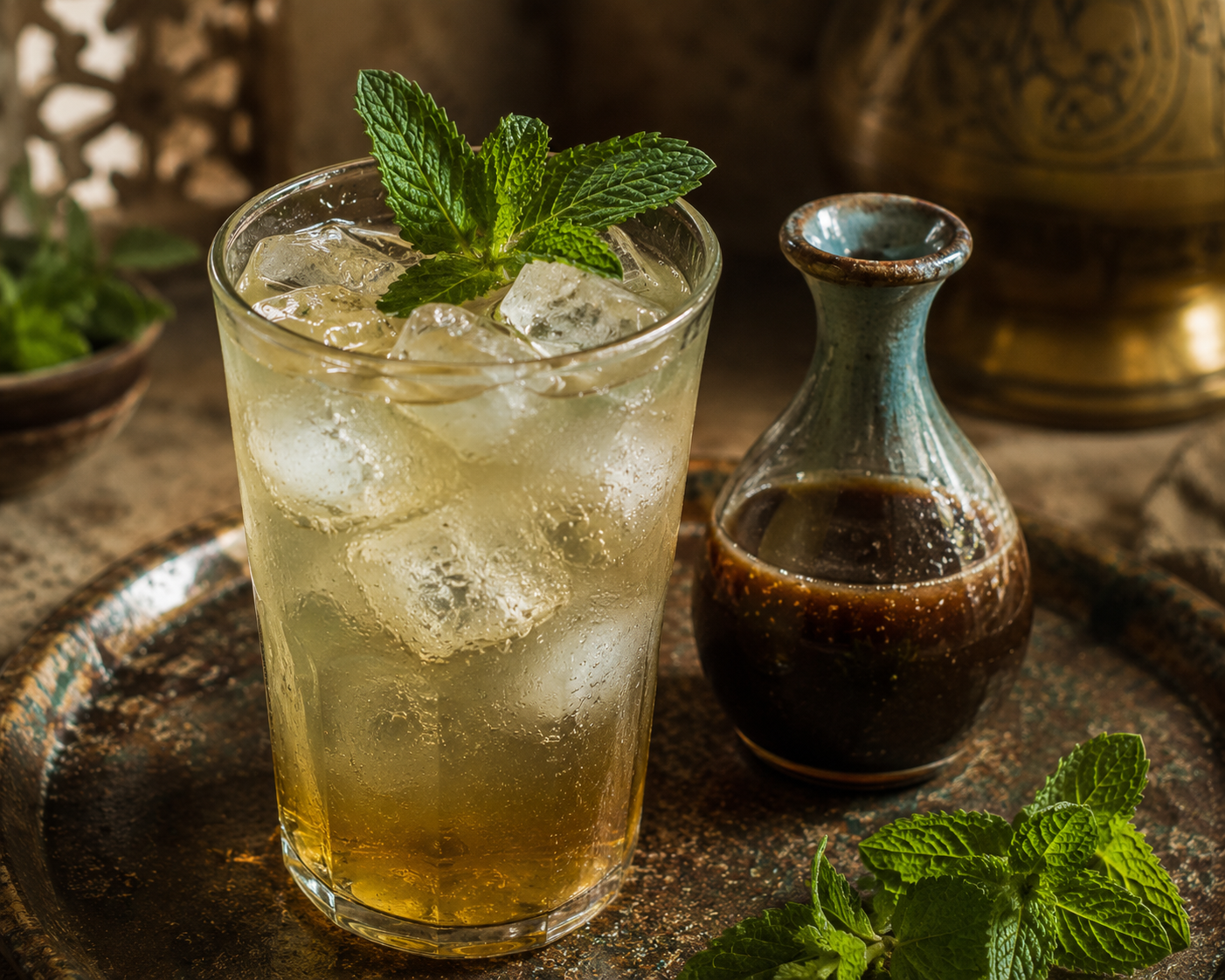
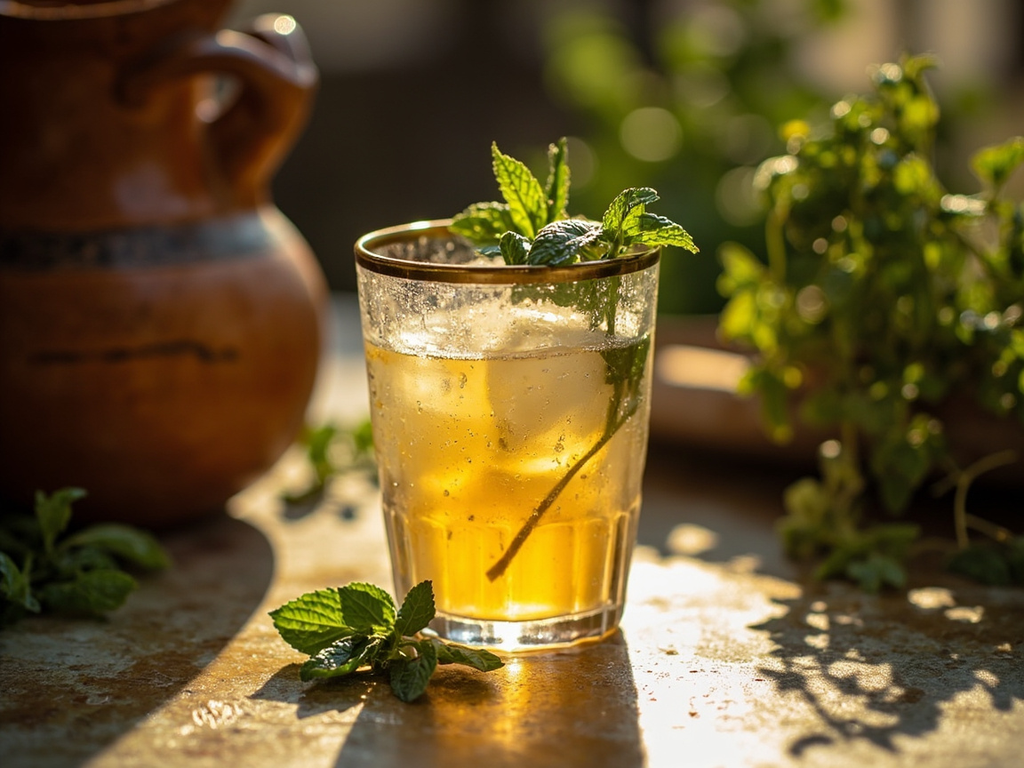
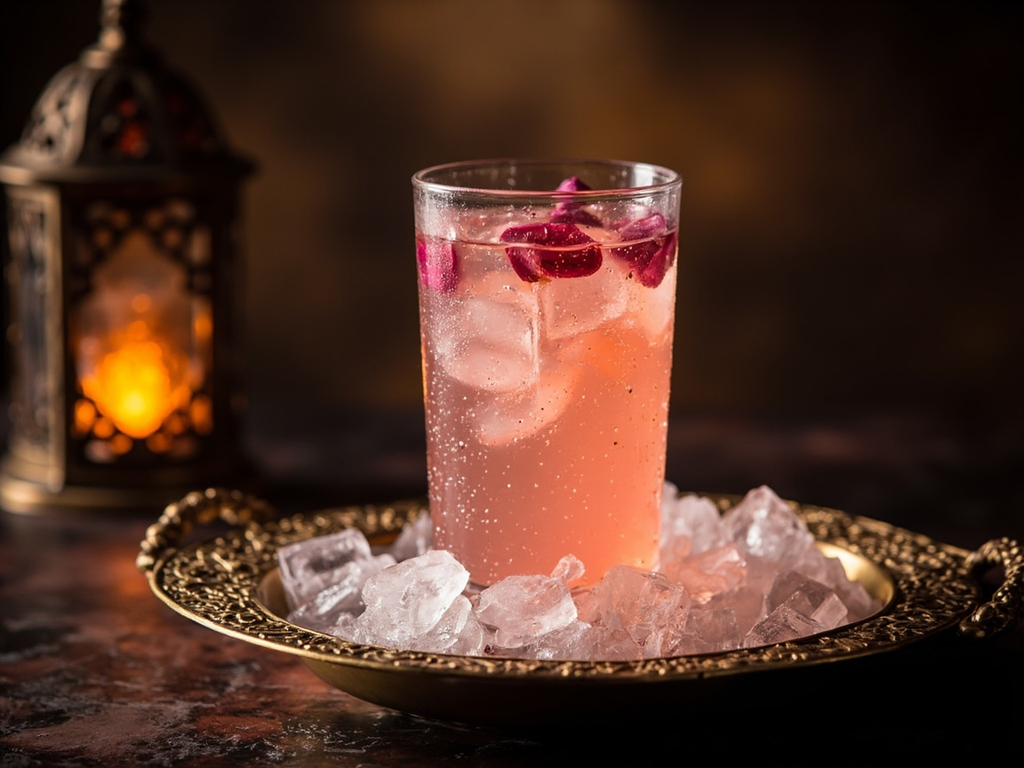
Refreshing drink based on a concentrated syrup of rose petals and sugar, diluted with cold water and sharpened with a dash of lemon juice. Ashriba (drinking syrups) were a specialty of Baghdad, a city where roses were cultivated on a large scale.
The night is long for one who observes the sky of Baghdad to measure the obliquity of the ecliptic. I keep company with a cup of sharāb al-ward, cool as the water from the porous earthen jars our servants keep in the shade. The rose petals from the caliph's garden infuse with cane sugar until they yield a syrup thick as honey, which we dilute with pure water. A little lemon prevents excess sweetness. This drink sustains the scholar without clouding his mind, unlike nabīdh which obscures reason.
- •Fresh rose petals — a large armful (perfume and color)
- •Cane sugar or honey — equal weight to petals (sweetener and preservative)
- •Water — enough to cover (base)
- •Lemon juice — a dash (acidifier)
Sharāb al-ward (Iced Rose Syrup Drink)
Refreshing drink based on a concentrated syrup of rose petals and sugar, diluted with cold water and sharpened with a dash of lemon juice. Ashriba (drinking syrups) were a specialty of Baghdad, a city where roses were cultivated on a large scale.
Why this dish? Sweet rose water drinks (ashriba) accompanied the intellectual work of Abbasid scholars. Al-Farghānī, writing his treatises at night by lamplight, refreshed himself with these syrups diluted in cold water — a habit attested in the learned circles of the House of Wisdom.
The night is long for one who observes the sky of Baghdad to measure the obliquity of the ecliptic. I keep company with a cup of sharāb al-ward, cool as the water from the porous earthen jars our servants keep in the shade. The rose petals from the caliph's garden infuse with cane sugar until they yield a syrup thick as honey, which we dilute with pure water. A little lemon prevents excess sweetness. This drink sustains the scholar without clouding his mind, unlike nabīdh which obscures reason.
Ingredients (period version)
- Fresh rose petals — a large armful (perfume and color)
- Cane sugar or honey — equal weight to petals (sweetener and preservative)
- Water — enough to cover (base)
- Lemon juice — a dash (acidifier)
Ingredients
- Quality rose water — 3 tbsp (main perfume)
- Sugar — 200 g (syrup base)
- Water — 500 ml (syrup) + fresh water for serving (base)
- Lemon juice — 2 tbsp (acidifier)
- Ice cubes — as needed (coolness)
- Untreated rose petals (optional) — a few (decoration)
Method
- Prepare the syrup: in a saucepan, dissolve sugar in 500 ml water over medium heat, stirring.
- Once boiling, reduce heat and let reduce for 10 minutes until syrupy.
- Remove from heat, add rose water and lemon juice. Let cool completely.
- To serve: pour 3-4 tbsp of syrup into a tall glass, top up with fresh water and ice cubes.
- Stir and decorate with a rose petal.
- The syrup keeps refrigerated for several weeks in a clean jar.
How it was made : The Kitāb al-Ashriba (Book of Drinks) is a genre of its own in the Abbasid world. Caliphs maintained rose gardens whose petals were used in perfumery and cooking. The concentrated syrup kept well and was easily transportable — travelers carried it in leather flasks.
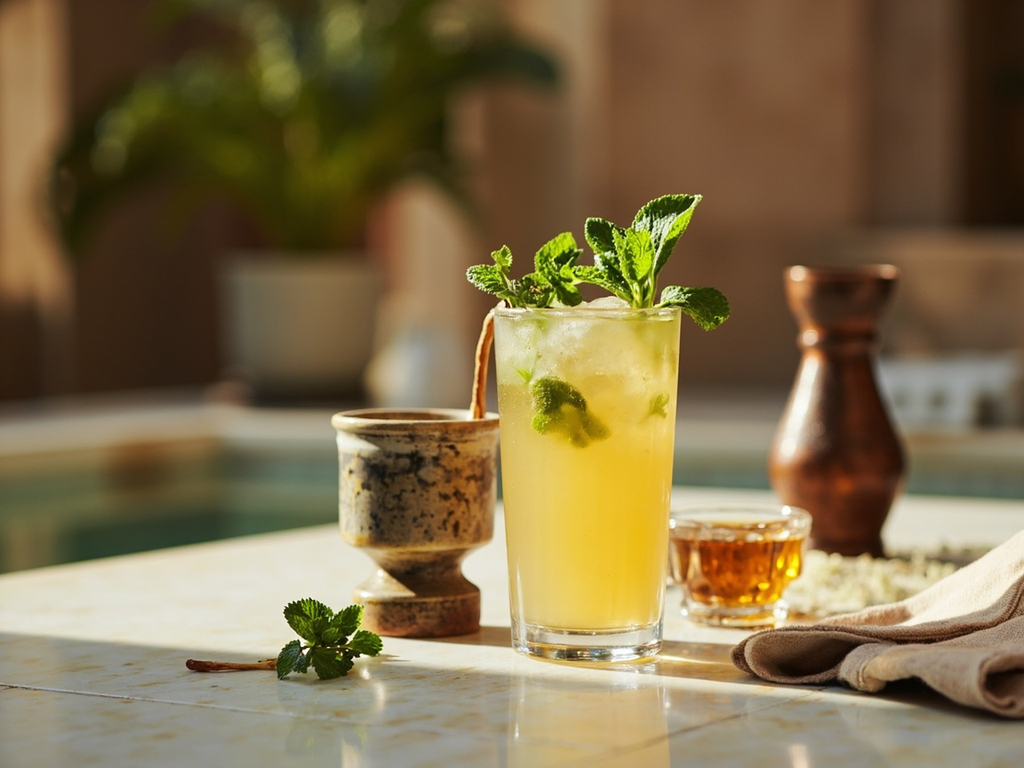
The contemporary twist : Serve in a clear glass over crushed ice with a splash of sparkling water to make a non-alcoholic "Baghdad spritz".
Sources : Ibn Sayyār al-Warrāq, Kitāb al-Ṭabīkh — chapter on ashriba · Nawal Nasrallah, Annals of the Caliphs' Kitchens, Brill, 2007 · Lilia Zaouali, Medieval Cuisine of the Islamic World, University of California Press, 2007
Al-Farghani · Charactorium