 flip
flipSekanjabin (Honey, Vinegar and Mint Syrup)
Sekanjabin (Honey, Vinegar and Mint Syrup)
Why this dish? A woman of knowledge and fasting, Fatima lived in a world where medicine and cuisine merged. Sekanjabin, a sweet-and-sour syrup to dilute in water, was the refreshing and digestive drink of scholars, also offered to the sick—natural beside an ablution fountain in the heat of Fes.
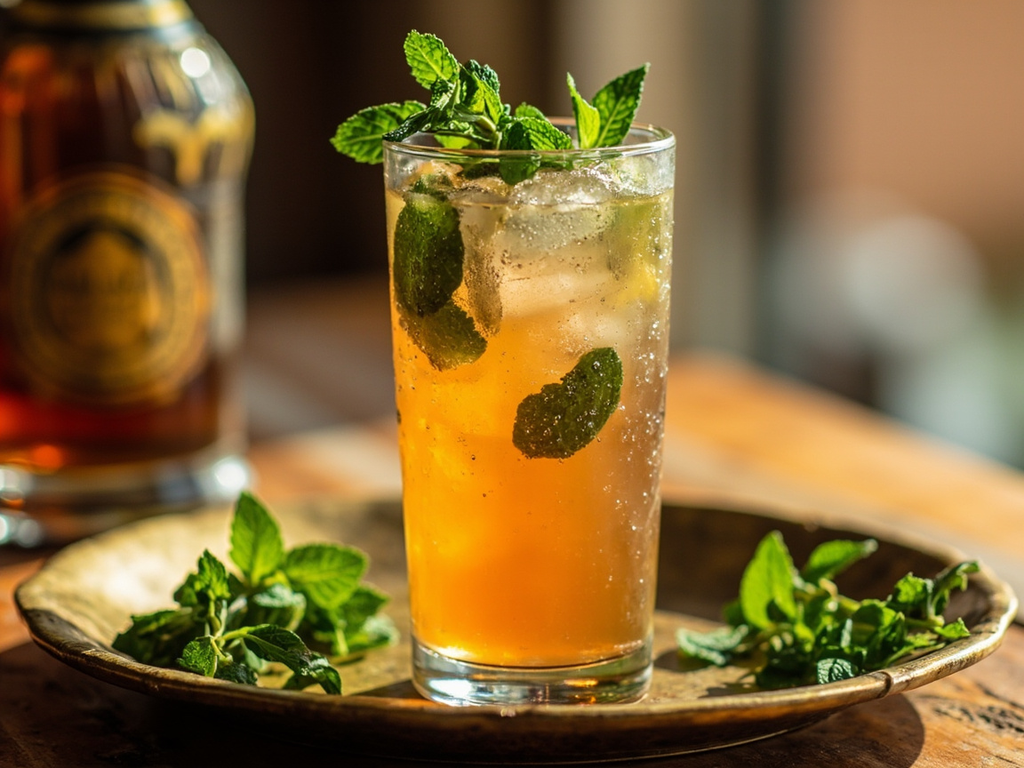
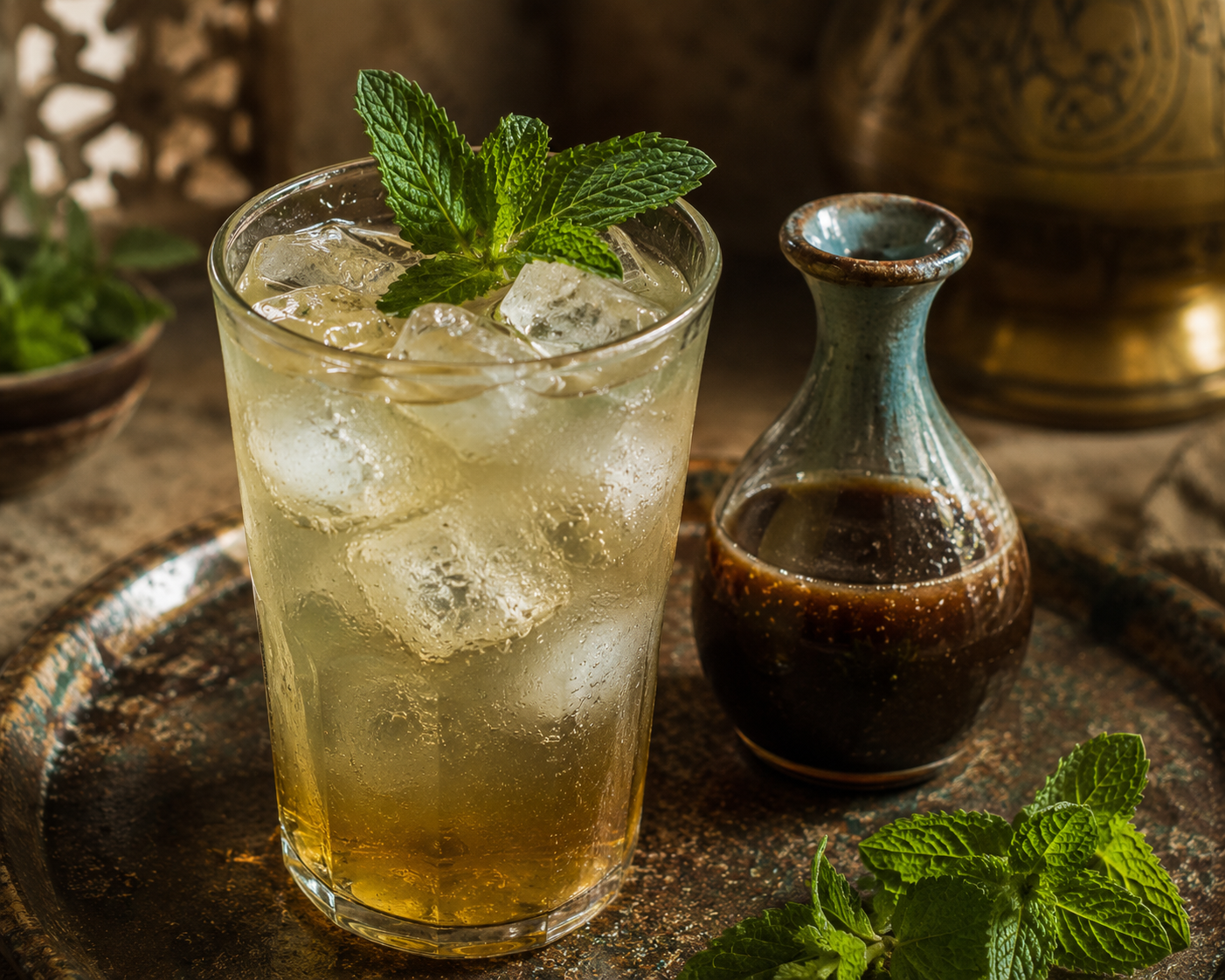
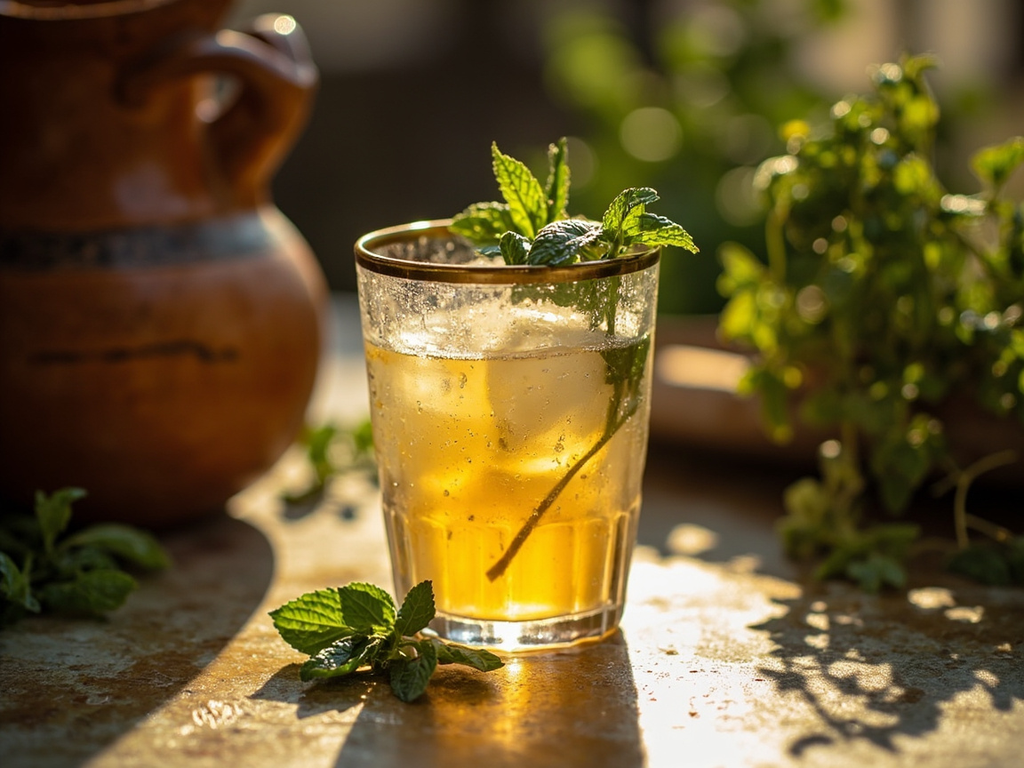
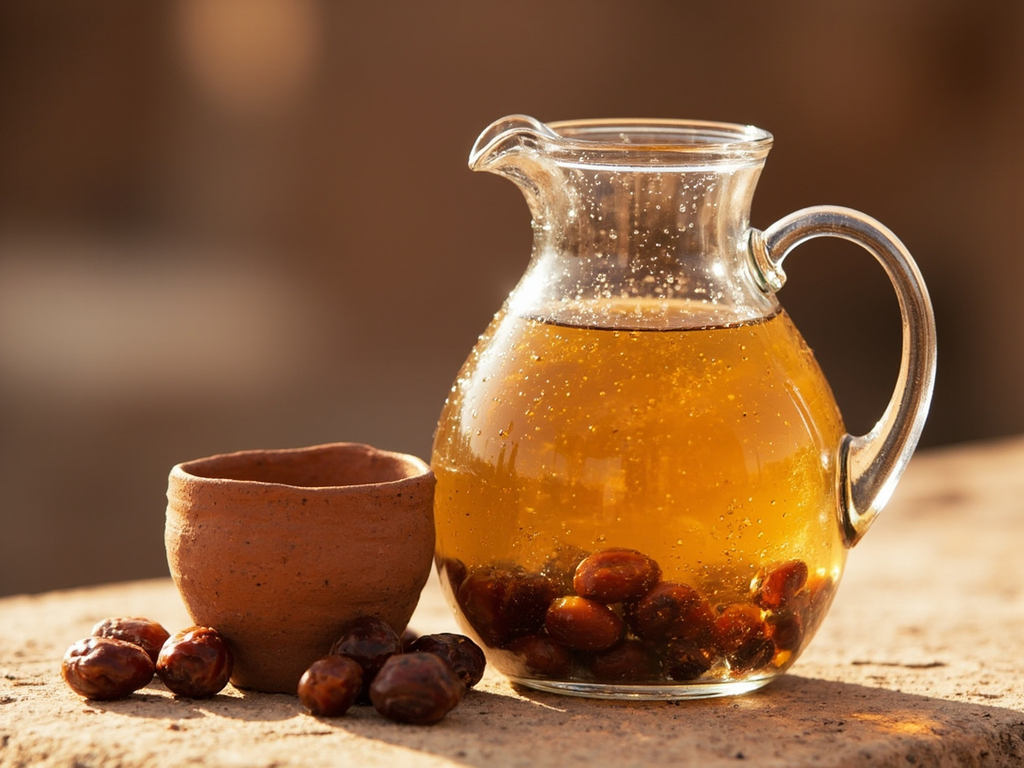
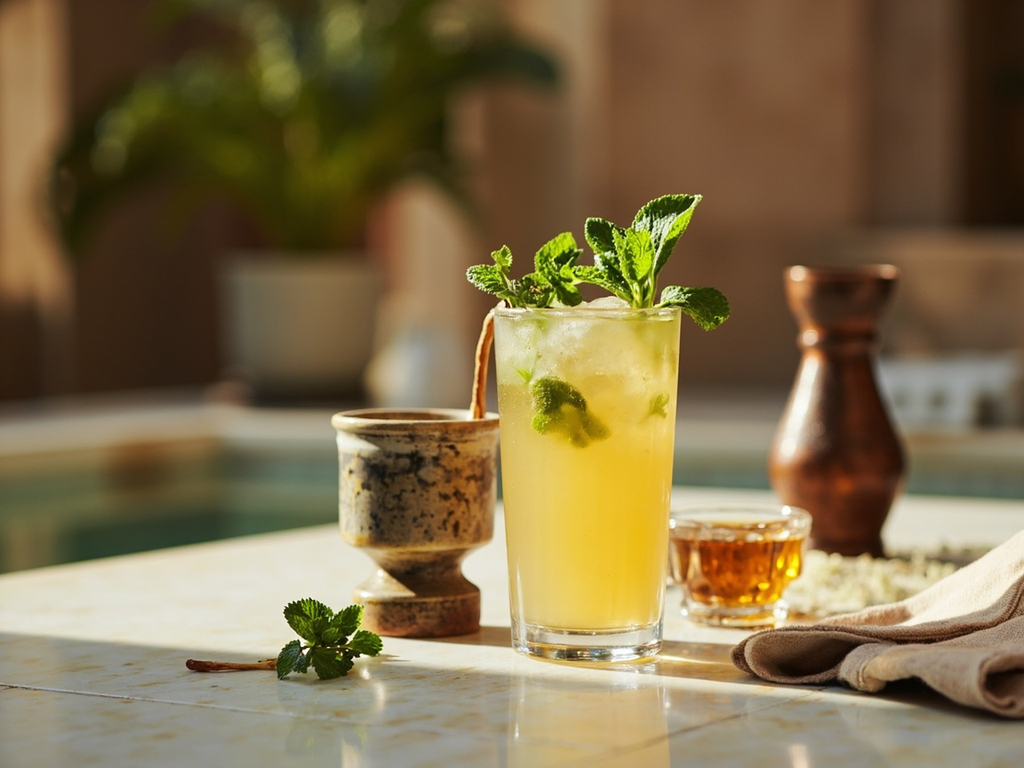
A clear syrup of honey and vinegar reduced with mint, then lengthened with cool water to obtain a thirst-quenching, lively, and fragrant drink, halfway between remedy and pleasure.
In the heat of the Fassi summer, nothing beats a cup of sekanjabin to quench thirst and soothe the stomach. Honey and vinegar are married over the fire, a bunch of mint is plunged in, and one waits until the syrup coats the spoon; then it is kept in a flask. When a visitor arrives with a sweaty brow, or a feverish person needs cooling, I pour a finger of it into well water—the physicians themselves prescribe it. Sour and sweet at once, like many things God has made good for us.
- •Honey — in abundance (sweetness)
- •Vinegar — in proportion to honey (acidity)
- •Fresh mint — one bunch (fragrance)
- •Fresh water — for dilution at serving (final drink)
Sekanjabin (Honey, Vinegar and Mint Syrup)
A clear syrup of honey and vinegar reduced with mint, then lengthened with cool water to obtain a thirst-quenching, lively, and fragrant drink, halfway between remedy and pleasure.
Why this dish? A woman of knowledge and fasting, Fatima lived in a world where medicine and cuisine merged. Sekanjabin, a sweet-and-sour syrup to dilute in water, was the refreshing and digestive drink of scholars, also offered to the sick—natural beside an ablution fountain in the heat of Fes.
In the heat of the Fassi summer, nothing beats a cup of sekanjabin to quench thirst and soothe the stomach. Honey and vinegar are married over the fire, a bunch of mint is plunged in, and one waits until the syrup coats the spoon; then it is kept in a flask. When a visitor arrives with a sweaty brow, or a feverish person needs cooling, I pour a finger of it into well water—the physicians themselves prescribe it. Sour and sweet at once, like many things God has made good for us.
Ingredients (period version)
- Honey — in abundance (sweetness)
- Vinegar — in proportion to honey (acidity)
- Fresh mint — one bunch (fragrance)
- Fresh water — for dilution at serving (final drink)
Ingredients
- Honey — 250 g (sweetness)
- Wine or cider vinegar — 120 ml (acidity)
- Water — 120 ml (for the syrup) (syrup base)
- Fresh mint — 1 large bunch (fragrance)
- Fresh or iced water — as needed (dilution at serving (1 part syrup to 5 water))
Method
- In a saucepan, gently bring the honey, water, and vinegar to a simmer, skimming if necessary.
- Let reduce for 10–15 minutes until a slightly coating syrup forms.
- Off the heat, plunge the mint into the hot syrup and let infuse for 20 minutes, then remove and strain.
- Store the syrup in a bottle in the refrigerator; to serve, use about 1 part syrup to 5 parts fresh water.
How it was made : Sekanjabin (from Arabic sikanjabîn, itself from Persian: 'vinegar-honey') is a classic oxymel of medieval Arab-Persian medicine, both a table drink and a digestive and febrifuge remedy, abundantly cited in treatises and cookbooks of the time.
The contemporary twist : Poured over crushed ice with a slice of cucumber, it becomes an ultra-refreshing sweet-and-sour mocktail for today's gatherings.
Fatima al-Fihri · Charactorium