 flip
flipJullab, Rose Water and Honey Syrup
Jullab, Rose Water and Honey Syrup
Why this dish? Sweet and perfumed drinks were the pride of Baghdad's tables, and the rose was the queen flower of Abbasid gardens. Al-Kindi, who also studied distillation and perfumes (he is credited with a treatise on the chemistry of essences), would have appreciated this drink where the science of aromas and pleasure meet.
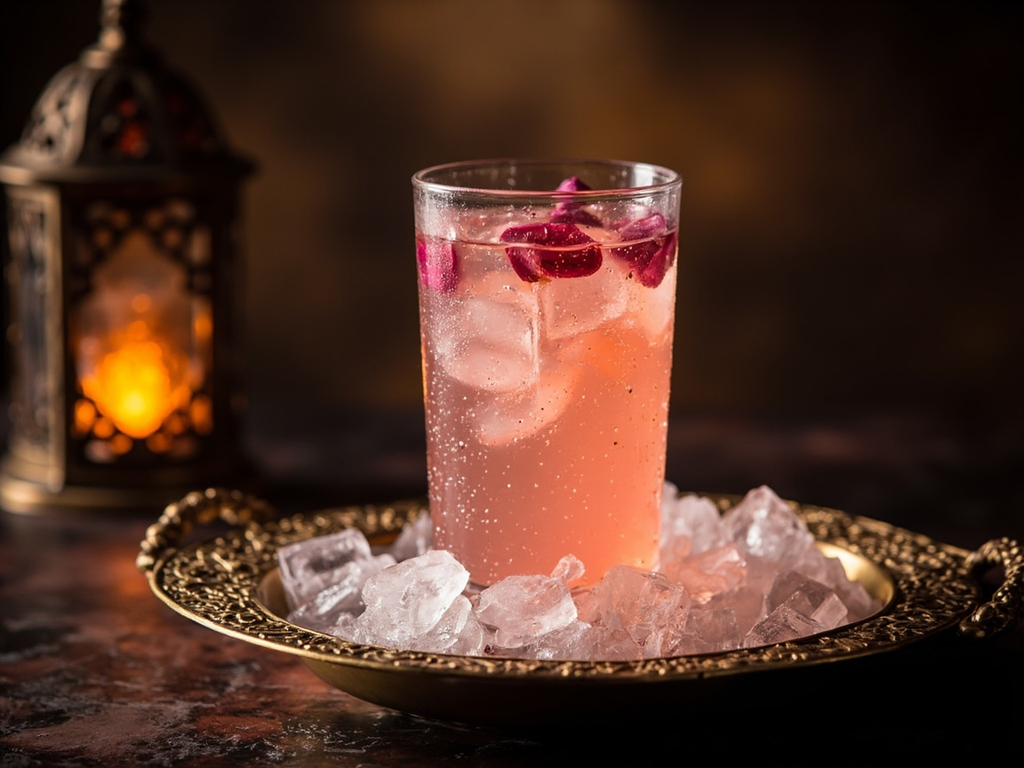
A clear syrup of honey perfumed with rose water, diluted with cool water. Served cold, sometimes over snow brought down from the mountains, it was the refreshing and elegant drink of hot Baghdad days.
Let me offer you a drink, for thirst troubles the mind as much as ignorance. This perfumed water, jullab, I consider a small marvel of art: we melt honey, add water drawn from roses by the alembic — the same instrument I use to study the nature of essences — and dilute it with very cold water. In summer, the rich melt snow brought from the mountains into it. Drink slowly, first breathe the perfume, then the coolness: this is how a scholar refreshes his mind.
- •Honey — in proportion (sweet base)
- •Rose water — a dash (perfume)
- •Fresh water — to dilute (drink)
- •Snow or ice (for the wealthy) — optional (coolness)
Jullab, Rose Water and Honey Syrup
A clear syrup of honey perfumed with rose water, diluted with cool water. Served cold, sometimes over snow brought down from the mountains, it was the refreshing and elegant drink of hot Baghdad days.
Why this dish? Sweet and perfumed drinks were the pride of Baghdad's tables, and the rose was the queen flower of Abbasid gardens. Al-Kindi, who also studied distillation and perfumes (he is credited with a treatise on the chemistry of essences), would have appreciated this drink where the science of aromas and pleasure meet.
Let me offer you a drink, for thirst troubles the mind as much as ignorance. This perfumed water, jullab, I consider a small marvel of art: we melt honey, add water drawn from roses by the alembic — the same instrument I use to study the nature of essences — and dilute it with very cold water. In summer, the rich melt snow brought from the mountains into it. Drink slowly, first breathe the perfume, then the coolness: this is how a scholar refreshes his mind.
Ingredients (period version)
- Honey — in proportion (sweet base)
- Rose water — a dash (perfume)
- Fresh water — to dilute (drink)
- Snow or ice (for the wealthy) — optional (coolness)
Ingredients
- Honey — 100 g (sweet base)
- Water — 100 ml for syrup + cold water for serving (dilution)
- Food-grade rose water — 2 to 3 tbsp (perfume)
- Ice cubes — as needed (coolness)
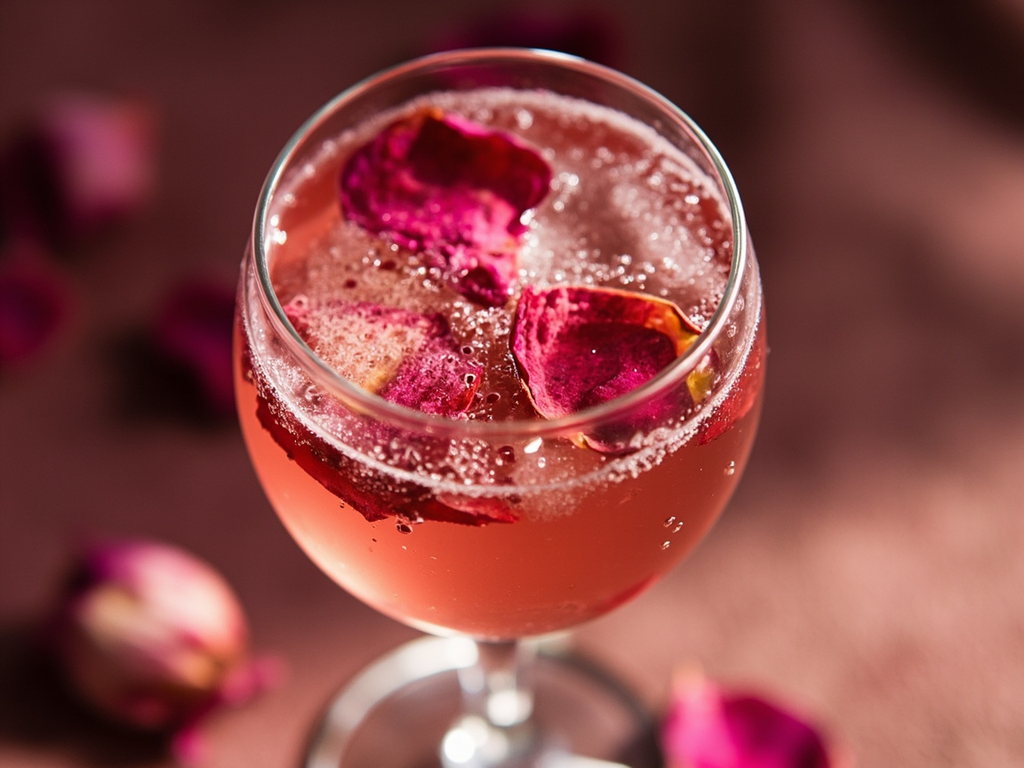
- Dried edible rose petals — for decoration (presentation)
Method
- Warm the honey with 100 ml water until a clear syrup forms; let cool.
- Add the rose water to the cooled syrup (heat would drive away the perfume).
- When serving, pour a little syrup into a glass and dilute with cold water to taste.
- Add ice cubes and, if desired, a few rose petals on top.
How it was made : Jullab (from Arabic, from Persian gul-āb = 'rose water') gave us the word 'julep'. Rose water was obtained by distillation, a technique that 9th-century Arab scholars like Al-Kindi and later al-Razi described and perfected for perfumes and remedies.
The contemporary twist : Turn it into a sparkling drink by diluting the syrup with carbonated water, and add a thin slice of lemon.
Sources : Ibn Sayyâr al-Warrâq, Kitâb al-Tabîkh (10th c.) ; Nawal Nasrallah, Annals of the Caliphs' Kitchens, Brill, 2007
Al-Kindi · Charactorium