 flip
flipTarichos: Aegean salted and preserved fish
Tarichos: Aegean salted and preserved fish
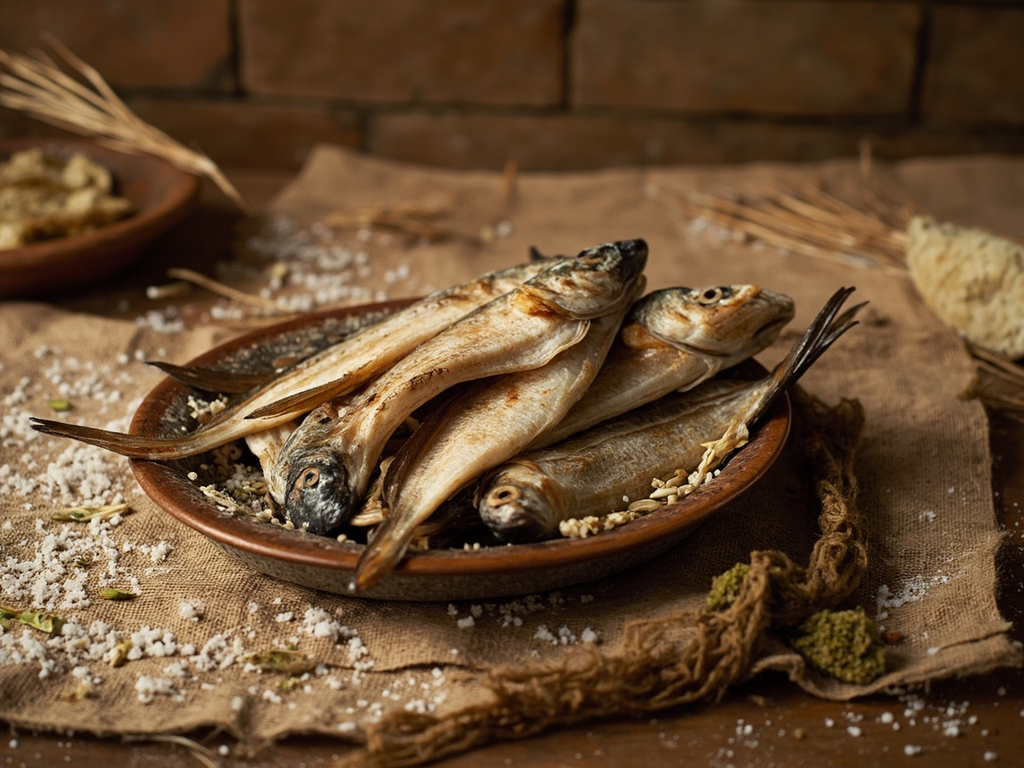
Why this dish? Mytilene lives off the Aegean Sea. Salted fish, or tarichos, allowed catches to be preserved and traded from city to city. On Alcaeus' table, this preserved fish was the quintessential opson placed on barley, and the salting trade enriched the ports of Lesbos.
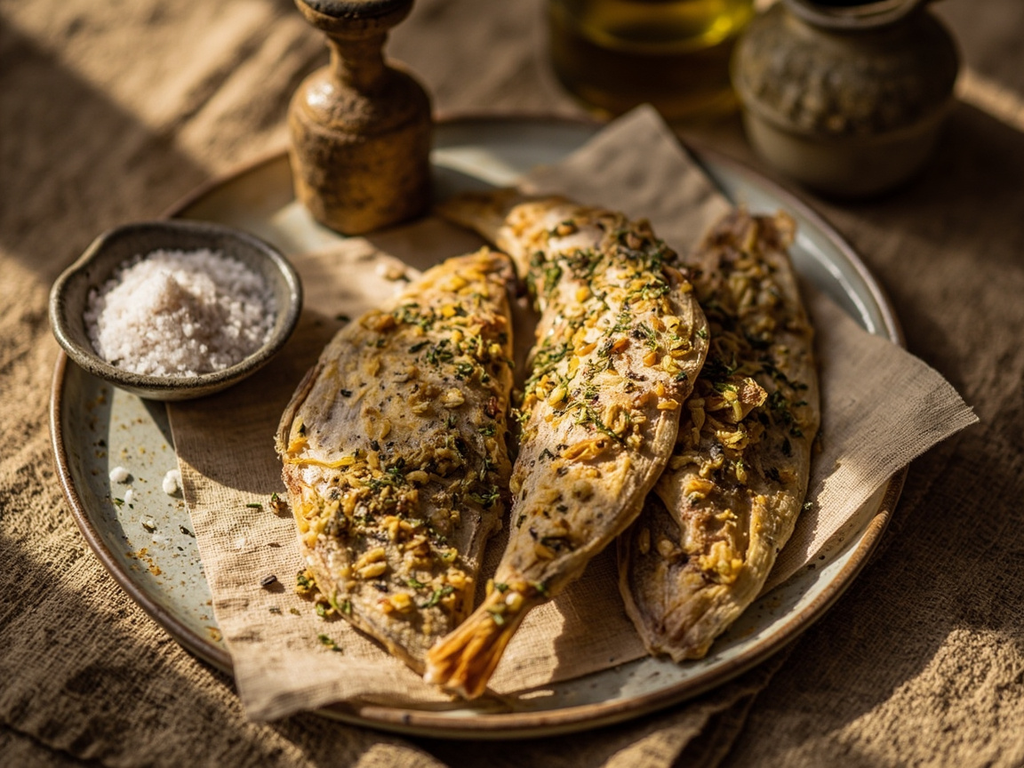
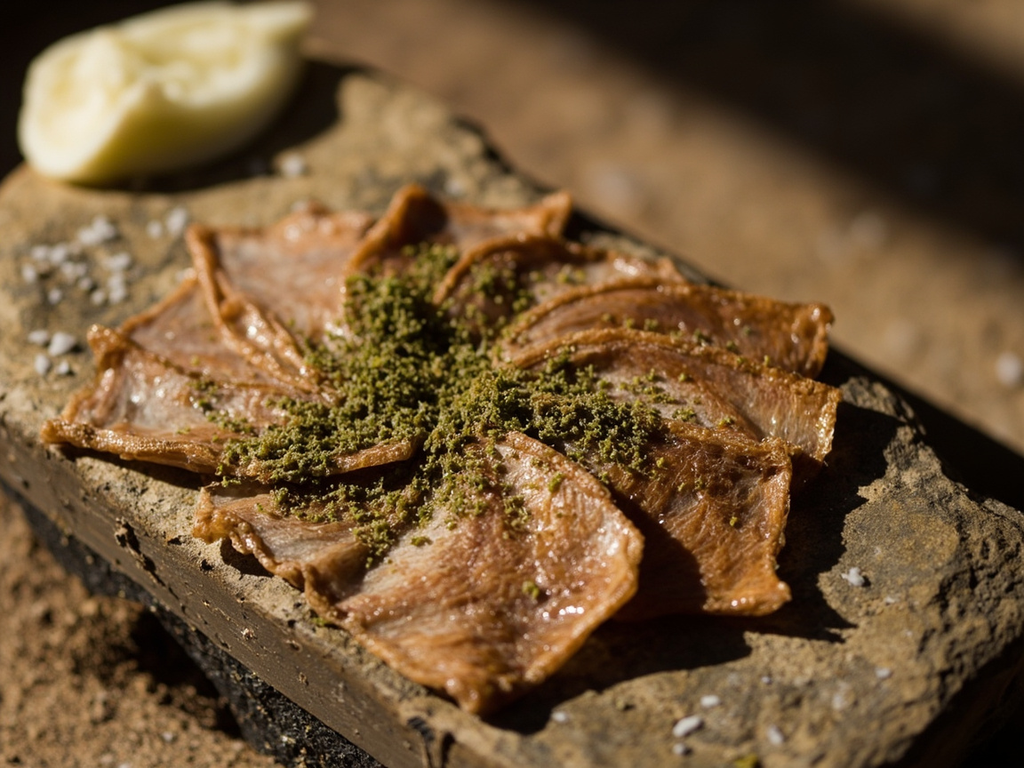
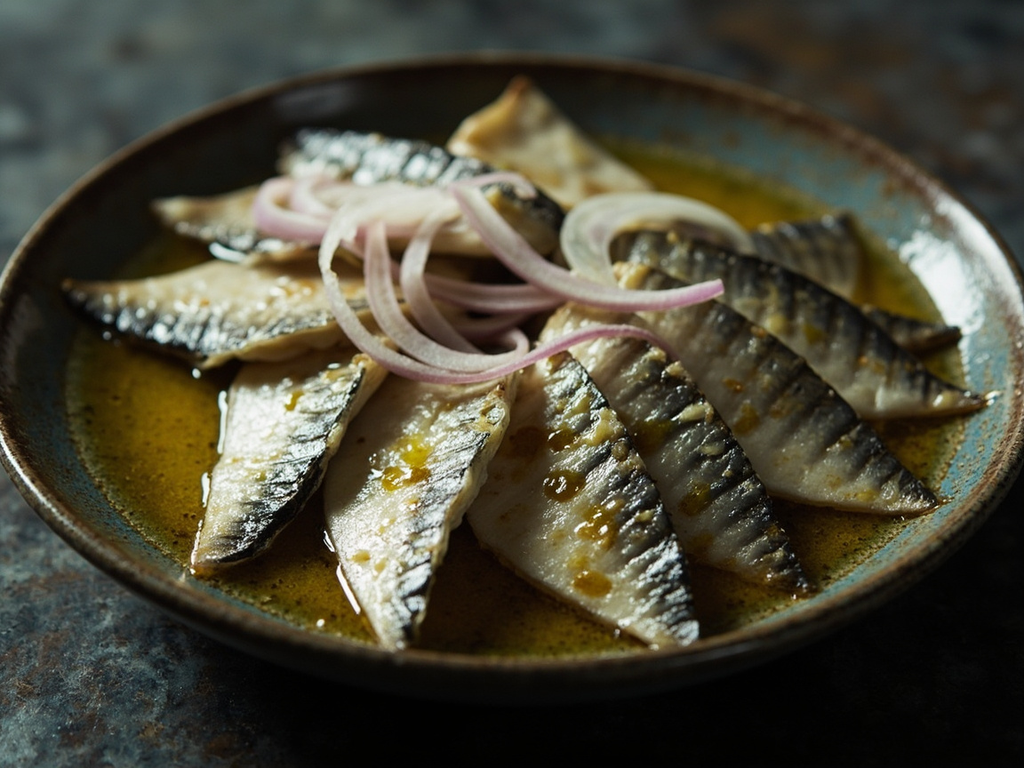
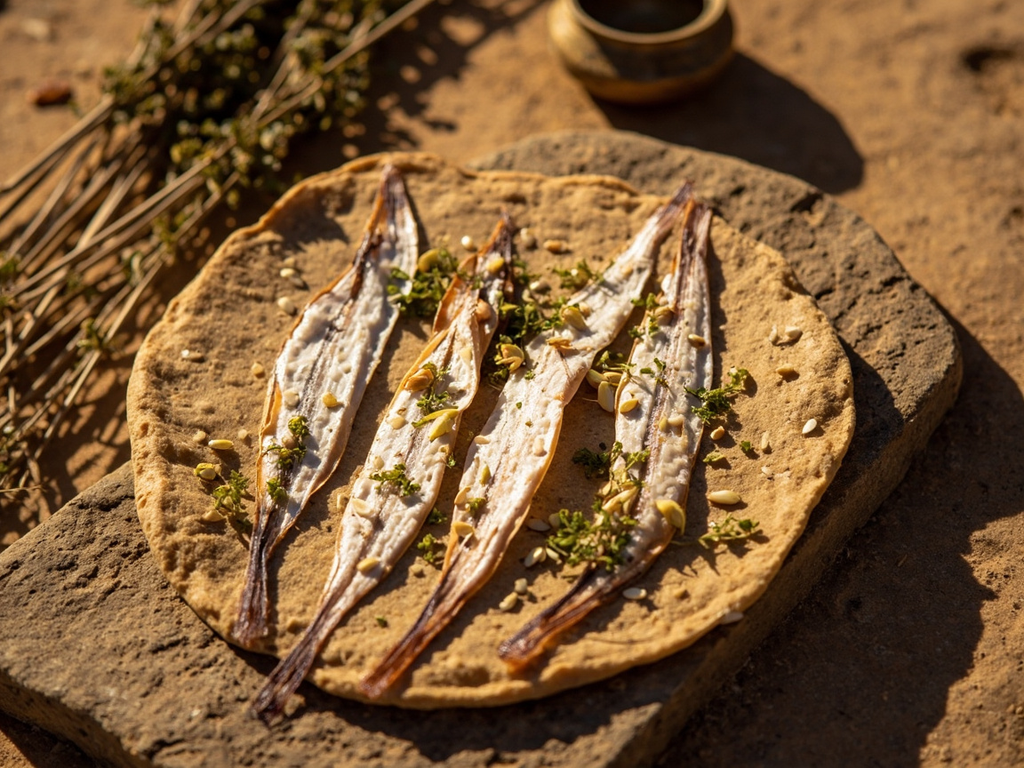
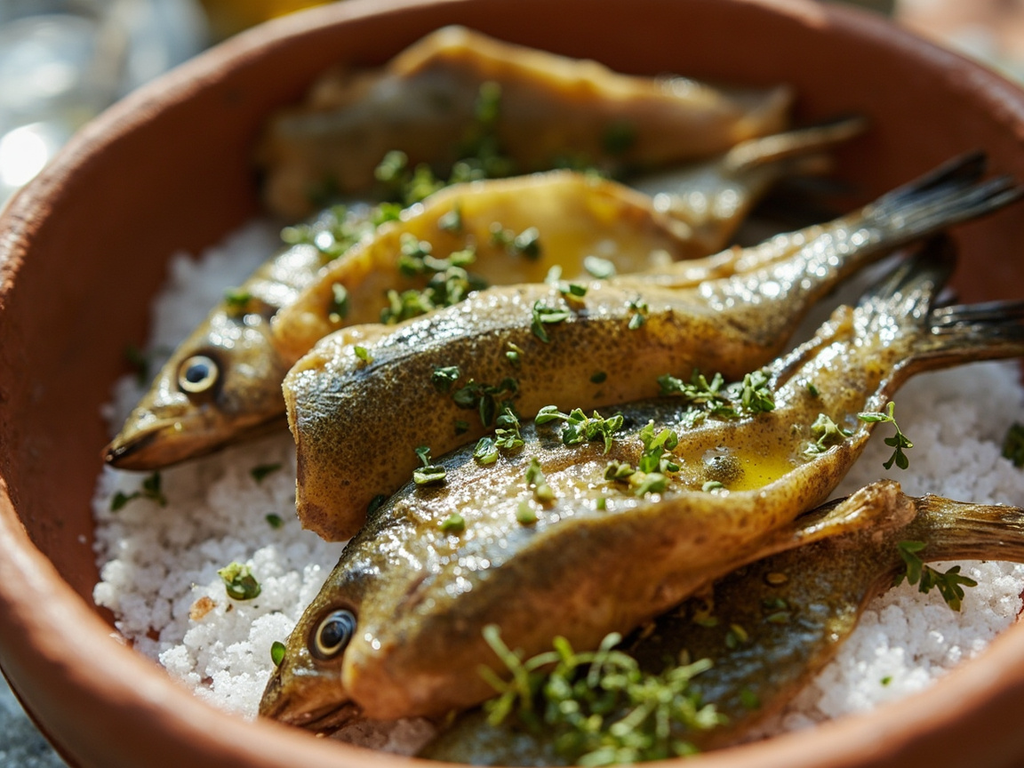
Fillets of small Aegean bluefish (mackerel, sardine, little tuna) salted then lightly marinated in oil and herbs. Salt concentrates the flavors: intense, briny, almost fermented — a powerful condiment that wakes up the barley flatbread.
The sea, you see, does not always give us fresh fish — but salt never lies. We take the little blue fish, we lay them in salt as one lays an honored dead, and when winter comes they still feed the house. Place one for me on the barley flatbread, drizzle with oil, and you'll have enough to stand against the north wind howling over Lesbos.
- •Small Aegean bluefish (mackerel, sardine, little tuna) — according to the catch (base)
- •Sea salt — abundant, to cover (preservation)
- •Olive oil — for the marinade (softening)
- •Oregano, coriander seeds — by hand (scent)
Tarichos: Aegean salted and preserved fish
Fillets of small Aegean bluefish (mackerel, sardine, little tuna) salted then lightly marinated in oil and herbs. Salt concentrates the flavors: intense, briny, almost fermented — a powerful condiment that wakes up the barley flatbread.
Why this dish? Mytilene lives off the Aegean Sea. Salted fish, or tarichos, allowed catches to be preserved and traded from city to city. On Alcaeus' table, this preserved fish was the quintessential opson placed on barley, and the salting trade enriched the ports of Lesbos.
The sea, you see, does not always give us fresh fish — but salt never lies. We take the little blue fish, we lay them in salt as one lays an honored dead, and when winter comes they still feed the house. Place one for me on the barley flatbread, drizzle with oil, and you'll have enough to stand against the north wind howling over Lesbos.
Ingredients (period version)
- Small Aegean bluefish (mackerel, sardine, little tuna) — according to the catch (base)
- Sea salt — abundant, to cover (preservation)
- Olive oil — for the marinade (softening)
- Oregano, coriander seeds — by hand (scent)
Ingredients
- Very fresh mackerel or sardine fillets — 4 fillets (≈ 300 g) (base)
- Coarse sea salt — about 200 g (salting)
- Extra virgin olive oil — 4 tbsp (marinade)
- Dried oregano — 1 tsp (scent)
- Crushed coriander seeds — ½ tsp (scent)
- Wine vinegar (optional) — 1 tbsp (brightness when serving)
Method
- Spread a layer of coarse salt in a dish, arrange the fillets skin side down, cover them completely with salt.
- Refrigerate for 2 to 4 hours depending on thickness (the flesh should firm up).
- Rinse the fillets thoroughly under cold water to remove excess salt, pat dry.
- Slice into strips, place in a bowl with the oil, oregano, and coriander.
- Marinate for at least 1 hour in the fridge; add a splash of vinegar just before serving.
- Serve in small quantities on the barley maza — it is a powerful condiment.
How it was made : Without refrigeration, salting was the great preservation technique for fish. Tarichos was exported throughout the Mediterranean and fed cities in winter. Later, Greeks and Romans would push the process to garos/garum, a fermented fish sauce — but in the Archaic period, simply salted fish dominated.
The contemporary twist : Serve as 'Aegean tapas': strips of marinated mackerel on warm barley flatbread, lemon zest and fleur de sel. Half-archaic, half-port bistro.
Sources : Athenaeus of Naucratis, The Deipnosophists, book III (on tarichos) · Andrew Dalby, Food in the Ancient World from A to Z (2003), entry 'salt fish'
Alcaeus · Charactorium