 flip
flipDried and Salted Nile Fish with Coriander
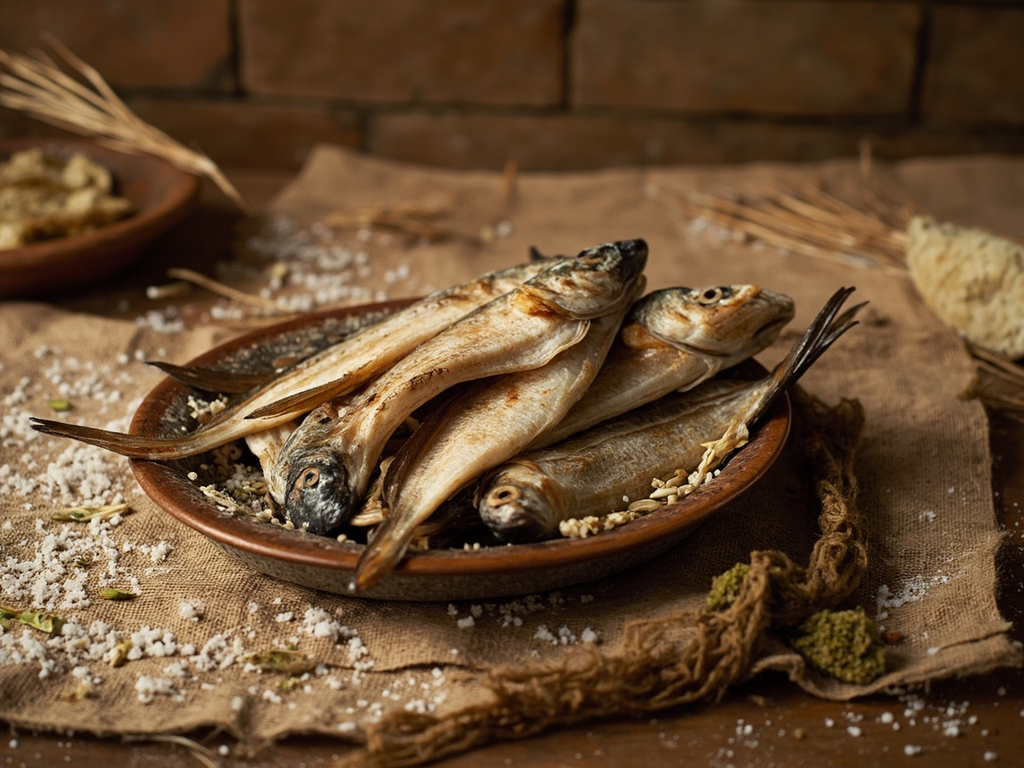
Dried and Salted Nile Fish with Coriander
Why this dish? The Nile feeds Egypt with its fish, dried and salted in large quantities to get through the flood season and supply expeditions, all the way to Nubia (Tombos) which Ahmose's dynasty reached. A modest but universal provision, from peasant household to royal stores.
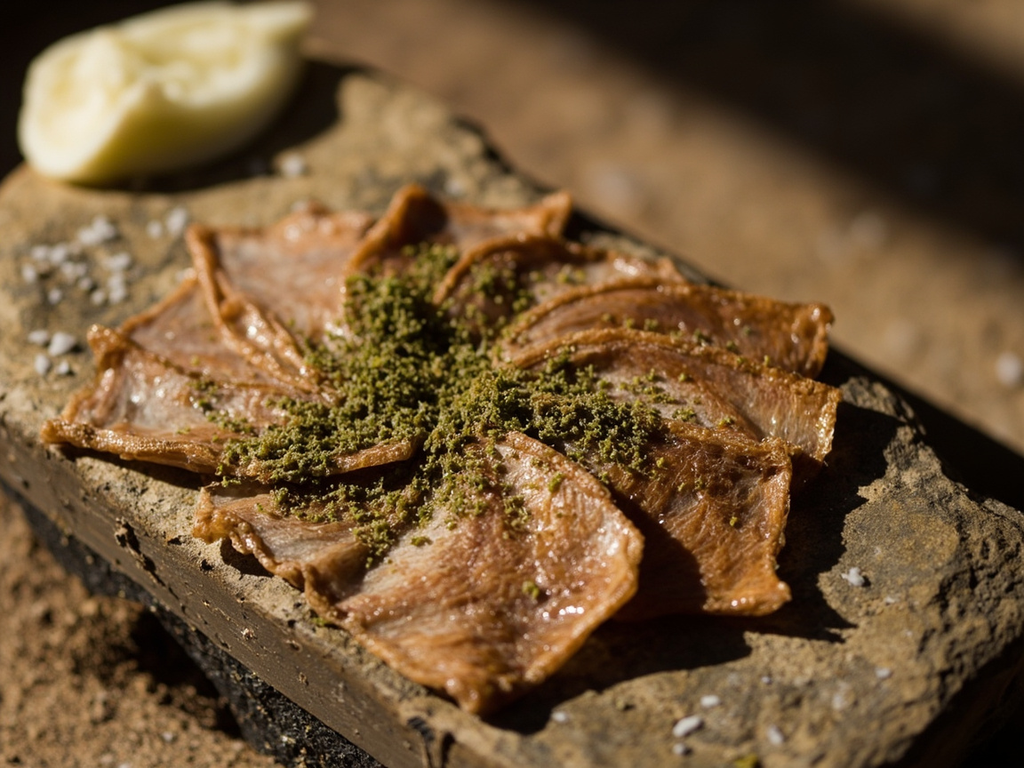
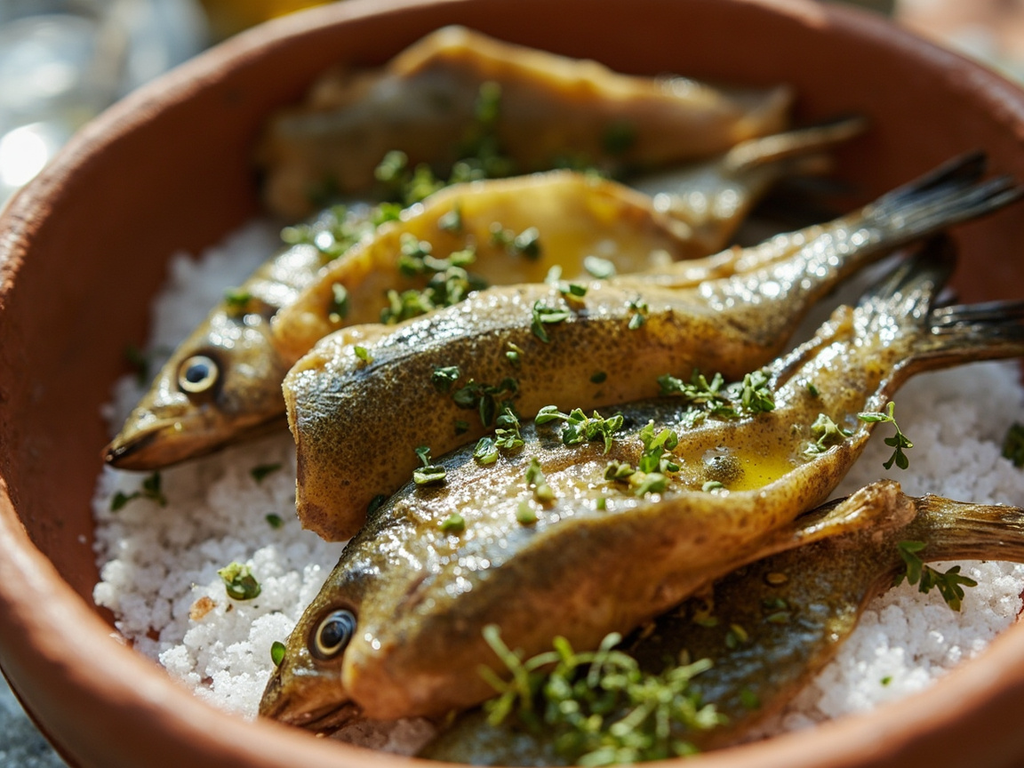
Nile fish fillets salted then sun-dried, perfumed with coriander and cumin. Firm, concentrated flesh, very salty and deeply umami, to be desalted and rehydrated before eating.
The river gives, but the river takes away: when the flood comes, one must know how to keep. My servants open the fish, rub salt to the core, lay them in the Theban sun until their flesh hardens like wood. They are perfumed with coriander to drive away flies and delight the nose. Thus we have fish even when the water rises, and our messengers carry it to the borders of Nubia.
- •Nile fish (tilapia, mullet) — several (base)
- •Salt — in abundance (preservation)
- •Coriander and cumin seeds — crushed (flavor and protection)
Dried and Salted Nile Fish with Coriander
Nile fish fillets salted then sun-dried, perfumed with coriander and cumin. Firm, concentrated flesh, very salty and deeply umami, to be desalted and rehydrated before eating.
Why this dish? The Nile feeds Egypt with its fish, dried and salted in large quantities to get through the flood season and supply expeditions, all the way to Nubia (Tombos) which Ahmose's dynasty reached. A modest but universal provision, from peasant household to royal stores.
The river gives, but the river takes away: when the flood comes, one must know how to keep. My servants open the fish, rub salt to the core, lay them in the Theban sun until their flesh hardens like wood. They are perfumed with coriander to drive away flies and delight the nose. Thus we have fish even when the water rises, and our messengers carry it to the borders of Nubia.
Ingredients (period version)
- Nile fish (tilapia, mullet) — several (base)
- Salt — in abundance (preservation)
- Coriander and cumin seeds — crushed (flavor and protection)
Ingredients
- Tilapia or mullet fillets (or mackerel) — 4 fillets
- Coarse salt — 500 g
- Coriander seeds — 1 tbsp, crushed
- Cumin — 1 tsp
- Olive oil (for serving) — a drizzle
Method
- Mix salt with crushed coriander and cumin.
- Completely coat fillets with this seasoned salt in a dish, cover and refrigerate 24-36 hours (water will bead).
- Rinse quickly, dry, then dry fillets on a rack in the refrigerator (or in a low-temperature dehydrator) 1-2 days until firm.
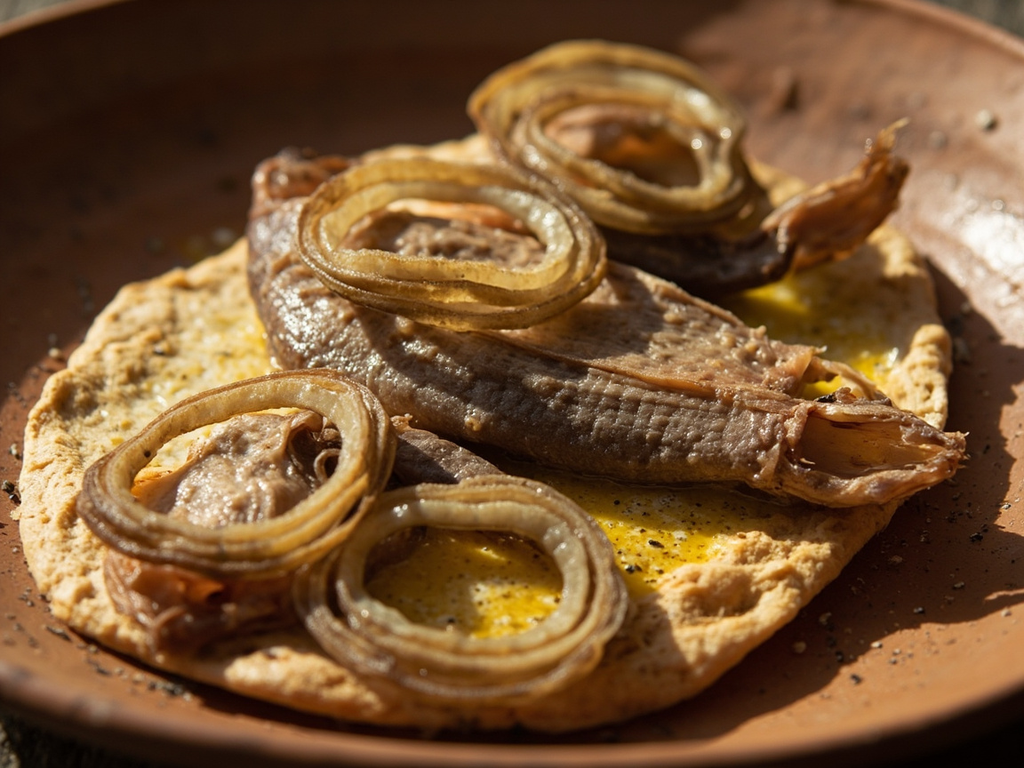
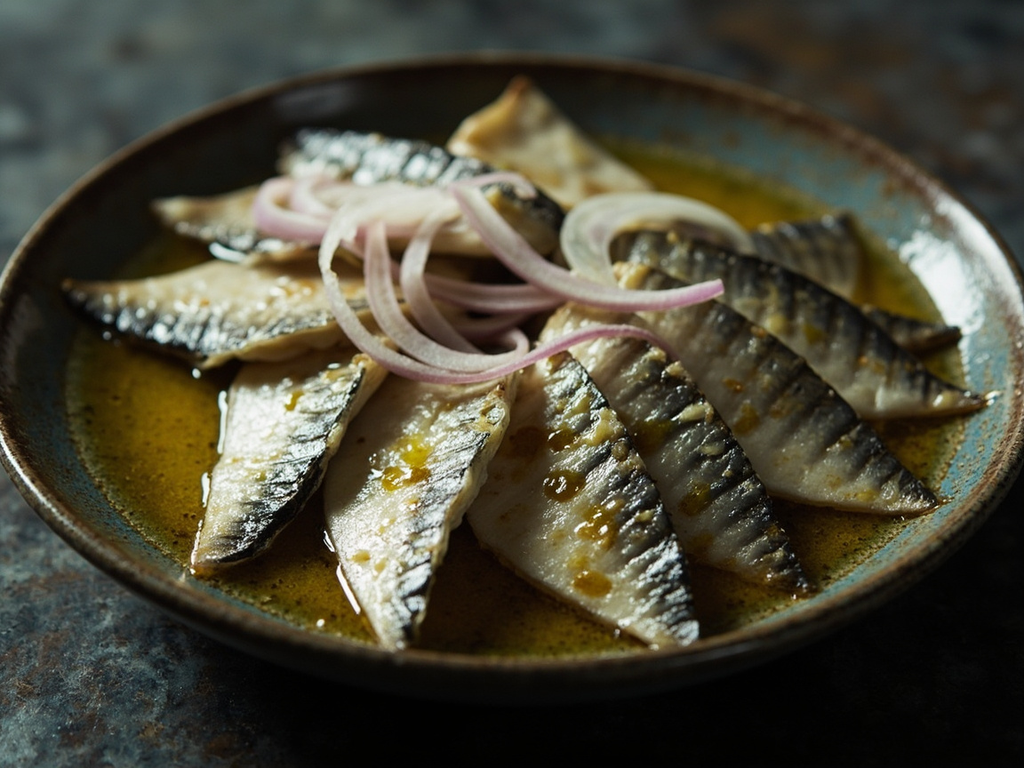
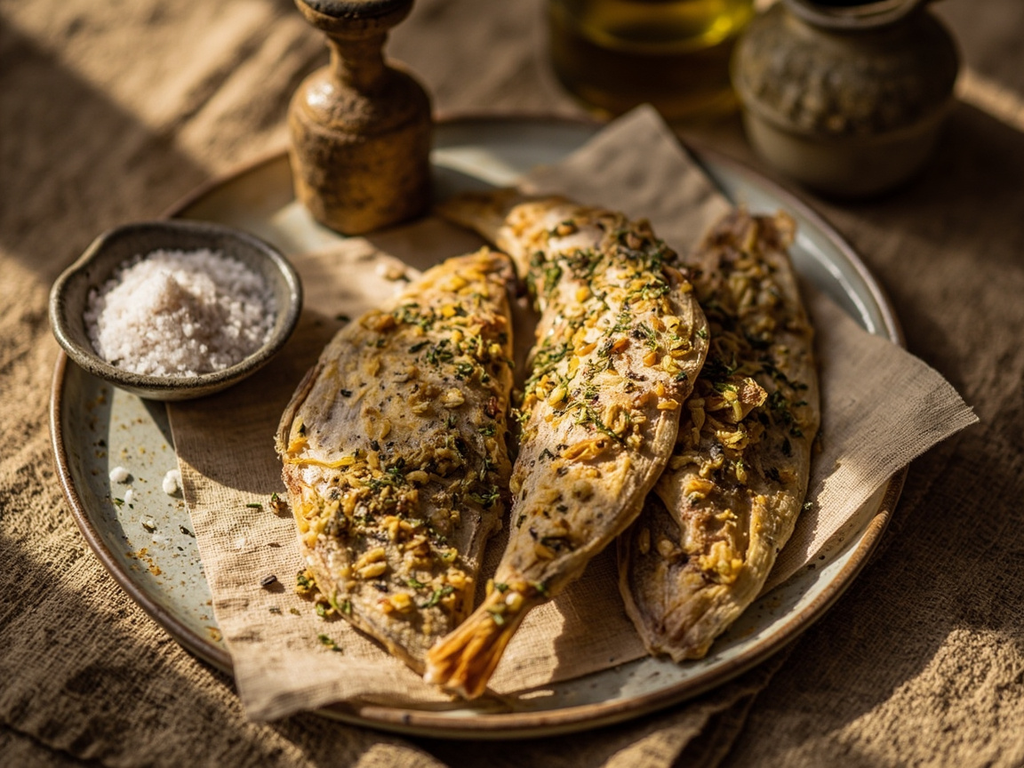
- Before consuming: desalt 2-3 hours in several changes of water, then crumble on bread with a drizzle of oil, or rehydrate in vegetable broth.
- (Family version: do not aim for complete open-air drying — use refrigerator or dehydrator for food safety.)
How it was made : Salting and drying fish are massively attested in Egypt: salting workshops, painted preparation scenes, and remains of processed fish. Dried fish constituted a ration and trade commodity; some strongly fermented preparations (ancestors of today's fesikh) were part of ancient festive customs.
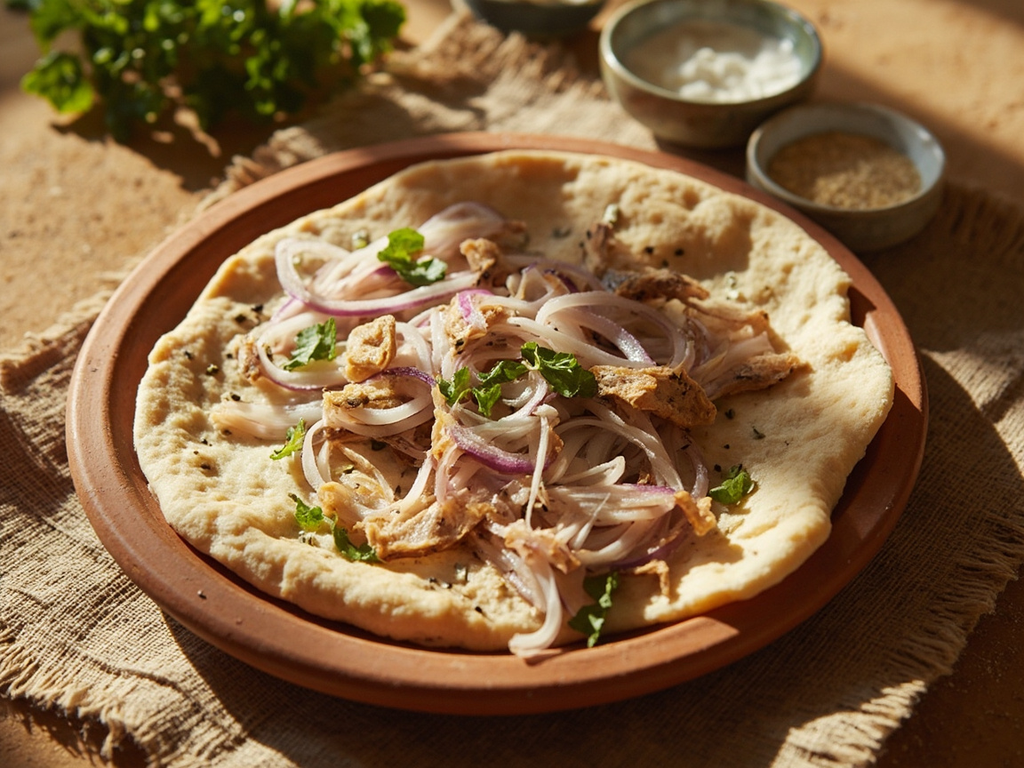
The contemporary twist : Serve crumbled on warm spelt flatbreads with sliced onion and fresh coriander, as "Nile toast".
Ahmose · Charactorium