 flip
flipSun-Salted and Dried Nile Fish
Sun-Salted and Dried Nile Fish
Why this dish? On the banks of the Nile, in Memphis as in Upper Egypt, the common people — those whose hearts Ammit would one day weigh — lived on dried and salted fish, preserved for lean days and the flood. Far from the splendor of the offering, this humble dish reminds us that Maat's scale judges all hearts, from vizier to fisherman. (Inspired by the living tradition of fesikh, still prepared today.)
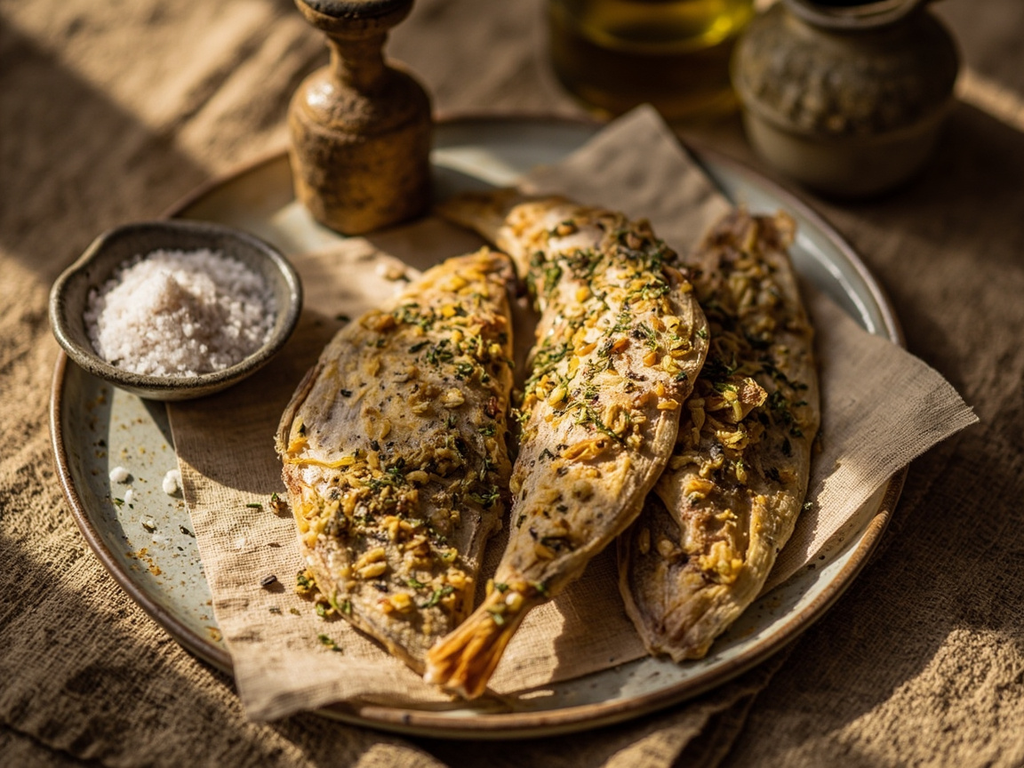
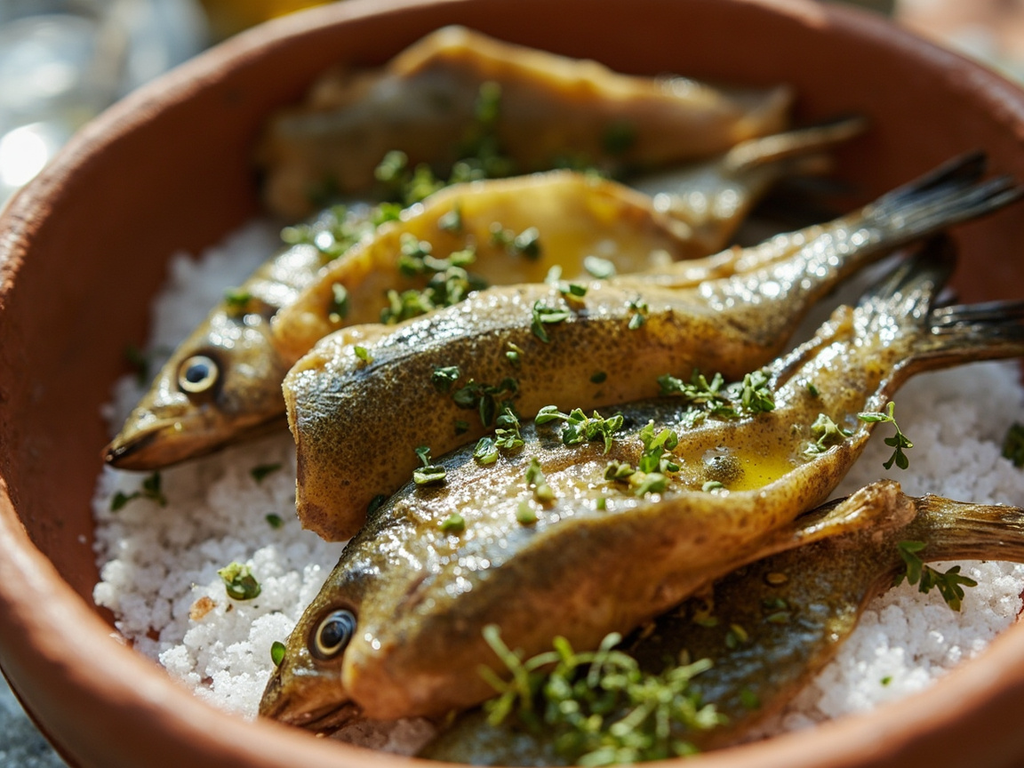
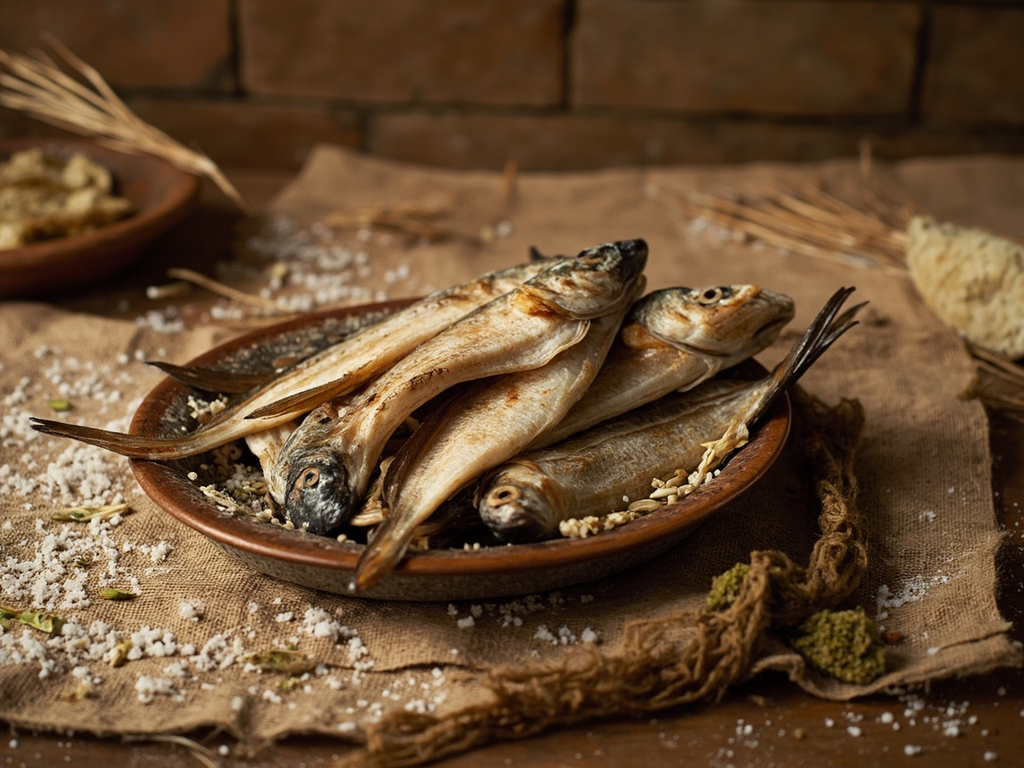
Nile fish salted and then sun-dried until it becomes a dense, savory provision with a marine and fermented flavor. The fisherman's preserve, lasting through the seasons.
Do not think that I weigh only kings. The fisherman who salts his fish on the bank, in Memphis, will also stand before my scale. I have tasted the smell of these fish dried in the sun, packed in salt like mummies in natron — humble food of the humble. Its strong flesh filled poor bellies throughout the flood. Eat it without shame: an honest fisherman's heart weighs as little as a feather.
- •Nile fish (mullet, tilapia) — the day's catch (staple product)
- •Salt — in abundance (preserving agent)
- •Sun and dry air — several days (drying)
Sun-Salted and Dried Nile Fish
Nile fish salted and then sun-dried until it becomes a dense, savory provision with a marine and fermented flavor. The fisherman's preserve, lasting through the seasons.
Why this dish? On the banks of the Nile, in Memphis as in Upper Egypt, the common people — those whose hearts Ammit would one day weigh — lived on dried and salted fish, preserved for lean days and the flood. Far from the splendor of the offering, this humble dish reminds us that Maat's scale judges all hearts, from vizier to fisherman. (Inspired by the living tradition of fesikh, still prepared today.)
Do not think that I weigh only kings. The fisherman who salts his fish on the bank, in Memphis, will also stand before my scale. I have tasted the smell of these fish dried in the sun, packed in salt like mummies in natron — humble food of the humble. Its strong flesh filled poor bellies throughout the flood. Eat it without shame: an honest fisherman's heart weighs as little as a feather.
Ingredients (period version)
- Nile fish (mullet, tilapia) — the day's catch (staple product)
- Salt — in abundance (preserving agent)
- Sun and dry air — several days (drying)
Ingredients
- Whole gutted mullet or tilapia (or mackerel as substitute) — 2 fish (base)
- Coarse salt — about 500 g (preservation)
- Coriander seeds — 1 tbsp (flavor)
Method
- Gut, scale, and rinse the fish thoroughly, then dry carefully.
- Line a container with coarse salt; place the fish and cover entirely with salt, inside and out.
- Let rest in a cool place for 24-48 hours: the salt draws out water and firms the flesh.
- Rinse quickly, hang the fish in a dry, airy, shaded place (or on a rack in the refrigerator) for 3-5 days, until the flesh is firm.
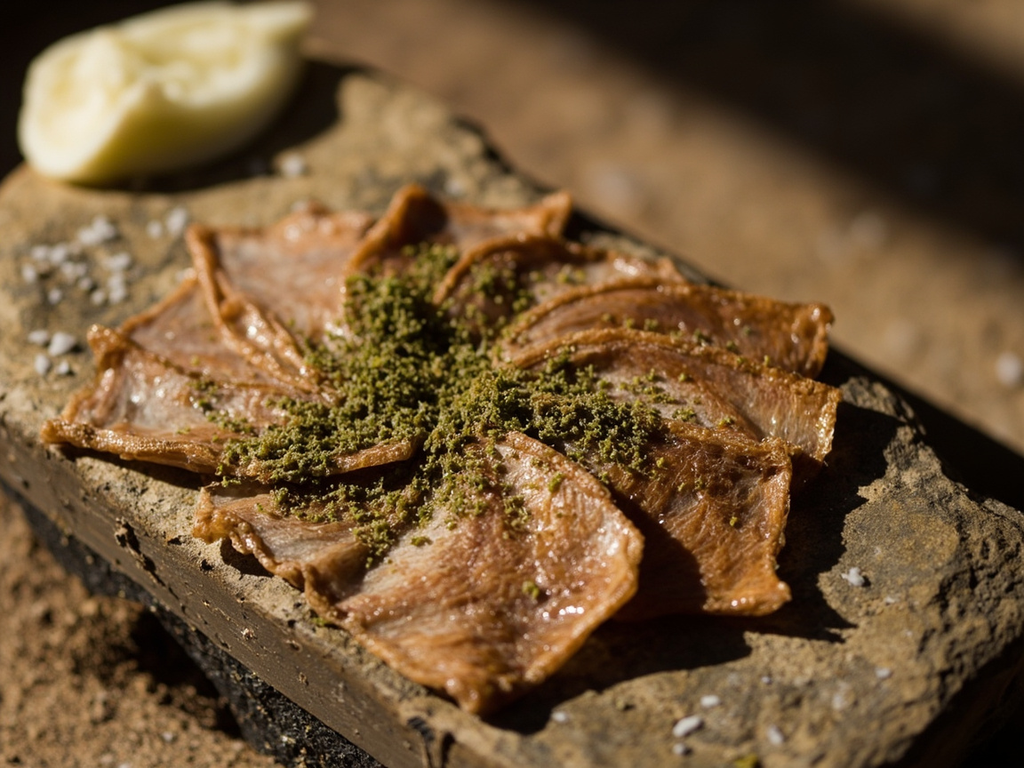
- Sprinkle with crushed coriander seeds before storing in a cloth.
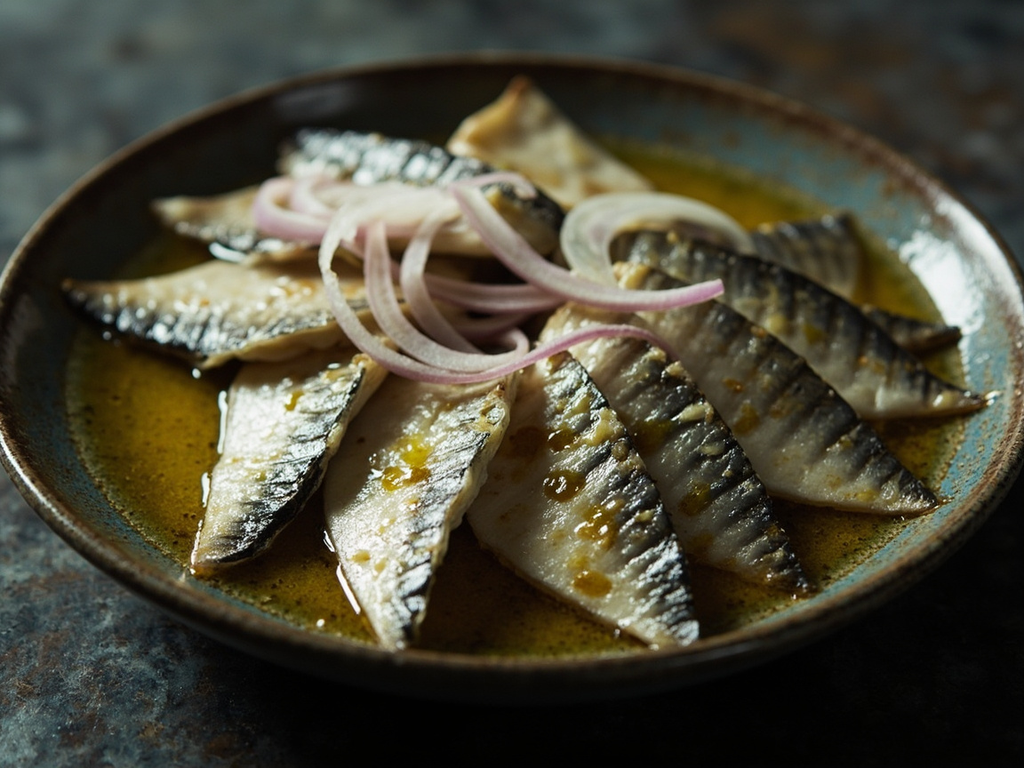
- Before eating, desalt by soaking in fresh water for 1-2 hours; serve shredded with bread and onion. (Cook thoroughly if you prefer to avoid any risk from raw fish.)
How it was made : Nile fish, abundant, were a major protein for the common people. Without refrigeration, they were preserved by salting and sun-drying — the same logic as mummification with natron. Salted in jars or dried in clusters, they formed a valuable reserve during the flood and periods of scarcity.
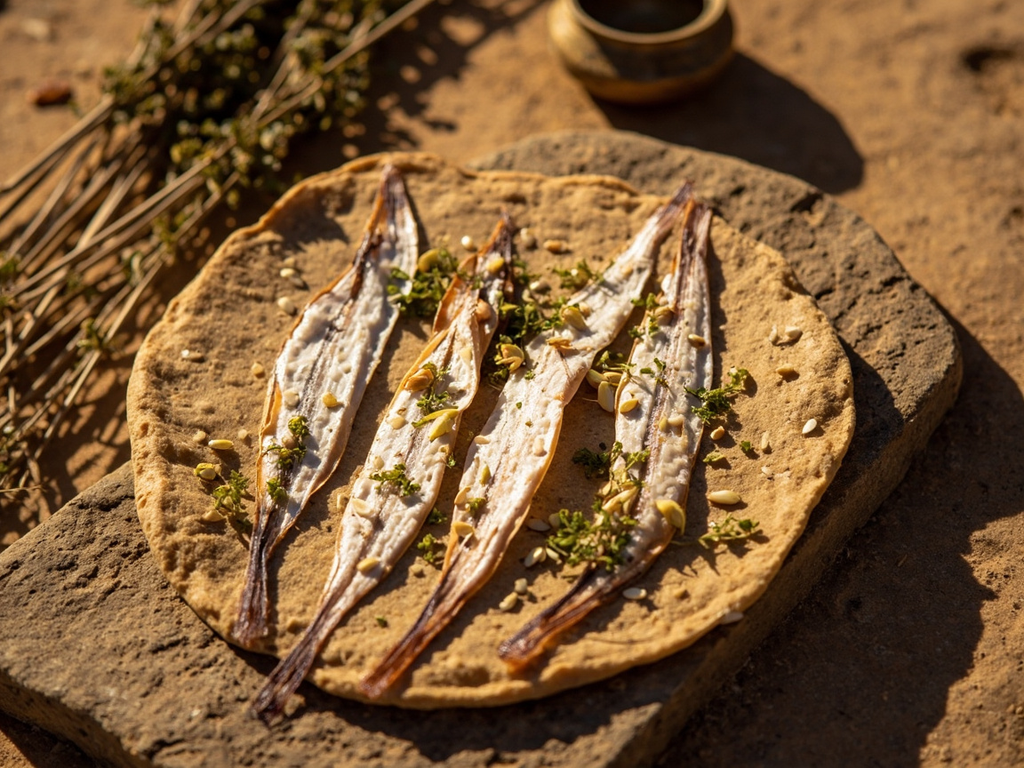
The contemporary twist : Crumble the desalted fish onto a warm flatbread with red onion and fresh coriander, as a "fisherman's toast" to share.
Sources : Pierre Tallet, Histoire de la cuisine et de la gastronomie égyptiennes, Khéops, 2003 · Douglas Brewer & Renée Friedman, Fish and Fishing in Ancient Egypt, Aris & Phillips, 1989
Ammit · Charactorium