 flip
flipSha kampo, Caravan Dried Meat
Sha kampo, Caravan Dried Meat
Why this dish? For her long clandestine marches through Tibet, Alexandra relied on transportable provisions: meat dried in the freezing air of the Tibetan winter kept for months and fit in a pilgrim's satchel.
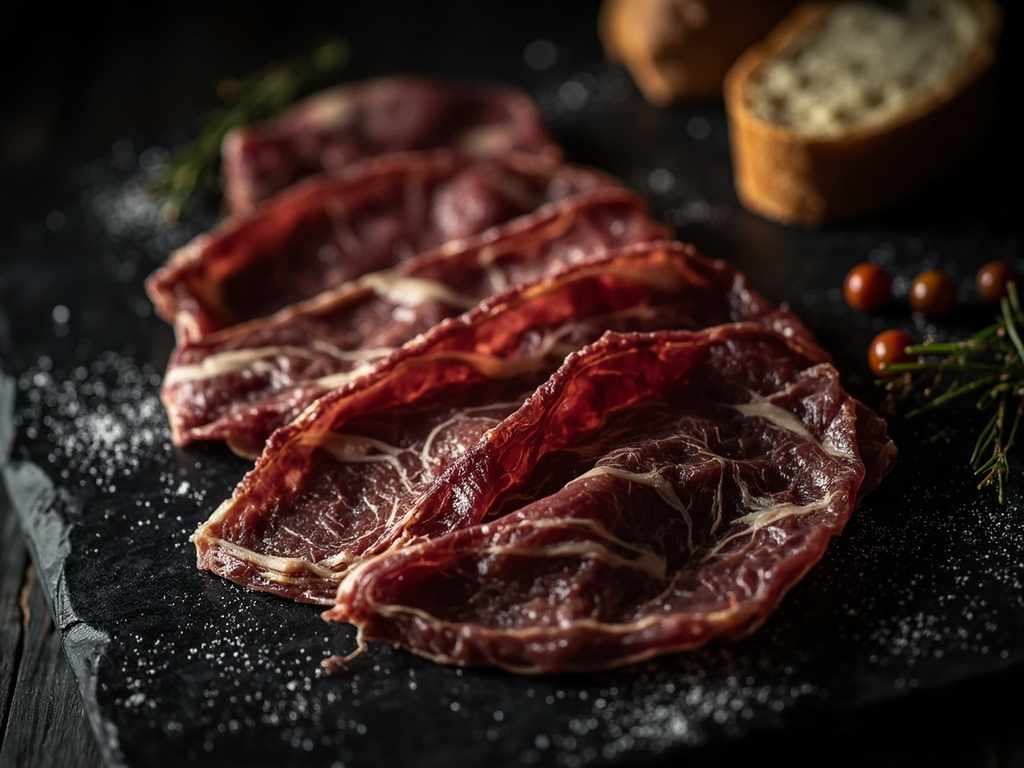
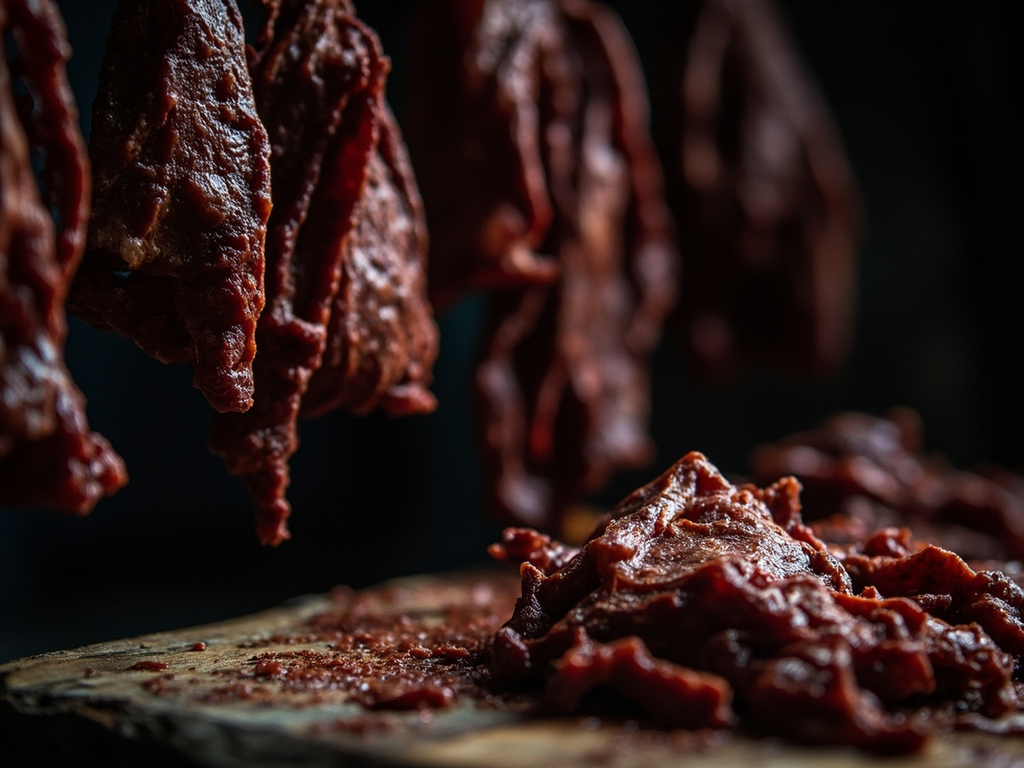
Strips of yak or beef dried in the dry cold and wind of the Himalayan winter. Eaten raw as a travel snack, or softened in a soup. It is the protein preserve of the nomads of the High Plateau.
On the High Plateau, there is neither icehouse nor salting cellar: winter itself preserves the meat. One hangs yak strips from the beams or outside, and the freezing wind dries them in a few weeks without them ever rotting. I slipped pieces into my satchel; you chew them as they are while walking, hard as leather but nourishing, or you toss them into the evening broth to soften them. Believe me, on the snowy passes, this meager treat was worth any feast.
- •Lean yak or beef — in strips (base)
- •Rock salt — a little (sometimes none) (preservation and flavor)
- •Cold, dry winter air — several weeks (natural drying)
Sha kampo, Caravan Dried Meat
Strips of yak or beef dried in the dry cold and wind of the Himalayan winter. Eaten raw as a travel snack, or softened in a soup. It is the protein preserve of the nomads of the High Plateau.
Why this dish? For her long clandestine marches through Tibet, Alexandra relied on transportable provisions: meat dried in the freezing air of the Tibetan winter kept for months and fit in a pilgrim's satchel.
On the High Plateau, there is neither icehouse nor salting cellar: winter itself preserves the meat. One hangs yak strips from the beams or outside, and the freezing wind dries them in a few weeks without them ever rotting. I slipped pieces into my satchel; you chew them as they are while walking, hard as leather but nourishing, or you toss them into the evening broth to soften them. Believe me, on the snowy passes, this meager treat was worth any feast.
Ingredients (period version)
- Lean yak or beef — in strips (base)
- Rock salt — a little (sometimes none) (preservation and flavor)
- Cold, dry winter air — several weeks (natural drying)
Ingredients
- Lean beef (topside, rump steak) — 500 g (base)
- Coarse salt — 2 tbsp (preservation and flavor)
- Sichuan pepper or cumin — 1 tsp (optional) (aromatic)
Method
- Cut the beef into thin strips, 1 cm thick, along the grain, removing all fat.
- Rub the strips with salt (and optional spices) and let rest for 1 hour in the fridge.
- Pat dry, then hang the strips or place them on a dehydrator rack (60°C) or in an oven with the door ajar (50°C) for 6 to 10 hours.
- The meat is ready when dry, pliable but brittle: store in a cloth in a dry place. Snack as is or rehydrate in a noodle soup (thukpa).
How it was made : Drying took advantage of the Tibetan climate: the freezing, desiccating air of high-altitude winter preserved meat without salt or smoking, unlike European methods. The raw dried meat was eaten straight from the hand on the trails, or broken into pieces in barley soups.
The contemporary twist : Presented on a charcuterie board as a Himalayan "jerky," alongside dry chhurpi cheese — the most ancient trekking snack there is.
Sources : Rinjing Dorje, Food in Tibetan Life, Prospect Books, 1985 · Alexandra David-Néel, Voyage d'une Parisienne à Lhassa, Plon, 1927
Alexandra David-Néel · Charactorium